Carthaginian Coins Returned: Tunisia–Norway Heritage Case!
In 2022, an unusual case of cultural heritage trafficking unfolded between Tunisia and Norway, a story that perfectly captures how ancient artefacts remain at risk from the illicit trade market.
A Tunisian man attempted to sell thirty Punic bronze coins, said to have come from an underwater hoard off Tunisia’s coast, to an antiques dealer in Oslo. Sensing that something wasn’t quite right, the dealer contacted Norwegian authorities, setting off an international investigation that would bring archaeology, diplomacy, and law enforcement together.
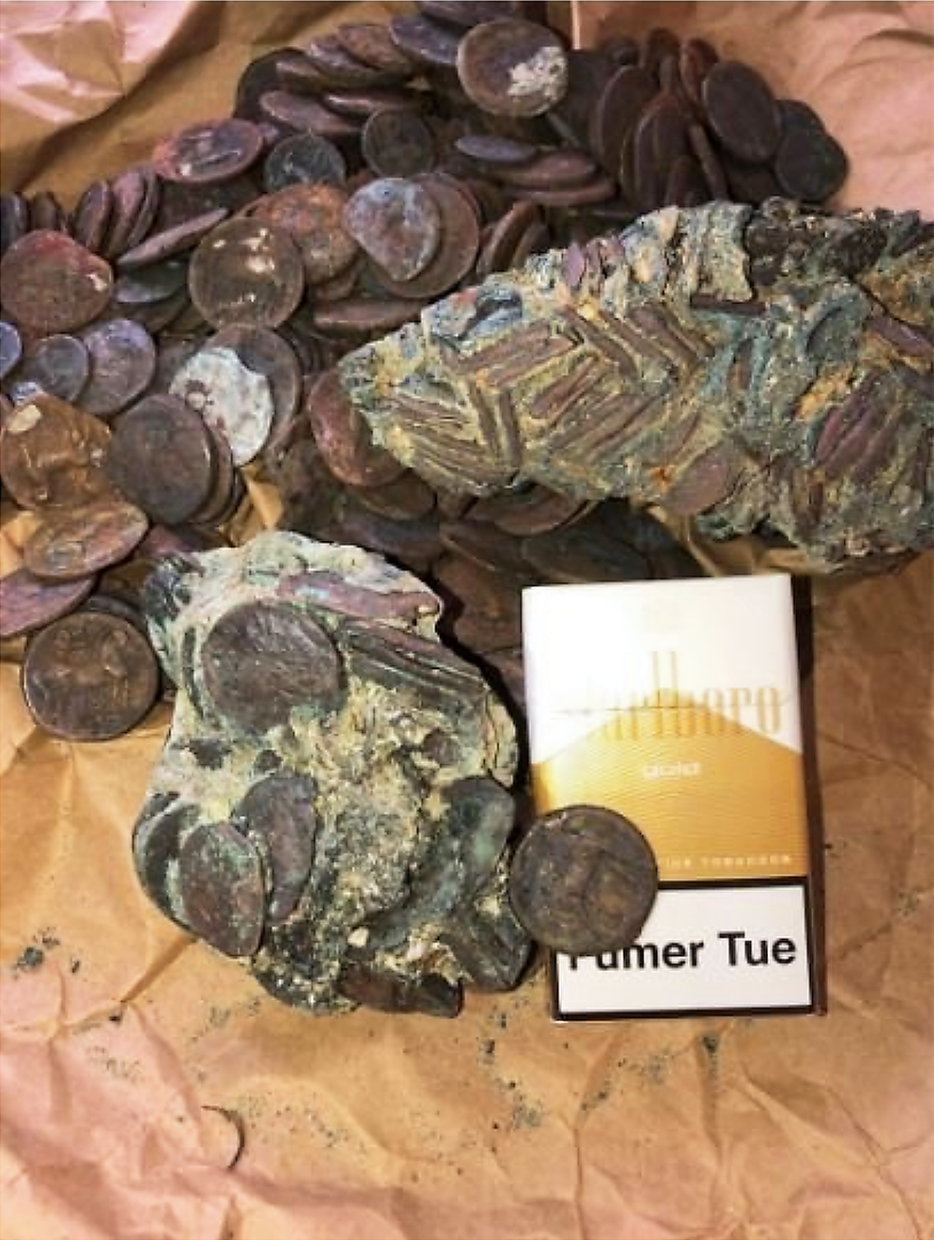
Photo Credit: Roland, H., & Visonà, P., Libyan Studies (2025); CC BY 4.0
Police intercepted the suspect in March 2022, confiscating the coins and placing him under arrest. Experts at the Museum of Cultural History, University of Oslo, later confirmed that the coins were of Carthaginian origin, minted during the Second Punic War (218–201 BC).
After a thorough legal review and diplomatic discussions, charges were dropped, and the coins were ultimately returned to Tunisia.
The alleged hoard was reported to have weighed around 200 kilograms, with each coin corroded from long exposure to water. They all depict the goddess Tanit on one side and a horse standing before a palm tree on the other. Stylistically, they appear to come from a single mint, most likely in Carthage, dating from the later stages of the Second Punic War.
Although their precise archaeological context is lost, this collection still sheds light on Carthaginian bronze coinage, an area far less understood than the civilisation’s gold and silver issues. It also hints at fascinating questions around maritime trade and military logistics in the western Mediterranean during that turbulent period.
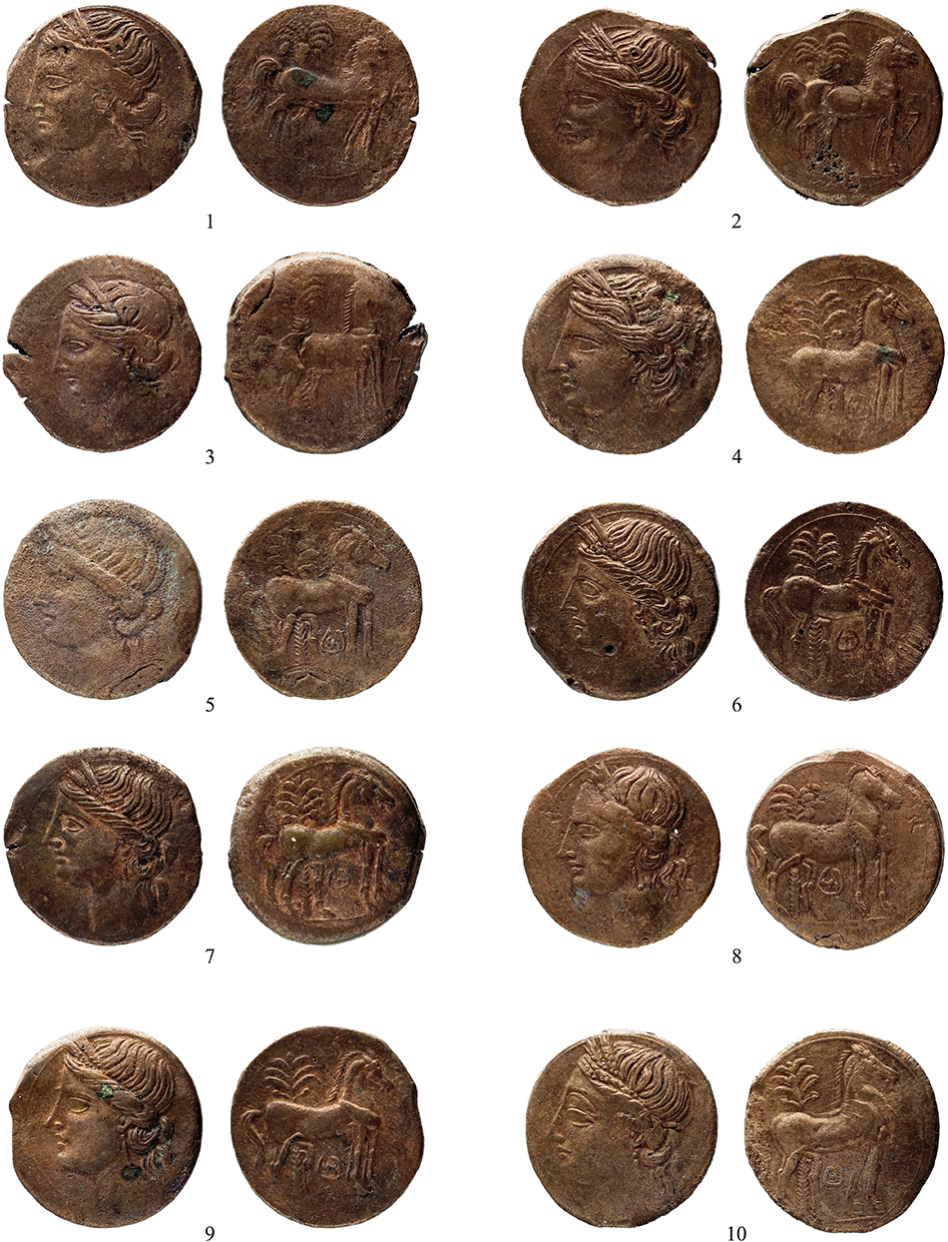
Photo Credit: Roland, H., & Visonà, P., Libyan Studies (2025); CC BY 4.0
This case is a reminder of how fragile our shared heritage can be. Coins, because of their size, portability, and market demand, are among the most commonly trafficked artefacts, often moving through legal grey zones before surfacing in legitimate-looking collections.
The successful restitution of these coins was made possible only through close coordination between the antiques dealer, the police, museum specialists, and diplomatic authorities. It’s a striking example of how international collaboration can make a real difference in protecting cultural heritage.
However, the story also exposes deeper, systemic issues. Enforcement of international heritage laws remains inconsistent, national legal frameworks are fragmented, and online marketplaces are making it easier than ever for looted objects to change hands anonymously.
It’s a growing challenge that calls for greater ethical responsibility, not just from governments and institutions, but from collectors, dealers, and the general public. Cultural property isn’t just a commodity; it’s a shared part of humanity’s story, and its rightful ownership must be respected.
Even stripped of their archaeological context, the seized coins still hold remarkable historical value. If they truly came from an underwater site, perhaps a shipwreck or a submerged storage cache, they could offer new insights into Carthaginian commerce, navigation, and wartime activities.
This case is a reminder that even a handful of ancient objects can spark meaningful dialogue: about scholarship, heritage diplomacy, and the global fight against illicit antiquities trading.