10,000 Years of Rock Art Uncovered on Egypt’s Umm Arak Plateau!
Archaeologists working in southern Sinai have revealed an extraordinary rock shelter on the Umm Arak Plateau that preserves nearly 10,000 years of human history. The site sits around five kilometres north-east of the Temple of Serabit el-Khadim, close to ancient copper and turquoise mining areas that once drew people to this rugged landscape.
The discovery was made during a regional survey carried out by Egypt’s Supreme Council of Antiquities, with guidance from a local resident, Sheikh Rabie Barakat. What they found is one of the most remarkable rock art sites identified in Sinai in recent years.
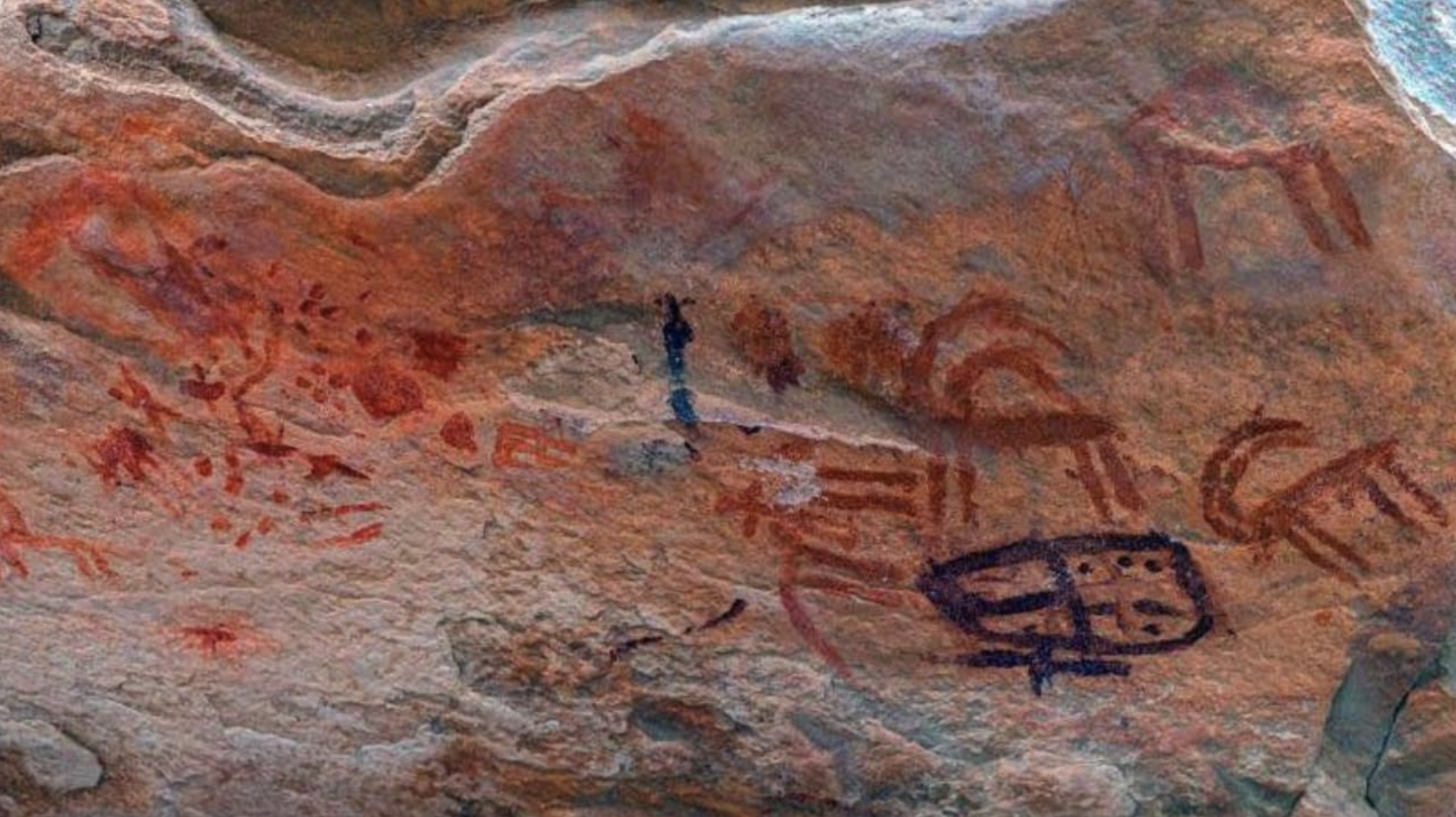
Photo Credit: Egyptian Ministry of Tourism and Antiquities
The sandstone overhang stretches for more than 100 metres along the eastern edge of the plateau. It is relatively shallow, between two and three metres deep. The ceiling height drops noticeably from around 1.5 metres at the entrance to just half a metre further inside.
From its elevated position, the shelter looks out across a wide plain extending north towards the Tih Plateau. Its vantage point would have made it ideal as both a lookout and a resting place, and evidence suggests it was used repeatedly across different periods.
The earliest artwork appears near the entrance and is thought to date between 10,000 and 5,500 BCE, based on style and technique. Many of these images were painted in red pigment across the ceiling. They depict animals that once roamed the region in prehistoric times.
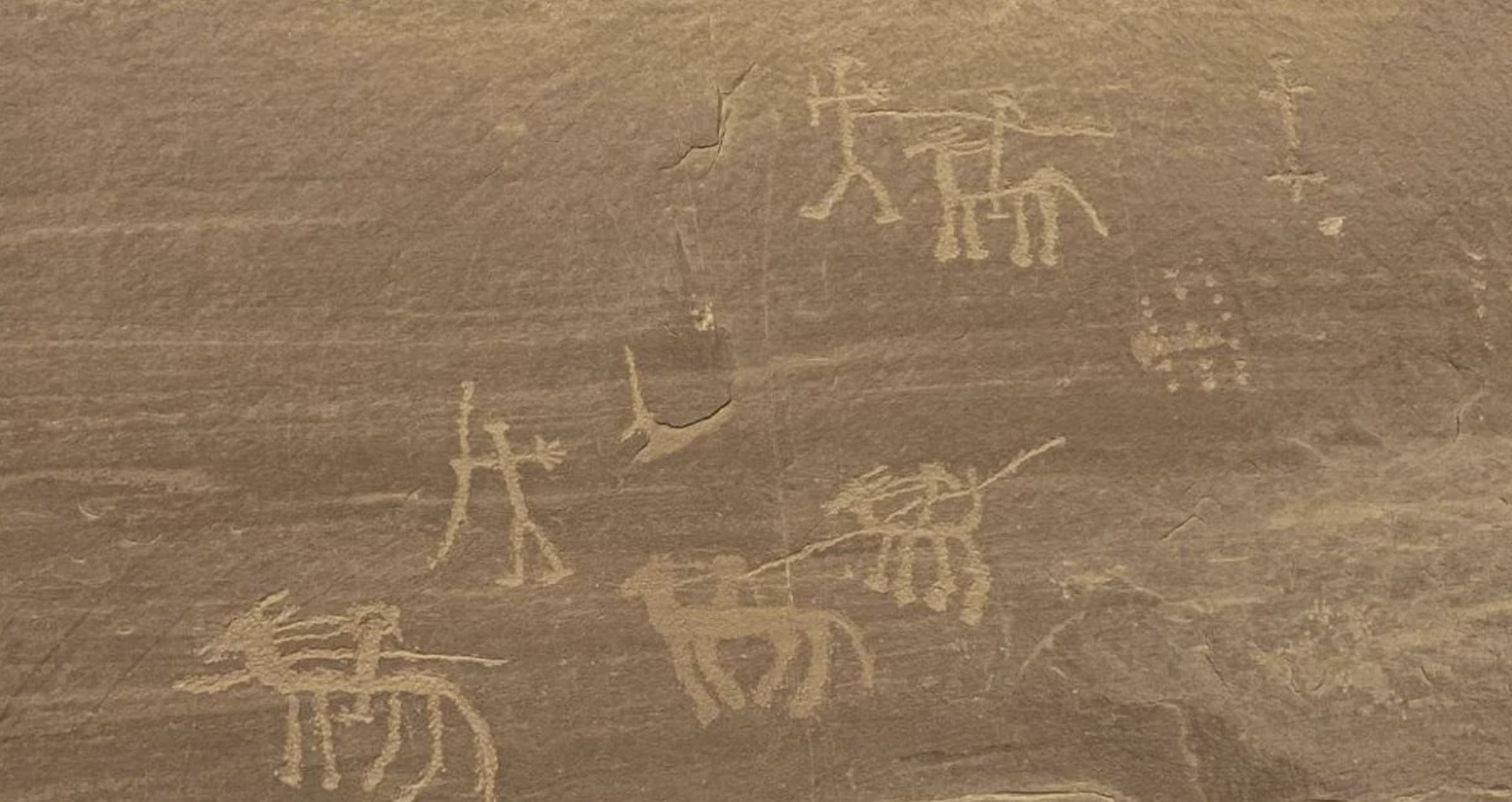
Photo Credit: Egyptian Ministry of Tourism and Antiquities
One particularly striking engraved scene shows a hunter drawing his bow towards an ibex, accompanied by several hunting dogs. Carved in sunken relief, it offers a vivid glimpse into daily life and survival strategies among Sinai’s early communities.
Later engravings introduce new subjects and reflect changing times. Some scenes show camels and horses ridden by armed figures, suggesting shifts in transport, trade and possibly conflict.
Several inscriptions have been identified as Nabataean, linking the site to the people best known for the city of Petra in modern-day Jordan. These inscriptions date roughly between 400 BCE and 200 CE.
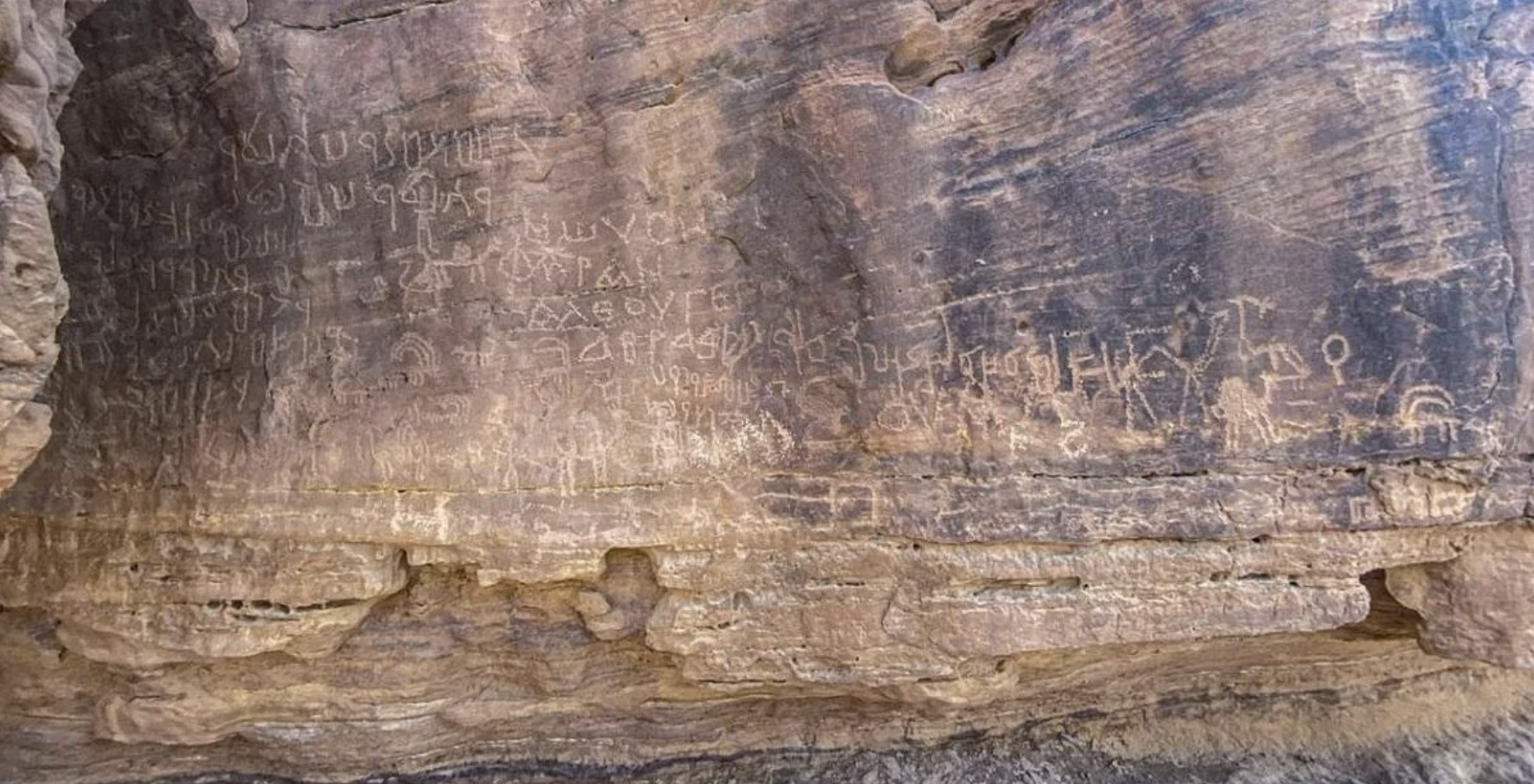
Photo Credit: Egyptian Ministry of Tourism and Antiquities
Further markings belong to late antiquity and the medieval period, from around the sixth to the fifteenth centuries CE. Throughout the shelter, geometric symbols, including X-shapes, squares, ovals and crescents, appear in various styles, created using different tools and techniques over the centuries.
Excavations inside the shelter revealed thick layers of animal dung, suggesting that in later periods the space served as a refuge for both people and livestock during cold or rainy weather.
Archaeologists also documented low stone partitions that divided the shelter into small living spaces. In the centre of these units, layers of ash and burnt material point to repeated use of hearths. Flint tools and pottery fragments further confirm long-term occupation. Some ceramics may date to Egypt’s Middle Kingdom, while others appear to belong to the third century CE during Roman rule.
Officials describe the Umm Arak Plateau as one of the most significant recent rock art discoveries in Sinai. The diversity of techniques, pigments and subjects creates a continuous visual record spanning from prehistoric hunters to medieval travellers.
Ongoing research aims to refine the dating of each phase of artwork and to develop a long-term strategy for documenting and protecting the site. What is already clear, however, is that this windswept plateau holds a rare and powerful record of human presence stretching back almost ten millennia.