Oldest Mithraic Sanctuary in Bavaria Discovered in Regensburg’s Roman Old Town!
When archaeologists began work at Stahlzwingerweg 6 in Regensburg, it was meant to be routine. The excavation was required ahead of a housing development that will add three multi-storey residential buildings to the city’s historic centre. In a place as layered as Regensburg, you expect traces of prehistory, the Roman era and the Middle Ages. And at first, that’s exactly what appeared. Nothing suggested that this dig would rewrite part of Bavaria’s religious history.
Excavations ran from spring to autumn 2023. Because the construction pit was narrow, the team had to work in sections, which made interpretation difficult. It was only after months of fieldwork and careful analysis that a clear pattern emerged. Under the direction of Dr Stefan Reuter, researchers concluded that the remains belonged to a sanctuary dedicated to the god Mithras.
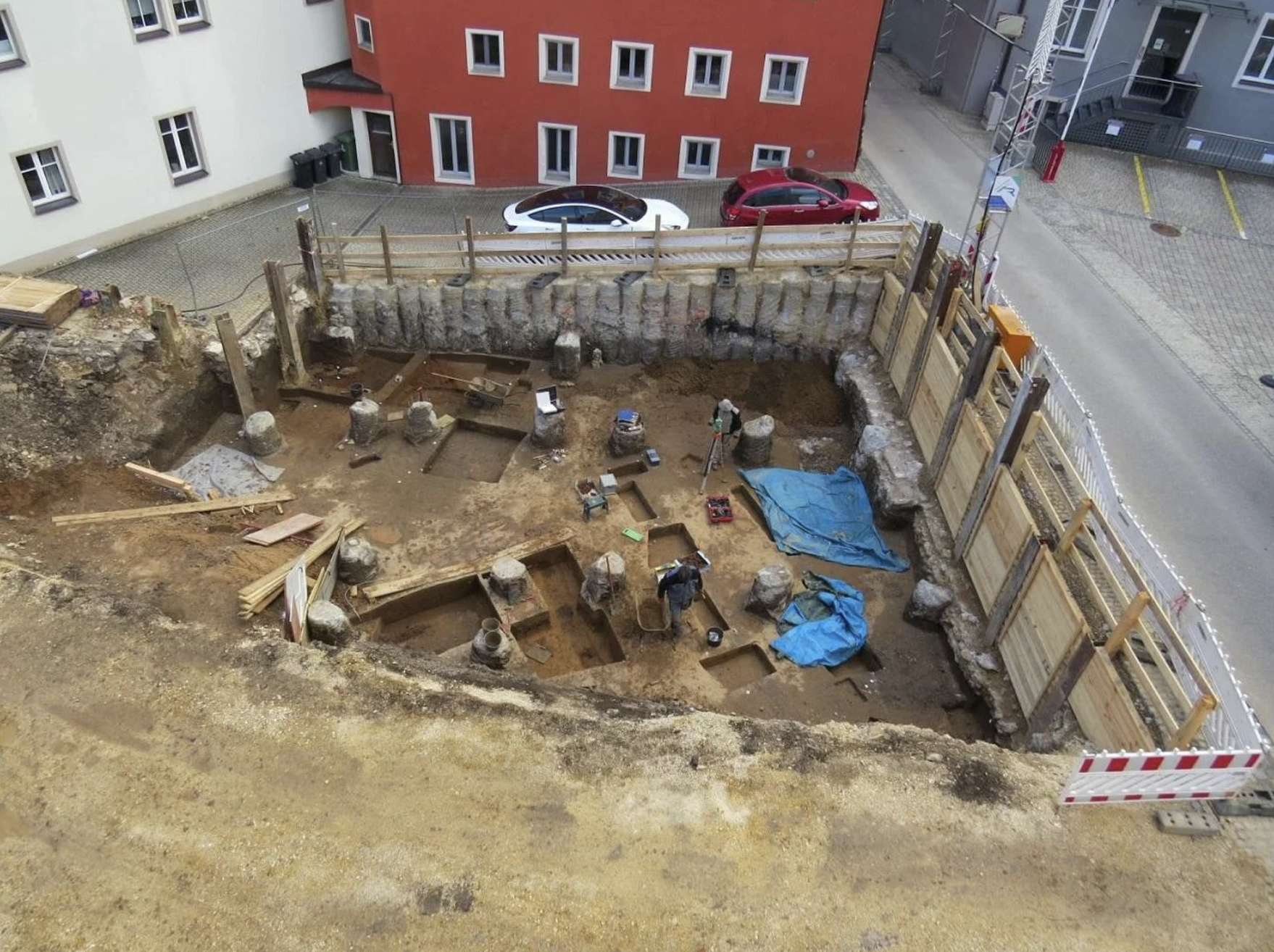
Photo Credit: ArchäoTeam, Regensburg
That conclusion did not come from dramatic standing walls or statues. In fact, very little of the structure survived. The sanctuary appears to have been built largely of wood, a material that rarely endures over nearly two millennia. Instead, the identification relied on smaller, quieter clues.
Among the finds was a fragment of a votive or consecration stone. Unfortunately, the inscription is too worn to read. There were also fragments of metal votive plaques, objects commonly associated with Mithraic temples, and fittings from what seems to have been a small shrine cabinet.
Pottery provided stronger evidence. Archaeologists uncovered fragments of a ceramic vessel decorated with snake motifs, imagery frequently linked with Mithraic symbolism. Incense burners and handled jugs were found in the same context, alongside drinking vessels that point to ritual meals, a central feature of Mithraic worship. Animal bones from sacrificial practices were also recorded.
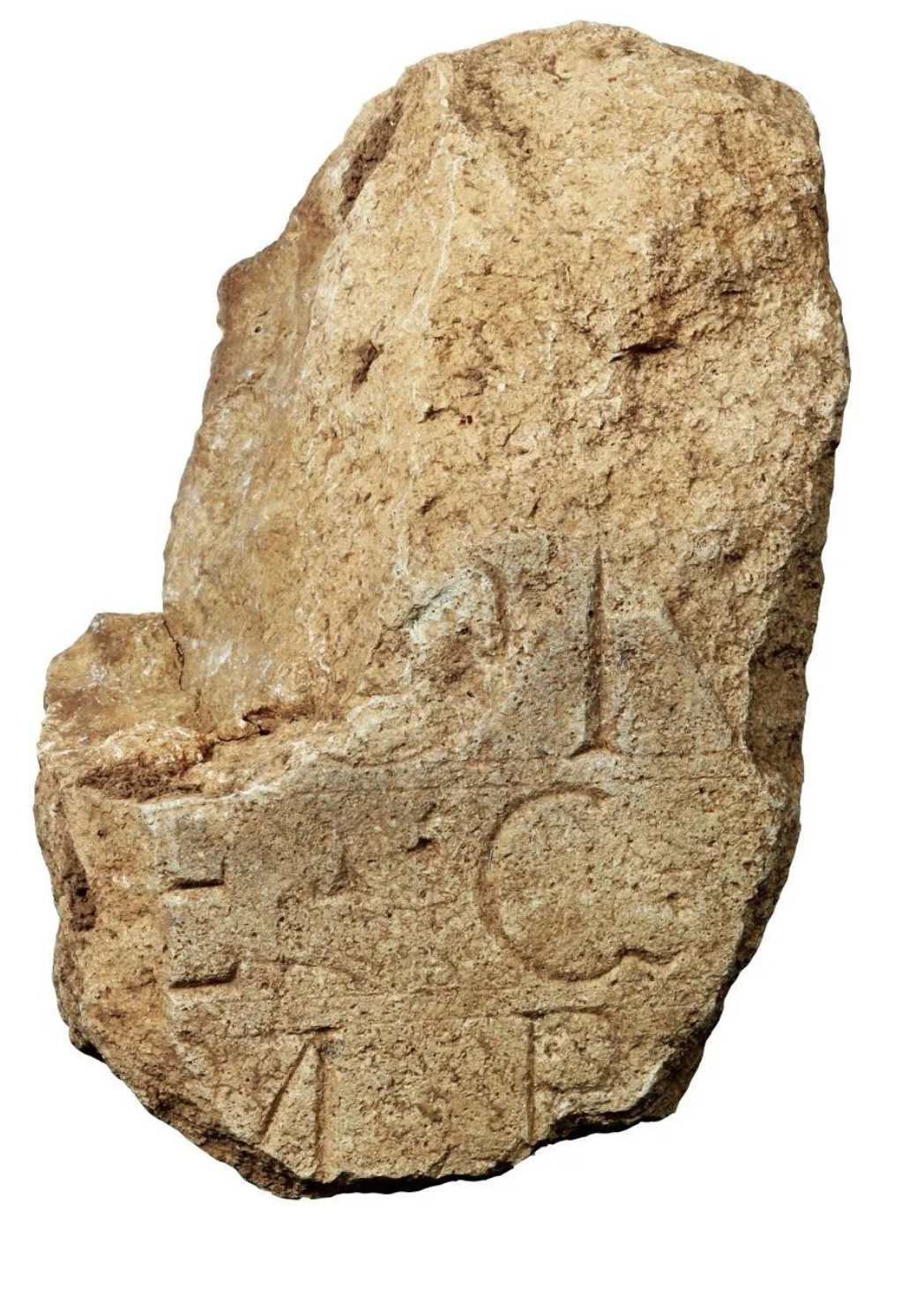
Photo Credit: Museen der Stadt Regensburg
Individually, these objects might not appear remarkable. Together, they told a compelling story.
Coins proved decisive in establishing the date. The material dates the sanctuary between 80 and 171 CE. One of the coins bears the image of Emperor Hadrian, who ruled from 117 to 138 CE.
This dating is significant. It corresponds with the cohort fort at Kumpfmühl and the adjacent civilian settlement along the Danube, and predates the foundation of the large legionary camp of Castra Regina.
In other words, followers of Mithras were gathering here decades earlier than many had assumed.
The discovery holds two notable distinctions. It is the first Roman-period sanctuary identified within Regensburg’s old town. It is also the oldest of the nine Mithraea recorded so far in Bavaria. Most other examples in the region date from the later second and third centuries, when Mithraic worship was at its height.
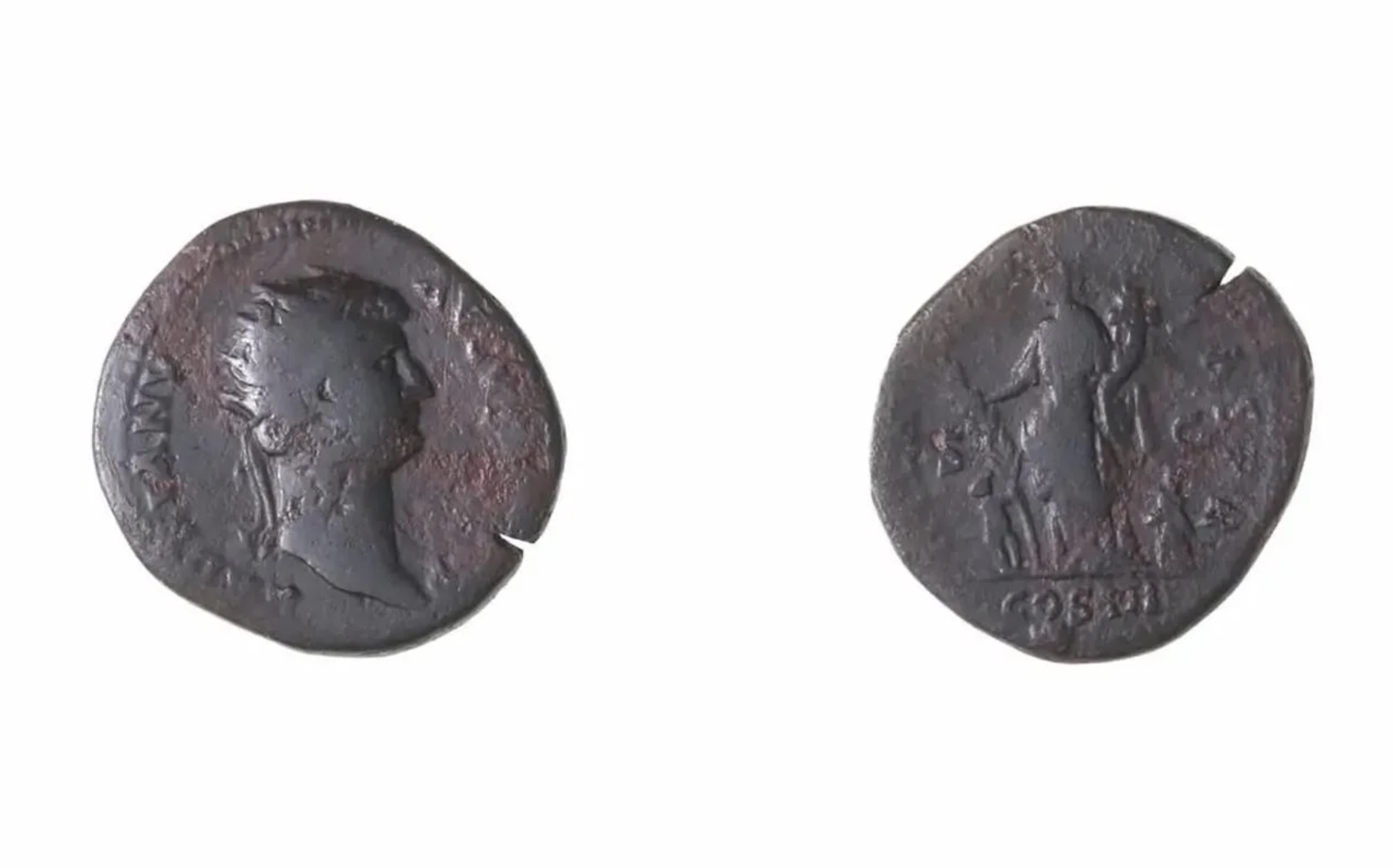
Photo Credit: Museen der Stadt Regensburg
Mithraism was particularly popular among soldiers, merchants and administrators stationed along the empire’s frontiers. It flourished during the second and third centuries before gradually declining as Christianity spread through the Roman world in the fourth and early fifth centuries. No sacred texts from the cult have survived, which makes physical evidence such as altars, cult vessels and animal remains especially valuable.
This find adds new detail to the early history of the Danube settlement, a phase often overshadowed by the later legionary base.
Because of the importance of the material, the City of Regensburg and the Bavarian State Office for Monument Preservation are funding a dedicated research project. Specialists continue to analyse and conserve the finds. Once fully studied, the objects will enter the collection of the Regensburg City Museums, where they will eventually be displayed within the broader story of Roman Regensburg and the province of Raetia.