1,800-Year-Old Oracle Monument Discovered in Turkey!
Archaeologists have uncovered an unusual monument at the ancient city of Kibyra in southwestern Turkey, offering a fascinating insight into how people sought divine guidance nearly 1,800 years ago. The limestone structure, which dates to the second or third century CE, is covered in Greek inscriptions recording 56 different oracles, allowing people to seek answers to questions about their health, finances, travels and personal lives.
The monument was discovered in 2024 during excavations on the third terrace of Kibyra's agora. A study published in the academic journal Gephyra has since examined the inscriptions, identifying the structure as an example of astragalomancy, an ancient form of divination that used animal knucklebones to obtain messages believed to come from the gods.
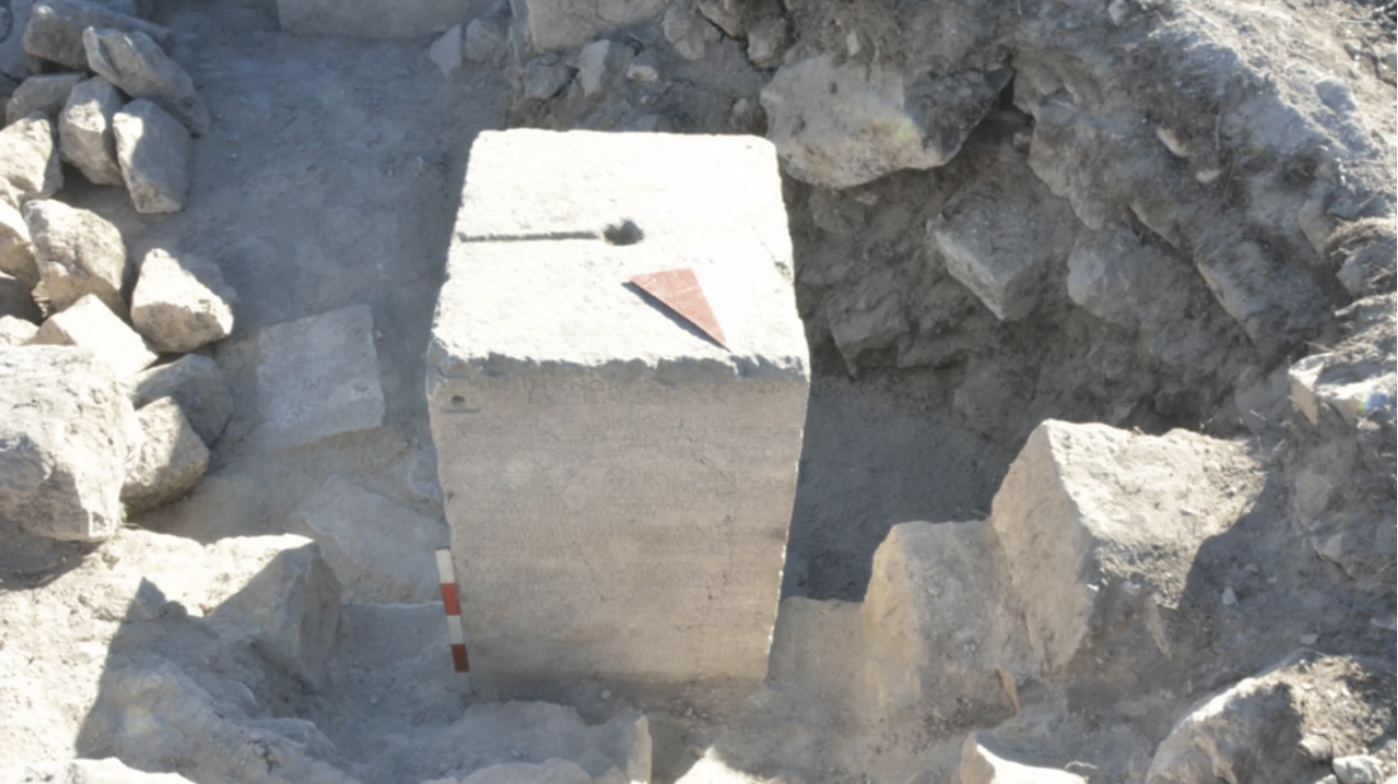
Photo Credit: Kileci, Tüner Önen & Özüdoğru (2026), Gephyra
Researchers Şenkal Kileci, Nihal Tüner Önen and Şükrü Özüdoğru investigated the monument, which stands 1.24 metres tall. Its inscriptions preserve an extensive collection of oracles, alongside the numerical instructions needed to determine which prediction applied to a particular throw.
Rather than consulting written horoscopes or drawing lots from a container, people using this system relied on small bones taken from the ankle joints of animals, including sheep, goats and calves. Known as astragaloi, these bones had four usable faces, each associated with a numerical value of 1, 3, 4 or 6.
To receive an oracle, a person would throw five knucklebones together and compare the resulting combination with the instructions carved into the monument. Each of the 56 possible outcomes corresponded to a particular prediction associated with a deity.
The inscriptions effectively provided a reference system, allowing visitors to interpret the results of their throws and discover the message assigned to them.
One particularly revealing example involved all five knucklebones landing on the number one. This combination was linked to an oracle associated with Olympian Zeus, which promised happiness and sound judgement. However, the message also advised the individual to show respect to Aphrodite and Hermes.
Not every result offered such encouraging guidance. Some predictions cautioned against embarking on a journey or beginning a business venture, while others indicated that an undertaking would succeed. Certain oracles offered hope for recovery from illness or the safe return of someone travelling far from home.
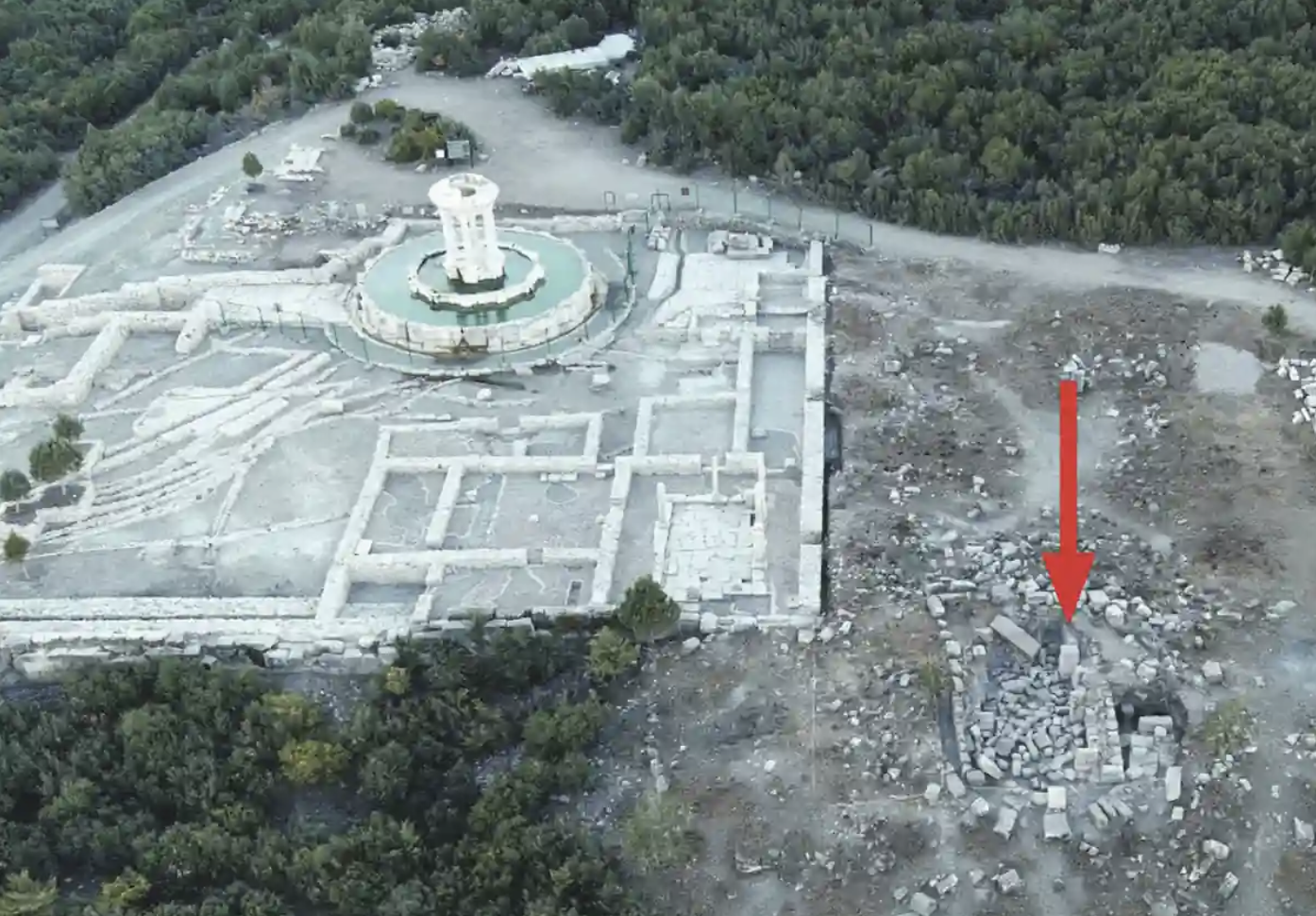
Photo Credit: Kileci, Tüner Önen & Özüdoğru (2026), Gephyra
These messages reveal the practical concerns that occupied people's thoughts in the Roman period. Divination was not necessarily reserved for rulers seeking answers about political decisions or military campaigns. Ordinary people could also consult the gods when faced with uncertainty about their health, livelihoods, relationships or future plans.
Although the process depended on the combination produced by the knucklebones, the predictions themselves followed established conventions. Many were written in Greek hexameter, a poetic metre associated with ancient Greek literary and religious traditions. This gave the oracles a formal style that connected the practice with a much older tradition of sacred poetry.
An inscription at the top of the monument provides further information about its original installation. According to the researchers, it indicates that a wealthy individual financed the oracle monument, a statue of Hermes, its pedestal and the surrounding decorative elements.
Unfortunately, the donor's name has not survived, leaving their identity unknown. Nevertheless, the dedication suggests that the installation was funded privately as a contribution to the city.
Hermes was a particularly suitable deity for such a monument. In ancient Greek religion, he was associated with travel, trade, communication and divination through the casting of lots. These connections made him relevant to people seeking answers about commercial ventures, journeys and other uncertain aspects of everyday life.
The monument was probably displayed in or near Kibyra's agora, a central public area where people gathered for commercial and civic activities. Its location would have allowed residents and visitors to consult the inscriptions and seek guidance.
The discovery also demonstrates how public spaces could serve religious as well as commercial and social purposes. A monument of this kind offered a practical means of consulting divine messages while making religious beliefs visible within the city.
Its later history, however, was rather different. Centuries after its original use, the inscribed stone was incorporated into the northern wall of a chapel on the third terrace of Kibyra's agora. Archaeologists discovered it in this secondary position in 2024, revealing how an earlier monument had been reused as the city developed and its buildings changed.
Kibyra's monument was not an isolated example of knucklebone divination. Similar inscriptions have been documented at several ancient settlements across southwestern and southern Anatolia, including Termessos, Kremna, Sagalassos and Perge.
These examples indicate that the practice was shared across the region during the Roman Imperial period, particularly between approximately 120 and 210 CE. Although individual cities used comparable systems, the inscriptions also reveal differences in how the oracles were recorded and presented.
The researchers found that Kibyra's inscriptions closely resemble those discovered at Kremna. However, the texts are not identical. Differences in grammar, variations in the verses and irregularities in poetic metre suggest that the inscriptions were adapted as the system spread between communities.
Some of these inconsistencies may have resulted from mistakes made during the carving process, while others could reflect deliberate changes by people adapting existing oracles for local use.
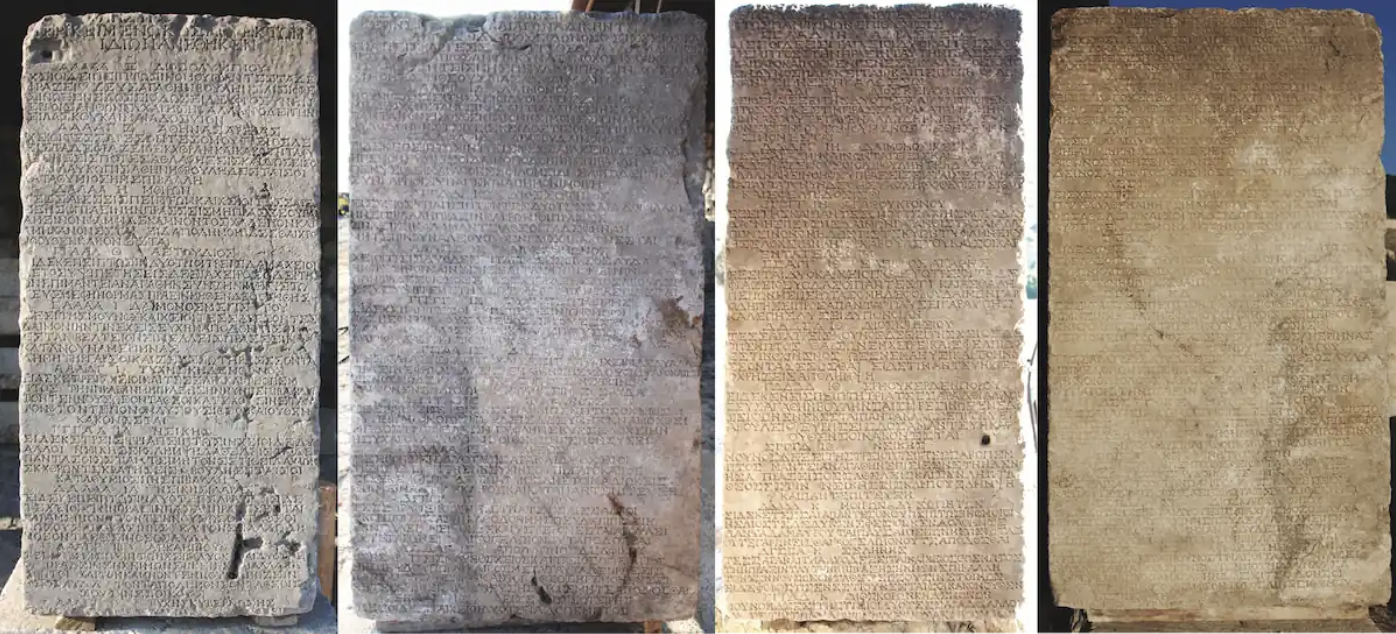
Photo Credit: Kileci, Tüner Önen & Özüdoğru (2026), Gephyra
One particularly important feature of the Kibyra monument is that its surviving inscriptions retain the numerical instructions needed to interpret the knucklebone throws throughout the sequence. Comparable monuments do not always preserve these details, making the Kibyra example especially valuable for understanding how the system operated.
Beyond its inscriptions, the monument provides evidence of the relationship between religion and everyday decision-making in an ancient city. The practice of casting knucklebones offered people a way to seek answers when faced with questions that could not easily be resolved through their own judgement. Whether they were concerned about an illness, considering a journey or hoping for commercial success, the oracles provided a framework through which they could interpret uncertainty as a message from the gods.
The monument also highlights the role of private benefactors in shaping public religious spaces. By financing the installation, an otherwise unidentified individual helped establish a place where members of the community could engage with a shared tradition of divination.
Meanwhile, the similarities between Kibyra's inscriptions and those found elsewhere in Anatolia demonstrate that these beliefs and practices extended beyond individual cities, forming part of a wider regional tradition.
The discovery therefore offers more than a collection of ancient predictions. It provides a glimpse into how people in Roman-era Anatolia understood their relationship with the divine and sought reassurance about the future.
Nearly 1,800 years ago, visitors to Kibyra could cast five small animal bones and consult a monumental inscription to discover which oracle had been assigned to their result. Today, the surviving stone allows researchers to investigate that practice and explore the beliefs, concerns and traditions of the people who once gathered around it.