Rare Silenus Relief Found on Roman Sarcophagus in Turkey!
Archaeologists investigating the ancient city of Attouda in western Turkey have identified an unusual decoration on a Roman-era terracotta sarcophagus: a small sculpted head believed to represent Silenus, a mythological companion of the Greek god Dionysus. A recent study suggests that the image may have served a symbolic purpose, potentially protecting the deceased from harmful forces.
The fragmented burial container was identified during archaeological surveys in 2023 in an area known as Musalla, south of ancient Attouda in Denizli Province. Based on comparisons with similar objects from the region, researchers believe it was probably produced during the first or second century CE.
Although terracotta sarcophagi are known from several ancient cities across Anatolia, the Silenus decoration makes this example particularly distinctive. Associate Professor Bilge Yılmaz Kolancı of Pamukkale University examined the discovery in a study published in the peer-reviewed journal Cedrus in 2026. Her research highlights how familiar mythological imagery could be incorporated into locally produced burial objects during the Roman period.
The remains were discovered scattered across agricultural land, where farming activities had damaged the original burial container. Archaeologists identified six fragments belonging to a cylindrical terracotta sarcophagus, including sections of its body and lid. The surviving pieces had been moved to the edge of the cultivated field before being transferred to the Denizli Museum.
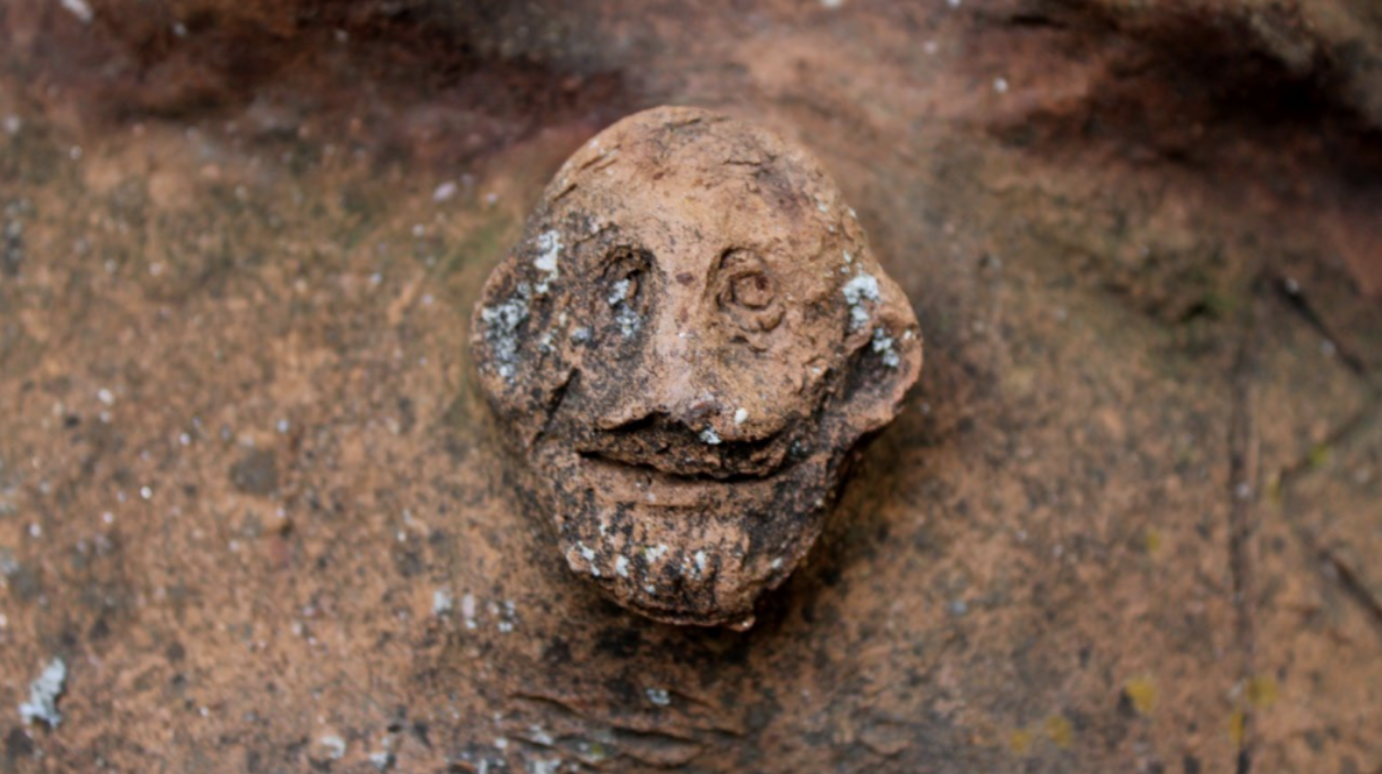
Photo Credit: Bilge Yılmaz Kolancı / Cedrus (2026)
The sarcophagus was manufactured from reddish clay containing mica and limestone particles. Based on the surviving remains, its original diameter is estimated to have been approximately 55–60 centimetres.
Several features, including raised bands and horizontal handles, resemble those found on terracotta sarcophagi from other nearby settlements, such as Laodikeia, Hierapolis and Trapezopolis. These similarities suggest that the vessel was probably produced by a regional workshop rather than transported over a considerable distance.
One of the surviving lid fragments, measuring approximately 33 by 30.5 centimetres, stands out from the rest. It preserves a small sculpted human face whose expressive features differ from the more straightforward decoration typically found on these burial containers.
The face has been identified as Silenus, making the Attouda sarcophagus an unusual example of regional funerary art. In Greek mythology, Silenus was closely associated with Dionysus, the god of wine, fertility and religious ecstasy. Usually portrayed as an older, bearded man, he was known as Dionysus' companion and teacher and frequently appeared in scenes involving drinking, music and celebration.
His appearance on a sarcophagus might initially seem surprising. However, imagery associated with Dionysus and his followers also featured in ancient funerary art, where it could carry meanings beyond the pleasures of earthly life. Dionysian imagery has been connected with ideas of transformation, renewal and the possibility of existence beyond death. Figures associated with the god could therefore have been appropriate additions to monuments commemorating the dead.
Silenus may also have had a more explicitly protective role. Ancient art frequently used exaggerated or unsettling facial features in images intended to ward off harmful influences. The striking appearance of the Attouda relief raises the possibility that it served a similar purpose.
Despite measuring just 4.8 centimetres in height, the sculpted face has several distinctive characteristics. Its bald forehead, prominent rounded eyes, broad nose, deeply carved lips and short beard give it an unusually expressive appearance. These features are consistent with representations of Silenus found in Greek and Roman art.
Kolancı proposes that the image may have functioned as a symbolic guardian for the deceased. Its possible placement above the head of the person buried inside could support this interpretation, although the fragmentary condition of the sarcophagus makes it impossible to establish the original arrangement with certainty. The protective interpretation remains a hypothesis, but it offers one possible explanation for the inclusion of such an unusual figure on a burial container.
The sculpted head is not the only noteworthy feature of the sarcophagus lid. Beside the relief, researchers identified the Greek letter Beta (β), which had been carefully incised into the clay. Measuring approximately seven centimetres in height, the letter may provide a clue to the sarcophagus's production. Kolancı suggests that it could have served as a mark identifying the workshop or craftsperson responsible for making the object, although its precise meaning has not been established.
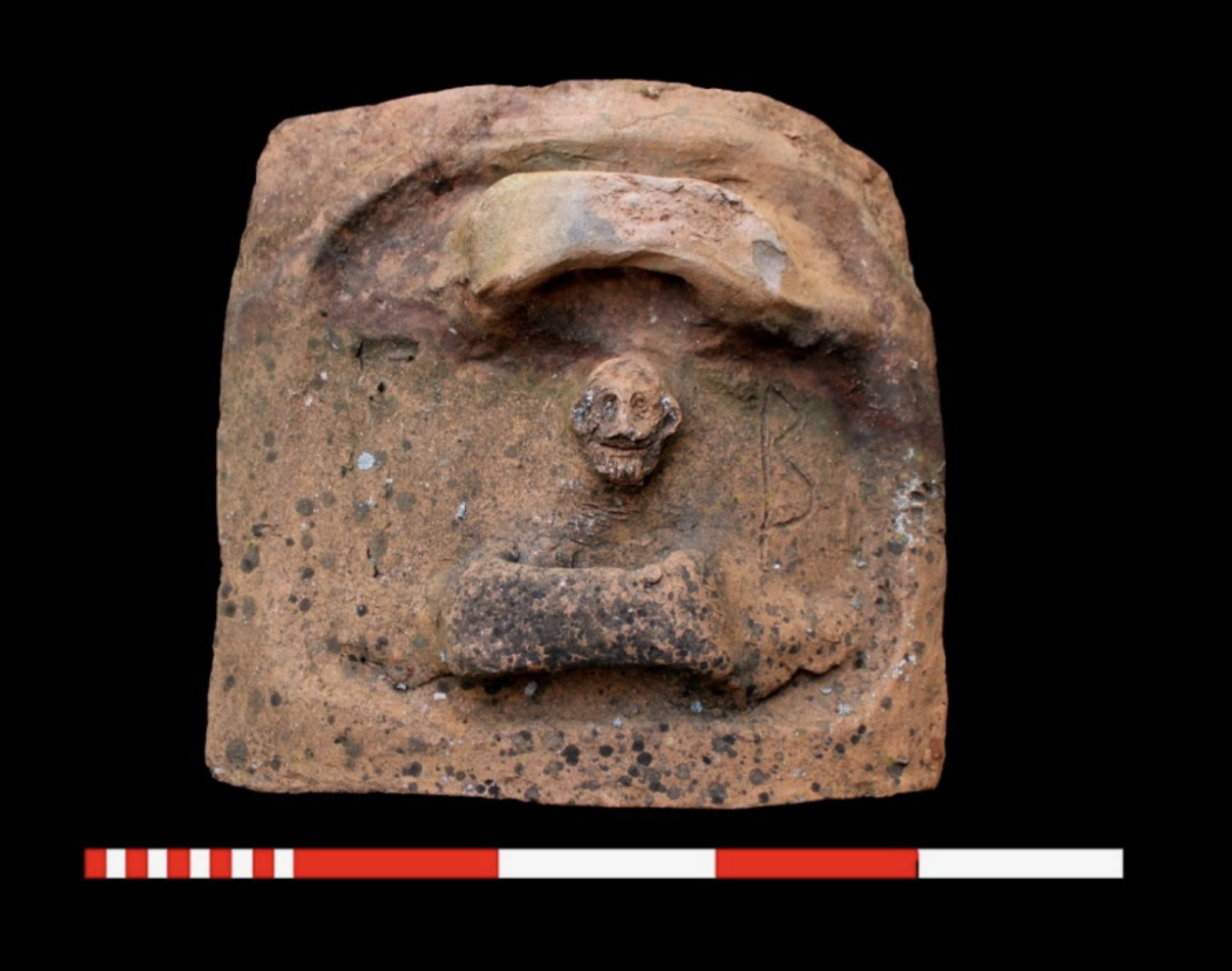
Photo Credit: Bilge Yılmaz Kolancı / Cedrus (2026)
Comparable markings have been recorded on other terracotta burial containers from the region. A cylindrical sarcophagus discovered at Laodikeia, for example, bears several incised letters that have also been interpreted as possible workshop marks.
The combination of the letter and the Silenus relief makes the Attouda example particularly interesting. While other cylindrical terracotta sarcophagi from Anatolia feature raised bands, handles and occasional geometric or symbolic decoration, the study identified no direct parallel for a Silenus-head relief among the known examples. This suggests that the lid represents an unusual artistic choice within an otherwise familiar tradition of regional burial practices.
Although the Silenus relief is unusual, the figure was not entirely unfamiliar in Attouda's archaeological record. A separate terracotta head identified as Silenus had previously been recovered from a tomb in the city's necropolis. The existence of two examples suggests that representations of this mythological figure formed part of the imagery used in at least some local funerary contexts.
Other evidence indicates that Dionysus himself was also recognised within the city's religious and cultural life during the Roman period. Coins produced at Attouda depict the god alongside attributes associated with him, including a staff and drinking vessel. Some representations also feature a panther, another familiar element of Dionysian imagery. Inscriptions provide further evidence of religious associations connected with the god.
Taken together, these discoveries suggest that the Silenus decoration was not necessarily an isolated artistic experiment. Instead, it may have drawn upon mythological imagery that people in Attouda already recognised.
For those familiar with Dionysus and his companions, the figure could have evoked a range of associations, from wine and celebration to renewal and protection. Its inclusion on the sarcophagus may reflect an attempt to connect these beliefs with the treatment of the dead.
The discovery also demonstrates how artistic traditions from the wider Greek and Roman world could be adapted to suit local practices. A relatively ordinary terracotta burial container could be given a distinctive symbolic character through the addition of a familiar mythological figure.
Despite the information the sarcophagus provides, establishing its precise date has proved difficult. Because the burial context had been disturbed, archaeologists recovered no associated grave goods or other material that could independently establish when the object was made. Instead, its proposed date of the first or second century CE is based on comparisons with similar sarcophagi from the surrounding region.
The uncertainty surrounding its date and original context means that some questions remain unanswered, including who was buried inside and what the Silenus image meant to the people who commissioned the container.
Nevertheless, the discovery provides valuable evidence for understanding funerary traditions in Roman-era Anatolia. It demonstrates that locally produced burial objects could incorporate distinctive mythological imagery, potentially reflecting beliefs about death, protection and the afterlife.
For the ancient city of Attouda, the sarcophagus adds to the evidence that Greek mythological traditions continued to feature in religious and funerary life under Roman rule. Its small Silenus relief may be only a fragment of a much larger object, but it offers an intriguing glimpse into how ancient communities used familiar figures from mythology to give meaning to the burial of their dead.