2,000-Year-Old Workshops and Roman Cemetery Unearthed in Egypt!
Archaeologists working in Egypt’s western Nile Delta have uncovered an extensive industrial complex dating back to the Late Period and early Ptolemaic Period, alongside a Roman-era cemetery. These discoveries are shedding new light on the economy, daily life, and burial traditions of the region across centuries.
The excavation was carried out by a joint Egyptian-Italian team from the Supreme Council of Antiquities and the University of Padua at the sites of Kom el-Ahmar and Kom Wasit in Beheira Governorate. The findings highlight the western Delta’s role as a thriving centre of production, trade, and settlement, closely connected to both the Mediterranean and the hinterland of ancient Alexandria.
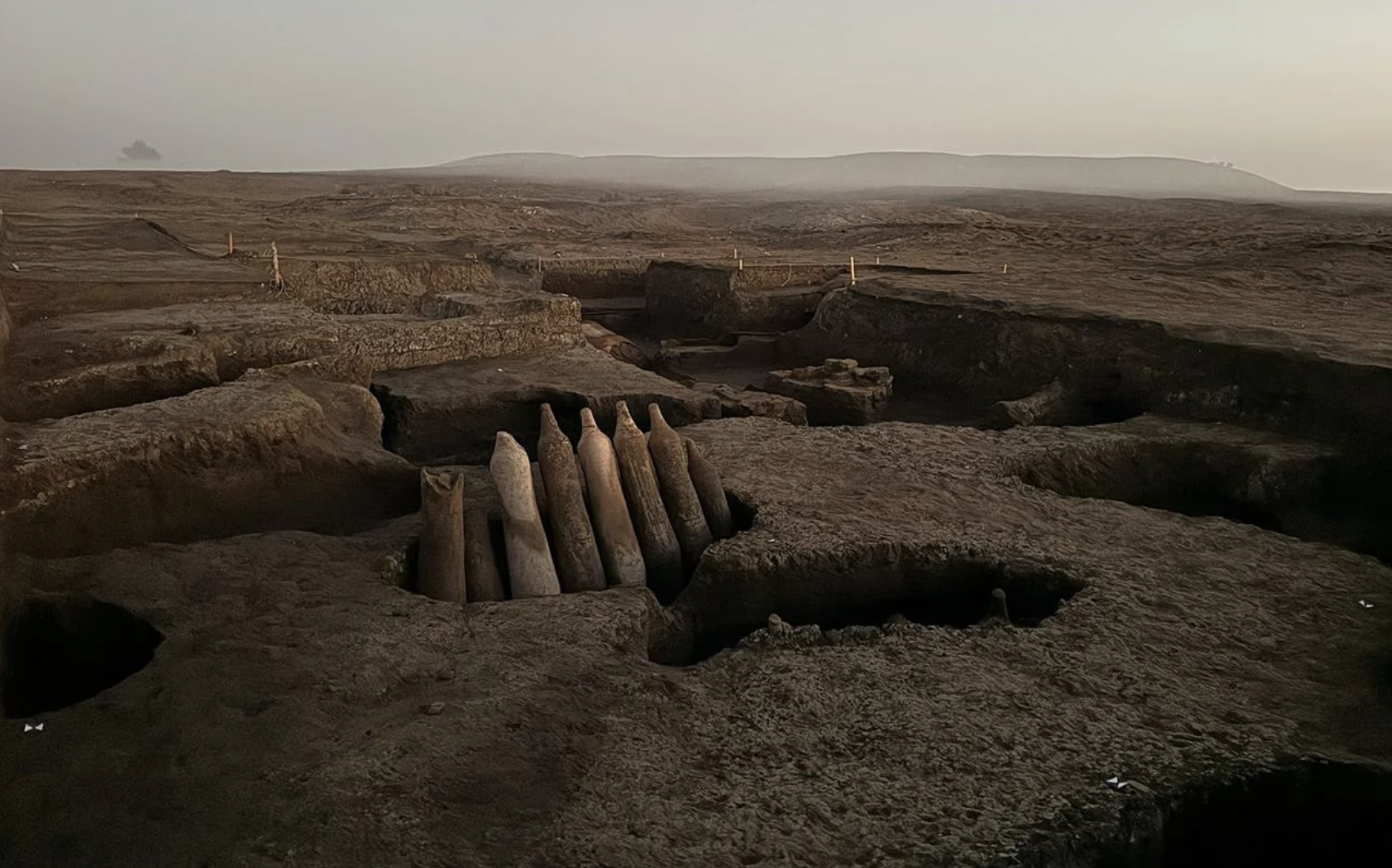
Photo Credit: Egyptian Ministry of Tourism and Antiquities
Archaeologists have uncovered a large industrial building, comprising at least six well-organised rooms. Two of these were used for fish processing, with nearly 9,700 fish bones recovered, indicating the mass production of salted fish, a highly prized commodity in antiquity that played an important role in long-distance trade.
Other rooms were dedicated to producing metal and stone tools, as well as faience amulets, demonstrating that the site supported a diverse local economy rather than a single specialised craft. Unfinished limestone figures and other artefacts in various stages of production suggest the workshops were actively used over time.
The presence of imported amphorae and fragments of Greek pottery points to the complex being in use as early as the fifth century BCE, underscoring strong cultural and commercial ties between Egypt and the Greek world.
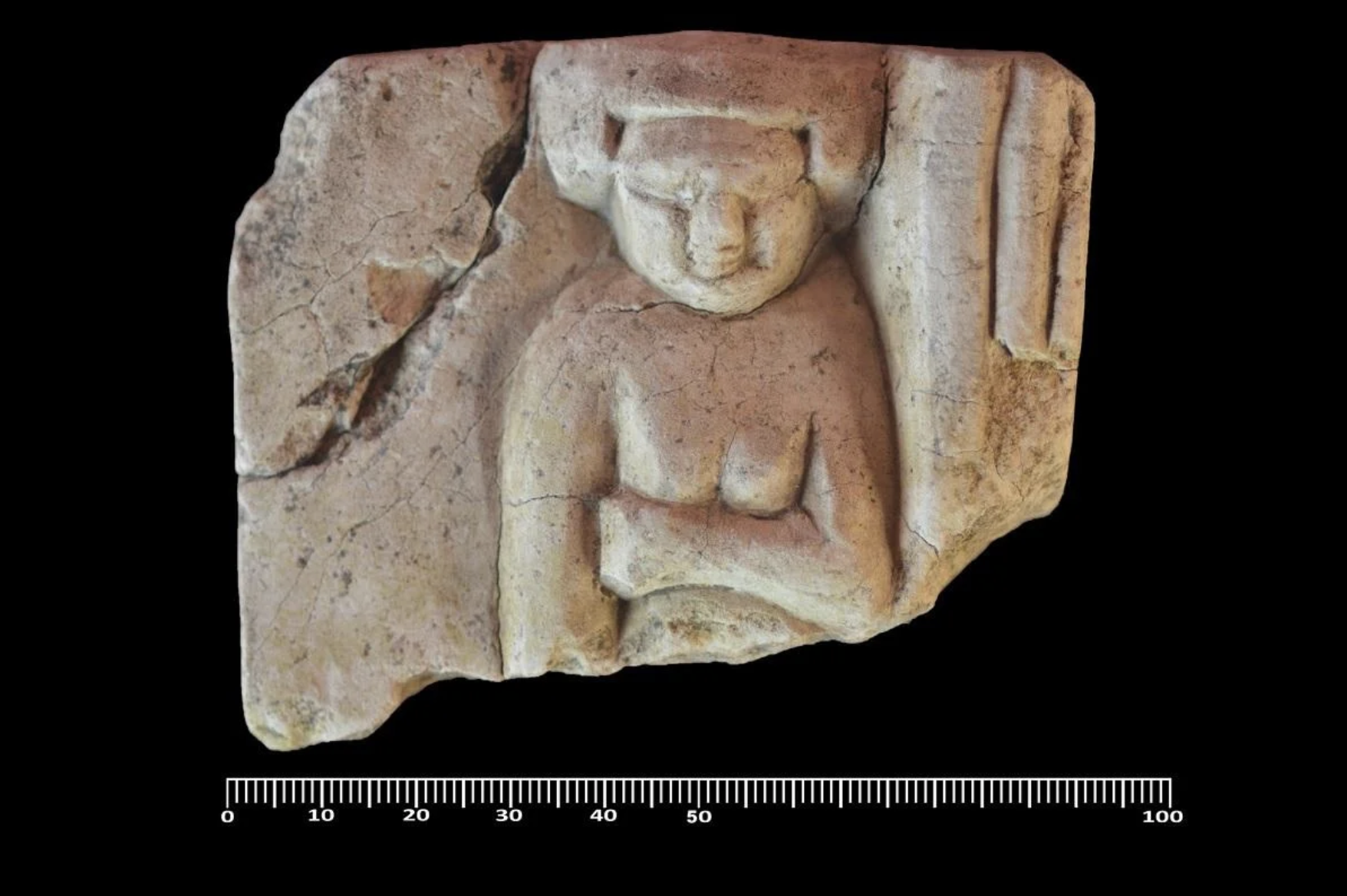
Photo Credit: Egyptian Ministry of Tourism and Antiquities
In addition to the workshops, the team excavated a nearby Roman cemetery. The necropolis contained a variety of burial types, including simple in-ground graves, burials in ceramic coffins, and even children interred in large amphorae. These varied practices provide a fascinating glimpse into the funerary traditions of the western Delta during the Roman Period, reflecting social structures and cultural influences.
Bioarchaeologists are studying the remains of 23 individuals, including men, women, children, and adolescents. So far, analyses indicate that the people buried here lived under relatively good conditions, with no evidence of major disease or violence. Ongoing research will reveal more about diet, health, age, and sex, helping to reconstruct daily life in the region.
Among the most remarkable finds are dozens of fully preserved amphorae and a pair of golden earrings, believed to have belonged to a young woman. These artefacts have been transferred to the Egyptian Museum in Cairo for preservation and study.
Taken together, these discoveries provide a rare and valuable window into industrial activity, economic life, and burial customs in Egypt’s western Nile Delta across multiple historical periods. They reaffirm the area’s significance as a hub of human activity and cultural exchange.