934 Roman Silver Coins Found in Germany Form Largest Hadrianic Hoard!
Archaeologists have uncovered an exceptional collection of 934 Roman silver denarii near Wesseling in western Germany, making it the largest known coin hoard from the reign of Emperor Hadrian ever discovered in the country.
The discovery was made during an authorised metal-detecting survey, after detectorist Oliver Riedl initially located a small number of silver coins in a field. What began with 15 finds soon developed into a much more significant archaeological investigation when his metal detector continued to register signals.
Riedl contacted the LVR Office for the Preservation of Archaeological Monuments in the Rhineland, allowing specialists to carry out a controlled excavation of the area. Their work revealed a substantial hoard weighing approximately 3.1 kilograms of silver.
The coins provide evidence of the long-term circulation of Roman currency. Although the most recent denarius was minted in CE 124 or 125, during the reign of Hadrian (CE 117–138), the majority of the collection dates to the rule of the Flavian emperors between CE 69 and 96.
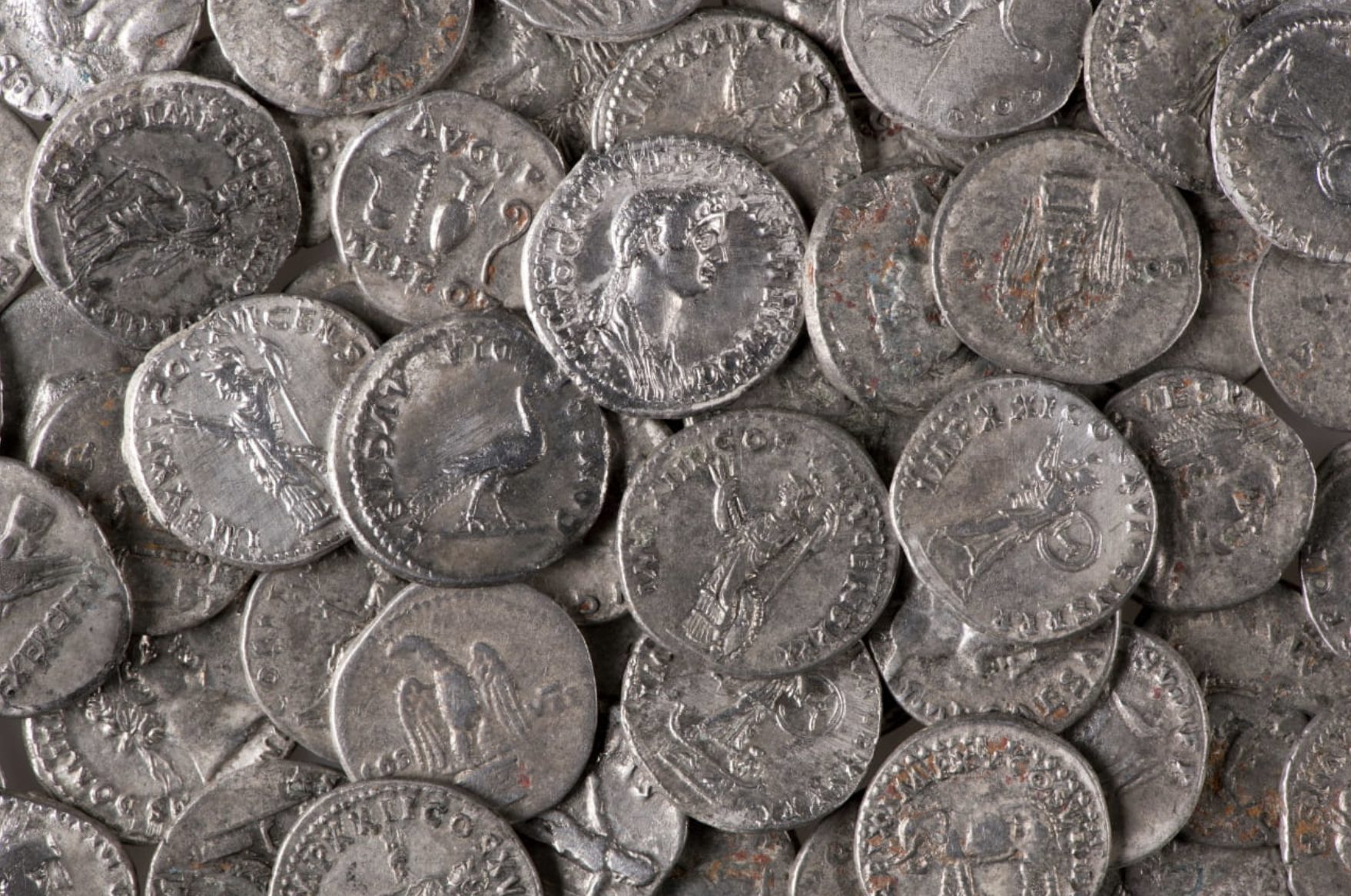
Photo Credit: Marcel Zanjani/LVR Office for the Preservation of Archaeological Monuments in the Rhineland
The oldest coin is considerably earlier. Struck in 148 BCE, during the Roman Republic, it was already more than 270 years old when the hoard was buried. Its inclusion demonstrates that older currency could remain in circulation for generations rather than being immediately removed from use.
Based on the composition of the collection, archaeologists believe that much of the money may have been accumulated around CE 100, before its eventual burial during Hadrian’s reign. The combination of coins from different periods suggests that the wealth was gathered over an extended period rather than assembled all at once.
According to the LVR, the discovery is the largest known Hadrianic hoard in Germany and ranks fifth worldwide among hoards associated with the emperor’s reign.
The quantity of silver offers an indication of the considerable wealth involved. Archaeologist Rahel Otte of the LVR examined the coins and compared their value with the earnings of Roman soldiers.
A Roman legionary received approximately 300 denarii annually, although a substantial proportion of this pay was used to cover food and equipment. Based on these figures, a soldier would have needed to save the equivalent of their remaining income for around six years to accumulate a sum comparable to the hoard.
The individual who owned the money has not been identified. Archaeologists have suggested that they may have lived on one of the Roman estates in the surrounding region, although the circumstances of the hoard’s burial remain uncertain.
The reason the coins were hidden is also unknown. Erich Claßen, an archaeologist involved in the investigation, explained that the owner may have concealed the money to protect their savings. Without modern banking institutions, burying valuables could have been one way of safeguarding personal wealth.
It is possible that the owner died before retrieving the coins or sharing the location with someone else, but this remains only one potential explanation.
The excavation provided information about the original storage method as well as the coins themselves.
Archaeologists discovered a dense concentration of denarii and removed the find as a single block of soil. This was transported to the restoration workshop at the LVR-Landesmuseum Bonn, where specialists could examine the contents in controlled conditions.
X-ray imaging revealed fragments of a ceramic vessel alongside traces of straw. These details suggest that the coins had originally been placed inside a pot lined with straw.
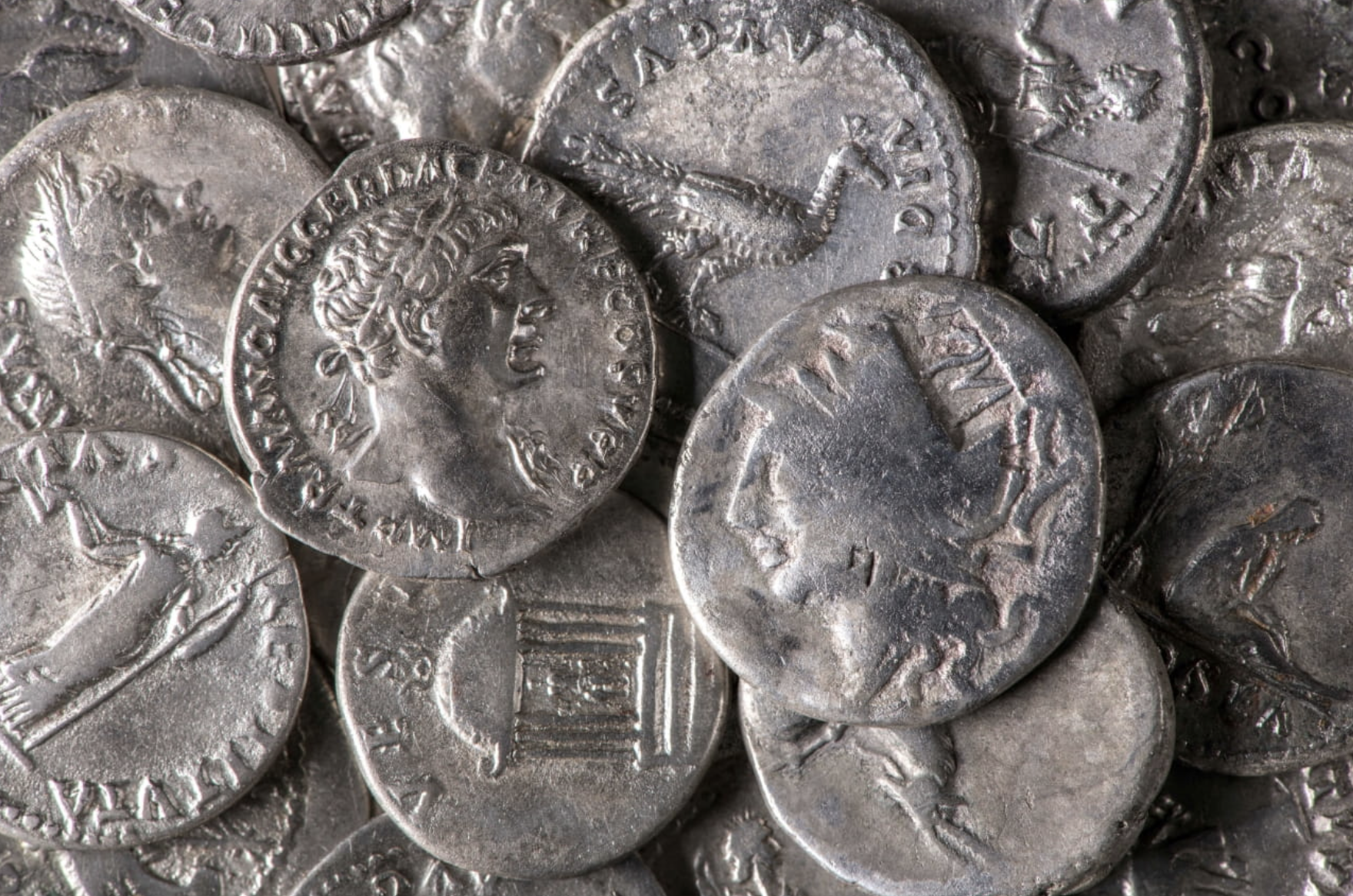
Photo Credit: Marcel Zanjani/LVR Office for the Preservation of Archaeological Monuments in the Rhineland
Over time, agricultural activity damaged the container and dispersed the coins through the surrounding soil. Despite the disturbance, archaeologists report that they successfully recovered all 934 denarii.
The decision to remove the concentration as a single block allowed specialists to investigate the arrangement and associated materials more carefully than would have been possible through the independent recovery of each coin.
The Wesseling hoard also demonstrates the importance of cooperation between metal detectorists and archaeological authorities. Riedl reported his discovery promptly after finding the initial coins, enabling professionals to investigate the location and document the archaeological context. Rather than removing the remaining objects independently, he allowed the LVR to organise a controlled excavation.
Metal detecting for archaeological objects in North Rhine-Westphalia is subject to heritage regulations. Individuals require approval from the relevant heritage authorities and permission from the landowner, while specialist training is also required through heritage offices such as the LVR.
The recovery of the hoard illustrates why reporting discoveries and preserving their archaeological context can be crucial. Information about the location, distribution and associated materials can help researchers understand how an object was used, stored and eventually deposited.
The discovery is being presented to specialists at the annual meeting of the West and South German Association for Archaeology in Bonn, which brings together approximately 300 archaeologists from across Germany.
The collection will subsequently go on public display for the first time at the LVR-Landesmuseum Bonn, giving visitors the opportunity to see the remarkable group of Roman silver coins.
Under North Rhine-Westphalia’s heritage legislation, the hoard now belongs to the state. Since Riedl followed the required procedures and reported his discovery, he will also receive a finder’s reward from the state.
The 934 denarii offer a valuable insight into the circulation of Roman money, the accumulation of personal wealth and the ways in which people safeguarded their possessions more than 1,800 years ago. Just as importantly, the discovery highlights how responsible metal detecting, followed by archaeological investigation, can bring significant historical evidence to light.