2,000-Year-Old Roman Kitchen Discovered in Northern Spain!
Archaeologists excavating the ancient Roman city of Segisamo in northern Spain have uncovered the remains of a kitchen dating to the reigns of Augustus and Tiberius. Among the discoveries are cooking pots, storage vessels, frying pans and fragments of a portable bread oven, offering an insight into how people prepared and stored food nearly 2,000 years ago.
The kitchen was found at La Era in Sasamón, in Burgos province, where researchers are investigating the development of the Roman settlement and its relationship with the communities that lived in the region before Roman rule. Although much of the original room has been lost, the objects recovered from the site provide evidence of the practical activities that once took place inside it.
The discoveries also highlight how Roman culinary practices existed alongside local traditions, revealing the cultural changes taking place as the area became incorporated into the Roman world.
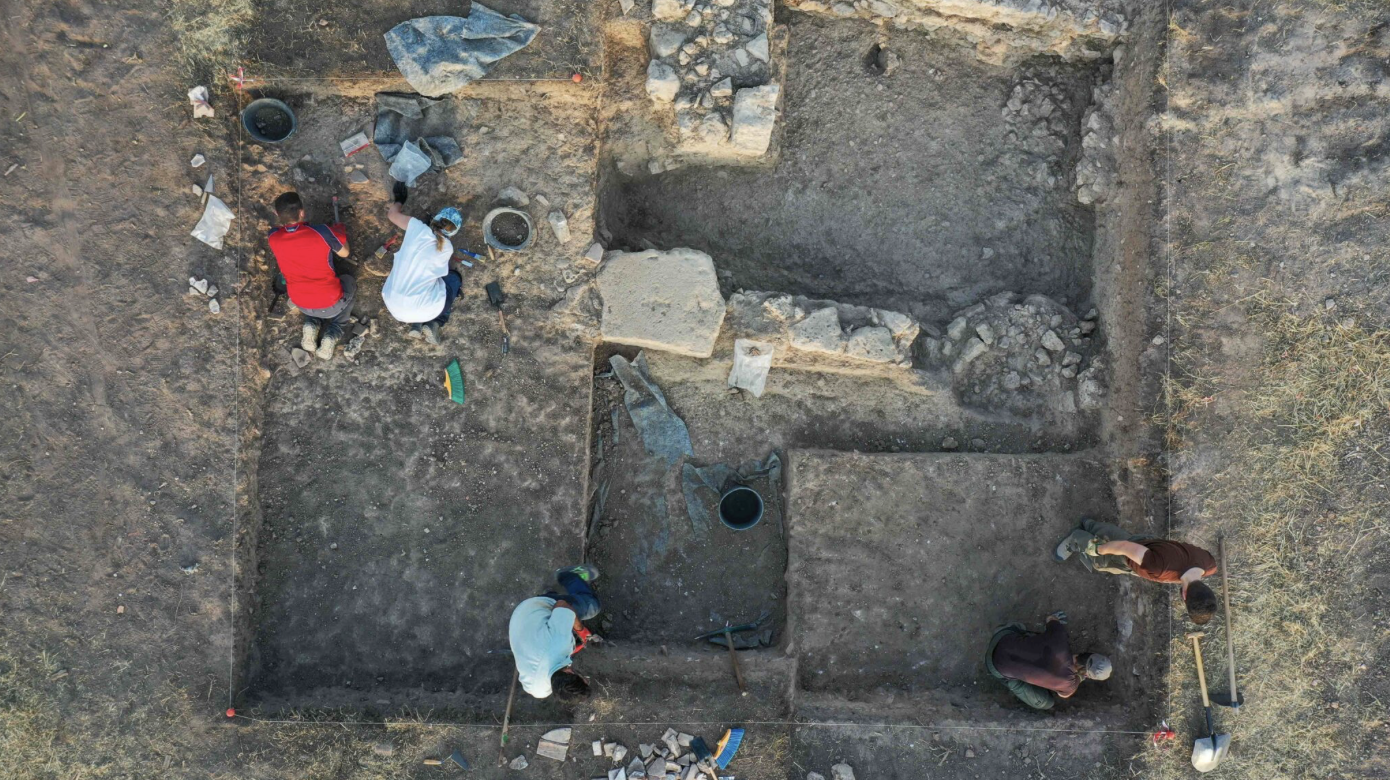
Photo Credit: José Manuel Costa García (USAL) - Universidad de Salamanca
The excavation is being conducted near the Church of Santa María la Real by researchers from the University of Salamanca and Spain's National Research Council (CSIC). Their work forms part of a long-term project examining the transformation of the region during the transition from indigenous communities to Roman-controlled settlements.
The research team had previously investigated Cerro Castarreño, an important Iron Age settlement associated with the Turmogi people. They also studied a Roman military enclosure believed to be connected with the final phase of occupation at the site.
At La Era, archaeologists are now exploring the Roman city that developed in the area. However, evidence from beneath the Roman structures suggests that the history of the location may extend further back.
Buildings discovered in another excavation trench share similarities with Iron Age architecture, raising the possibility that Segisamo developed in a landscape already occupied or used by local communities before the Roman settlement was established.
This evidence provides an opportunity to investigate not only the Roman city itself, but also the earlier history of the people and places on which it was built.
The kitchen appears to have been a functional room rather than an elaborate domestic space. Its walls were constructed from adobe on stone foundations and may originally have been covered with plaster. The floor consisted of compacted clay laid over a layer of small stones.
These materials reflect the practical requirements of a working kitchen, where durability and ease of maintenance would have been important. A raised section, reached by a small step, may have supported an oven, while a substantial deposit of ash and charcoal suggests that a fire had been burning in the area.
Much of the room's original structure was subsequently damaged, leaving archaeologists with an incomplete picture of its layout. Nevertheless, the surviving floor, traces of burning and associated objects help reconstruct the activities that took place within the space.
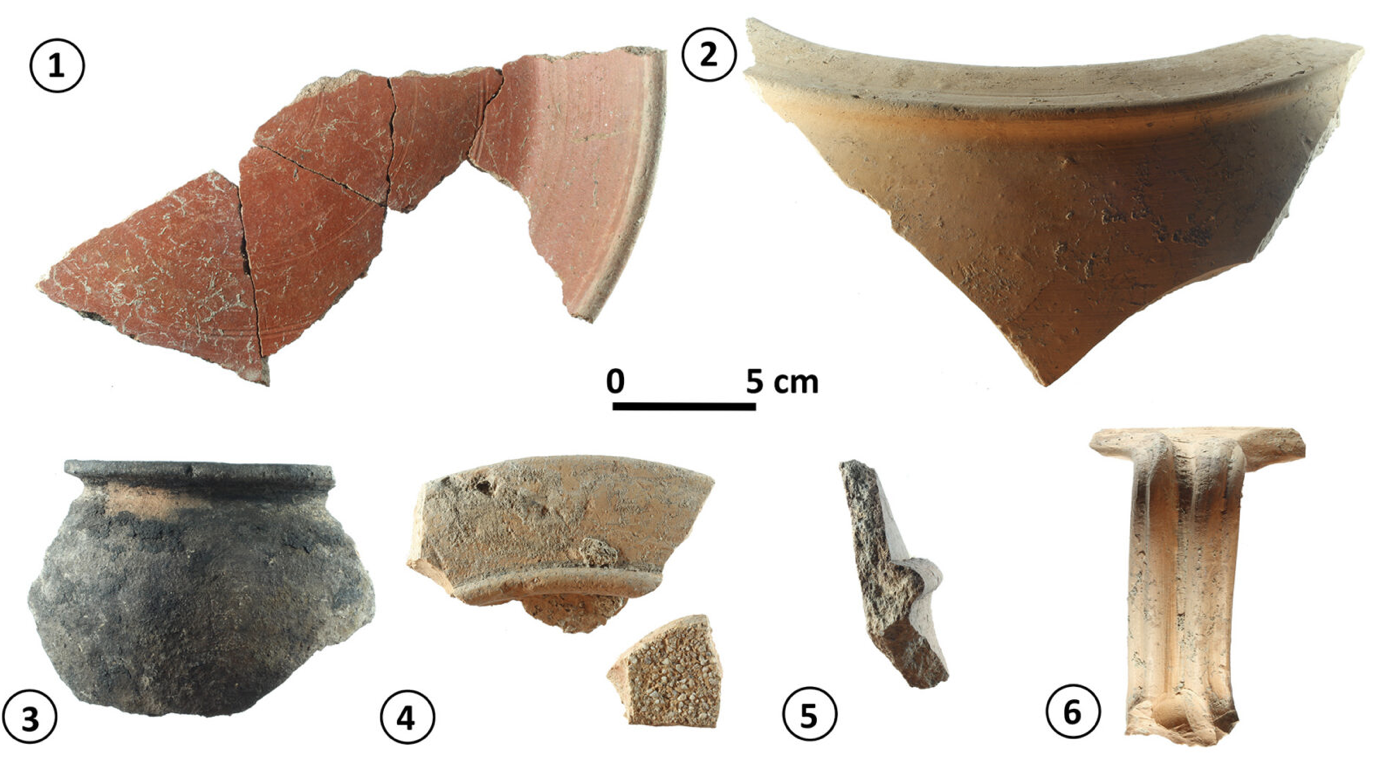
Photo Credit: José Manuel Costa García (USAL) - Universidad de Salamanca
Rather than revealing the luxurious side of Roman life, the kitchen offers evidence of the everyday work involved in preparing food, managing ingredients and maintaining a household.
The objects recovered from the kitchen provide some of the clearest evidence of its purpose. Archaeologists identified large storage vessels known as dolia, along with jugs, bowls and mortars used for handling and preparing food.
Cooking pots and frying pans were also found, including examples of Pompeian red-slip pottery. This distinctive ceramic tradition is associated with Roman cookware and demonstrates connections between the equipment used at Segisamo and culinary practices found elsewhere in the Roman world.
One particularly notable discovery is the collection of fragments belonging to a clibanus, a portable oven used for baking bread. Unlike a permanent oven incorporated into a building, this type of vessel could be used on a suitable heat-resistant surface, providing a different method of cooking.
The combination of storage jars, preparation vessels, cooking pots and a portable oven suggests that the room supported a range of food-related activities. Ingredients could be stored, processed and cooked using different types of equipment.
However, the discoveries do not establish precisely which dishes were prepared in the kitchen. Further analysis will be needed to determine more about the foods consumed by the people who used it.
The pottery assemblage reveals that the kitchen was not supplied exclusively with objects from a single cultural tradition. Some of the vessels appear to have been imported from the Italian Peninsula, while others were produced locally and retain characteristics associated with earlier Turmogi pottery.
This combination is significant because it demonstrates that Roman influence did not necessarily replace existing customs. Instead, new cooking equipment and practices could be adopted alongside traditions that had already developed within the region.
The presence of imported Roman-style cookware therefore does not mean that the people who used the kitchen had come from Italy. Local inhabitants could have incorporated new objects into their existing routines, adapting their cooking practices while continuing to use locally produced vessels.
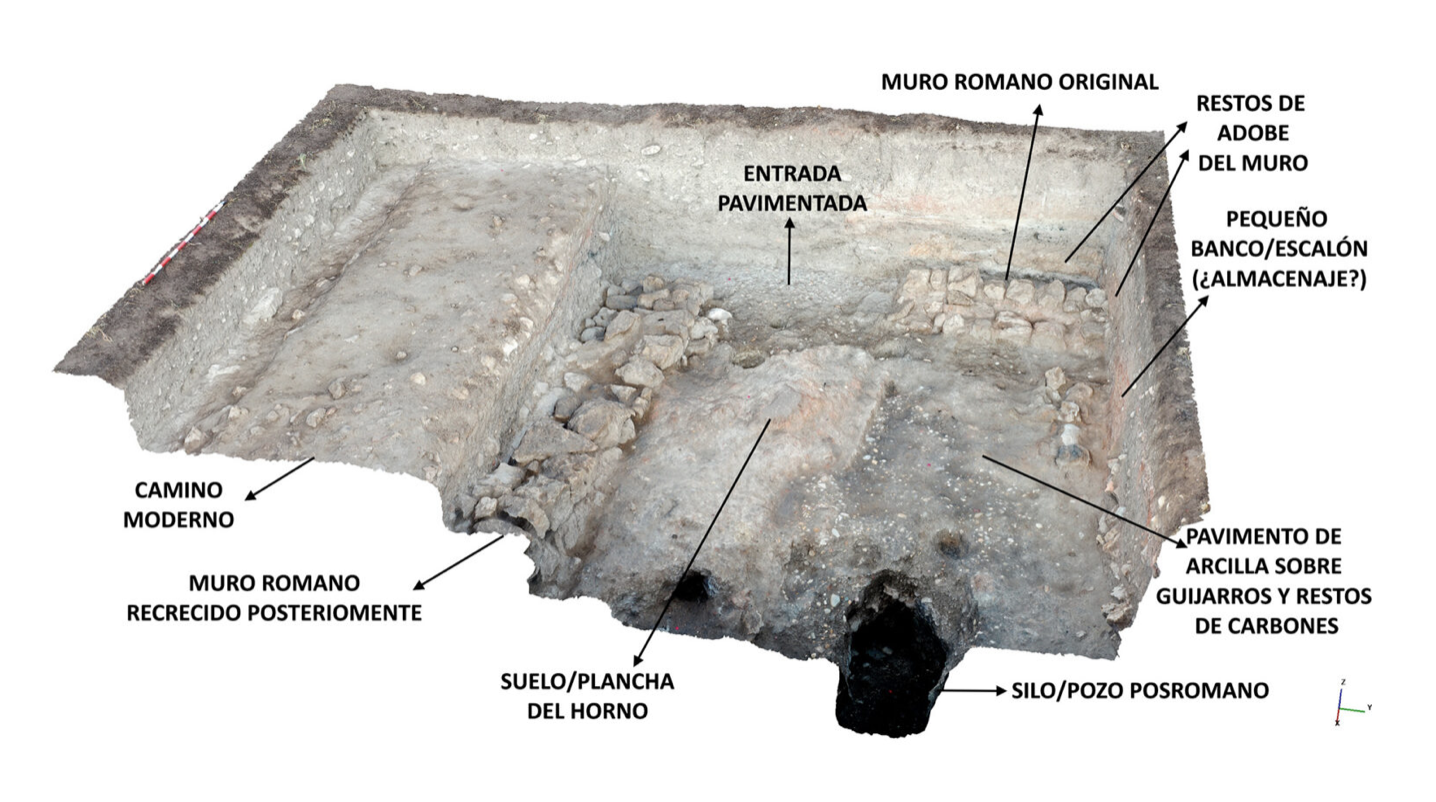
Photo Credit: José Manuel Costa García (USAL) - Universidad de Salamanca
The research team has drawn a comparison with a Turmogi grandmother's kitchen, where older and newer traditions might exist side by side. Although the identity of the kitchen's occupants remains unknown, the comparison illustrates the broader cultural interactions taking place during the Roman period.
The evidence is a reminder that cultural change can be observed not only through monumental buildings and political developments, but also through the ordinary objects people used to prepare their food.
The Roman kitchen represents only one phase in the long history of La Era. Excavations have revealed evidence of occupation and activity from several later periods, demonstrating how the area continued to be used after the Roman settlement declined.
Medieval remains have been found beneath later structures, while other discoveries date from between the sixteenth and eighteenth centuries. Archaeologists have also identified approximately ten nineteenth-century graves, apparently separate from the main burial area associated with the church.
A military uniform button dating to the reign of Isabella II, who ruled between 1833 and 1868, has helped researchers establish a date for the burials. Their arrangement may suggest that the individuals were buried in unusual circumstances, potentially in connection with an epidemic, although this interpretation has not been confirmed.
Other finds from the excavation include jewellery, oil lamps, iron knives and pottery decorated with ancient graffiti. Some bricks preserve impressions left by footwear in wet clay, providing small but tangible traces of the people involved in the construction process.
Together, these discoveries show that the site contains evidence of activity spanning many centuries, from the Roman period through to more recent history.
The research into the Roman kitchen is not yet complete. Archaeologists are continuing to examine a substantial collection of animal bones and other discarded materials recovered during the excavation.
These remains could provide information about the animals consumed by the inhabitants and potentially help researchers understand aspects of food preparation and diet at Segisamo.
The cooking equipment has already revealed how food might have been stored, prepared and cooked. Analysis of the discarded remains could now help establish what actually ended up on the inhabitants' tables.
The kitchen may be a relatively modest discovery compared with the monumental remains of the Roman world, but its contents offer an important perspective on daily life. Through its cooking pots, storage vessels and portable oven, the excavation provides evidence of the practical routines that connected Roman culinary practices with local traditions in northern Spain.