Tiny Leather Mouse Reveals Everyday Life at Roman Vindolanda!
A tiny piece of leather discovered at the Roman fort of Vindolanda has revealed an unexpectedly personal side of life on Rome’s northern frontier.
Shaped like a mouse, the unusual object measures just 12.2 centimetres long and 2.6 centimetres across. It dates to around AD 105–130, a period when Roman soldiers, officials and their families were living at Vindolanda, south of the later line of Hadrian’s Wall.
Although it is small and seemingly simple, the object provides a fascinating reminder that life at the fort was not solely about military activity.
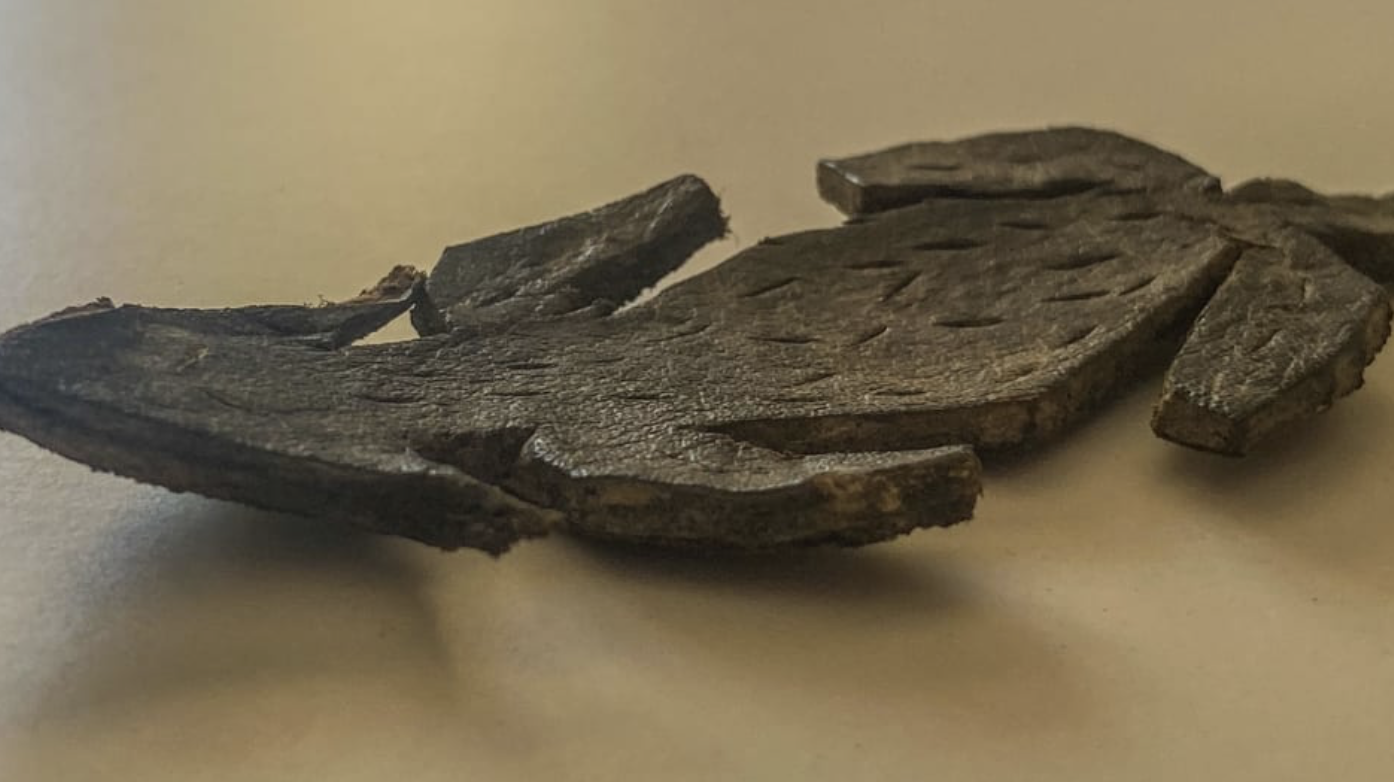
Photo Credit: Vindolanda Charitable Trust
The leather mouse was originally excavated in 1993 from a room within the commanding officer’s residence. However, its significance was not recognised at the time. Instead, it was placed alongside hundreds of other pieces of discarded leather and remained there for decades. It was only during a review of the collections in 2020 that researchers noticed the distinctive shape and realised that this particular fragment had been intentionally crafted.
Closer examination showed that the leather had been cut into the recognisable form of a mouse. Details were also added to suggest features such as its eyes and fur, demonstrating that it was more than simply an oddly shaped scrap.
Its original purpose remains a mystery. One possibility put forward by researchers at the Vindolanda Trust is that it was made as a toy for a child. Children are known to have lived at Vindolanda, although objects that can be confidently identified as toys are relatively uncommon within the archaeological record.
There is also another, rather more mischievous explanation. The little mouse could have been created as a practical joke, perhaps intended to surprise or frighten someone.
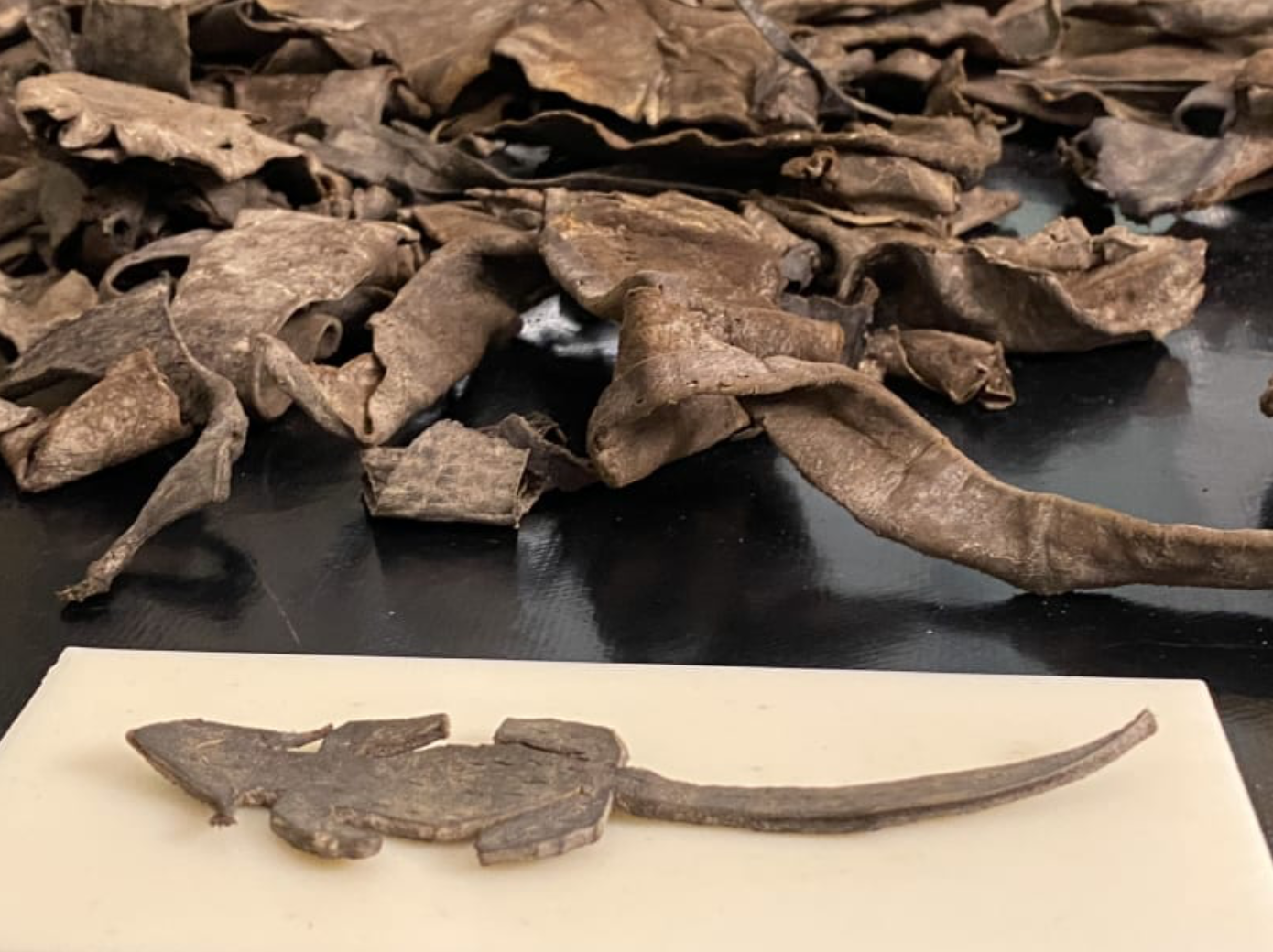
Photo Credit: Vindolanda Charitable Trust
Without further evidence, it is impossible to know which interpretation is correct. Its deliberately detailed appearance, however, suggests that whoever made it wanted the animal to be recognisable.
There would have been no shortage of real mice around the fort. Excavations of Vindolanda's granaries in 2008 uncovered the remains of thousands of mice beneath the floors. The rodents appear to have lived underneath the buildings, where they could access grain that had fallen through gaps between the stone paving.
For the people living at Vindolanda, encountering mice would therefore have been an ordinary part of daily life. That makes the decision to reproduce one in leather particularly amusing, whether the object was intended as a child's toy or as a joke.
Vindolanda is particularly valuable to archaeologists because its waterlogged, oxygen-poor deposits have preserved organic materials that would usually decay. Wooden writing tablets, footwear and numerous leather objects have survived in remarkable condition, providing unusually detailed evidence for everyday life at the fort. The leather mouse adds another small piece to that picture.
We may never discover who made it or exactly what they intended it to do. But after spending decades hidden among unremarkable leather scraps, the tiny object now offers an intriguing glimpse of the people behind the Roman frontier, and perhaps a little evidence that they enjoyed a joke or two as well.