Ancient Ship Graffiti at Kition Reveal Bronze Age Maritime Links!
For more than 3,000 years, images of ships have remained carved into the stonework of an ancient building at Kition, on the island of Cyprus. Now, modern scanning technology has revealed that these weathered engravings contain far more information than archaeologists previously recognised.
A new study has identified previously overlooked ship graffiti and uncovered evidence of different maritime traditions converging at Kition during the transition from the Late Bronze Age to the Early Iron Age. The vessels display similarities to ship designs from Cyprus, the Levant and the Aegean, providing a rare glimpse into the region's seafaring connections.
Published in the International Journal of Nautical Archaeology in August 2026, the research by Graham C. Braun, Caroline Barnes and Tzveta V. Manolova reassesses both the number of ships carved into the monument and the period over which the engravings were created.
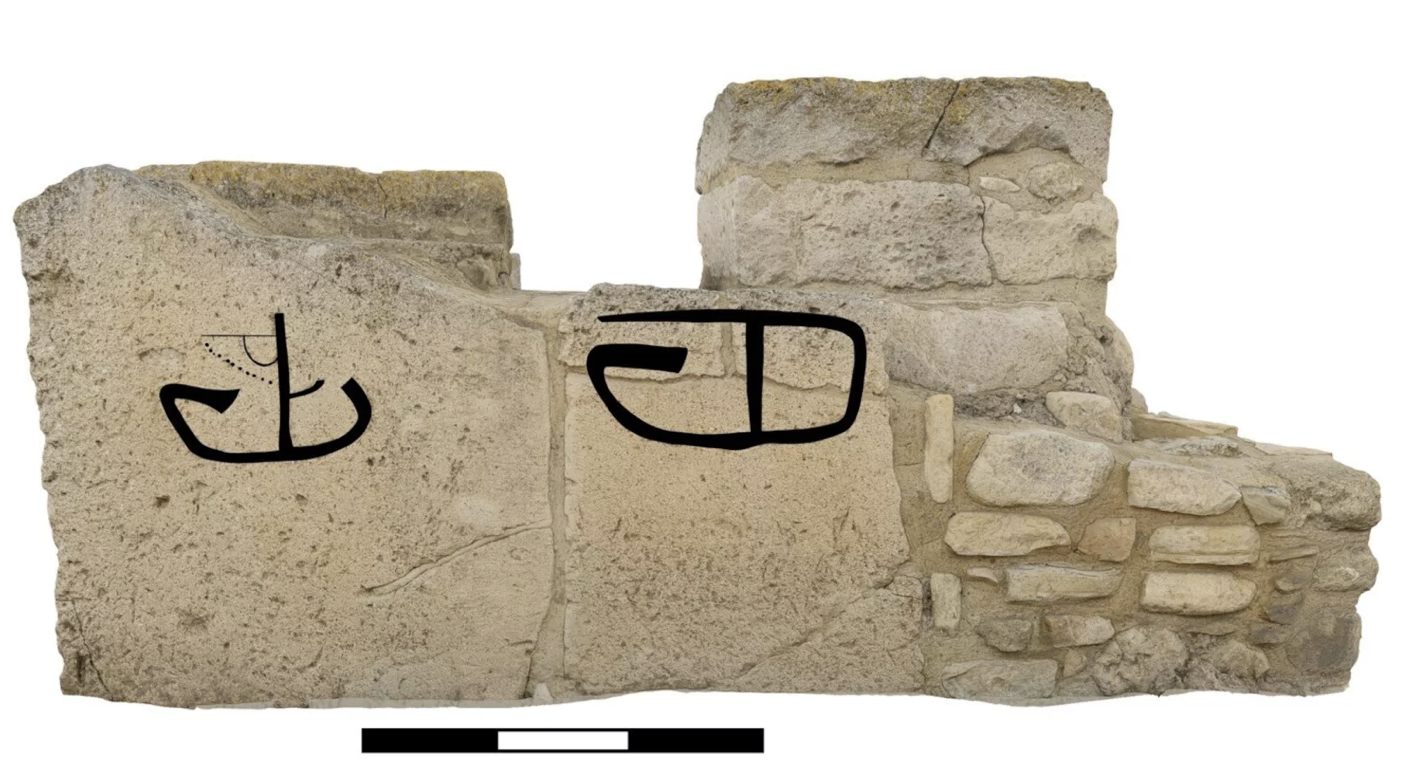
Photo Credit: Drawing by T. V. Manolova in Braun et al. (2026).
Rather than representing a single collection of drawings made at one particular moment, the graffiti may document generations of people engaging with maritime imagery and the changing shipbuilding traditions of the eastern Mediterranean.
The ship engravings were first published in 1985, when researchers recorded 19 vessels on the southern façade of Kition's Temple 1, as well as two further examples from Temple 4. These images subsequently became important evidence for the study of ancient ship iconography, but a detailed digital reassessment had not previously been carried out.
To investigate the carvings in greater detail, the research team used terrestrial laser scanning and photogrammetry. These techniques enabled them to examine subtle marks on the stone surfaces, distinguishing possible human-made engravings from natural cracks, erosion and other forms of damage.
Their analysis identified 23 additional potential ship graffiti on the blocks of Temple 1. Of these, nine were considered highly reliable identifications, six were assigned an intermediate level of confidence, and eight remained uncertain.
Digital examination also helped researchers revise some of the details recorded in the original publication, offering a more accurate understanding of several of the vessels.
The significance of the research, however, extends beyond discovering additional carvings. The technology also helped reveal how the graffiti may have accumulated over an extended period.
For many years, the ship graffiti at Kition were generally associated with the Late Bronze Age. However, the study draws attention to a particular stone, designated T1.8, which complicates this interpretation.
Unlike the original limestone blocks used in the construction of Temple 1, T1.8 formed part of a later repair to the building's façade. The stone nevertheless contains ship engravings, indicating that at least some of the images were created after the original construction phase.
According to the researchers, the block was installed approximately 150 years after the original orthostats. This suggests that the practice of carving ships onto the monument continued beyond its initial construction, with later individuals adding new images to an already decorated surface.
The evidence therefore points towards repeated episodes of carving spanning the Late Bronze Age and Early Iron Age. Rather than a single fleet depicted in one coordinated composition, the façade may represent an evolving collection of maritime imagery that developed over several generations.
The authors consider continuous carving across this period the most plausible explanation for the evidence currently available.
The different dates and phases of carving are particularly significant because the vessels themselves do not all share the same characteristics. Researchers grouped most of the ship graffiti into six morphological categories, including merchant vessels, galleys and hybrid forms.
Together, these groups provide evidence for the variety of shipbuilding traditions circulating across the eastern Mediterranean during a period of considerable change.
Some of the engraved vessels display similarities to ships represented in the Aegean, including imagery associated with Helladic and Minoan traditions. Other examples share features with vessels from the Levantine coast, an area closely connected to Cyprus through maritime trade and cultural exchange.
The graffiti also contains features that may reflect developments within Cyprus itself. Among the details highlighted by the researchers are triangular arrangements linked to mast support, as well as a distinctive stern feature resembling an inward-facing duck's head.
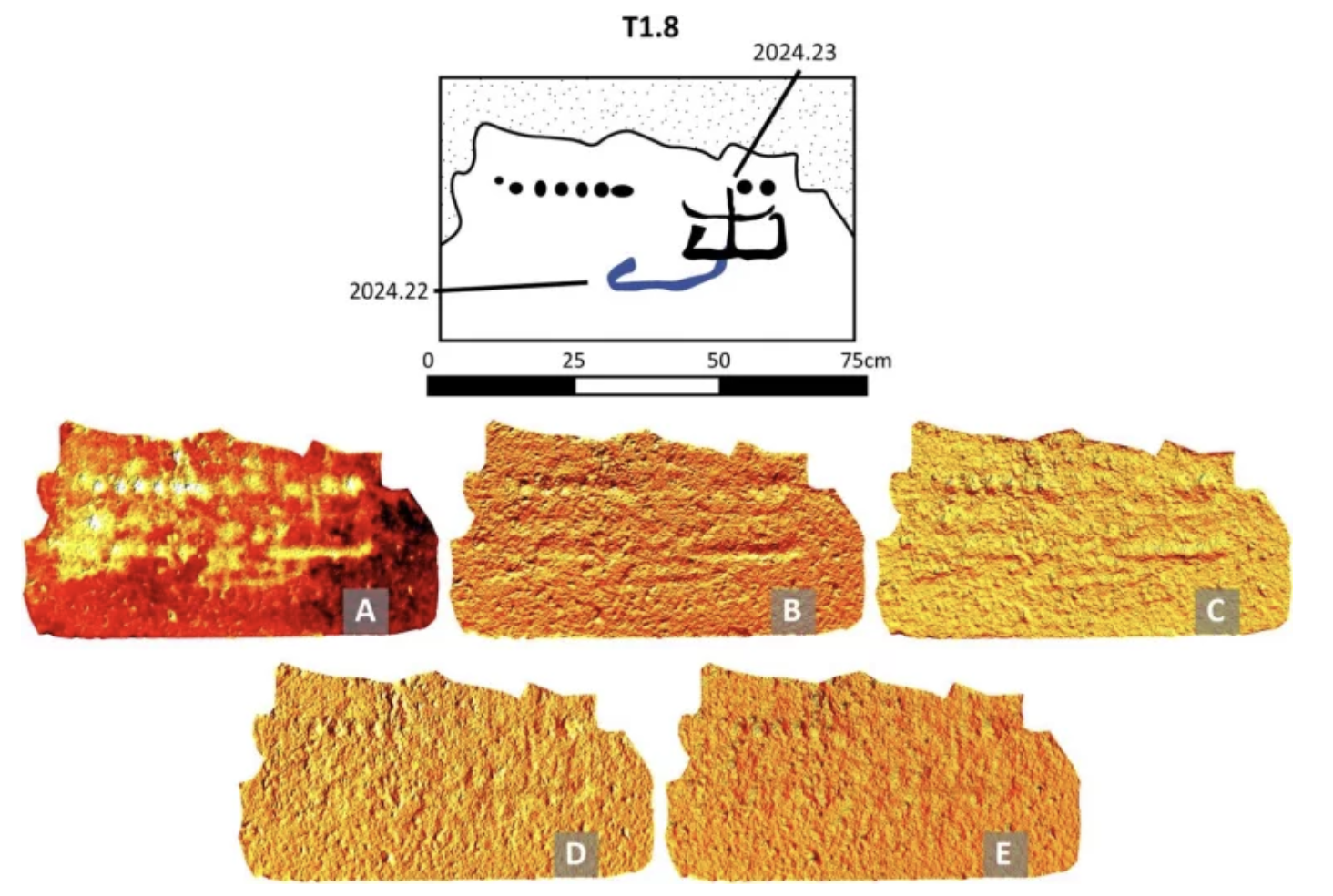
Photo Credit: G. C. Braun in Braun et al. (2026).
The latter is associated particularly with Cypriot vessels of the Early Iron Age and may help identify a hybrid ship design as a development with local origins.
These similarities do not necessarily indicate that a single shipbuilding tradition replaced another. Instead, the evidence suggests that Kition was a setting where different nautical influences came into contact, while local shipbuilding practices continued to develop.
Located on Cyprus, Kition occupied an important position within the maritime networks connecting the Aegean, the Levant and the wider eastern Mediterranean.
The ship graffiti reflect this geographical setting, but the researchers caution against interpreting the collection as evidence of overwhelming Aegean influence. Although some vessels have Aegean parallels, Cypriot and Levantine characteristics appear to form the more substantial element of the assemblage.
This distinction is important for understanding the cultural and maritime changes taking place around the end of the Bronze Age. The evidence does not support a straightforward interpretation in which developments at Kition can be explained solely through the arrival of Aegean populations.
Instead, the carvings suggest a more interconnected process, in which maritime technologies and visual traditions travelled between communities, while local practices remained significant.
The graffiti offer an opportunity to examine these connections through the shapes and details of the vessels themselves, rather than relying exclusively on written records or archaeological remains of actual ships.
Despite the new findings, the purpose of the engravings remains uncertain. Researchers cannot yet establish who created the images or precisely why they were added to the temple's stonework. Because the carvings appear on a monumental building, their presence may have carried greater significance than ordinary, informal scratching. Nevertheless, the term graffiti is retained to describe the engravings.
One interpretation is that sailors themselves created the images. Earlier suggestions have included the possibility that the ships were votive offerings, perhaps connected to requests for protection before a voyage or expressions of gratitude following a safe return.
Another explanation is that people near the harbour carved representations of ships they observed at sea. In this scenario, the graffiti could have been inspired by the vessels moving through Kition's maritime environment.
At present, there is insufficient evidence to determine which interpretation, if either, is correct. The engravings could have served different purposes at different points in the monument's history.
What the research demonstrates more clearly is the longevity of the practice. Ship imagery continued to appear on the building over generations, suggesting that vessels and seafaring remained meaningful subjects within the community.
The newly reassessed graffiti at Kition provide a valuable source of evidence for understanding shipbuilding, maritime connections and cultural exchange during the transition between the Bronze Age and Iron Age.
Their importance lies not only in the number of vessels recorded, but also in the variety of features they preserve. Cypriot, Levantine and Aegean parallels demonstrate the movement of maritime ideas across the eastern Mediterranean, while locally distinctive elements point towards developments within Cyprus itself.
As modern scanning techniques reveal details hidden by centuries of weathering, the walls of Kition are offering researchers a more complex picture of ancient seafaring. The engravings may have been created by different people at different times, but together they preserve a record of communities whose lives were closely connected to the sea.
Rather than depicting one moment in maritime history, the monument appears to document a much longer relationship between Kition and the ships, technologies and traditions that moved through the eastern Mediterranean.