Ancient Roman Sitella Found in Cartagena Reveals Lost Governor!
At first glance, it was nothing remarkable, just a distorted lump of corroded metal pulled from the ruins of a fire-damaged Roman building in Cartagena. Yet this modest object, uncovered at the Molinete Archaeological Park in what was once the Roman city of Carthago Nova, has turned out to be one of the most intriguing archaeological discoveries in the region in recent years.
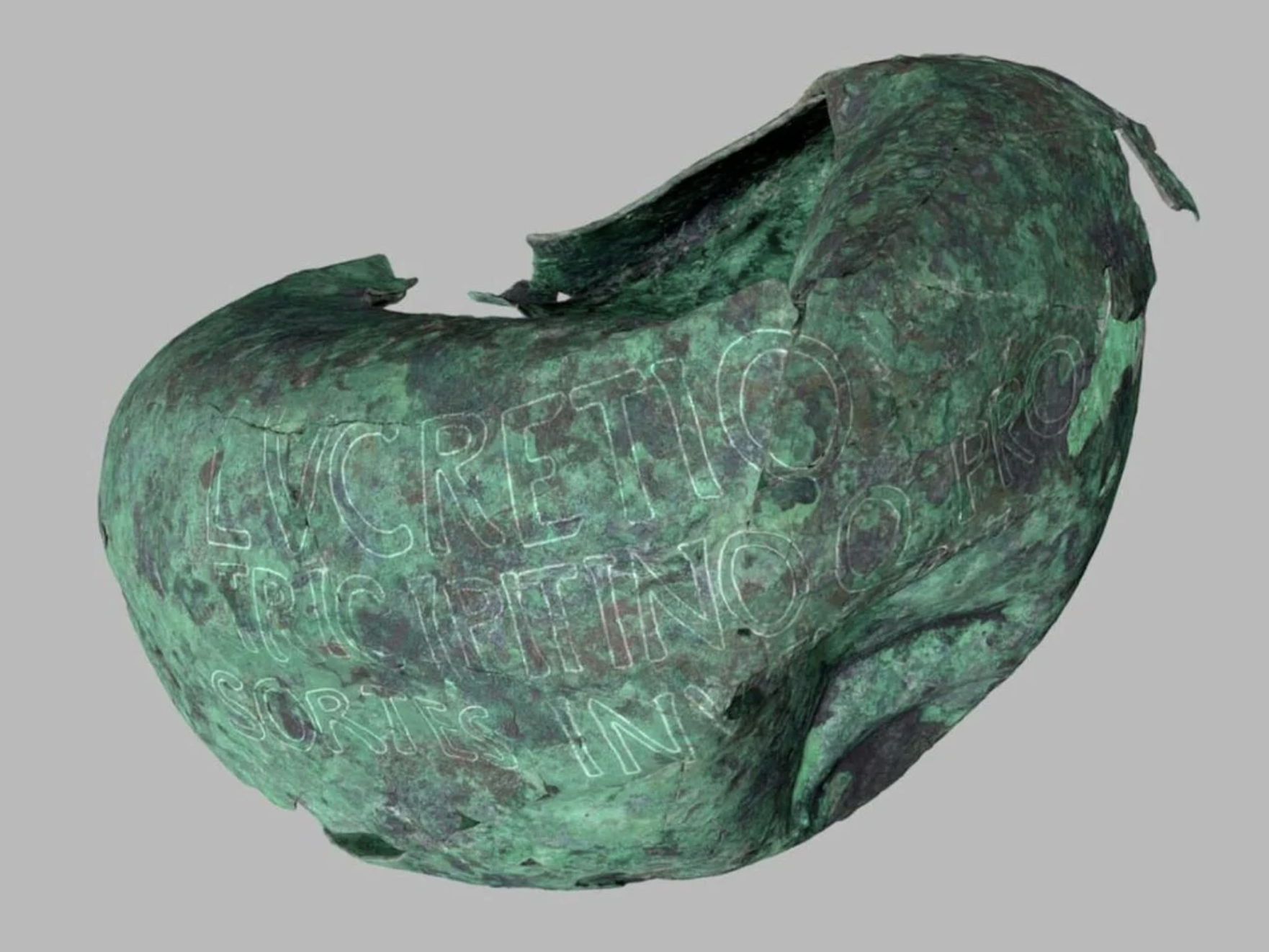
Photo Credit: J. G. Gómez Carrasco / J. M. Abascal Palazón et al., Boletín del Archivo Epigráfico (2025)
The building in which it was found had been destroyed by fire towards the end of the third century CE. For a long time, the metal fragments seemed to offer little insight. Only after painstaking restoration work, reassembling more than 200 pieces, did archaeologists realise they were dealing with something far more significant.
The object has now been identified as a sitella, a Roman metal vessel used in the casting of lots. Made from a copper alloy and rounded in shape, these containers played an official role in Roman life. They were used in procedures governed by chance, from assigning public duties and distributing responsibilities to carrying out rituals intended to seek divine guidance. The decisive clue lay in an inscription that includes the word sortes, referring to the tablets or tokens drawn during such practices.
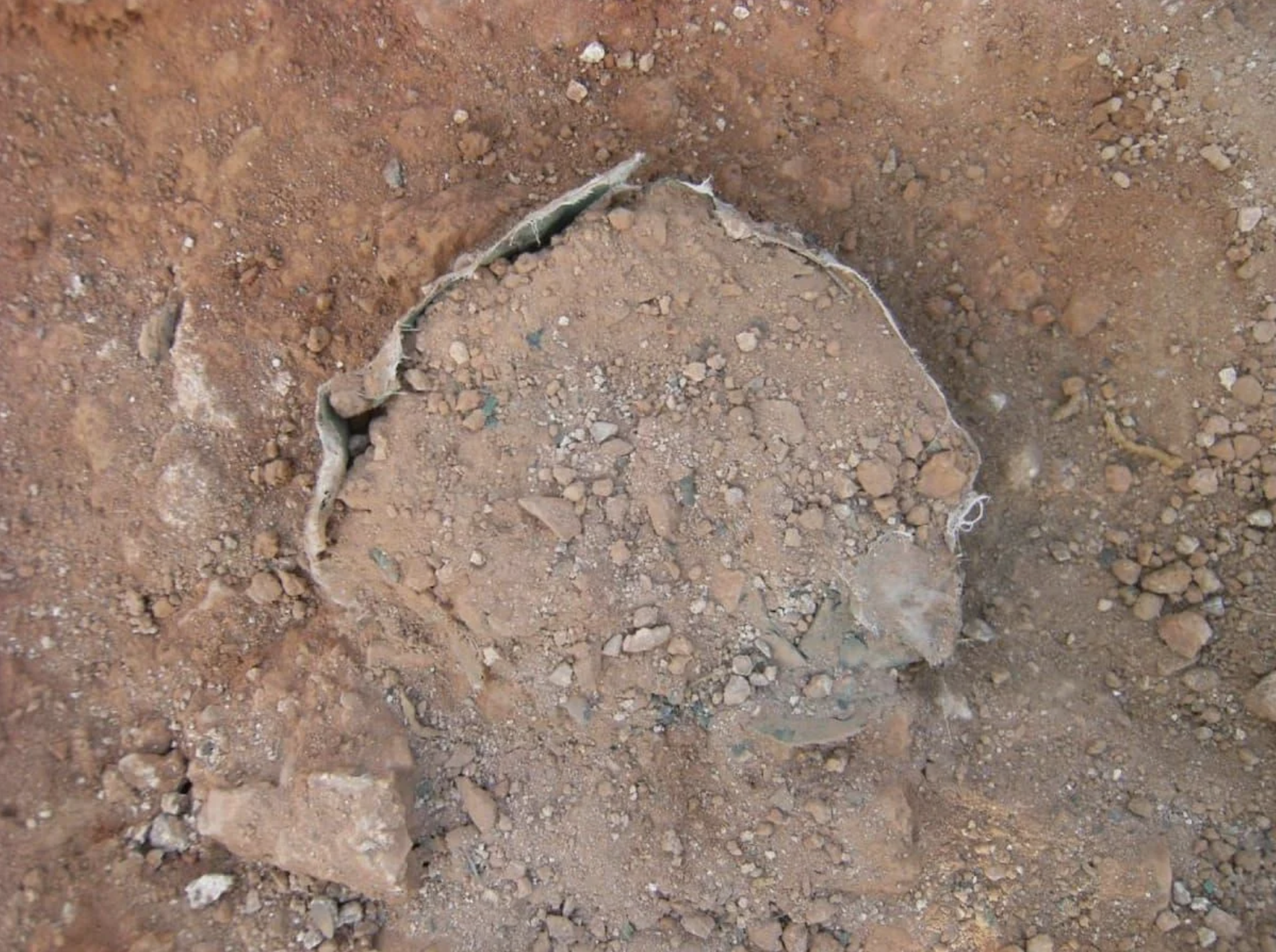
Photo Credit: J. G. Gómez Carrasco / J. M. Abascal Palazón et al., Boletín del Archivo Epigráfico (2025)
What truly elevates the importance of this find, however, is the name preserved in that inscription. It records a Roman official previously unknown to historians: Spurius Lucretius Tricipitinus, identified as quaestor pro praetore. This was an unusual and powerful role, granted when a quaestor assumed full provincial authority in the absence of a governor. In the province of Hispania Citerior, such appointments were extremely rare, with only one other example known before now. Scholars believe Lucretius Tricipitinus held this position sometime between around 47 and 27 BCE, during the chaotic final years of the Roman Republic.
The sitella also helps solve a long-standing mystery from Cartagena’s epigraphic record. A damaged stone inscription, known since early modern times, referred to a quaestor pro praetore who personally paid for major public building projects, but the individual’s full name was missing. Thanks to this newly discovered vessel, researchers can now confidently identify that benefactor as Lucretius Tricipitinus, revealing him as both a provincial governor and a committed patron of Carthago Nova.
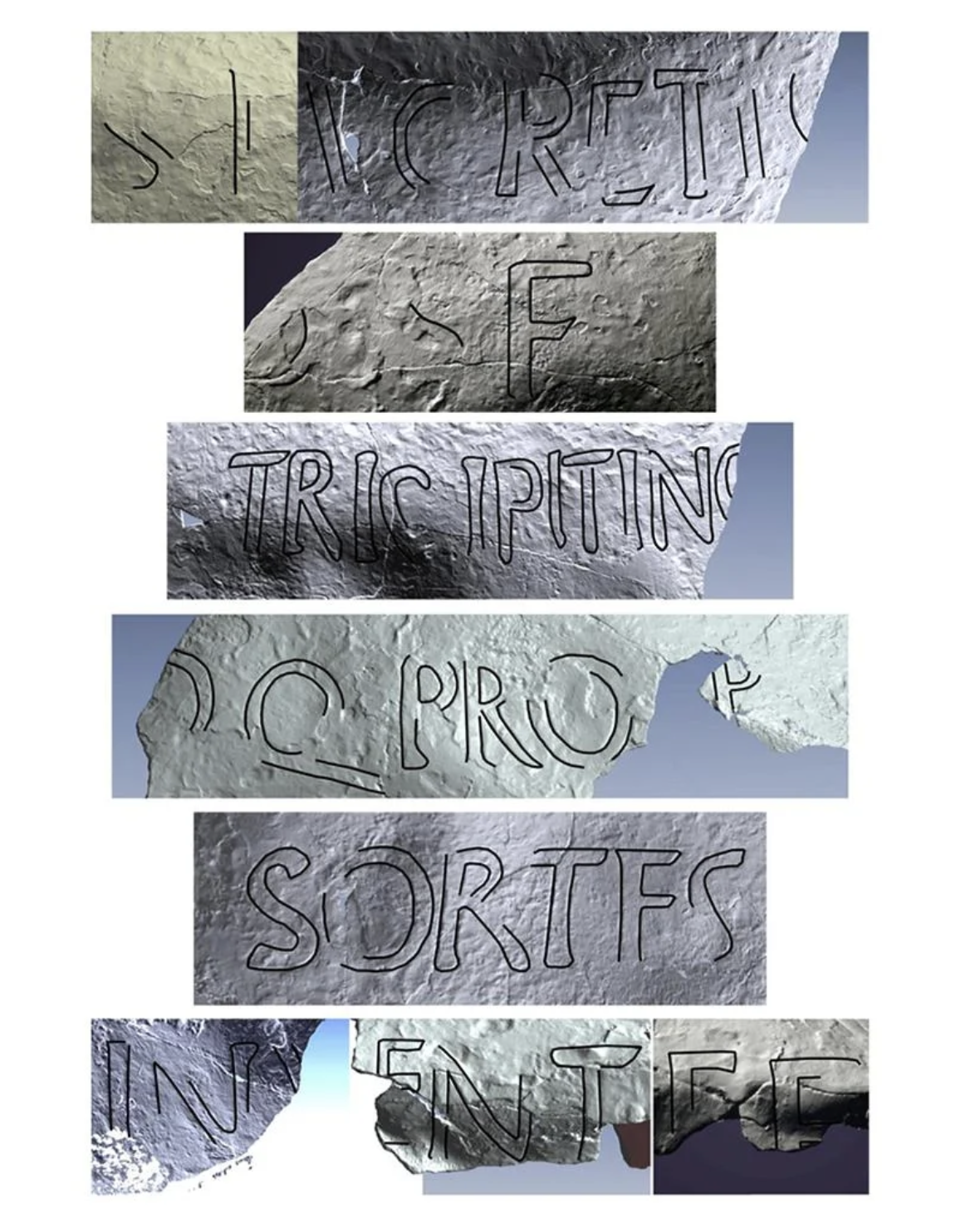
Photo Credit: Laboratory of the Technological Research Support Service (SAIT), Polytechnic University of Cartagena / J. M. Abascal Palazón et al., Boletín del Archivo Epigráfico (2025)
There is further evidence to support this picture of wealth and influence. The Lucretius name appears on lead ingots from the nearby Cartagena–Mazarrón mining district, suggesting that the family had control over, or at least profited from, the region’s valuable mineral resources. In Roman practice, this overlap between political authority and economic interest was not unusual, as provinces were often assigned to officials with existing ties to local industries.
The location of the discovery adds another intriguing layer. The building stood close to a sanctuary dedicated to Isis, and earlier excavations in the area revealed a monumental cornucopia, a symbol commonly associated with Fortuna, the goddess of luck. Taken together, these clues raise the possibility that the sitella was used not only for administrative purposes, but also in ritual or oracular contexts linked to chance and divine favour.
Ironically, it was the destructive fire that preserved the vessel for future discovery. Today, this once-overlooked metal container offers a rare and vivid glimpse into how authority, wealth and chance were intertwined in one of the Roman Mediterranean’s richest provinces.