Ancient Sewage Reveals Hidden Health Struggles of Roman Soldiers at Vindolanda!
A recent scientific study has offered an unglamorous but fascinating insight into daily life for Roman soldiers stationed at Vindolanda, a fort near Hadrian’s Wall in northern England. By analysing ancient sewage deposits, researchers have uncovered strong evidence that many of the soldiers suffered from ongoing intestinal parasite infections, largely caused by poor sanitation and contaminated water.
The research focused on sediment taken from a stone drain connected to a communal latrine that formed part of the fort’s bath complex during the third century CE. The drain, almost nine metres long, once carried waste away from the latrine and into a nearby stream. Scientists examined fifty samples taken from different points along its length, using microscopic and biochemical techniques to identify parasites preserved in human waste nearly 2,000 years old.
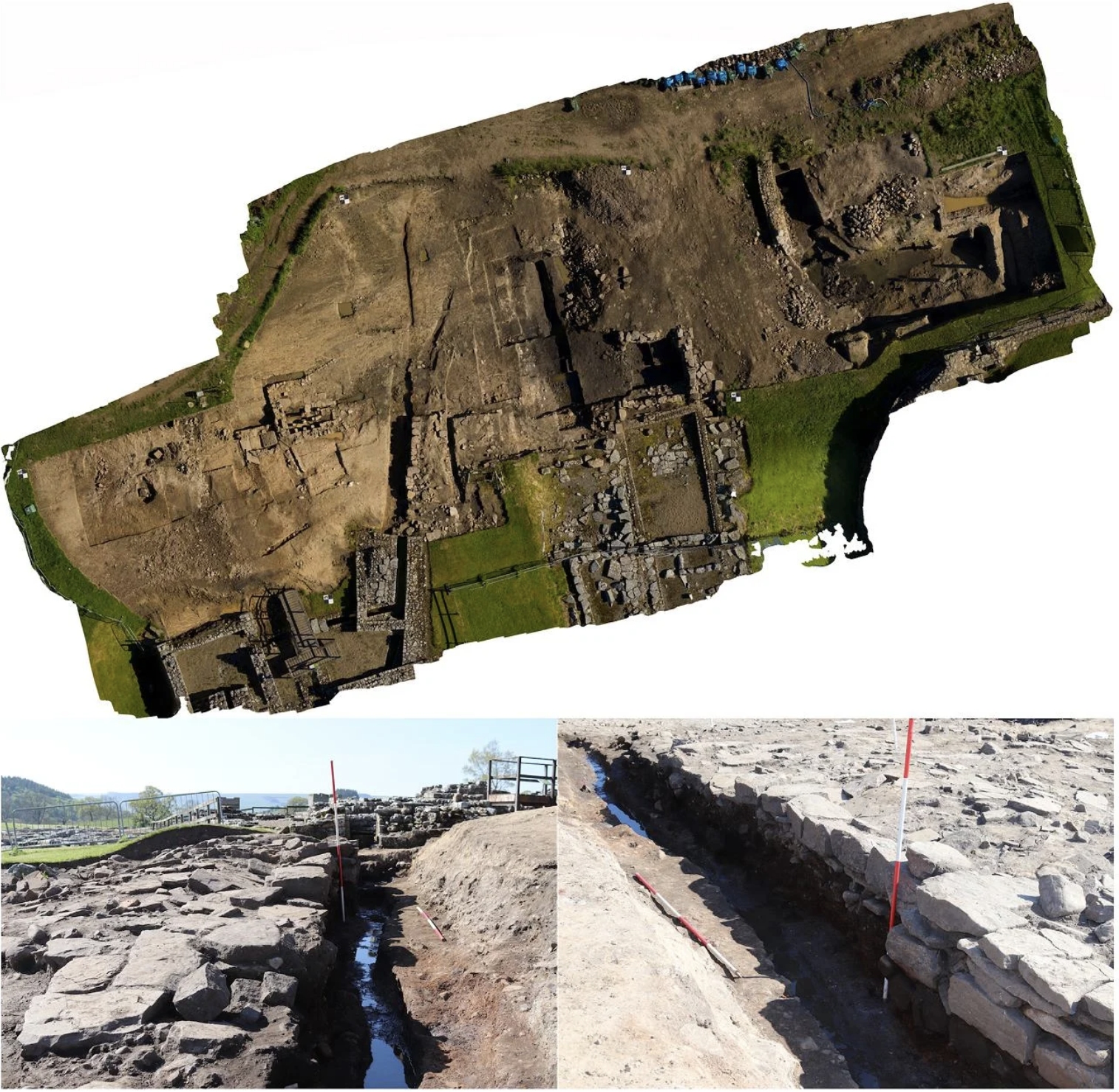
Photo Credit: M. L. Ledger et al., Parasitology (2025); CC BY-NC-ND 4.0
The results revealed the presence of roundworm and whipworm, parasites spread through contact with human faeces, as well as Giardia duodenalis, a microscopic organism known to cause severe diarrhoea. While roundworm and whipworm have been found at other Roman sites in Britain, this marks the first confirmed evidence of Giardia in Roman Britain. Because Giardia spreads easily through contaminated drinking water, it can rapidly infect large numbers of people.
More than a quarter of the samples contained parasite eggs, showing that these infections were not occasional outbreaks but a persistent problem at the fort. An additional sample taken from an earlier defensive ditch dating to the first century CE also contained roundworm and whipworm, suggesting that sanitation-related illness was present from the earliest days of occupation at Vindolanda.
Vindolanda, located just south of Hadrian’s Wall, was garrisoned by auxiliary troops recruited from across the Roman Empire. The site is famous for the exceptional preservation of organic material, including wooden writing tablets and leather shoes, which have transformed our understanding of life on Rome’s northern frontier. These new findings add another layer to that picture, highlighting how disease may have affected soldiers’ health, stamina and overall readiness.
The researchers note that all of the parasites identified are spread via the faecal–oral route, pointing to poor hygiene and waste management. Unlike major Roman towns in Britain, such as London or York, where evidence of parasites linked to meat and fish consumption has been found, Vindolanda’s parasite profile is dominated by infections passed directly between people. This closely matches patterns seen at other Roman military sites across Europe.
Beyond revealing the health challenges faced by Roman soldiers, the study also demonstrates the value of sampling multiple points within ancient drainage systems. This approach not only helps identify parasites but also improves our understanding of how Roman sanitation infrastructure functioned in practice.