Bronze Age Mass Burial in Scotland Reveals Ancient Crisis!
High in the rolling hills of south-west Scotland, archaeologists have uncovered a haunting reminder of how fragile life could be more than 3,000 years ago. Near Twentyshilling Hill, a few miles south of Sanquhar in Dumfries and Galloway, what began as routine archaeological work ahead of a wind farm development turned into the discovery of an extraordinary Bronze Age burial.
During excavations carried out in 2020 and 2021, archaeologists revealed a low earthen barrow that had gone unnoticed for millennia. At its centre was a tightly packed group of five ceramic urns, all placed together in a single pit. Inside them were the cremated remains of at least eight people. Scientific dating shows that they were buried at the same time, sometime between 1439 and 1287 BCE.
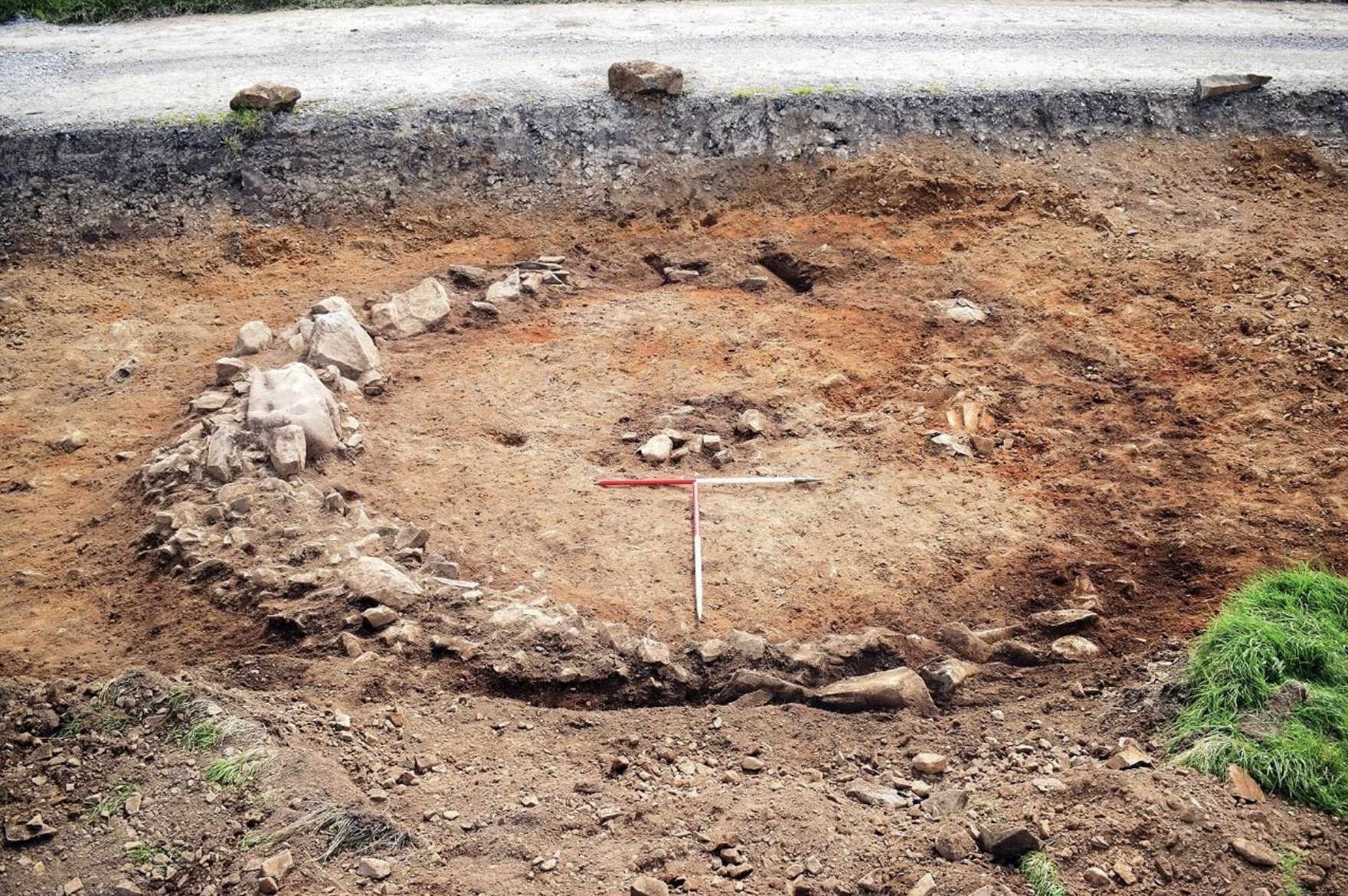
Photo Credit: GUARD Archaeology Ltd
What makes this site so striking is how different it is from most Bronze Age burials in Scotland. Normally, burial mounds were reused repeatedly over generations, and there is often evidence that bodies were left exposed before cremation as part of extended rituals. At Twentyshilling, there are no signs of this. The bones suggest the dead were cremated and buried almost immediately, pointing to a sudden and concentrated episode of death rather than a long-running funerary tradition.
Each urn appears to contain more than one individual, including both adults and children. This combination is fairly common in Bronze Age burials, but the fact that all five urns were placed at once suggests something out of the ordinary. Archaeologists believe the people buried here may have belonged to the same family or close-knit social group, all affected by the same tragic event.
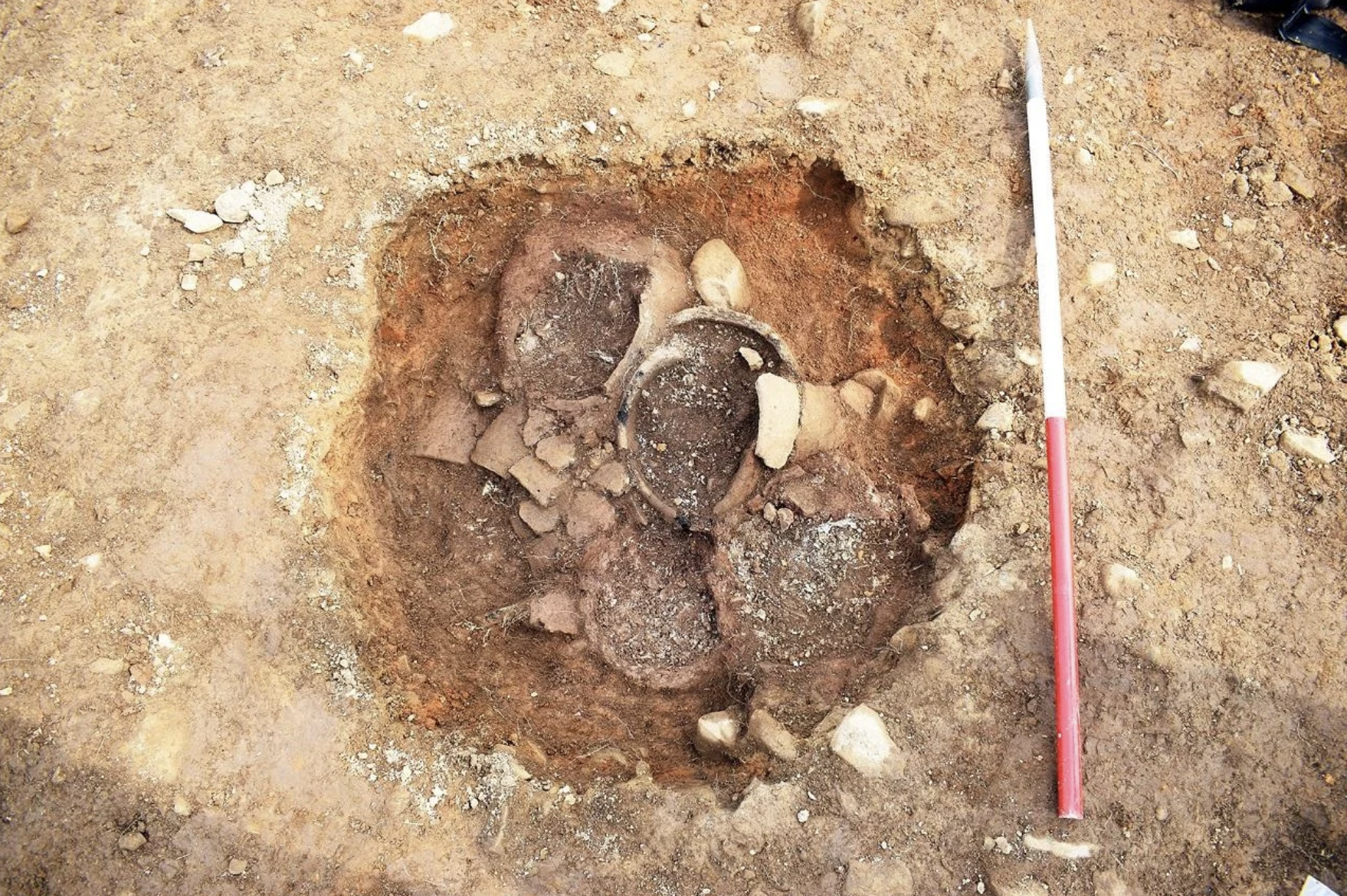
Photo Credit: GUARD Archaeology Ltd
Nearby, earlier features dating back to the late Neolithic period were also found. These shallow pits show that the area held significance thousands of years before the Bronze Age burial took place. Rather than continuous settlement, it seems people returned to this landscape again and again, possibly guided by memory, tradition, or ancestral ties.
So what caused this sudden loss of life? While there are no definitive answers, researchers suggest the burial could reflect a time of extreme hardship, such as famine, disease, or another catastrophic event. This idea fits with evidence from other sites in the region that point to population decline and periods of abandonment during the Bronze Age.
Together, the discoveries at Twentyshilling offer a rare and deeply human glimpse into prehistoric Scotland. They remind us that ancient communities were closely bound to their landscapes, and that, even thousands of years ago, people had to find ways to respond to crisis, loss, and change.