Ancient Teos Inscriptions Reveal Powerful Roman Trade Networks in Anatolia!
Fresh research into two inscriptions uncovered at ancient Teos suggests Roman merchants had a much stronger influence over the city’s economy than historians once believed. The inscriptions were discovered during excavations at the Sanctuary of Dionysos in 2021 and date back to the 1st century BCE. Although they first appeared to be ordinary honorary texts, scholars now think they reveal evidence of organised Roman business activity inside a Greek city before the height of Roman imperial rule.
The study, written by Tolga Uzun and published in Belleten, argues that these inscriptions are the clearest proof so far that Roman commercial groups were active in Teos. It also indicates that Roman trading networks, known as conventus, operated across a much larger part of western Anatolia than previously understood.

Photo Credit: Uzun, T. (2026)
Situated near present-day Seferihisar in İzmir Province, Teos was one of the leading Ionian cities of western Anatolia. It was especially well known for the Sanctuary of Dionysos and its connection to the Artists of Dionysos, a professional association of performers and musicians which turned the city into an important cultural centre.
However, Teos was not only significant for its festivals and artistic life. The city also possessed a thriving economy built on products such as wine, olive oil, timber, wool and marble. One of its most valuable exports was the richly coloured stone later referred to by the Romans as Marmor Luculleum or Africano marble, which became highly sought after for prestigious Roman buildings.
Because of this prosperity, Teos naturally attracted foreign traders. The newly examined inscriptions suggest Roman businessmen were more than temporary visitors. They appear to have formed an organised and influential presence within the city itself.
One inscription explains that “the Romans conducting business here” honoured a man named Menophantos, son of Apollonides, for his service as agoranomos. In Greek cities, this official supervised the marketplace, overseeing trade, prices and commercial order. According to the text, Menophantos carried out his duties with distinction and was rewarded with a golden wreath, a highly respected civic honour in the Greek world.
Researchers believe the Roman businessmen may have recognised him because he supported their commercial interests, perhaps connected to the trade or transport of Teos’ famous marble. It is also possible he helped resolve disputes involving shipping arrangements, pricing or market regulations.
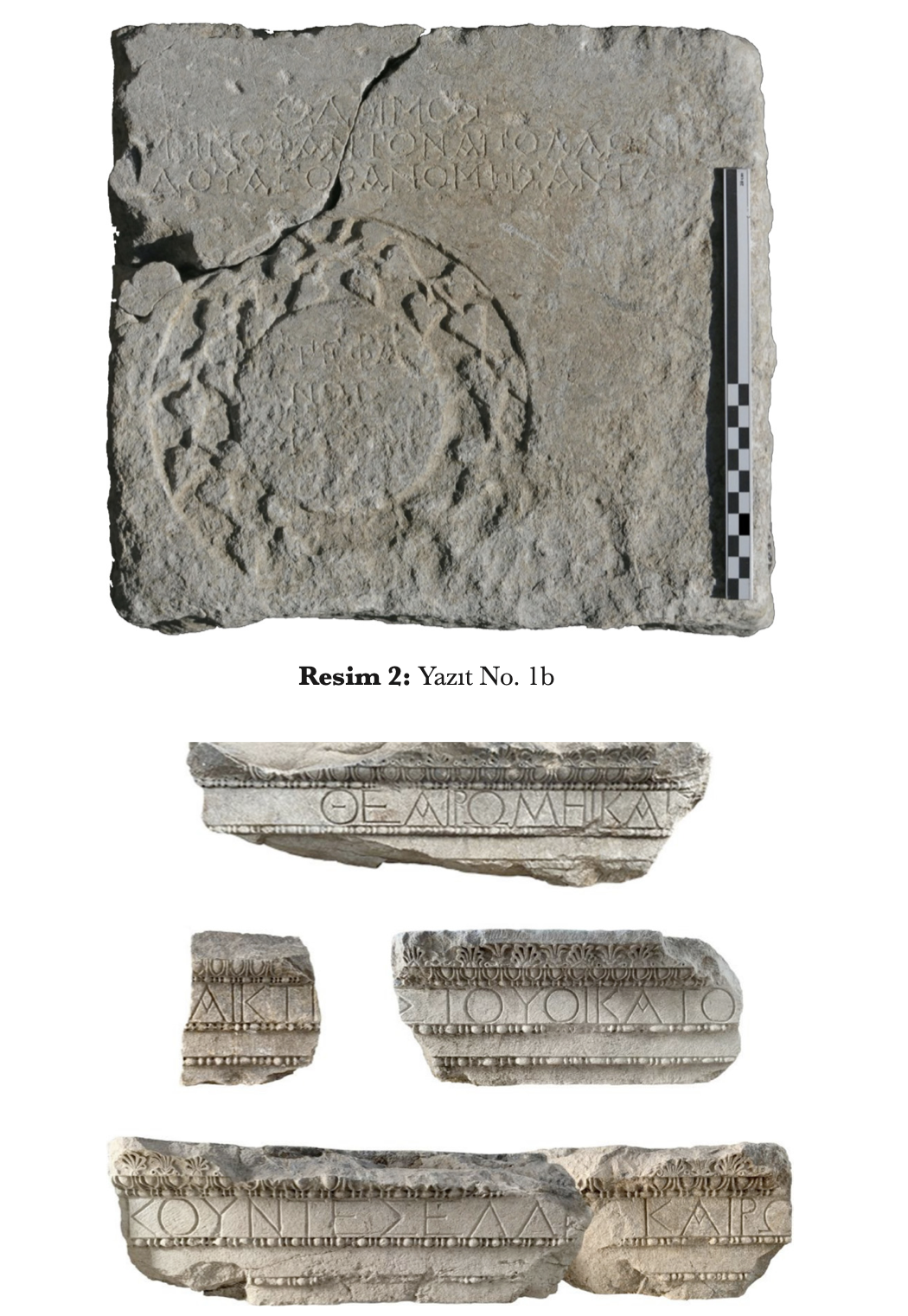
Photo Credit: Uzun, T. (2026)
A second inscription reveals that the citizens of Teos also honoured Menophantos with a golden wreath. This is significant because it shows he was respected not only by local inhabitants but also by the Roman business community active within the city.
The terminology used in the inscriptions is particularly revealing. The Greek wording corresponds to the Latin term negotiatores, which referred not to ordinary shopkeepers but to wealthy investors, financiers and large-scale traders operating across the Roman provinces. This distinguished them from mercatores, who were more closely associated with smaller-scale merchants.
The businessmen in Teos were therefore likely connected to broader financial and trading networks capable of moving goods, money and influence across different regions. Their presence matches patterns already identified in cities such as Ephesos, Smyrna and Pergamon, but the Teos inscriptions extend evidence of Roman commercial organisation further into the Ionian world.
The study also links these traders to the Roman conventus system, organised communities of Romans living and working outside Italy. While not companies in the modern sense, these groups allowed Roman citizens and Italic merchants to cooperate, protect shared interests and maintain influence abroad.
What makes the discovery especially valuable is that the businessmen appear to have acted collectively. The inscription records them honouring Menophantos as a unified group rather than as separate individuals, offering rare insight into how Roman commercial communities operated in Greek cities.
The findings also highlight the cultural impact of Roman trade in Anatolia. These merchants brought more than wealth; they introduced Roman customs, legal practices and social influence into local civic life. Through business relationships and public honours, they became integrated into the political and economic fabric of the city.
Teos is often remembered primarily for religion, festivals and the worship of Dionysos, yet these inscriptions reveal another side to the city. Alongside temples and artistic traditions existed a busy commercial environment where Roman capital and Aegean trade intersected with Greek administration.
Rather than focusing on wars or emperors, the inscriptions shed light on the quieter forces that shaped history. They reveal how trade, finance and personal connections helped tie the Greek East to the expanding Roman world. For historians, the discovery demonstrates that Rome’s influence in Anatolia spread not only through military conquest, but also through merchants, marketplaces, shipping networks and economic power.