Archaeologists Discover Possible Hellenistic Military Camp in Uzbekistan!
A seemingly unremarkable hilltop in southern Uzbekistan has revealed evidence that could reshape our understanding of the Hellenistic presence in Central Asia. What was once thought to be a modest rural settlement is now being interpreted as a temporary military camp dating back more than 2,000 years, offering a rare glimpse into life on the frontier of the Greco-Bactrian world.
The site, known as Iskandar Tepa, occupies a commanding position overlooking the Loylagan Valley in Uzbekistan's Sherobod District. Rising around 20 metres above the surrounding landscape, the hill would have provided excellent views across an oasis that lay between the ancient regions of Bactria and Sogdiana.
Iskandar Tepa was first identified in 2017 during joint Czech-Uzbek archaeological investigations. Initial excavations confirmed that the site had been occupied during the Hellenistic period, but there was little evidence to suggest it had served a military purpose.
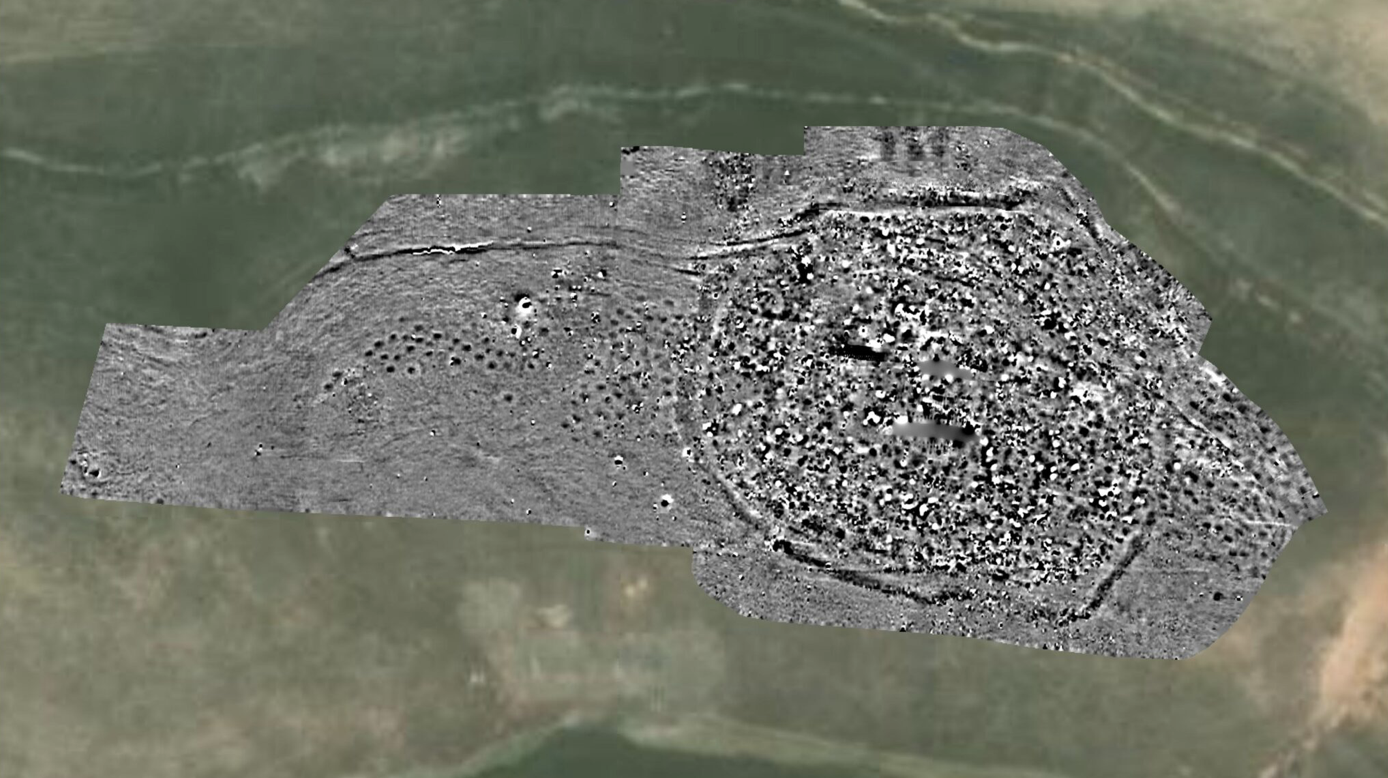
Photo Credit: Stančo, Kysela, Tencer, Milo, & Shaydullaev, 2026
That picture changed dramatically when researchers carried out geophysical surveys using magnetometry and ground-penetrating radar. Hidden beneath the surface, they detected a large oval ditch encircling the summit. Stretching for almost 400 metres and enclosing roughly 1.2 hectares, the feature had gone unnoticed in satellite imagery and was barely visible from ground level.
Subsequent excavations confirmed the existence of the defensive ditch. Depending on where it was examined, it measured between four and seven metres wide and up to one metre deep. Archaeologists also uncovered a line of evenly spaced postholes along its inner edge, suggesting a timber palisade or similar defensive barrier once stood there.
Rather than indicating a permanent fortress or settlement, these discoveries point towards a short-lived, fortified encampment designed for defence rather than long-term occupation.
One of the most intriguing discoveries inside the enclosure was a series of large ceramic storage jars, known as khums, buried into the ground. Earlier excavations had already uncovered several of these vessels, but the geophysical survey demonstrated that they were distributed across much of the site.
Several jars contained white calcareous deposits, although attempts to recover preserved plant material proved unsuccessful. As a result, researchers believe the containers were most likely used to store water instead of food.
This interpretation makes practical sense. No natural spring or well has been identified on the hilltop, meaning anyone stationed there would have relied on transported water, rainwater collection or an engineered supply system. Geophysical evidence also revealed a linear feature on the northern slope that may represent a canal, potentially bringing water up towards the camp.
For a military force operating in a semi-arid environment, maintaining a reliable water supply would have been just as important as constructing defensive earthworks.
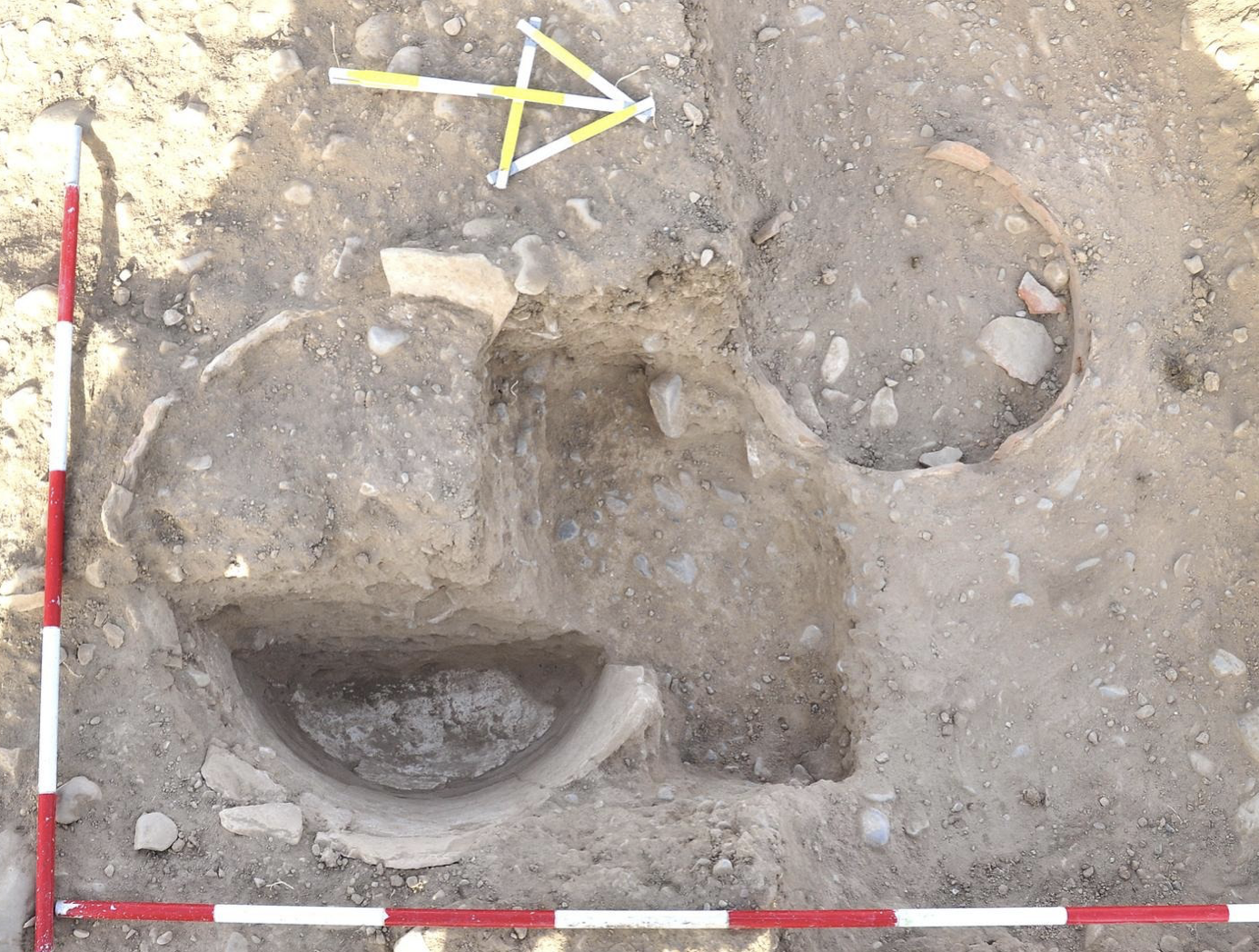
Photo Credit: Stančo, Kysela, Tencer, Milo, & Shaydullaev, 2026
The site's chronology has been established through a combination of pottery and coin finds. Among the recovered coins are examples linked to Greco-Bactrian rulers, including Diodotus II, Euthydemus I and Demetrius I.
These discoveries indicate that Iskandar Tepa was occupied mainly during the 2nd century BCE, with activity possibly continuing into the 1st century BCE. This places the camp firmly within the era that followed Alexander the Great's conquests, when Greco-Bactrian kingdoms controlled large parts of Central Asia.
Although there is no evidence that Alexander's own troops camped here, the site illustrates how the military systems established after his campaigns continued to shape the region for generations. Frontier positions like Iskandar Tepa would have helped safeguard strategic routes, fertile valleys and border areas across the expanding Hellenistic world.
The hilltop's story did not end when the military occupation ceased. Geophysical surveys identified almost 90 oval pits clustered around the eastern and western edges of the site. Archaeologists believe these features are burial pits dating to the later Transitional, or Yuezhi, period, around the 1st century BCE to the 1st century CE.
Some of the graves appear to overlap with earlier settlement remains, suggesting the abandoned camp was later transformed into a cemetery. This shift in function highlights how the location retained its importance long after its military role had ended.
The researchers compare Iskandar Tepa with Boysari Tepa in central Sogdiana, another elevated site displaying similar defensive characteristics. Many of the features identified at Iskandar Tepa, including its naturally defensible position, oval earthwork, probable wooden palisade and limited permanent buildings, closely resemble what archaeologists expect from temporary Hellenistic military camps.
Such sites are exceptionally difficult to identify because they rarely leave substantial ruins behind. Timber structures decay, shallow ditches become eroded, and buried storage features often remain hidden beneath the surface for centuries.
Thanks to modern geophysical survey techniques, Iskandar Tepa has emerged as an important piece of the puzzle, providing rare evidence of how Hellenistic forces may have established, supplied and defended temporary frontier outposts along the eastern edge of the Greek world more than two millennia ago.