Archaeologists Discover Remarkable Marble Lion at Ancient City of Philippi!
Archaeologists working in the ancient city of Philippi in Greece have uncovered an impressive marble lion sculpture, offering a fascinating glimpse into the city’s long and layered history. The discovery was made during the 2025 excavation season by a research team from the Aristotle University of Thessaloniki, and it has already sparked excitement among historians and archaeologists alike.
The marble lion is large and striking, carved with a beautifully detailed mane and its head turned proudly to the side. What makes the find even more remarkable is the condition of the sculpture, which has survived exceptionally well despite being buried for centuries.
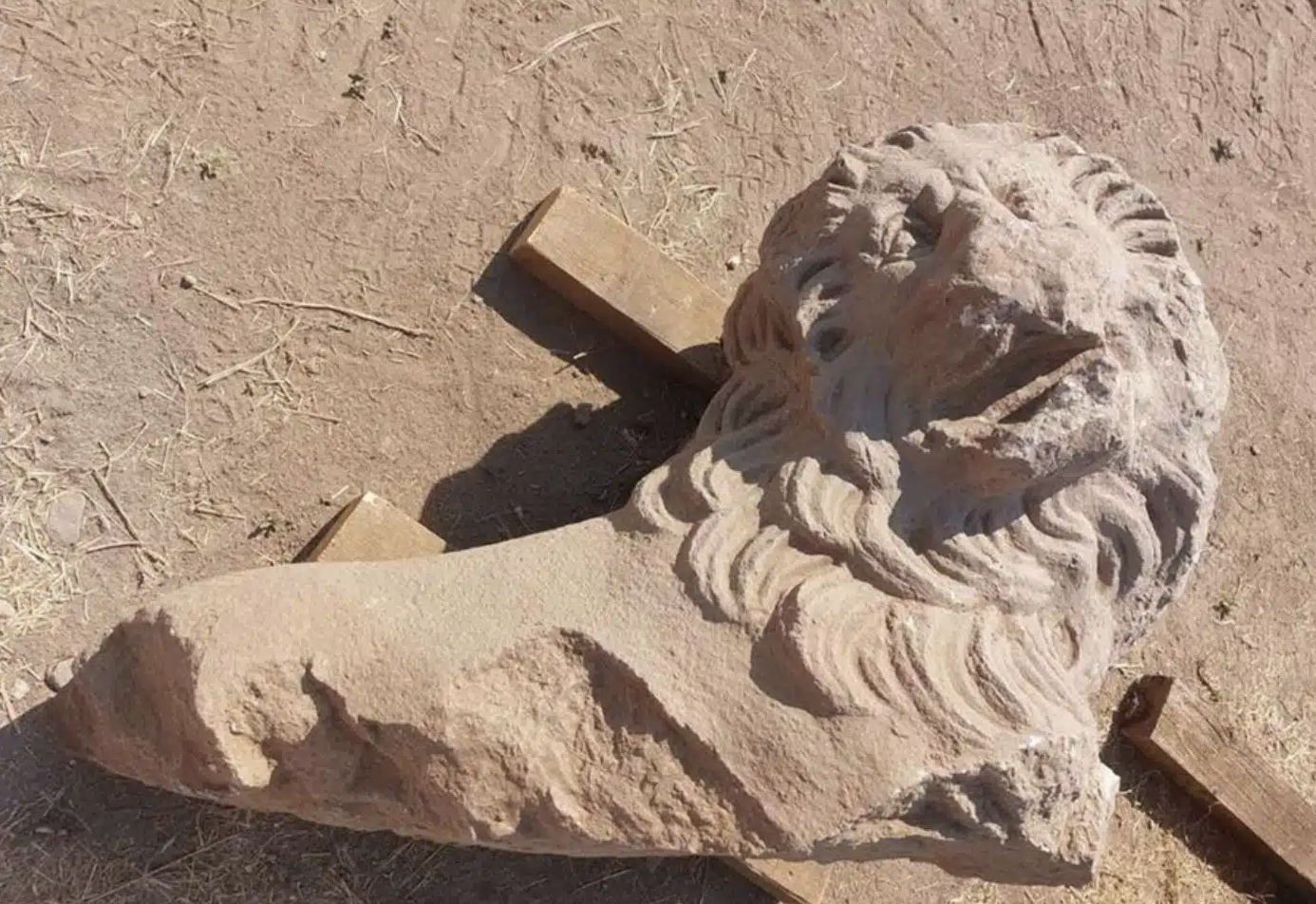
Photo Credit: Greek Ministry of Culture
Researchers discovered the lion while excavating the southern decumanus, one of Philippi’s main east–west roads. It is believed that the statue once decorated a monumental fountain, known as a nymphaeum, located at the intersection of the city’s two principal roads. This location would have been an important and busy meeting point in the ancient city, suggesting the fountain and its sculpture were intended to make a powerful visual impression on those passing through.
The excavation team focused their work on uncovering the full remains of the fountain structure situated where the northern and southern decumanus roads meet. During the 2025 season, they managed to reveal the entire layout of the fountain complex, along with part of a paved square that once surrounded it.
Among the discoveries were several fragments of marble reliefs that once formed curved parapets, arranged in a shell-like design to guide the flow of water. Two of these fragments were successfully reattached to the original parapet still standing at the site, helping researchers piece together how the fountain once looked.
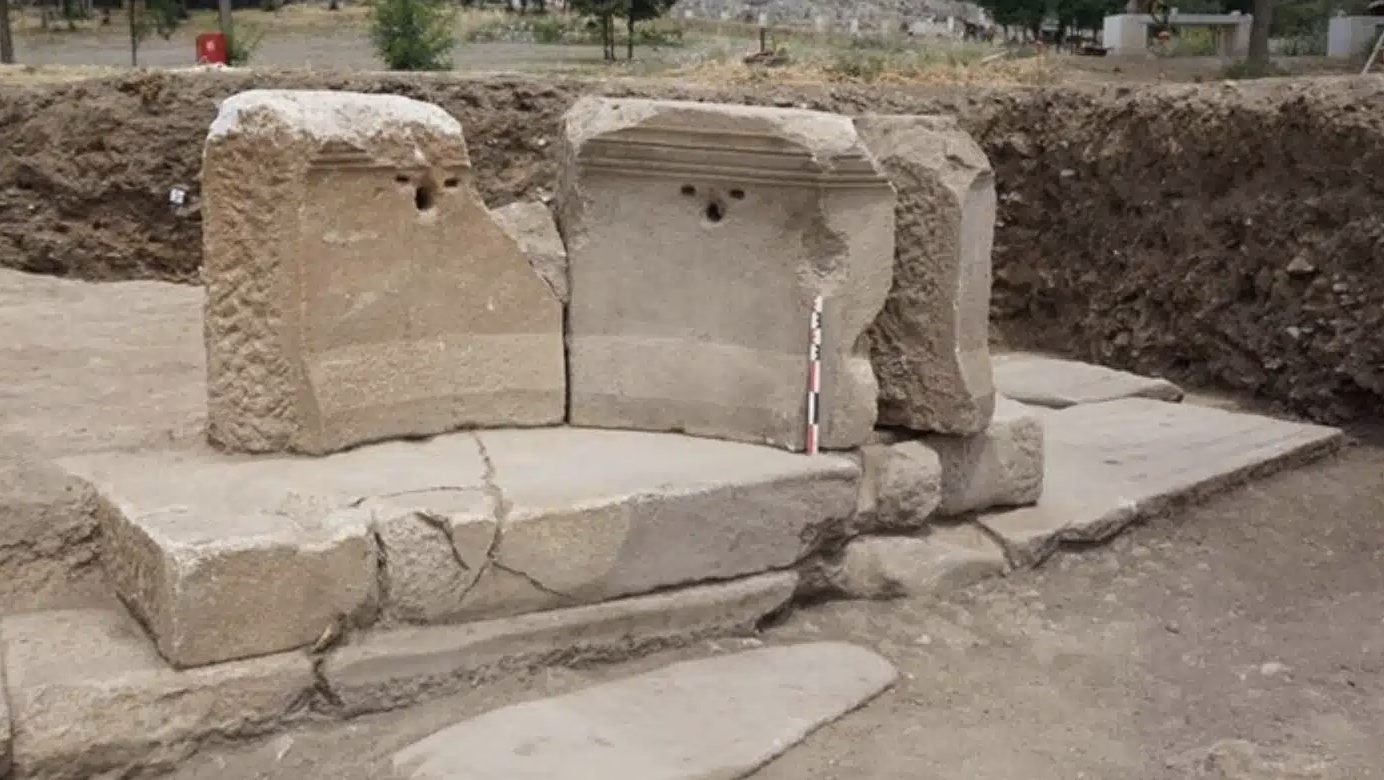
Photo Credit: Greek Ministry of Culture
The team also uncovered fragments of Latin inscriptions, believed to have come from the fountain’s architrave. One piece includes the letters “PHILIP”, while another preserves two lines reading “P·NYMP” and “REI·PVB”. These inscriptions provide valuable clues about the structure’s original purpose and official designation.
One of the most intriguing aspects of the lion sculpture is that it does not stylistically match other sculptures previously found at the site. While the lion likely dates back to the Roman Imperial period, the fountain itself appears to have undergone changes much later.
Researchers now believe that the structure was remodelled during the early Middle Byzantine period. During this time, builders often reused older architectural elements and sculptures from Roman monuments. This practice, sometimes described as a form of historical revival, allowed later builders to evoke the grandeur of the past.
Evidence supporting this idea comes from the fountain’s construction techniques and the way it was built directly on top of earlier paving stones at the crossroads. This suggests that the entire junction was redesigned during the early medieval period, incorporating pieces from different eras.
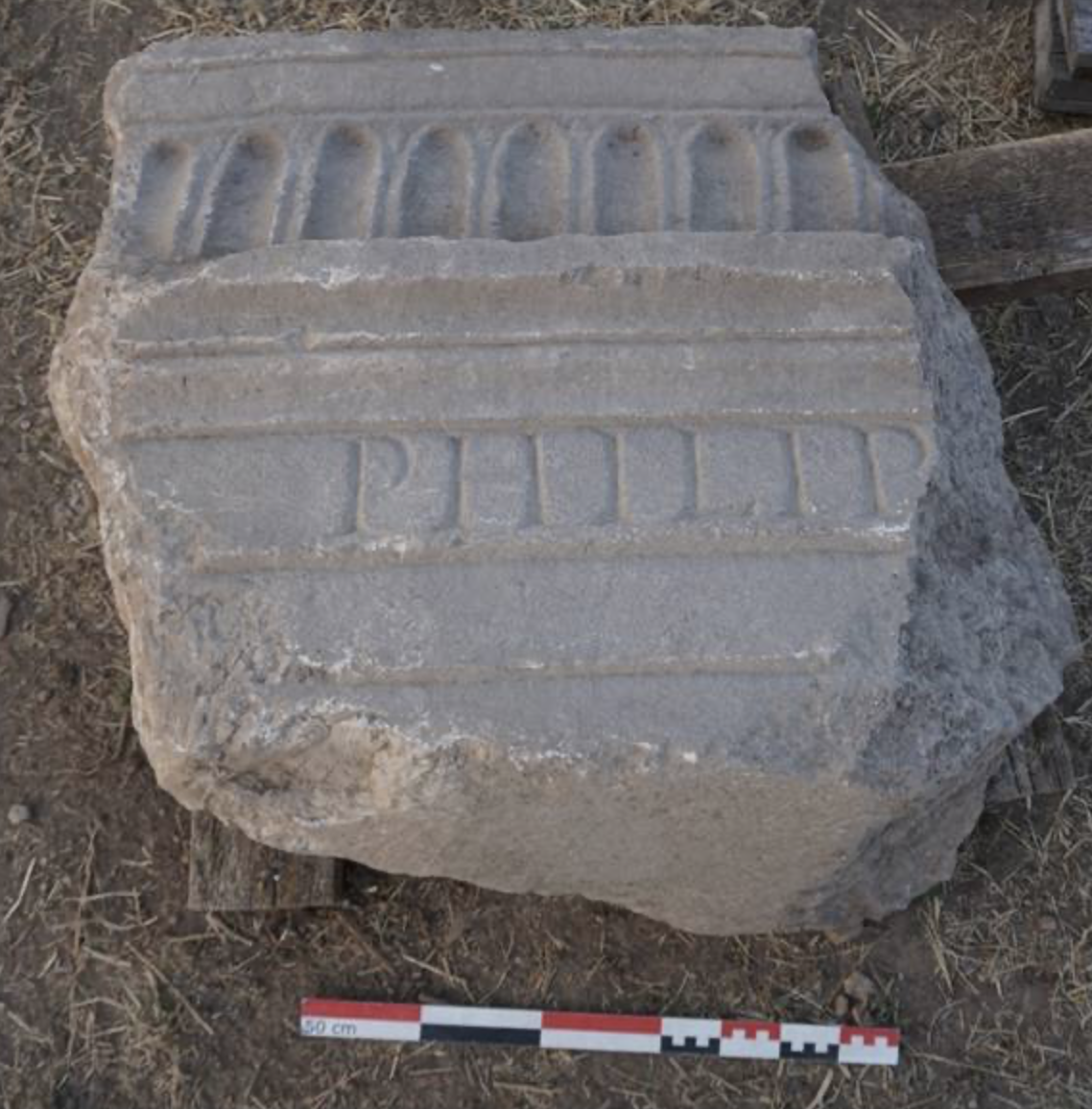
Photo Credit: Greek Ministry of Culture
The 2025 excavation season uncovered more than just the lion statue. Archaeologists also found a variety of smaller artefacts, including pottery, bronze coins, metal objects, and a well-preserved marble basin. Together, these discoveries help paint a picture of a site that remained an active and important part of the city for centuries after its original Roman construction.
Rather than being just a simple crossroads, the area appears to have been a lively urban space that evolved over time, reflecting the changing cultures and influences that shaped Philippi.
The city itself has a long and fascinating history. It was originally founded in 360 BC by colonists from Thasos and named Crenides. Just a few years later, in 356 BC, it was conquered by Philip II of Macedon, who renamed the city Philippi. Philip recognised the area’s strategic importance. Not only were there rich gold mines nearby, but the city also lay along a key route that would later become the Via Egnatia, the major Roman road connecting the Adriatic Sea to the Bosporus.
Under Macedonian and later Roman rule, Philippi developed into a prosperous and largely self-governing city, becoming a major commercial and military centre in the region. Philippi played a crucial role in two major turning points in history.
The first came in 42 BC during the Battle of Philippi. This decisive clash saw the forces of Mark Antony and Octavian defeat the armies of Brutus and Cassius, the assassins of Julius Caesar. Their defeat effectively marked the end of the Roman Republic and paved the way for the rise of the Roman Empire.
The city also holds a special place in the history of Christianity. Around 49–50 AD, the Apostle Paul arrived in Philippi and established what is widely regarded as the first Christian church in Europe. This event helped transform the city into an important centre for early Christianity.
Today, Philippi is recognised as a UNESCO World Heritage Site and remains one of the most complete examples of an ancient city. Visitors can see the layers of history that span centuries, from its Hellenistic beginnings and Roman splendour to its early medieval transformations.
The discovery of the marble lion adds yet another piece to this historical puzzle, reminding us that even after centuries of exploration, ancient cities like Philippi still have remarkable stories waiting to be uncovered.