Greek Inscription Found in Homs Mosque May Reveal Lost Temple of the Sun!
Recent restoration work inside the Great Mosque of Homs in western Syria has reignited interest in one of the city’s long-standing historical mysteries. While carrying out repairs, workers uncovered a Greek inscription carved into the base of a granite column. The discovery has reopened debate about the possible location of the famous Temple of the Sun that once stood in ancient Emesa, the city we now know as Homs.
For years, historians and archaeologists have wondered whether the Great Mosque might sit directly on top of the remains of this ancient sanctuary dedicated to the solar god Elagabalus. The question is particularly significant because the high priest of this cult eventually became Roman emperor in 218 CE, taking the name Elagabalus. Despite decades of research involving historical texts, coins and scattered archaeological evidence, no definitive proof has ever confirmed the temple’s exact location.
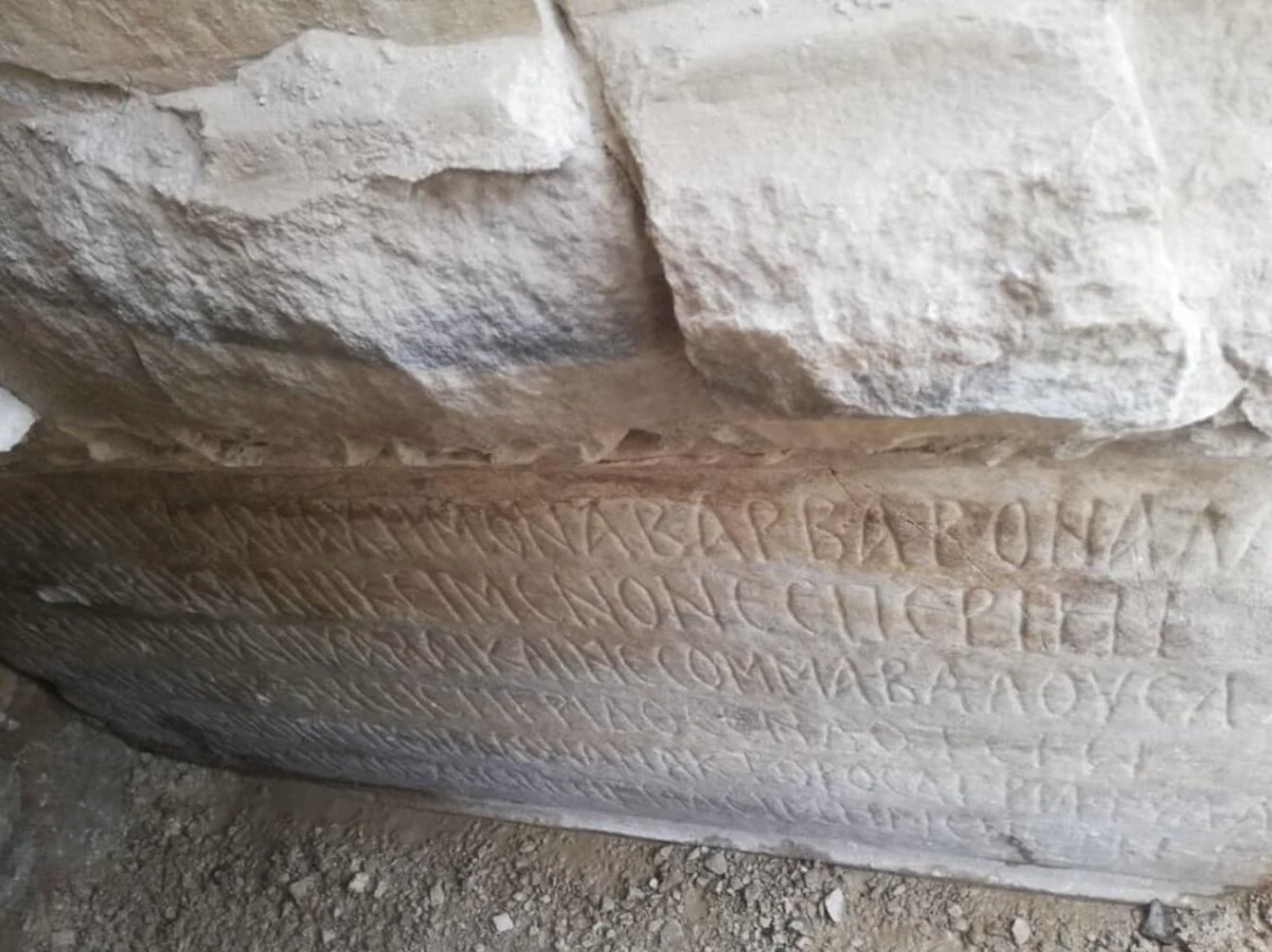
Photo Credit: Teriz Lyoun
The newly examined inscription appears on a column base measuring roughly one metre by one metre. The carved panel itself covers about 75 centimetres across the front and is bordered by decorative framing. Although the stone was first uncovered during excavations in 2016, ongoing conflict in the region delayed a detailed study until recently. The inscription is neatly arranged in straight horizontal lines, with a formal frame at the top, a style commonly seen in commemorative or dedication inscriptions from antiquity.
An early translation released in 2016 describes a powerful warrior ruler, compared to the wind, the storm and even a leopard. The tone of the text is heroic and strongly militaristic. Interestingly, the Greek used in the inscription contains some grammatical irregularities. These quirks are typical of inscriptions from Roman Syria, where Aramaic was the everyday language spoken by the local population. Linguistic details like these suggest the text likely originated locally during the Roman period rather than being reused at a later time.
In a study published in the journal Shedet, Professor Maamoun Saleh Abdulkarim from the University of Sharjah argues that the inscription strengthens the case that the Temple of the Sun once stood beneath the present mosque. His research considers both the text itself and the architectural history of the building, along with records from earlier excavations. According to Abdulkarim, the evidence points to continuity in the use of this location as a sacred space, rather than suggesting the temple once stood on a nearby mound where the Islamic Citadel is now located.
The site of the Great Mosque has a long and complex religious history. Tradition holds that a church dedicated to John the Baptist once stood here before the mosque was built. In the twelfth century, the Zengid ruler Nur al-Din further associated the mosque with his authority, reinforcing its symbolic importance within the city. Although the mosque’s rectangular layout differs from descriptions of the earlier oval sanctuary, the reuse of older foundations and building materials was very common in the region.
Ancient Emesa itself was strategically positioned at a crossroads linking major cities such as Antioch and Damascus, as well as important trade routes across the Levant. During the Roman period, much of the city’s religious and civic life revolved around the cult of Elagabalus. Festivals held at the temple blended religious devotion with political authority, and the priesthood wielded considerable influence.
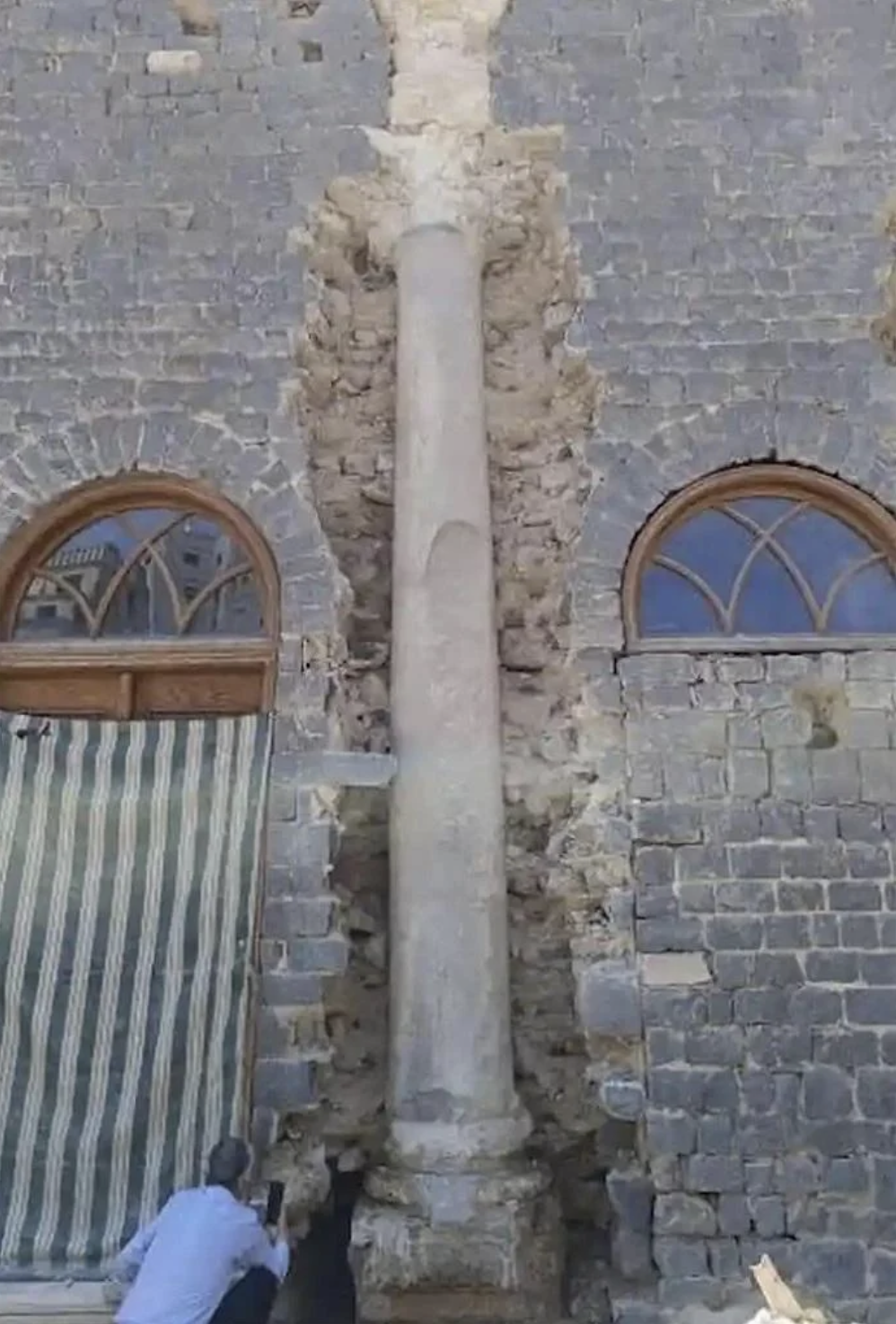
Photo Credit: Abdulhadi Al-Najjar
This influence reached its peak when the young priest Varius Avitus Bassianus became Roman emperor in 218 CE. Once in power, he attempted to promote his Syrian sun god above Rome’s traditional deities. His reign was brief and controversial, but it clearly illustrates how prominent the cult had become.
By the fourth century, Christianity began gaining a foothold in the city. However, this transition was gradual rather than sudden. Pagan and Christian communities lived side by side for generations. After the Islamic conquest, the church on the site was eventually converted into a mosque. Arab historians later recorded this sequence of religious transformations, describing how older sacred buildings were adapted for new faiths.
Professor Abdulkarim’s research places the newly studied inscription within this broader story of religious change. If the text does indeed relate to solar worship, the column base may mark part of the physical footprint of the Roman temple. Each additional Roman-era inscription discovered within the mosque helps scholars piece together the puzzle.
What seems increasingly likely is that the site was never abandoned, but continually reused and reshaped by successive communities. Pagan, Christian and Islamic traditions may all have centred on the same sacred ground, adapting existing structures rather than building entirely new ones elsewhere.
The importance of this discovery goes beyond identifying the remains of a single temple. In ancient Emesa, religious buildings were closely tied to political authority, civic identity and trade networks. Across centuries of change, this location appears to have remained the symbolic heart of the city.
The Greek inscription alone cannot answer every question. However, it adds an important piece of evidence to a debate that has continued for decades. The long-lost Temple of the Sun may well lie beneath the floors of the Great Mosque of Homs, hidden in plain sight beneath layers of history.