Old Kingdom Tombs with 160 Pottery Vessels Discovered at Qubbet el Hawa in Aswan!
Archaeologists working at Qubbet el Hawa in Aswan have uncovered a new cluster of rock-cut tombs dating back to Egypt’s Old Kingdom, roughly between 2686 and 2181 BCE. The discovery was made by an Egyptian archaeological team from the Supreme Council of Antiquities during the current excavation season on the west bank of the Nile.
During their excavations, the team cleared a series of burial shafts and chambers carved directly into the rock. The design and layout of the tombs strongly suggest they were first constructed during the Old Kingdom.
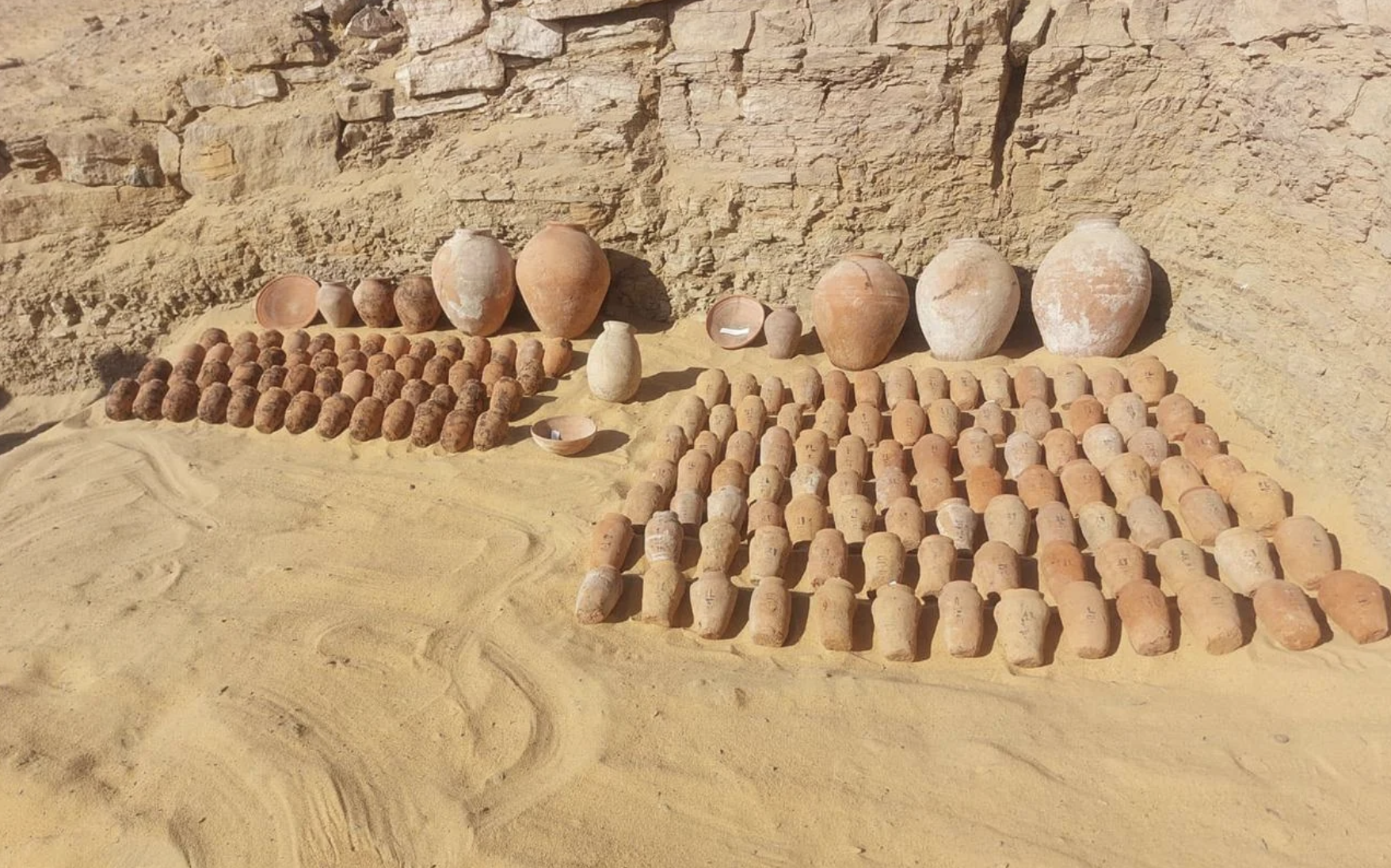
Photo Credit: Egyptian Ministry of Tourism and Antiquities
However, the story of these tombs did not end there. Evidence found within the burial shafts shows that the complex was reused in later periods. Archaeologists identified signs of activity from the First Intermediate Period and again during the Middle Kingdom. Differences in blocking stones, burial layers and the positioning of objects point to these later phases of reuse.
One of the most significant discoveries came from two of the chambers, where archaeologists found around 160 pottery vessels. Most of these date back to the Old Kingdom, and many were recovered intact. Several jars still carry hieratic inscriptions, the cursive script used in ancient Egypt for everyday writing and administration. These markings likely recorded details such as the vessel’s contents or its owner.
Early analysis suggests that many of the jars once held liquids or grain. These goods formed part of the funerary provisions placed in tombs to sustain the deceased in the afterlife.
What makes the find particularly interesting is the condition and arrangement of the vessels. Rather than appearing scattered or discarded, the jars were carefully grouped in ways that suggest deliberate storage. For researchers, this offers a rare glimpse into how food and drink offerings were prepared, labelled and stored for burial in southern Egypt more than 4,000 years ago.
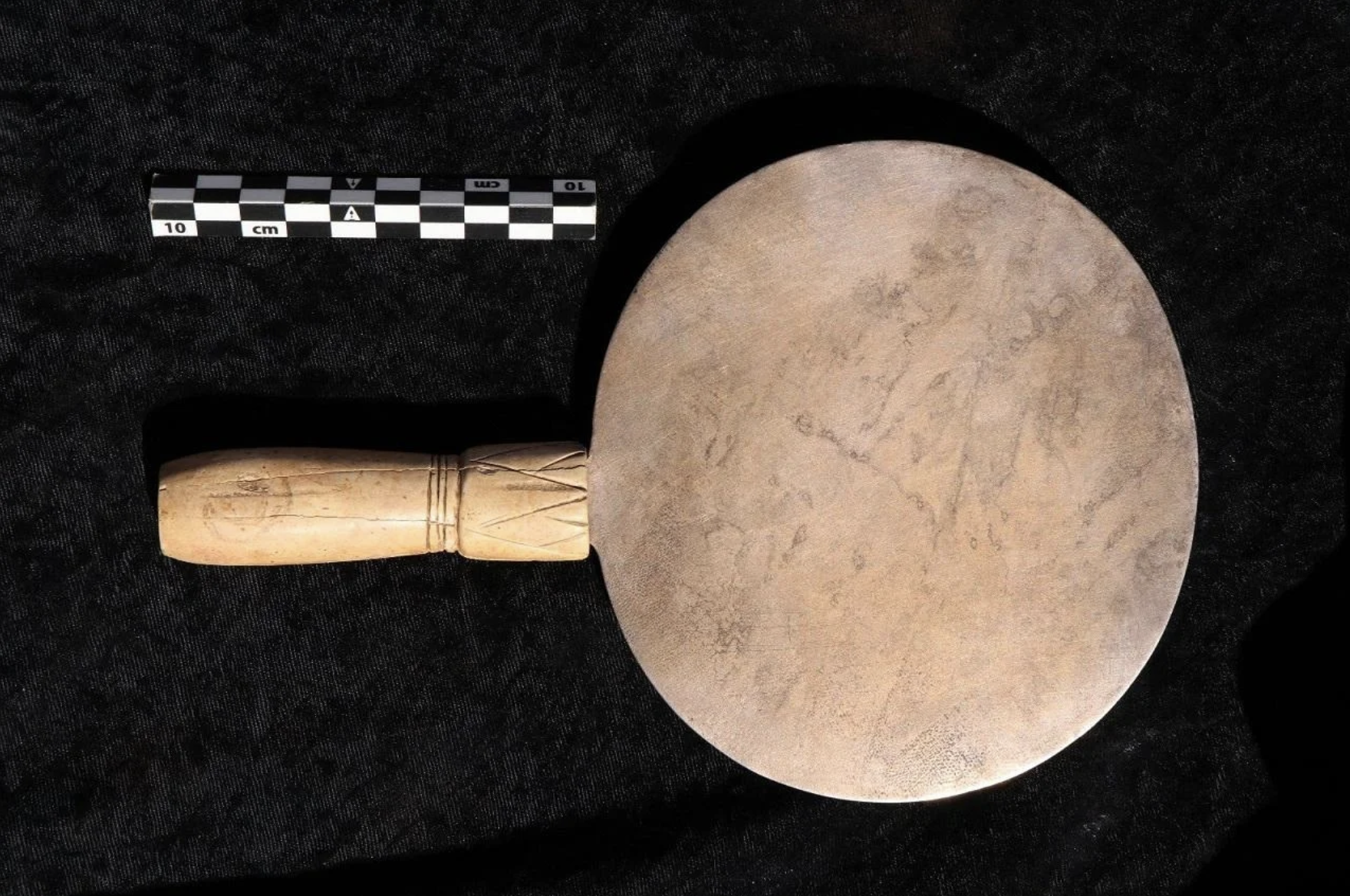
Photo Credit: Egyptian Ministry of Tourism and Antiquities
In the outer courtyard of the tomb complex, archaeologists uncovered a number of artefacts dating to a later period. These include copper-alloy mirrors, alabaster kohl containers, bead necklaces in a variety of shapes and colours, and several amulets. Based on their style and materials, these objects are believed to date to the Middle Kingdom, roughly between 2055 and 1650 BCE. Their presence confirms that the tomb complex continued to attract visitors and burials centuries after it was first constructed.
Qubbet el Hawa has long been recognised as one of the most important burial sites in Aswan. The hill overlooks the First Cataract of the Nile and served as the resting place for governors and officials responsible for managing Egypt’s southern frontier.
Burials at the site span a vast period of time, from the early Old Kingdom through to the Greco-Roman era. The newly uncovered tombs add another piece to this long and complex history.
The archaeological team is now carefully documenting the tomb architecture, pottery inscriptions and smaller artefacts found during the excavation. Further work is also planned in nearby areas of the site. Ongoing research at Qubbet el Hawa aims to build a clearer picture of how later generations reused earlier tombs and how burial customs evolved over time in southern Egypt.