Kybele Stele Discovery in Western Türkiye Hints at Hidden Hellenistic Rural Sanctuary!
A fragmentary stone stele discovered beside an ancient route in western Türkiye may point to the existence of an as-yet unidentified rural sanctuary dedicated to Kybele, the Mother Goddess whose worship spread widely across Anatolia and the wider Mediterranean world.
The find comes from Çayağzı, a village in the Kiraz district of İzmir province, an area that is gradually emerging as a significant but previously under-studied part of the Hellenistic landscape. Situated in the fertile Küçük Menderes Valley, once part of ancient Lydia, the region formed a natural corridor linking important centres such as Ephesos, Hypaipa, Palaiapolis, and Philadelphia (modern Alaşehir).
Recent research by Ali Özkan brings together a series of discoveries from the area, including two Hellenistic fortifications at Karaburç and Çayağzı, a votive stele dedicated to Kybele, and a nearby 2nd-century BCE tomb. Viewed together, these remains suggest that Kiraz was not a remote backwater, but rather a connected, defended, and ritually active rural environment during the Hellenistic period.
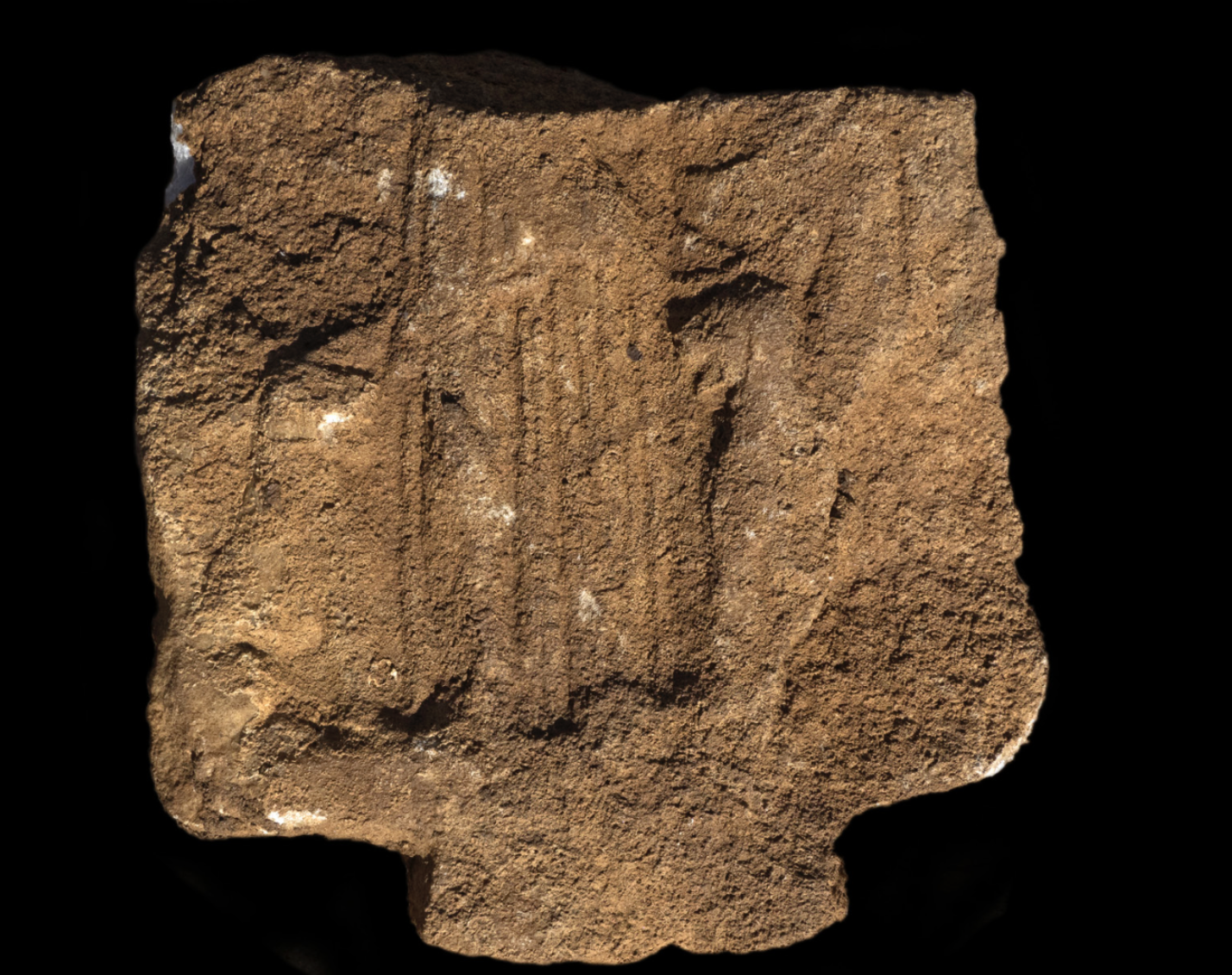
Photo Credit: Ali Özkan / Arkeoloji Dergisi, 2026
The Kybele stele from Çayağzı was identified following a rescue excavation conducted by the Ödemiş Museum in 2017, prompted by reports of illegal digging in the area. It was found close to a disturbed burial and near a road that once continued from Kiraz towards ancient Philadelphia.
Although the upper portion of the monument is missing and its surface heavily weathered, the surviving imagery is sufficient to identify the central figure as Kybele. She is depicted standing, wearing a chiton and likely a himation, flanked by two lions, one of her most recognisable attributes. The style corresponds to the so-called “Ephesos type” of votive steles, a form widely attested in western Anatolia from the Late Classical period onwards.
The location of the find is particularly significant. Rather than originating in an urban sanctuary, the stele was uncovered in a rural setting near a watercourse and overlooking a valley route. This has led researchers to suggest that Çayağzı may once have hosted an open-air sanctuary or informal cult place dedicated to the goddess.
Kybele was closely associated with wild landscapes, mountains, fertility, and protection. Across western Anatolia, her worship frequently appears outside formal temple complexes, instead taking place in caves, rock-cut niches, and countryside shrines. The Çayağzı stele fits comfortably within this broader tradition, potentially representing a modest votive offering placed within a lived landscape of farming, travel, and spiritual protection.
Originating in Phrygian tradition as the “Mother,” Kybele became one of Anatolia’s most enduring and widely adopted deities. Her cult spread through Greek city-states, Hellenistic kingdoms, and eventually into Rome, yet it consistently retained strong ties to nature, fertility, and the landscape itself.
On the Çayağzı stele, the goddess appears accompanied by lions, reinforcing her established iconography. Despite damage, the study suggests that additional figures may originally have been included, possibly attendants similar to those seen on other Ephesos-type monuments. Comparable examples from sites such as Ephesos, Metropolis, and across the Küçük Menderes Valley indicate that local workshops were actively producing such votive works during the Hellenistic era.
The Çayağzı example is broadly dated to the 3rd–2nd centuries BCE. Its discovery in Kiraz is particularly important, as the district has seen limited systematic excavation, meaning each new find significantly reshapes understanding of the region’s past.
Rather than reflecting elite patronage, the stele likely represents the devotion of a rural community whose daily life depended on agriculture, water resources, and local routes. In this context, Kybele would have been understood not as a distant figure, but as a protective presence embedded in the rhythms of the land.
In close proximity to the stele, archaeologists also documented a rectangular tomb that had been damaged by illicit excavation. The structure was aligned north–south and measured approximately 2.60 metres in length and 1 metre in width. Its walls were constructed from stone bonded with mud mortar, with one end closed by a single slab.
Despite disturbance, human remains were recovered, including fragments of skull, jaw, and teeth. Two unguentaria and a lagynos were also found, providing key evidence for dating.
The unguentaria, small vessels commonly associated with oils or perfumes used in funerary contexts, belong to a fusiform type widely used in the Hellenistic period. Comparable examples from Metropolis, Ephesos, Sardis, and Laodikeia support a 2nd-century BCE date.
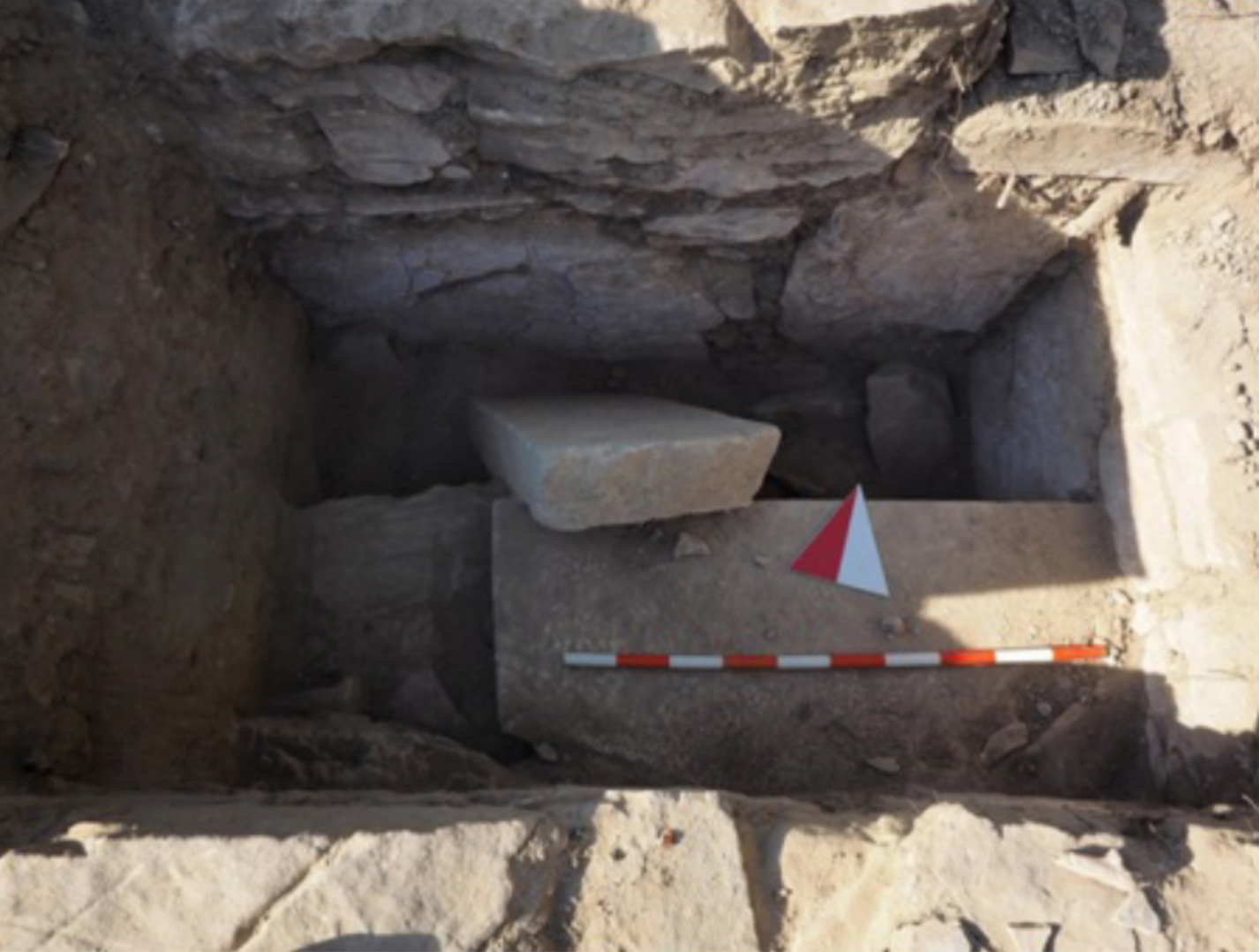
Photo Credit: Ali Özkan / Arkeoloji Dergisi, 2026
The presence of a lagynos is also noteworthy. This long-necked vessel type is often linked with Pergamene ceramic traditions. Although its painted decoration is now poorly preserved, traces of pigment suggest it may once have been ornamented. This hints at cultural and artistic connections between rural Kiraz and major Hellenistic production centres.
Taken together, the burial evidence points not only to local funerary customs but also to wider networks of exchange, where goods, styles, and practices circulated between urban centres and rural communities.
Alongside the religious and funerary evidence, the study also examines two defensive structures at Karaburç and Çayağzı, situated roughly two kilometres apart and positioned on elevated ground overlooking key routes and the Kilbos plain.
These fortifications would have had clear strategic value, allowing control and observation of movement through the Küçük Menderes Valley, including routes towards Philadelphia and other major settlements. In periods of political instability, such positions would have been essential for protecting agricultural production and securing communication lines.
Karaburç features a combination of polygonal, trapezoidal, and isodomic masonry, suggesting either multiple construction phases or varied building practices. Çayağzı, by contrast, displays a more uniform isodomic emplekton technique, indicating a more standardised or possibly later construction.
The architectural evidence places both structures broadly in the 3rd–2nd centuries BCE. Karaburç may date to the early Hellenistic period, potentially linked to the era of Lysimachos, while Çayağzı may belong to the period of Seleucid or Attalid influence.
This was a time of considerable upheaval in western Anatolia, following the fragmentation of Alexander the Great’s empire. Competing Hellenistic powers sought control over cities, trade routes, and fertile agricultural zones, making the Küçük Menderes Valley a strategically valuable and contested landscape.
When considered together, the discoveries from Kiraz present a more complex picture of rural life in the Hellenistic world. The Kybele stele points to religious practice, the tomb reflects burial customs and long-distance cultural connections, and the fortifications demonstrate strategic organisation and control of territory.
Rather than existing on the margins of history, Kiraz appears to have been integrated into a wider system of settlement, belief, and defence that sustained the region’s major cities.
Future archaeological work may clarify whether the Kybele stele originated from a dedicated sanctuary, how the tomb related to nearby habitation, and how the fortifications fitted into broader military networks across western Anatolia.
For now, the fragmentary stele is enough to reshape the narrative. On a hillside beside an ancient road, the image of the Mother Goddess endures, not in a monumental temple, but in a rural landscape where ancient communities lived, worked, buried their dead, and sought divine protection over two thousand years ago.