Pompeii Discovery Suggests Victim May Have Been a Roman Doctor Carrying Medical Tools!
A man who perished while attempting to flee the eruption of Mount Vesuvius in AD 79 may have been a Roman physician, according to recent findings released by the Pompeii Archaeological Park. The discovery adds an unexpected personal dimension to one of history’s most studied disasters, suggesting that at least one of Pompeii’s victims may have been a medical professional carrying the tools of his trade as he tried to escape the city’s final hours.
The story begins in the early 1960s, when excavations at the Orto dei Fuggiaschi, better known as the Garden of the Fugitives, uncovered a group of fourteen individuals who had been overwhelmed by the deadly pyroclastic flow as they attempted to flee Pompeii near Porta Nocera. Their bodies, preserved as plaster casts, captured the final movements of people caught in the chaos of the eruption.
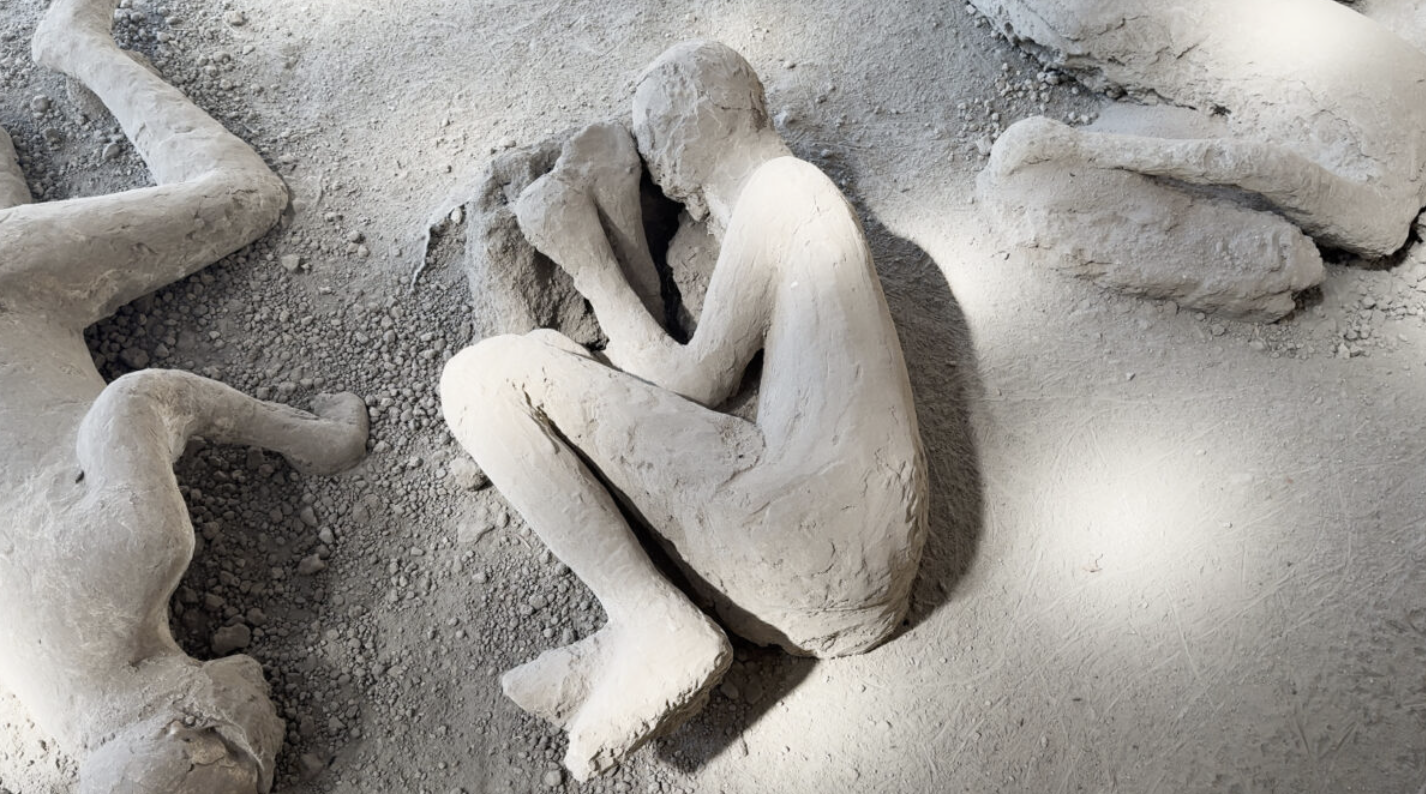
Photo Credit: Pompeii Archaeological Park
For decades, these casts remained one of the most striking and emotional reminders of Pompeii’s destruction. But recent scientific reanalysis of materials stored by archaeologists has revealed new details that were previously hidden from view.
Modern imaging techniques have allowed researchers to examine a small case embedded within one of the plaster casts without damaging it. Inside, they identified a collection of objects that appear to form a compact set of medical tools.
The case itself, made from organic materials and reinforced with metal fittings, also contained a cloth pouch holding coins, alongside several small instruments. Among the most intriguing finds was a slate-like tablet, which may have been used to prepare medicinal or cosmetic mixtures, as well as additional metal implements that closely resemble surgical tools used in the Roman world.
Although the man remains unnamed, the nature of these items strongly suggests he may have been a medicus, a physician in ancient Roman society. The breakthrough came through the use of X-rays and CT scanning, including 3D reconstruction techniques and AI-assisted analysis. These non-invasive methods allowed experts to explore the contents of the case in extraordinary detail, revealing both its structure and its contents.
The scans also showed that the case featured a sophisticated locking mechanism, likely operated by a toothed wheel. This level of craftsmanship indicates that the container was both valuable and carefully designed, reinforcing the idea that its contents were important to its owner.
According to researchers, this discovery goes beyond the identification of objects. It offers a rare opportunity to infer aspects of the individual’s identity and profession. If the interpretation is correct, the man was not simply fleeing with personal valuables, but with the instruments that defined his livelihood and expertise.
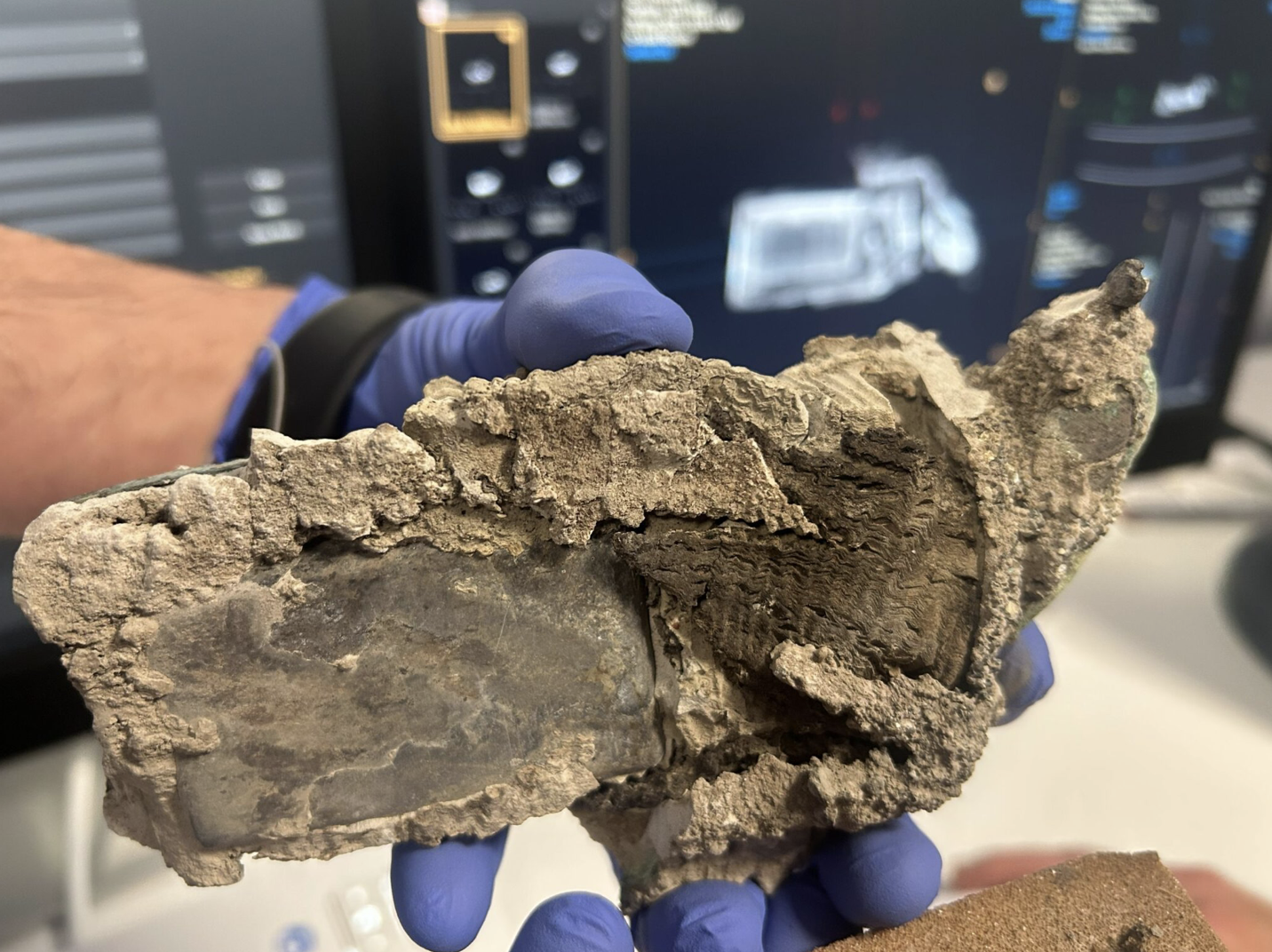
Photo Credit: Pompeii Archaeological Park
In Roman society, doctors could work in a range of environments, from private households to military camps and urban settings. Their medical kits were portable by necessity, combining practical tools with substances used in treatment. Such a kit would have represented both professional status and economic survival.
Director Gabriel Zuchtriegel of the Pompeii Archaeological Park described the find as modest in scale but significant in meaning. He suggested that the man may have carried his instruments not only in an attempt to survive, but potentially with the intention of continuing his work elsewhere or assisting others during the disaster.
This interpretation adds a poignant layer to the story of the Garden of the Fugitives, a site that already captures one of the most dramatic final moments in Pompeii’s history. Among the group frozen in time may have been a healer, escaping with the very tools that defined his role in society.
The discovery also highlights how archaeological research is evolving. Materials excavated decades ago are now being revisited using technologies such as digital imaging, radiological scanning, and 3D modelling. These methods allow researchers to extract new information without disturbing fragile remains.
What was once seen primarily as a collection of tragic casts is now becoming a source of detailed historical insight. The combination of archaeology, medical imaging, numismatics, and digital analysis is revealing stories that were previously inaccessible.
More than 1,900 years after the eruption buried Pompeii, the city continues to yield new discoveries that reshape understanding of its final day. This latest finding is not a grand structure or a newly uncovered fresco, but something far more intimate: a concealed medical kit that may once have belonged to a man whose profession defined him.
In a place where so many identities were lost to time, this discovery offers something rare, a possible glimpse of who one of the victims truly was, preserved not only in ash, but in the tools he carried as the ancient world came to an end.