Archaeological investigations at Epidaurus in Greece are helping to identify a long-lost sacred site once described by the ancient traveller Pausanias nearly 1,800 years ago. Among the discoveries are a monumental fountain, a sacred well, religious offerings and a marble statue of a woman who may represent Epione, the wife of Asclepius, the Greek god of medicine.
The findings are providing fresh insight into the religious landscape of one of ancient Greece’s most important healing centres, revealing how worship, ritual practices and ideas about healing developed over several centuries.
On 9th November 2026, Professor Vassilis Lambrinoudakis of the National and Kapodistrian University of Athens presented an assessment of archaeological research carried out at Epidaurus over more than 50 years. Bringing together evidence from successive excavation campaigns has allowed researchers to reconsider the location of a previously unidentified sanctuary and explore its relationship with the wider cult of Asclepius.
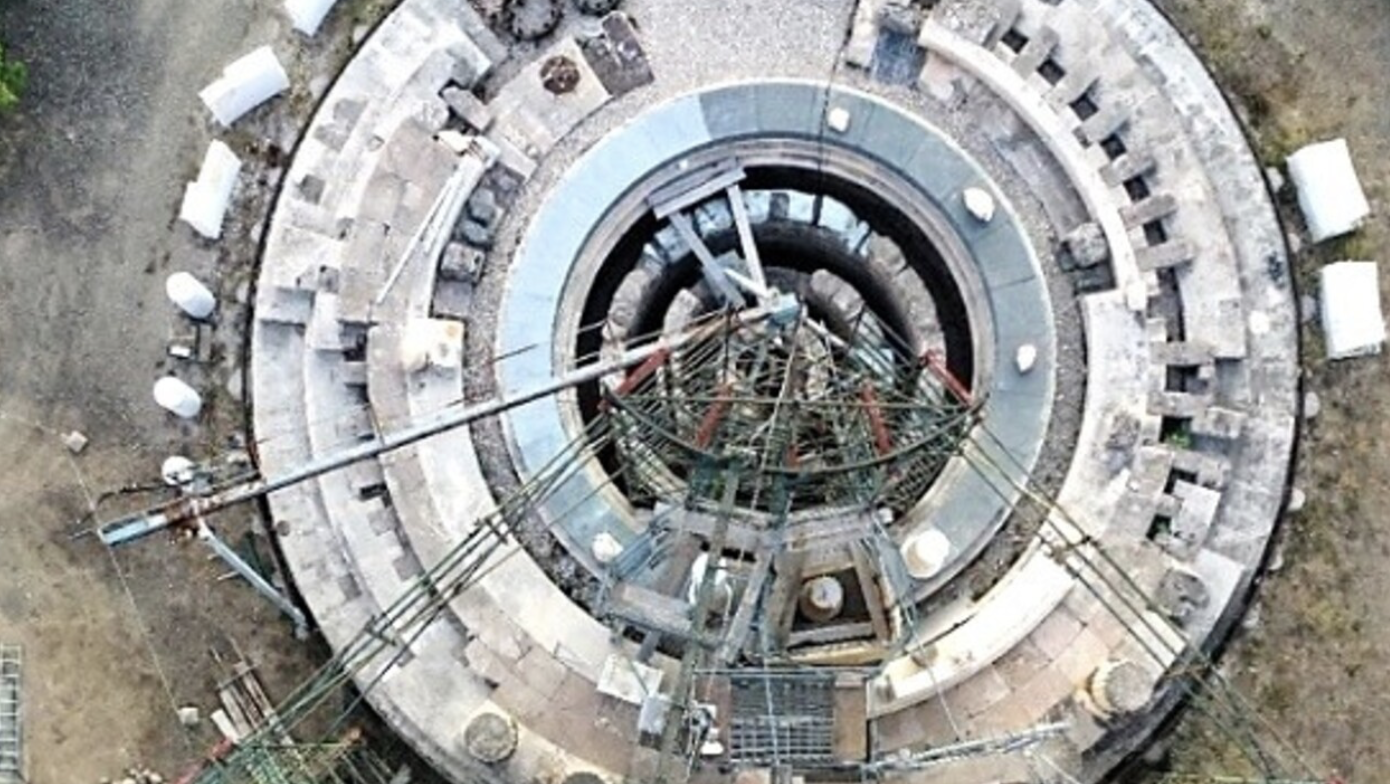
Photo Credit: National and Kapodistrian University of Athens – Epidaurus Excavation Project.
In the 2nd century AD, the Greek traveller and writer Pausanias recorded visiting an open-air sacred precinct in the centre of Epidaurus. He described statues of Asclepius and his wife, Epione, standing within the area. Despite this account, archaeologists had struggled to establish exactly where the sanctuary was located, particularly as it was separate from the better-known Asclepieion outside the city.
Excavations in the vicinity of Epidaurus' small theatre have now provided important clues. Archaeologists uncovered a substantial fountain complex dating to the 4th century BC, alongside an adjoining sacred precinct. Its architectural features included Ionic columns, a water collection basin and several associated structures, suggesting that the area had an important religious function.
Further investigation revealed a well positioned within the sacred precinct. An underground channel connected it to the reservoir of the monumental fountain, demonstrating how water was incorporated into the layout of the complex.
Other discoveries have strengthened the proposed identification of the site. These include votive offerings and a fragment of pottery carrying part of the name of Asclepius. Together, the archaeological evidence provides a compelling connection with the sanctuary described by Pausanias.
Perhaps the most intriguing discovery is a marble statue of a woman found within the enclosed section of the sanctuary. Slightly larger than life-size, the figure is depicted wearing long garments and may correspond to the statue of Epione mentioned in Pausanias' account.
Lambrinoudakis considers the identification plausible, particularly given the statue's archaeological context and the ancient writer's description. However, no accompanying inscription has been discovered to confirm the woman's identity, meaning the suggestion remains a possibility rather than an established identification.
In Greek mythology, Epione was the wife of Asclepius and was associated with soothing pain and easing suffering. Her presence alongside the god would therefore have been particularly appropriate within a sanctuary connected with healing.
Other objects recovered from the precinct may point towards an even older religious tradition. These include small votive plaques depicting female divine figures and terracotta figurines. Researchers suggest that these objects could reflect an earlier cult associated with nature, fertility and renewal, which may have influenced the later religious character of the site.
The discoveries are also helping archaeologists reconsider when the worship of Asclepius first became established at Epidaurus.
Investigations near the Tholos, the distinctive circular building constructed during the 4th century BC within the famous Asclepieion, identified the remains of a much earlier structure. Dating to the late 7th century BC, the building contained a rock-cut basement, walls decorated with dark red plaster and a floor surfaced with small pebbles.
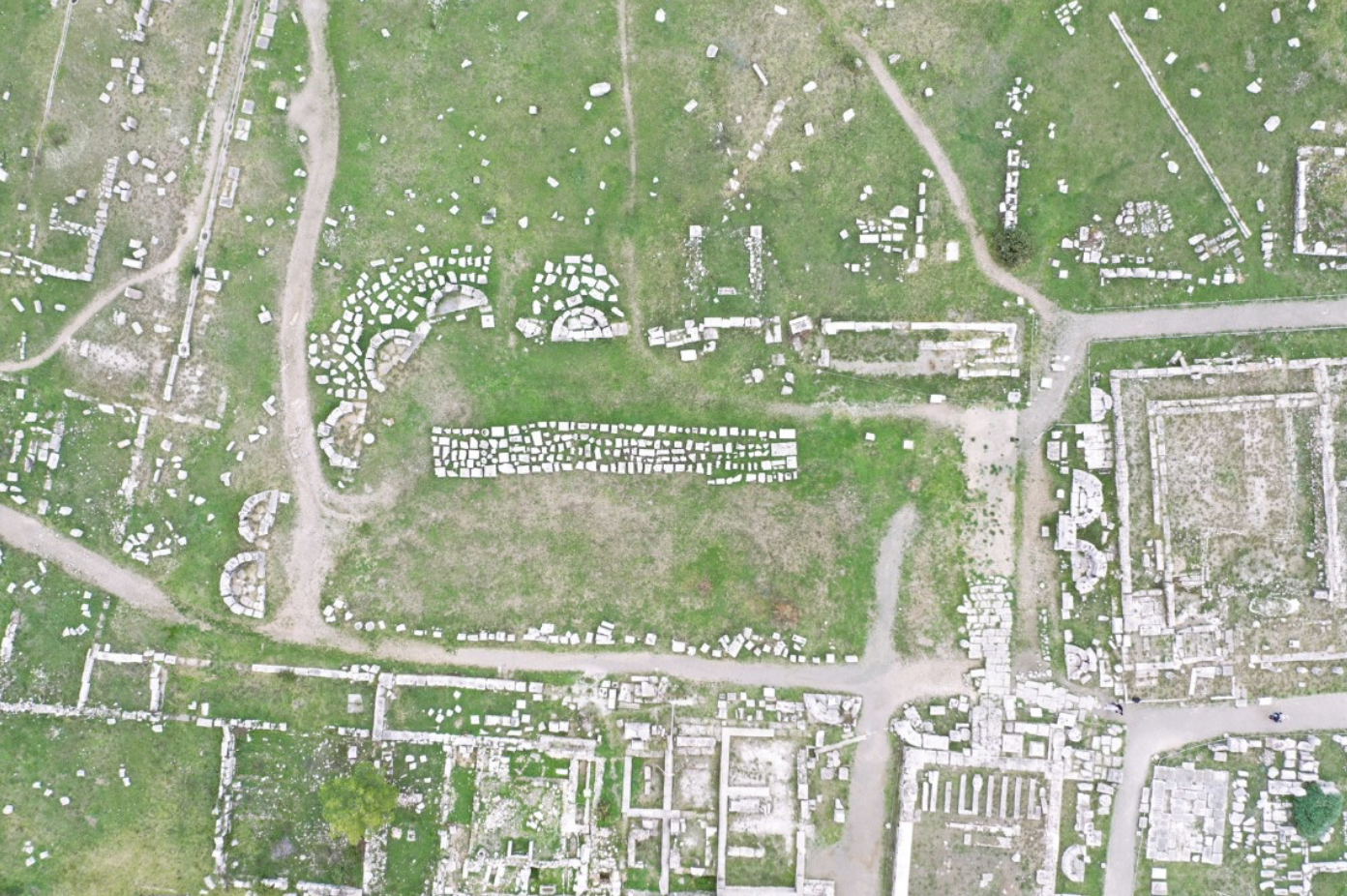
Photo Credit: National and Kapodistrian University of Athens – Epidaurus Excavation Project.
One particularly interesting feature was a basin positioned in a corner of the building. Its purpose has not been definitively established, although researchers believe it may have been used in connection with liquids required for religious ceremonies.
The building had been identified during earlier excavation work, but its significance has become clearer through subsequent research. Its date suggests that the origins of the cult of Asclepius at the sanctuary could be around 60 years earlier than previously believed.
Another important detail is that the older structure appears to have been preserved when the later Tholos was constructed. Researchers believe this may have been a deliberate decision, potentially reflecting an intention to maintain an established religious tradition rather than completely replace an earlier sacred building.
Further mysteries have emerged from Building B within the Asclepieion, particularly in an area that underwent expansion during the Roman period. Archaeologists identified an unusual underground space in the north-western part of the complex. Its architecture differs from the surrounding structures, featuring niches constructed using reused architectural fragments, openings that allowed sunlight to enter around midday and the lower sections of four large amphorae set directly into the floor.
The precise function of this underground area remains uncertain. One possibility being considered is that it was connected with a mystery cult, although researchers have not yet established which religious practices or ceremonies might have taken place there.
The combination of its unusual architectural features and carefully arranged objects suggests that the space served a specific purpose, rather than simply being an ordinary underground room.
Taken together, the archaeological evidence from Epidaurus demonstrates that ancient Greek healing traditions involved considerably more than the treatment of physical illness.
Water sources, religious offerings, sacred buildings and underground spaces all formed part of the wider religious environment surrounding Asclepius. The possibility of an earlier cult associated with nature and renewal also suggests that the sanctuary's history may have incorporated several layers of religious belief.
The identification of the city-centre sanctuary described by Pausanias is particularly significant, as it provides an opportunity to compare an ancient written account with surviving archaeological evidence. Although the identification of the female statue as Epione remains unconfirmed, its discovery adds another important dimension to our understanding of the sanctuary.
More than half a century of archaeological research is therefore helping to reconstruct the religious history of Epidaurus, revealing how its sacred spaces developed and how ideas about healing, renewal and divine protection were expressed in the ancient world.