More than 2,000 fragments of carved bone recovered from Pompeii are shedding new light on the elaborate furniture used in Roman funeral ceremonies. Decorated with images of helmeted warriors, ornate shields and triumphal wreaths, some of these luxury furnishings even retained traces of red pigment and gold leaf, revealing just how elaborate their original appearance would have been.
A new study, published in the Journal of Roman Archaeology, has examined these remarkable objects to explore the craftsmanship behind Roman funerary furniture and the symbolism associated with its decoration. Researchers Pilar Mas Hurtuna, Llorenç Alapont Martín and Agustín Ángel Diez Castillo compared finds from the Porta Nola necropolis with material recovered from the Casa del Fabbro, or House of the Craftsman, inside Pompeii.
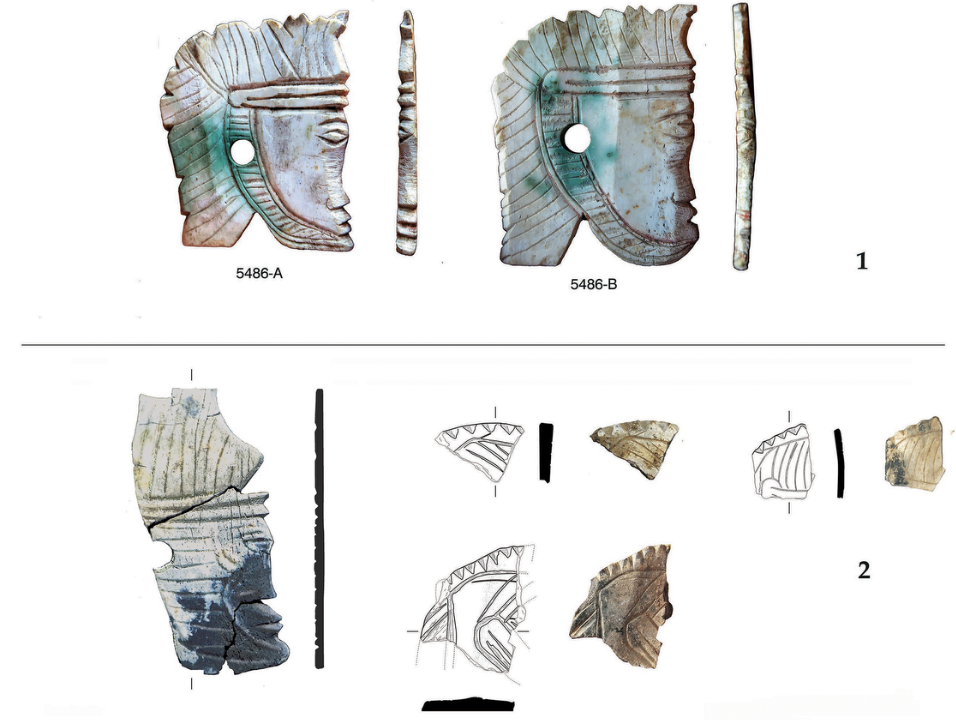
Photo Credit: Mas Hurtuna et al., Journal of Roman Archaeology (2026).
Their analysis has revealed notable similarities between the two collections, raising questions about the production, decoration and circulation of expensive furniture in the city during the first century AD.
In ancient Rome, funeral beds were more than simply somewhere to place the deceased. They formed an important part of the rituals surrounding death, with the body displayed on an elaborately decorated wooden couch before being transported to the funeral pyre.
The bed was often burned alongside the deceased, meaning that relatively little of the original furniture survived. However, the bone decorations could endure among the cremated remains, charcoal and other burial deposits, giving archaeologists an unusual opportunity to reconstruct these otherwise lost objects. Several particularly interesting groups of fragments were recovered from the Porta Nola necropolis in Pompeii.
One collection came from the tomb of Marcus Obellius Firmus, which was initially investigated in 1976. Further excavations carried out between 2015 and 2017 allowed archaeologists to examine approximately 450 fragments associated with the burial, including pieces of decorative bone that had once been attached to a wooden funerary bed.
Other discoveries included around 540 fragments from a cremation burial known as Tomb A, some of which had been placed inside a ceramic urn. A nearby cremation deposit produced approximately 500 additional pieces, including an almost complete furniture leg and part of a frame that still retained its carved bone decorations.
Taken together, these discoveries demonstrate that Roman funeral beds could feature extensive decorative schemes. Rather than limiting ornamentation to a few individual details, craftspeople incorporated carefully arranged motifs across different parts of the furniture.
Among the most distinctive discoveries are small carved representations of soldiers wearing elaborate helmets. Some resemble Attic-style military helmets, which were frequently associated with commanders in Greek and Roman artistic traditions, while others display features influenced by Hellenistic military equipment.
The researchers identified several different types of decorative figures, ranging from small plaques showing helmeted heads in profile to larger, medallion-shaped ornaments. These images were carved into thin pieces of bone, with fine incisions used to pick out details such as helmet crests, cheek guards, facial features and clothing. Despite their relatively small size, the surviving decorations demonstrate considerable attention to detail.
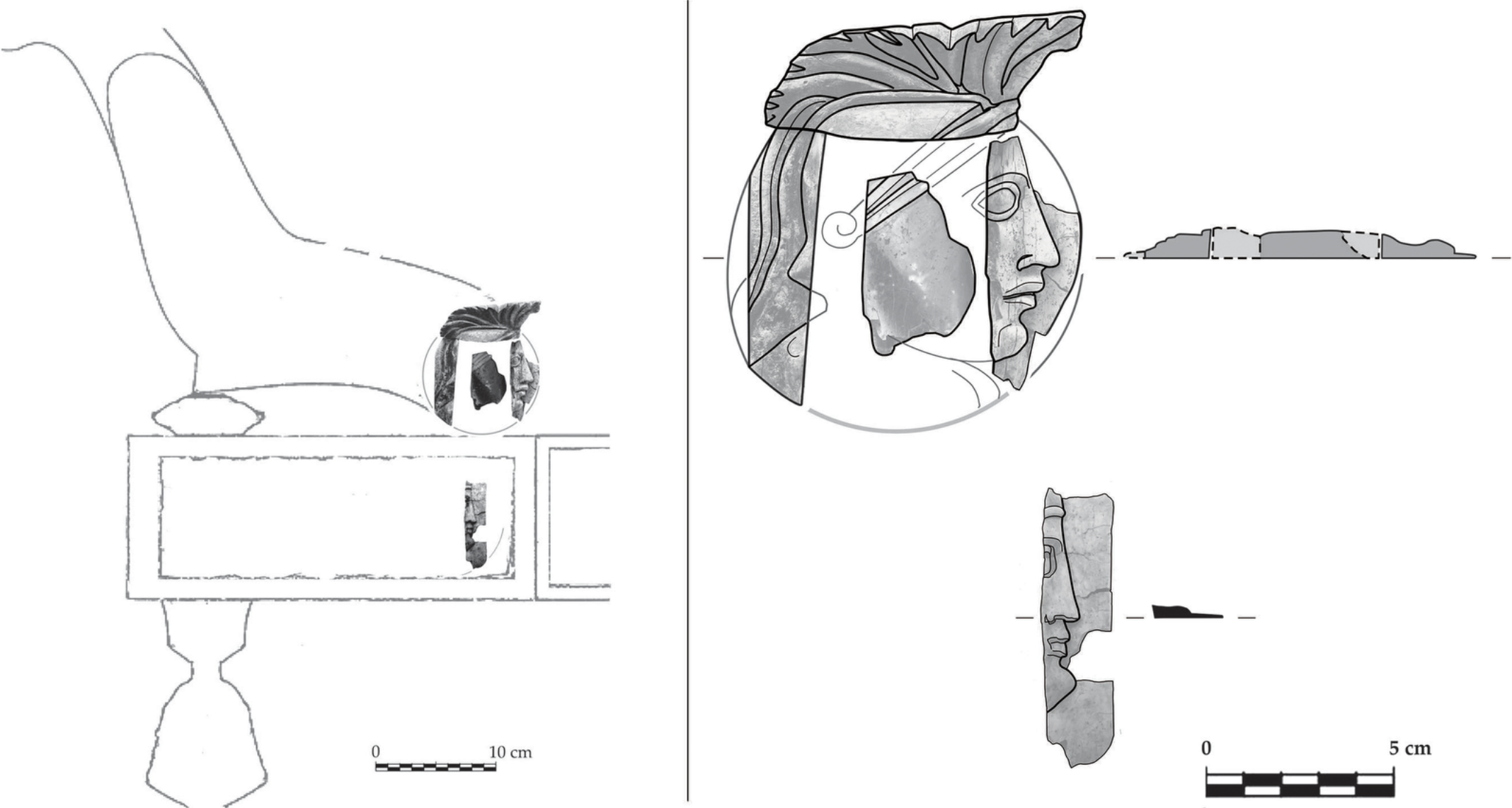
Photo Credit: Mas Hurtuna et al., Journal of Roman Archaeology (2026).
The military theme continues across other elements of the furniture. Archaeologists identified miniature shields in a variety of shapes, including hexagonal, rectangular and crescent-shaped examples. Some appear to draw inspiration from Macedonian and wider Hellenistic military traditions, suggesting that Pompeian craftspeople incorporated established artistic styles into their designs.
Importantly, the decorations were not necessarily left in their natural bone colour. Some fragments recovered from the Casa del Fabbro retain traces of red pigment within their carved details, indicating that colour was used to make particular features stand out.
There is also evidence of more luxurious finishing techniques. A decorative garland from the tomb of Marcus Obellius Firmus preserves traces of gold leaf, suggesting that at least some of the ornaments were enhanced with precious materials. Although this does not mean that the entire furniture pieces were covered in gold, it provides an indication of the resources that wealthy Roman families were willing to invest in their funerary displays.
Perhaps the most intriguing aspect of the research is the connection identified between the Porta Nola cemetery and the Casa del Fabbro, a building located within Pompeii's residential area.
Excavations at the house, conducted between 1926 and 1933, uncovered a substantial collection of worked bone objects. One room contained 20 decorative plaques alongside a further 322 fragments, including ornaments remarkably similar to those recovered from the funerary beds.
The building's changing function is particularly interesting. Following the earthquake of AD 62, which caused considerable damage across Pompeii, the Casa del Fabbro appears to have undergone a change of use. Rather than continuing as a conventional residence, it may have become a workshop or storage space in the years leading up to the eruption of Mount Vesuvius in AD 79.
When comparing the two collections, the researchers identified similarities not only in their decorative designs but also in the techniques used to produce them.
One particularly distinctive example involves the use of curved gouges to create repeated, scale-like patterns across the surfaces of certain shields. The presence of comparable carving techniques in both collections suggests a possible connection between the objects.
However, the researchers are careful not to claim that the Casa del Fabbro was definitely responsible for manufacturing the specific funeral beds discovered at Porta Nola. Instead, several possibilities remain. The building may have been used for producing decorative furniture components, storing finished ornaments or repairing and reusing existing pieces. Some of the objects show signs of previous use, raising the possibility that valuable decorations were removed from older furnishings and incorporated into new ones.
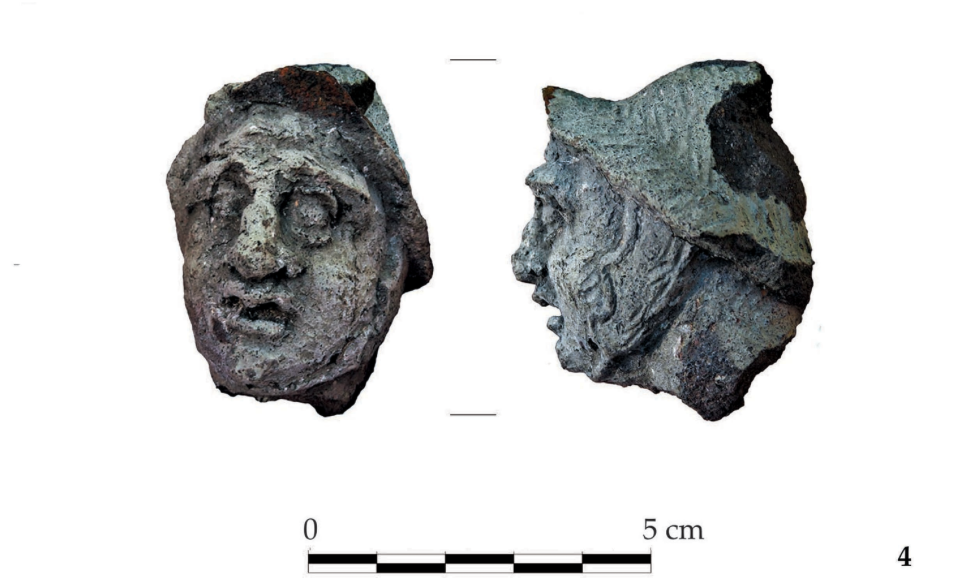
Photo Credit: Mas Hurtuna et al., Journal of Roman Archaeology (2026).
Whatever its precise function, the evidence suggests that specialised furniture-related activities were taking place in Pompeii during the city's final decades.
The repeated appearance of warriors, weapons and shields also raises an interesting question about the meaning behind these decorations. Military imagery was closely associated with ideas of authority, victory and prestige throughout the Roman world. The researchers suggest that the use of Hellenistic military equipment and triumphal symbols on funerary furniture may have communicated some of these wider cultural associations.
Importantly, the presence of soldiers on a funeral bed does not necessarily mean that the deceased had served in the Roman army. Instead, these images may have reflected the family's wealth, ambitions or desire to associate the deceased with the ideals of military success.
There may also have been a more symbolic connection with death itself. The researchers consider whether military victory could have represented a metaphorical triumph over death, giving the images of warriors and weapons an additional meaning within the funeral ceremony.
These decorative traditions were not exclusive to Pompeii. Similar examples have been identified at archaeological sites across present-day Switzerland, Germany, France, Spain and Britain. Comparing these discoveries helps researchers understand how particular artistic styles and decorative motifs circulated throughout the Roman Empire.
The study also raises the possibility that some of these elaborately decorated beds were not originally made for funerals. Wealthy Romans regularly used luxurious couches in their homes, particularly for reclining and dining. Given the similarities between domestic furniture and the surviving funerary examples, the researchers suggest that some pieces may have been used during everyday life before eventually becoming part of their owners' funeral ceremonies.
Although it is not possible to establish how frequently this happened, the possibility highlights the relationship between domestic luxury and funerary traditions in Roman society.
Ultimately, the thousands of carved bone fragments from Pompeii provide a rare glimpse into an aspect of Roman life that would otherwise have largely disappeared. They reveal the skill of ancient craftspeople, the importance of elaborate funeral displays and the ways in which wealthy families used artistic decoration to express status and identity.
They also demonstrate how discoveries from seemingly very different archaeological contexts, from domestic buildings to burial grounds, can be brought together to reveal more about the people who lived in the ancient city.