Archaeologists investigating an ancient church in southwestern Turkey have uncovered intriguing evidence that Roman-era seating arrangements may have been repurposed for early Christian education. The remains, found at the ancient city of Adada, include rows of stone seating, architectural features associated with a possible baptismal area, and an unusual engraving depicting a boat, a human figure and the Tree of Life.
A new study by archaeologists Nurittin Çelik and Ahmet Mörel of Süleyman Demirel University, published in the Journal of Archaeology, explores the architectural development of the South Valley Church and how its layout may have changed during Late Antiquity. Their research suggests that the building served purposes beyond conventional worship, potentially providing a dedicated space for people learning about Christianity before baptism.
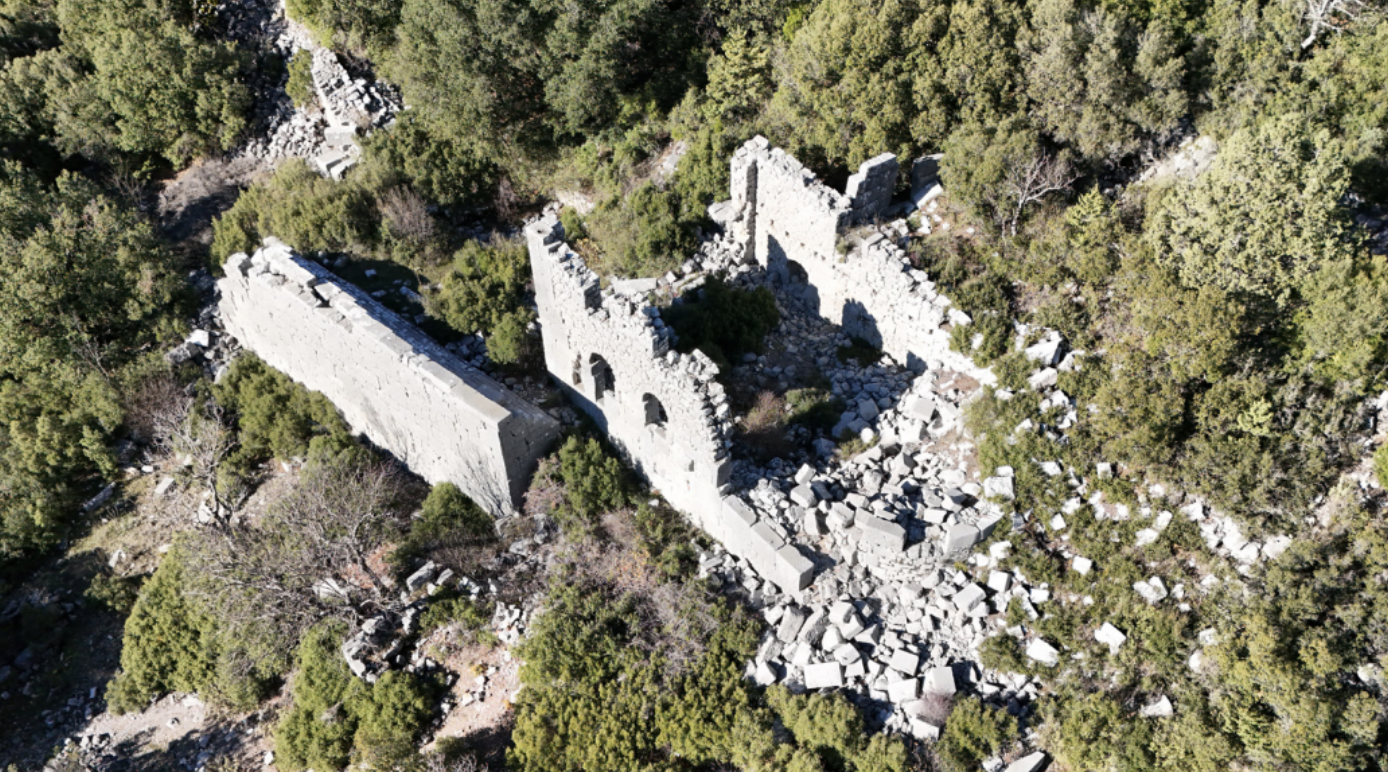
Photo Credit: Çelik & Mörel (2026), Arkeoloji Dergisi, Fig. 10. CC BY 4.0.
The ancient city of Adada lies near the modern village of Sağrak, in the Sütçüler district of Isparta. Situated in the ancient region of Pisidia, it occupied an important position along routes linking the Mediterranean coastline with the interior of Anatolia.
Adada first developed during the Hellenistic period, when its defensive walls and public buildings helped establish it as an important settlement. Its significance continued under Roman rule, when monumental temples and other substantial structures transformed the city.
Its location also placed Adada within a wider network of routes associated with the spread of Christianity across Anatolia. Roads connecting Perge with Pisidian Antioch passed through the surrounding region and were used by St Paul during his missionary journeys. Although there is no definitive evidence that Paul himself visited Adada, researchers suggest that he probably travelled along the Via Sebaste towards Pisidian Antioch. Other routes also connected Adada with neighbouring settlements.
These transport networks brought more than merchants and travellers into the region. They also provided opportunities for religious beliefs and ideas to circulate between communities.
Archaeological evidence highlights just how established Christianity eventually became in the area. Researchers have identified 13 churches in and around Adada, including six within the city itself and another seven in nearby rural settlements. This distribution suggests that Christian communities were widespread throughout the surrounding landscape rather than concentrated exclusively in the urban centre.
Written records provide further evidence of this religious development. Adada became a bishopric centre, appearing in ecclesiastical documents between the 4th and 12th centuries AD under variations of its name, including Dada and Atada.
The South Valley Church is particularly interesting because its construction incorporated elements of an earlier Roman-period structure. Located in the southern valley of the ancient city, close to an old transport route, the church features a three-aisled basilical layout opening onto a large courtyard. Archaeologists believe it was constructed over the remains of an earlier public or religious building, although its original purpose remains uncertain.
Evidence for the earlier structure can still be seen in the surviving architecture. Sections of Roman masonry remain in their original positions along the northern façade, while blocks originating from the Hellenistic period were also incorporated into the later construction. Differences in building techniques suggest that the complex developed through several phases rather than being completed all at once.
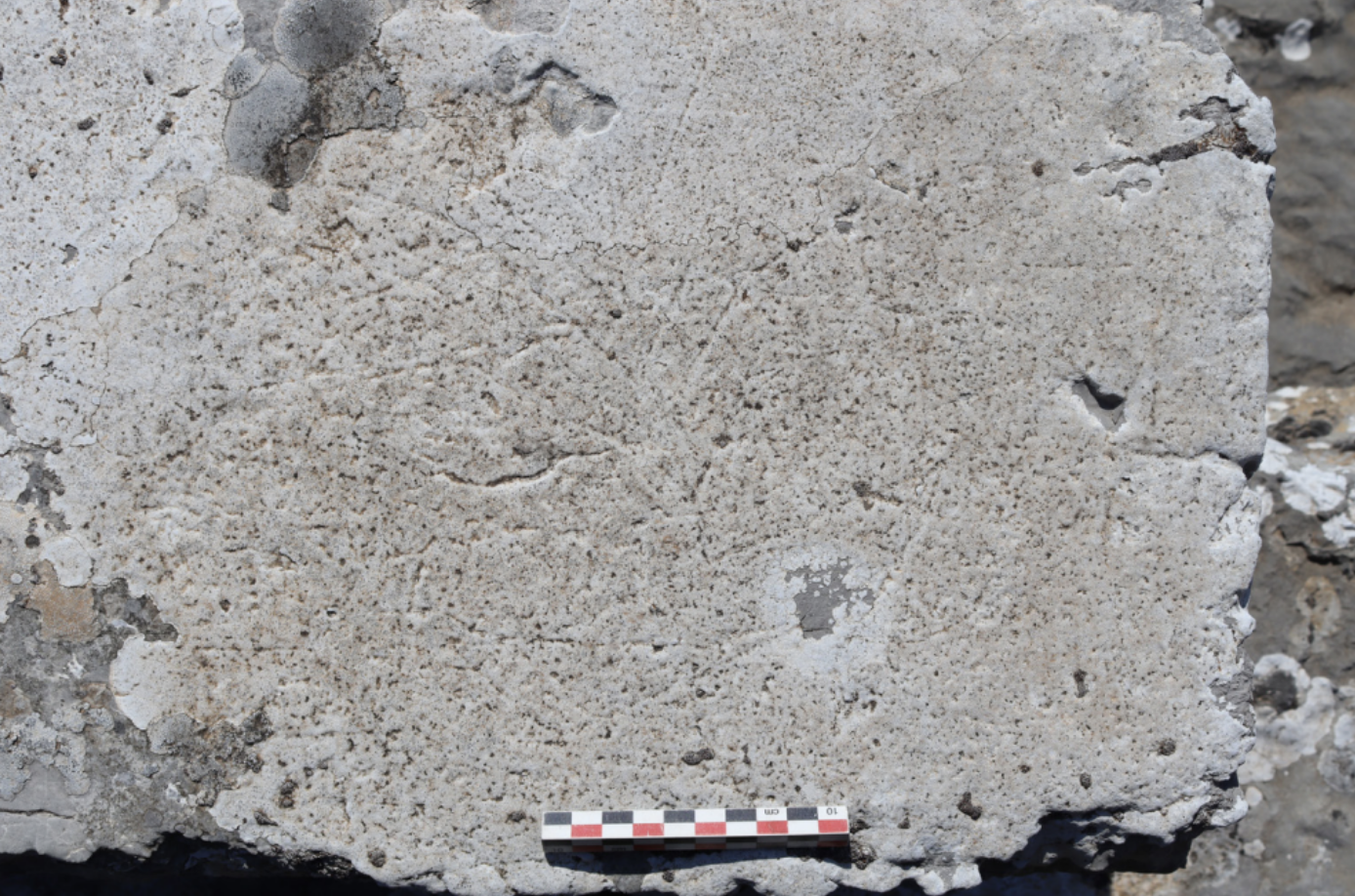
Photo Credit: Çelik & Mörel (2026), Arkeoloji Dergisi, Fig. 12. CC BY 4.0.
Importantly, there is currently insufficient evidence to identify the original Roman building as a temple. It would therefore be misleading to describe the church simply as a former Roman temple converted into a Christian place of worship. What the archaeological remains do demonstrate is that materials and foundations from an earlier structure were reused when the church was constructed.
Based on comparisons with other buildings, the researchers date its initial construction to the 5th or 6th century AD. Certain architectural features, particularly around the eastern end, resemble churches found in northern Syria and Cilicia. The apse and two adjoining rooms are concealed behind a straight exterior wall, with a corridor running behind the apse to connect the spaces.
An additional building attached to the northern side of the church may have accommodated a member of the clergy, potentially serving as both a residence and an area for church-related activities. Changes to its doorways and construction suggest that the relationship between the two buildings evolved over time.
One of the most unusual features identified during the investigation is a series of stone seating steps within the church's western courtyard.
The wider complex covered approximately 832 square metres, with rows of seating surviving along its southern and western edges. The southern section measures around 15.55 metres in length, while some of the western blocks feature decorative lion-paw reliefs.
Several details indicate that these seats were already present before the church was built. Their stonework and arrangement do not align entirely with the later church walls, suggesting that they belonged to an earlier Roman-period structure. However, the researchers believe the seating may have acquired an entirely different purpose during the Christian period.
Çelik and Mörel propose that the steps could have been used by catechumens, people undergoing religious instruction in preparation for baptism and full admission into the Christian community.
During the early centuries of Christianity, becoming a member of the Church involved a period of preparation in which individuals learned about Christian beliefs and practices before receiving baptism. The researchers suggest that the layout of the South Valley Church may have accommodated this process.
Their proposed interpretation involves a route along the southern exterior of the church, leading towards one of its side rooms. From there, individuals may have been able to reach a possible baptismal area behind the apse. Such an arrangement would have allowed those who had not yet been baptised to participate in religious instruction without entering the church's main worship space.
This theory is supported by several architectural details, including openings along the southern side of the building and the corridor connecting the rooms behind the apse. Comparable arrangements in other Early Christian churches also provide useful parallels.
Nevertheless, the interpretation remains a possibility rather than an established fact. No inscription or written source has been discovered confirming that catechumen instruction took place here, and the proposed baptismal area's function has not been conclusively identified. The seating could alternatively have provided space for the wider congregation during religious ceremonies and communal gatherings.
Similar seating arrangements have also been identified at Adada's Agora Church and Theatre Church, suggesting that these architectural features may have formed part of broader religious practices within the city.
The Roman seating steps have attracted further attention because of an unusual collection of engravings found on one of the stone blocks in the upper row. The carving depicts three elements: a small boat or ship, a human figure and a motif interpreted as the Tree of Life. Although the engraving is relatively small, its combination of imagery has prompted researchers to consider whether it carries a religious meaning.
The boat measures approximately 15 centimetres in length and has a depth of around 3 centimetres. Beside it, the human figure stands just 2.55 centimetres tall, while the Tree of Life motif measures approximately 12.7 centimetres.
Depictions of ships are known from a variety of ancient buildings, including temples, churches and public structures. They are sometimes understood as personal markings associated with travel, fishing or maritime trade. The Adada example, however, appears to present something more distinctive. According to the researchers, the human figure stands on the boat, while the Tree of Life rises from the position where a sail would normally be depicted.
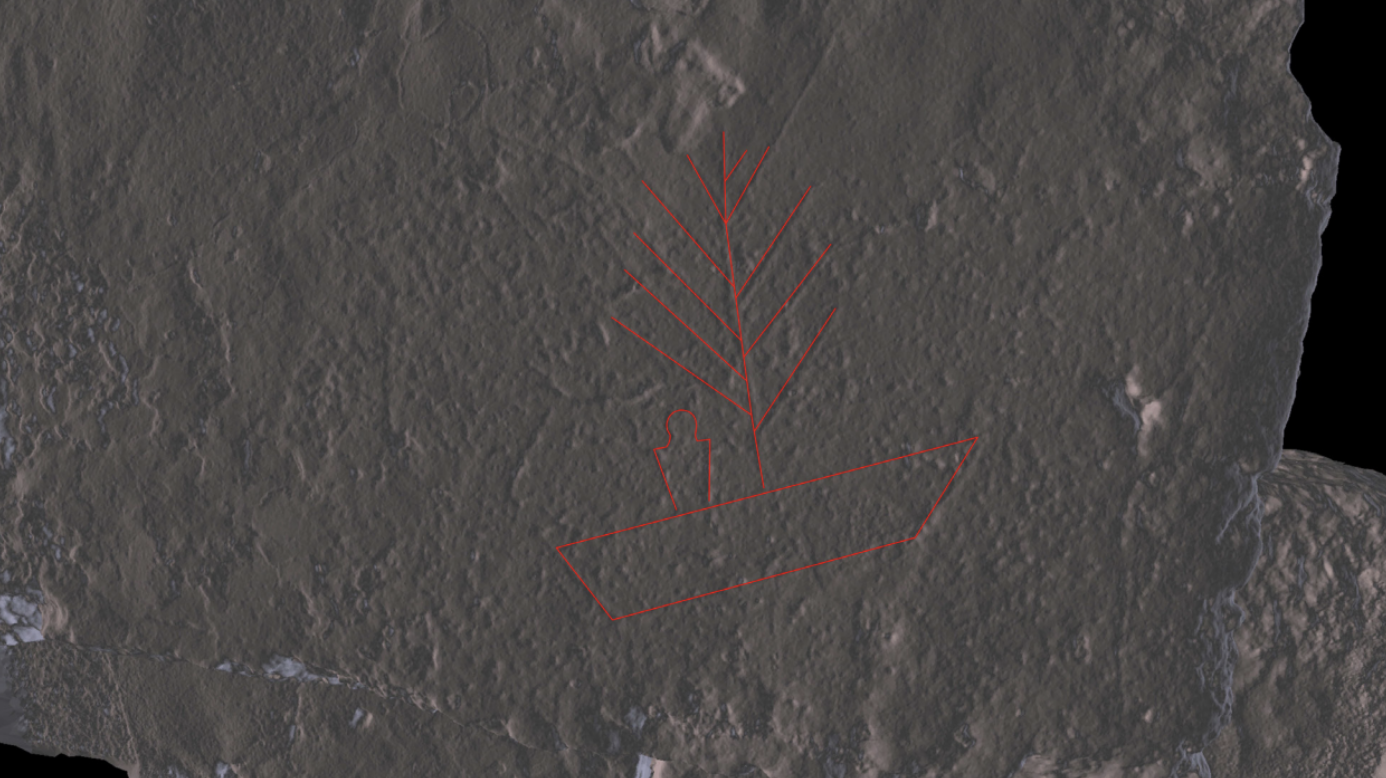
Photo Credit: Çelik & Mörel (2026), Arkeoloji Dergisi, Fig. 13. CC BY 4.0.
Çelik and Mörel suggest that the composition could have a connection with an individual of Jewish origin who travelled to the region by sea before undergoing Christian instruction. The interpretation draws upon the symbolic importance of the Tree of Life within Jewish religious traditions.
However, the identity and religious background of whoever created the engraving remain unknown. There is also no direct evidence establishing that the carving records an individual's conversion to Christianity.
Although this explanation cannot be confirmed, the unusual combination of imagery adds another dimension to the possible religious significance of the seating area.
The South Valley Church provides an insight into the wider transformation of Adada between the Roman period and the Middle Ages. During Roman rule, the city was characterised by monumental temples and public buildings. Over subsequent centuries, Christianity became increasingly established, with churches appearing throughout the urban centre and surrounding countryside.
This transition did not mean that all earlier structures were abandoned or demolished. Instead, existing buildings were frequently adapted, with older foundations, walls and stonework incorporated into new construction. The Roman seating at the South Valley Church is a particularly interesting example of this continuity, potentially taking on a new role within an evolving Christian community.
The church itself also underwent changes as the settlement developed. During later periods, Adada's occupied area contracted and defensive arrangements became increasingly important around Cevizli Tepe. The South Valley Church and its neighbouring buildings eventually fell within the area covered by these fortifications.
According to the researchers, the church remained in use until approximately the 12th century AD, undergoing various repairs and alterations along the way.
Taken together, the architectural remains, unusual engravings and historical records provide a valuable picture of how religious life developed in Adada over several centuries. While the precise purpose of the Roman seating remains uncertain, the possibility that it was incorporated into an early Christian teaching space offers an intriguing new perspective on how existing Roman buildings were adapted to meet the needs of changing religious communities.