Archaeologists have uncovered a fascinating collection of ancient features and artefacts inside Etruscan tombs at the Monte Abatone necropolis in Cerveteri, Italy. The discoveries include stone thrones carved directly into the walls, traces of red-painted decoration and an almost completely intact ceramic vessel decorated with animal figures.
The finds came to light during conservation work after several burial chambers were found to be damaged and in need of urgent investigation. Rather than beginning a new excavation, archaeologists focused on clearing and stabilising the existing tombs, allowing them to document features and objects that had survived despite earlier disturbance.
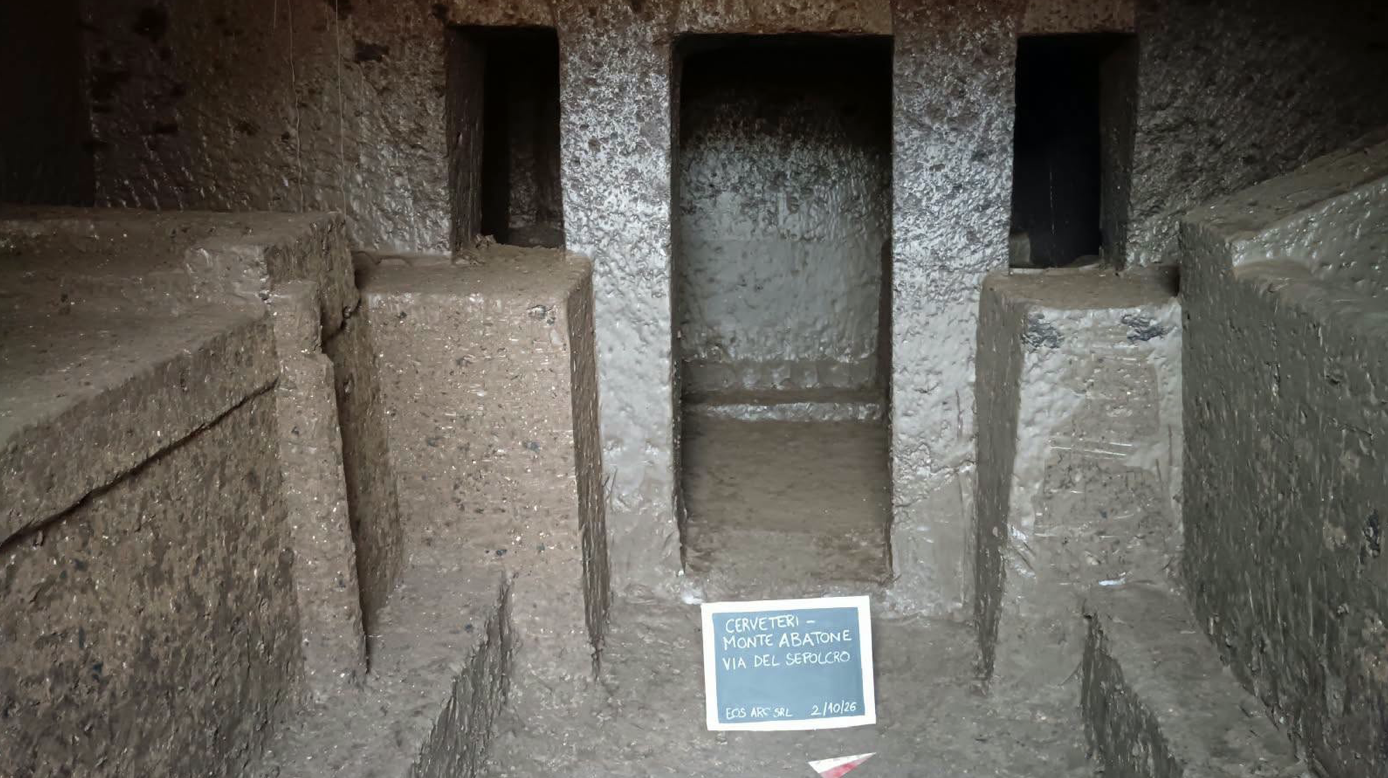
Photo Credit: SABAP Etruria Meridionale.
Italy's Soprintendenza Archeologia Belle Arti e Paesaggio per l'Etruria Meridionale announced the discoveries on 3 November 2026. The results offer further insight into the funerary architecture and burial traditions of ancient Caere, one of the most significant cities of the Etruscan civilisation.
The investigation began with several burial chambers at Monte Abatone that had suffered structural damage. Archaeologists first cleared blocked entrances and carefully removed accumulated deposits to gain access to the interiors.
Inside, they encountered chambers with a variety of architectural features. One retained much of its original vaulted ceiling, while another contained funerary furnishings fashioned directly from the surrounding volcanic tuff. Among these were distinctive throne-shaped seats carved into the rock itself.
Other chambers preserved traces of red pigment across their walls. Although the original decorative schemes have yet to be fully established, these surviving patches of colour provide valuable evidence of how the Etruscans decorated their burial spaces.
The discoveries demonstrate that the tomb interiors were carefully designed rather than simply serving as places to deposit the dead. Carved furnishings, architectural features and painted surfaces all contributed to the appearance of these underground spaces, potentially reflecting the importance attached to the deceased and their funerary arrangements.
One of the most notable finds from the conservation work is a ceramic vessel that survived in remarkably good condition despite previous disturbance within the tomb. The object is described as an olla with a stamnoid form, meaning that its shape resembles a stamnos, a type of wide-bodied vessel found in ancient Mediterranean ceramic traditions.
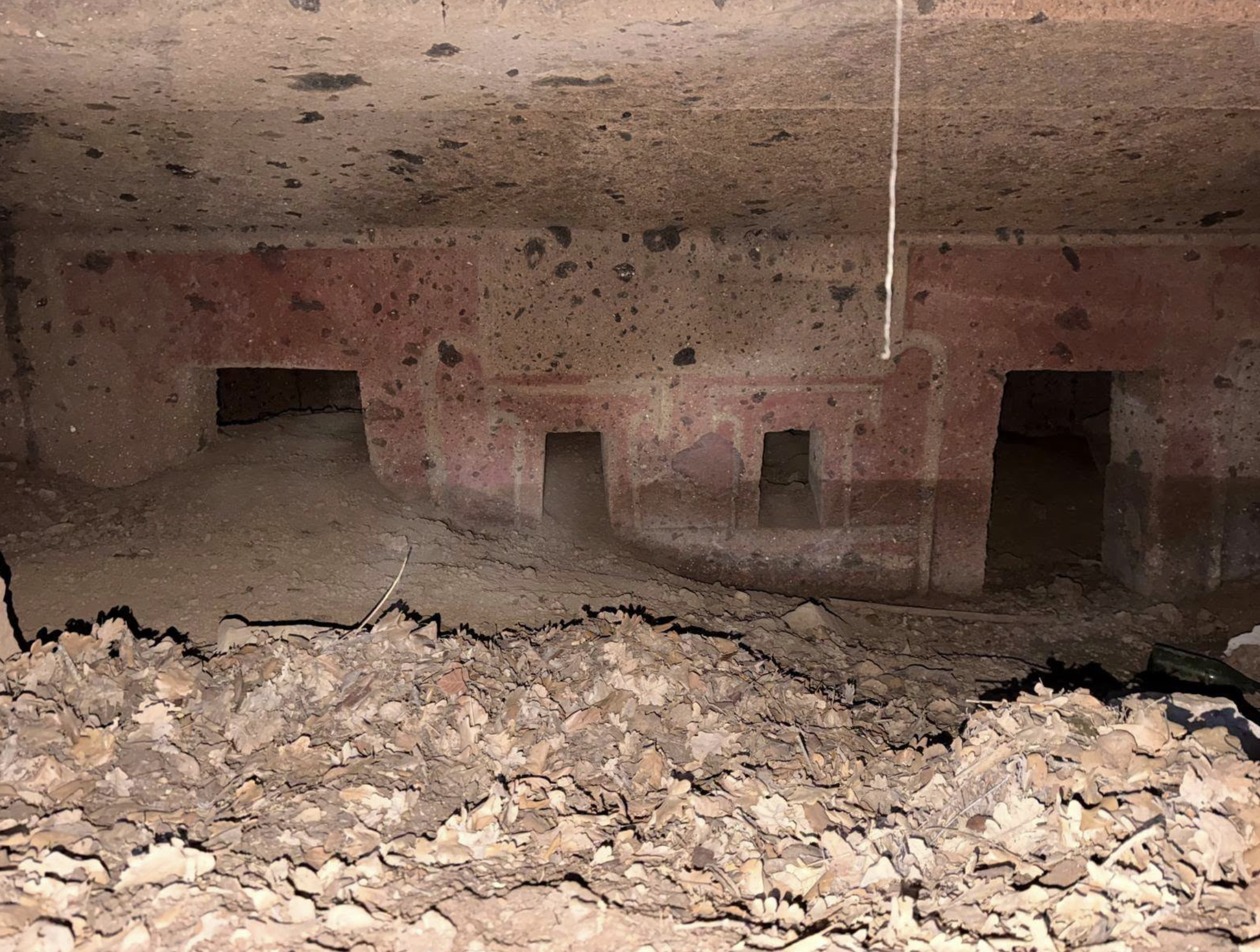
Photo Credit: SABAP Etruria Meridionale.
Its decoration is particularly interesting. Animal figures have been engraved into the ceramic surface, accompanied by details painted in red. Researchers have not yet confirmed which animals are represented or established a precise date for its manufacture.
Further cleaning and restoration should help specialists examine the vessel's decorative details and production techniques in greater detail. Once this work has been completed, the Soprintendenza intends to make the object available for public display.
Its survival is especially significant given the history of disturbance at the site. Despite earlier interference with the tomb, the vessel remained almost completely intact, preserving an example of Etruscan craftsmanship for further study.
The discoveries form part of the wider archaeological record of ancient Caere, the Etruscan settlement that occupied the area around modern-day Cerveteri, north-west of Rome. Caere was an important centre of Etruscan civilisation, and its extensive burial grounds provide evidence of how funerary customs and architectural traditions developed over many centuries.
According to Italy's Ministry of Culture, the Monte Abatone necropolis was in use from the late eighth century BCE until the first century BCE. Archaeological investigations during the twentieth century identified hundreds of tombs, establishing the cemetery as an important resource for understanding Etruscan burial practices.
More recent research has continued to expand knowledge of the site. Excavations undertaken between 2018 and 2021 investigated groups of burials dating to the first half of the seventh century BCE. These included graves arranged in parallel rows, offering clues about how the cemetery was organised.
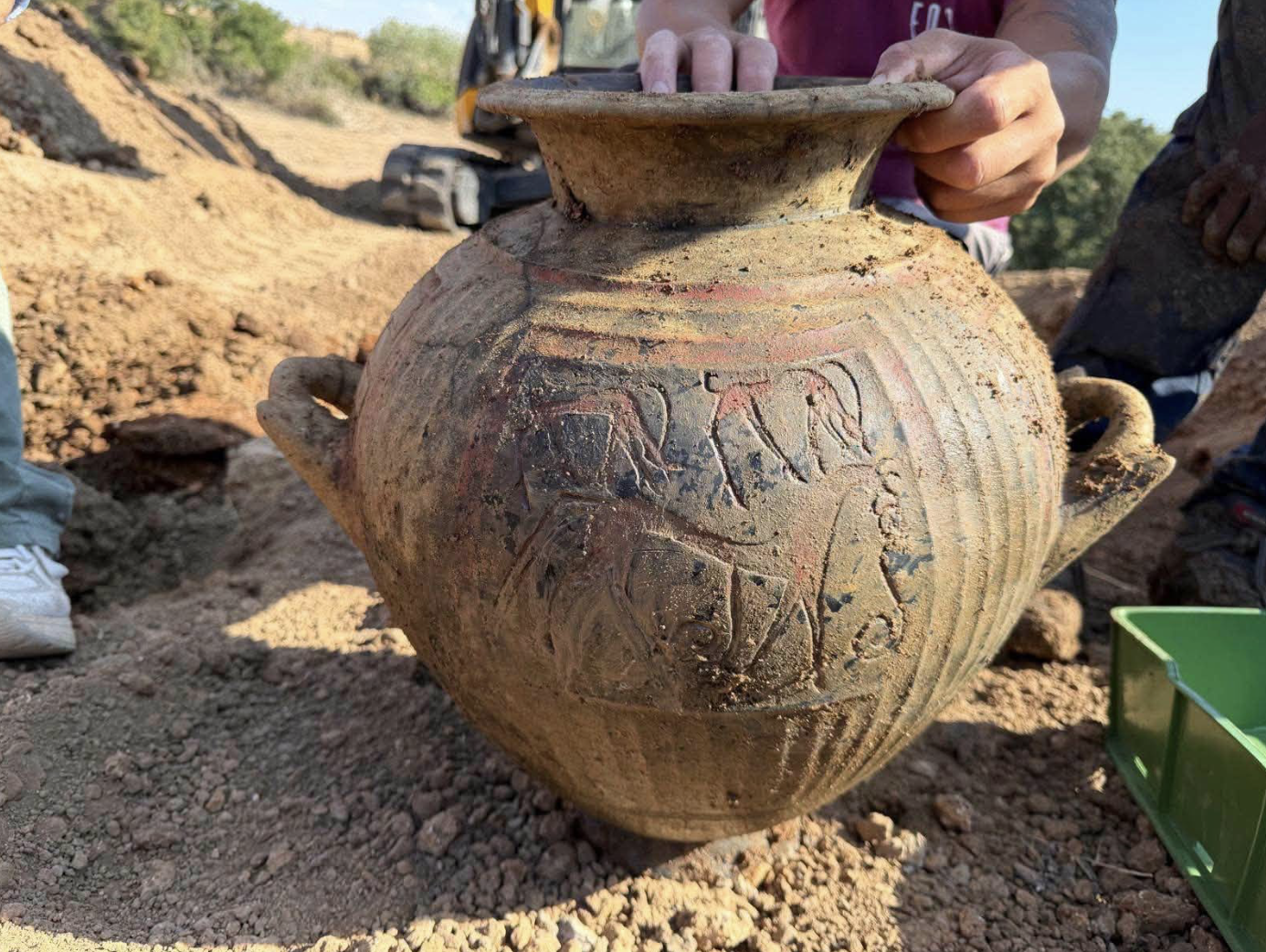
Photo Credit: SABAP Etruria Meridionale.
Researchers have also examined its architectural development, spatial arrangement and ceramic assemblages. A 2024 study by Fernando Gilotta, Luca Lucchetti and Teresa Patriziano explored the archaeological documentation of Monte Abatone, including digital mapping and the restoration of ceramic finds.
This earlier research provides useful context for the latest discoveries. However, archaeologists have not yet published precise dates for the chambers investigated during the recent conservation work, meaning their relationship to the previously studied burial phases remains unclear.
The conservation work also revealed evidence that some of the burial chambers had previously been disturbed by illegal excavations. Although earlier tomb robbing had affected the archaeological contexts, important features and objects remained in place.
These surviving remains include the carved stone furnishings, painted wall surfaces and decorated ceramic vessel. Their discovery highlights the archaeological value of investigating damaged tombs, even when much of their original contents may have been removed.
The Soprintendenza has confirmed that the conservation team has now investigated, documented and stabilised all the tombs included in the intervention. Attention will now turn towards cleaning and restoring the recovered material, alongside further research into the objects' dates, manufacturing techniques and archaeological significance. The decorated vessel is also expected to go on public display once restoration is complete.
Although the work was initially prompted by the need to protect deteriorating burial chambers, it has produced an important addition to our understanding of ancient Caere. The discoveries at Monte Abatone offer another glimpse into Etruscan funerary architecture, artistic traditions and the care invested in creating spaces for the dead.