A collection of childhood amulets, personal grooming implements and 38 bronze coins has been uncovered in a Roman house at Pompeii, offering a glimpse into domestic life before the catastrophic eruption of Mount Vesuvius in 79 CE. Although the wooden cupboard that once held these belongings has largely disappeared, archaeological evidence has allowed researchers to reconstruct its original form and examine the objects stored inside.
The discovery was made in a residence traditionally identified as the House of Cornelius Maximus, situated along Via dell’Abbondanza, one of the ancient city's principal streets. Excavations by the Archaeological Park of Pompeii have revealed a varied collection of possessions, ranging from cosmetic equipment and household vessels to objects that may have held considerable personal significance for their owners.
Together, these finds provide an unusual opportunity to explore the relationship between everyday activities, personal possessions and childhood memories in the Roman world.
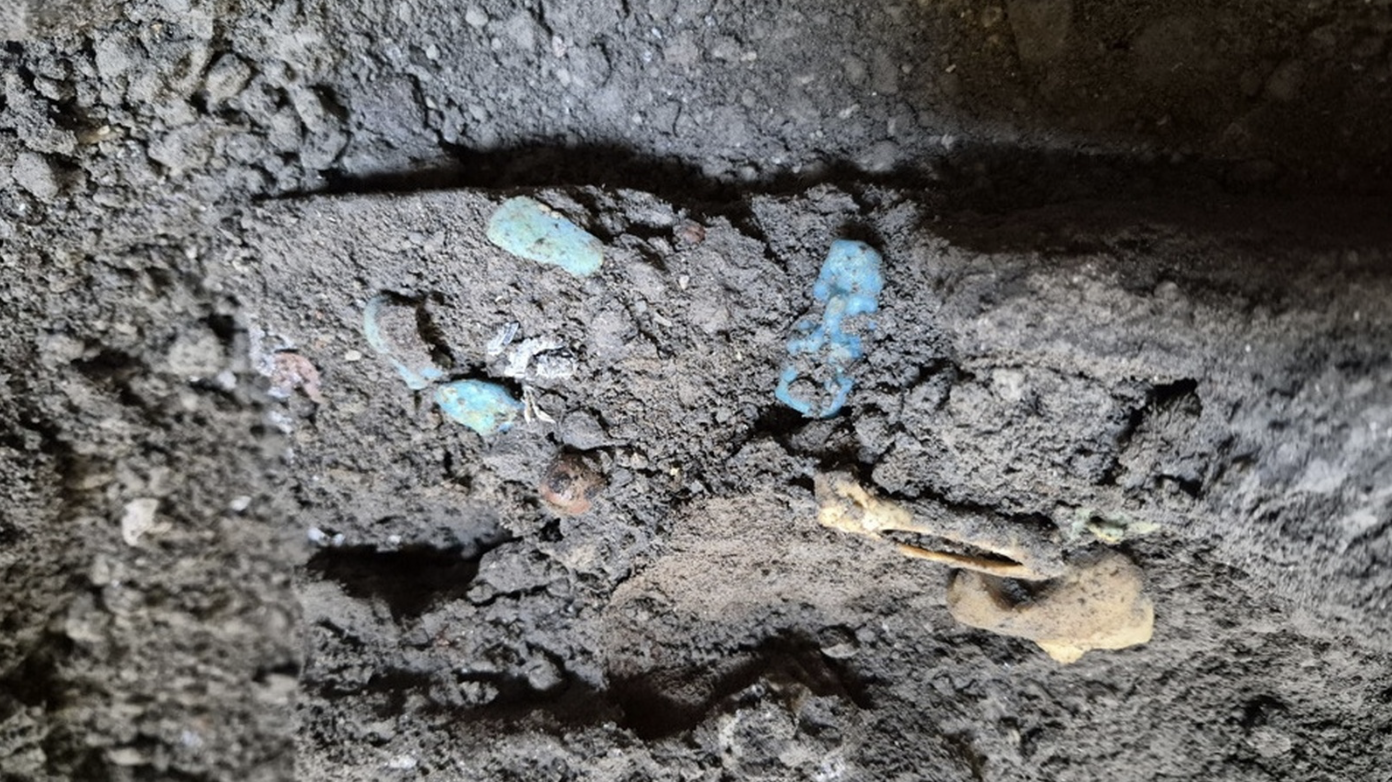
Photo Credit: Archaeological Park of Pompeii.
Among the most intriguing objects recovered from the cupboard are at least 24 miniature pendants believed to have belonged to a necklace. Manufactured from materials including faience, bone, glass paste and rock crystal, the ornaments depict a variety of figures and symbols. These include the deities Bes and Mercury, miniature hands and feet, pine cones and bunches of grapes.
Archaeologists have identified the objects as crepundia, ornaments associated with Roman childhood. Their name derives from a Latin term connected with rattling or making a noise, reflecting one of their potential functions. Such objects could be worn by young children as protective amulets, while their sounds may also have helped adults keep track of their movements.
However, their significance was not necessarily limited to childhood. Some people may have retained these ornaments into adulthood, preserving them as reminders of their early years or their families. In a society where individuals could travel considerable distances from their birthplace, such objects may have carried particular sentimental value.
The Pompeii collection raises the possibility that the necklace was kept for similar reasons. Its original owner remains unidentified, and archaeologists cannot establish whether the amulets belonged to a child or an adult. Nevertheless, their presence alongside other household possessions highlights how objects could retain personal meaning long after their original purpose had passed.
The cupboard also contained an assortment of objects associated with personal grooming and domestic activities. Among them were tweezers, a small implement used to mix cosmetic pigments, a glass vessel that may have held perfume or ointments, and an incense burner.
Other discoveries included a bronze lamp and a selection of vessels made from bronze, glass and ceramic. One particularly distinctive piece was a small jug decorated with a pattern resembling the scales of a pine cone.
Cooking pots and utensils were also recovered, demonstrating the variety of objects kept together within the cupboard. Rather than containing items belonging to a single activity, the storage space appears to have accommodated possessions used for different aspects of everyday life.
Researchers also found lead weights inside a small wooden box, although only traces of the container survived. These weights could indicate that commercial or weighing activities took place within the household, but their precise purpose has not yet been established.
The combination of domestic equipment, grooming tools and possible commercial implements provides a more detailed picture of the activities that may have taken place inside the residence.
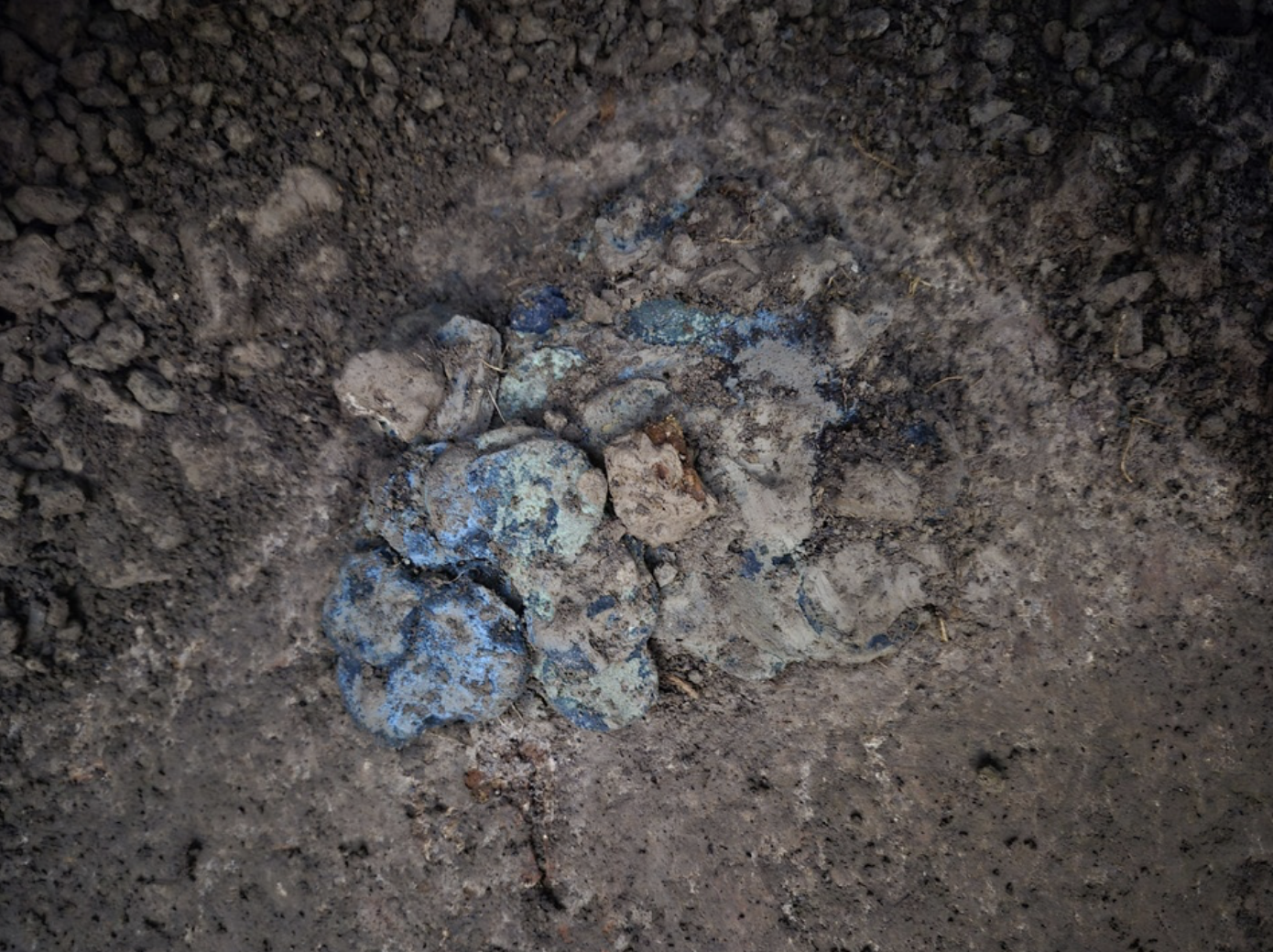
Photo Credit: Archaeological Park of Pompeii.
One of the most striking finds was a collection of 38 bronze coins. The money had been kept in a small woven container made from plant fibres, traces of which survived well enough for archaeologists to investigate how it was constructed.
The coins offer a tangible connection to the household's financial life. However, their discovery does not establish the total wealth of the occupants or explain why the money had been stored in this particular location.
Like the other objects, the coins remained where they had been left when the eruption of Mount Vesuvius brought ordinary life in Pompeii to an abrupt end in 79 CE. Their survival raises questions about the circumstances in which the cupboard was abandoned. The presence of money and potentially sentimental belongings suggests that these possessions were not retrieved before the room was buried. However, the archaeological evidence cannot establish whether the occupants escaped the disaster or perished during it.
The excavation took place in house IX 11, 7, traditionally known as the House of Cornelius Maximus. This identification is based on inscriptions recorded during the excavation of the building's façade in 1912. As those inscriptions are no longer visible, the attribution remains uncertain.
Located on Via dell'Abbondanza, the residence occupied a position along one of Pompeii's major thoroughfares. Its interior decoration suggests that considerable attention was paid to the appearance of the house.
The room containing the cupboard featured elaborate Fourth Style wall paintings. These have been attributed to a workshop associated with Via di Castricio, providing further evidence of the decorative schemes used in Pompeian homes.
However, the building was not necessarily in a finished state when Vesuvius erupted. Archaeological evidence indicates that construction or renovation work was taking place in parts of the house, suggesting that the residence was still undergoing changes when the disaster struck.
The excavation also uncovered the fragmented remains of two young wood mice (Apodemus sylvaticus) inside an amphora stored in an elevated area. Although a relatively minor discovery compared with the collection of amulets and coins, the animals offer a reminder of the less glamorous realities of maintaining a household in the ancient city. Food supplies and storage containers could attract rodents, just as they do in more recent domestic settings.
These findings form part of a broader restoration and accessibility project involving the neighbouring Insula dei Casti Amanti. Although investigations have so far covered only part of the residence, the recovered material is already helping researchers reconstruct aspects of its interior and the activities carried out within it.
Gabriel Zuchtriegel, director of the Archaeological Park of Pompeii, has highlighted the significance of examining the objects together rather than treating them as isolated archaeological finds. Their combination brings together different aspects of domestic life, from personal grooming and household work to possessions that may have carried emotional significance.
The identity of the people who lived in the house remains unknown. Although the cosmetic implements might suggest that a woman was among the occupants, such objects cannot establish the gender of their owner or reveal precisely how the household was organised.
The childhood amulets are particularly revealing because their potential significance extends beyond their material value or practical function. While coins could be used in financial transactions and cooking vessels served everyday needs, the miniature pendants may also have represented personal memories or attachments.
Their precise history remains uncertain, and archaeologists cannot determine who originally wore the necklace, why it was retained or who placed it inside the cupboard. Nevertheless, the possibility that these objects were preserved as keepsakes adds another dimension to the evidence recovered from the house.
The cupboard also illustrates the value of studying ordinary possessions when investigating the past. Grand buildings, elaborate paintings and monumental inscriptions can reveal much about Roman society, but smaller domestic objects offer a more intimate perspective on how people lived.
Nearly 2,000 years after the eruption of Mount Vesuvius, the surviving contents of this Pompeian cupboard provide a snapshot of a household interrupted by disaster. They cannot tell us exactly what happened to the people who owned them, but they preserve evidence of their everyday activities, possessions and perhaps even their personal memories.