Roman Fortlet Discovered Beneath Bearsden Gardens Near the Antonine Wall!
Archaeologists have uncovered the remains of a previously unknown Roman fortlet beneath the back gardens of homes in Bearsden, Scotland. The discovery offers new insight into the defensive system that once protected the Antonine Wall.
The find was made during archaeological work carried out ahead of planned property development in the area. Researchers from GUARD Archaeology identified the stone foundations of what appears to have been a turf rampart, a key defensive feature commonly used in Roman frontier construction.
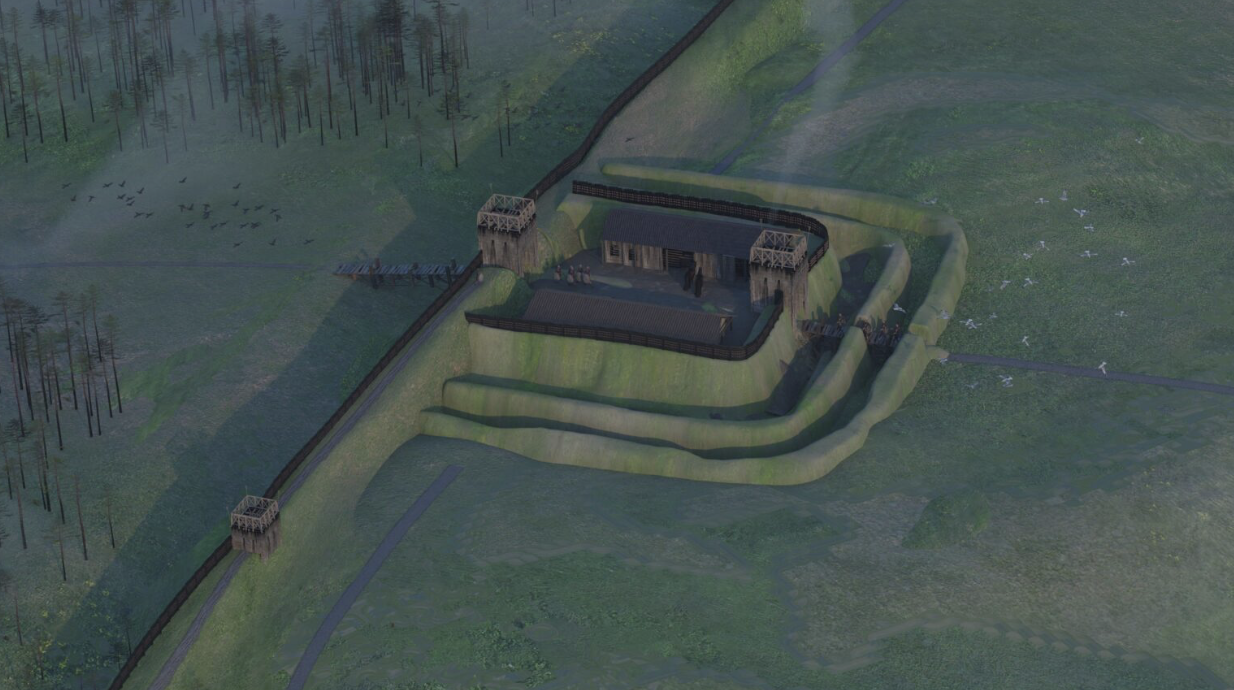
Photo Credit: GUARD Archaeology Ltd
Following the initial discovery, Historic Environment Scotland recognised the potential importance of the site and commissioned further investigation. Excavations revealed a ditch running parallel to the stone base. Within the ditch, archaeologists recovered peat deposits, fragments of wood, and other preserved organic material. At the same time, a geophysical survey detected buried stone structures nearby, which are believed to be surviving sections of the Antonine Wall itself.
One of the most interesting aspects of the discovery was the layout of the remains. The stone foundation and ditch were aligned at a right angle to the Antonine Wall, which runs through this part of Bearsden. This unusual orientation suggested that the structures were not part of the wall itself but instead belonged to a small defensive outpost linked to the frontier.
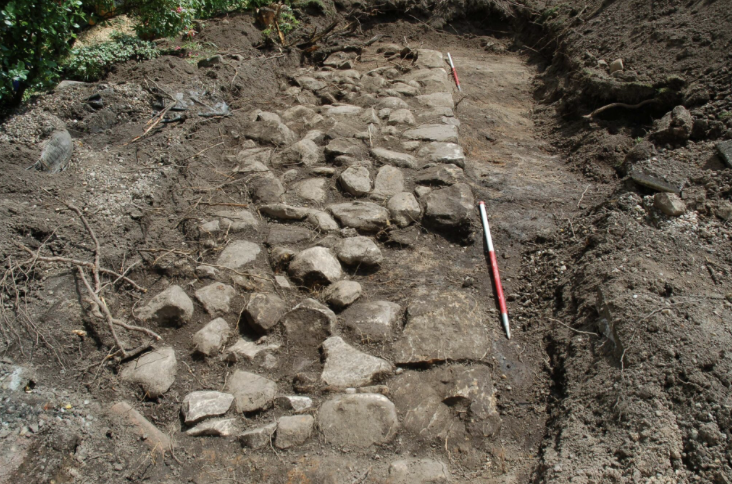
Photo Credit: GUARD Archaeology Ltd
Scientific analysis helped confirm the Roman date of the site. Wood recovered from the base of the ditch was radiocarbon dated to between AD 127 and AD 247. This timeframe overlaps with the period when the Antonine Wall was actively garrisoned, as well as the decades that followed.
Additional evidence came from the discovery of two fragments of Roman pottery found beneath the stone base, further supporting the interpretation that the structure was a Roman fortlet.
The Antonine Wall itself was built on the orders of Emperor Antoninus Pius shortly after AD 142. Constructed by the Roman army, it stretched across central Scotland and marked the northern frontier of Roman Britain. However, the occupation of this frontier was relatively short-lived. By the AD 160s, Roman forces had withdrawn southwards to Hadrian’s Wall.
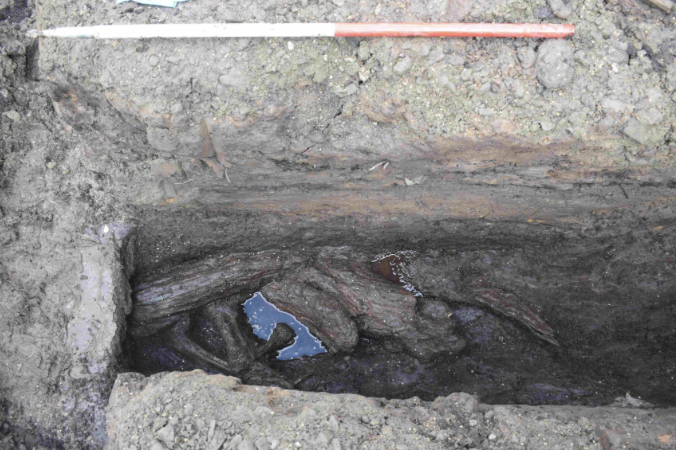
Photo Credit: GUARD Archaeology Ltd
The newly discovered fortlet occupies a strategic position on elevated ground close to the Antonine Wall. From this vantage point, Roman soldiers would have had clear views across the surrounding landscape, particularly to the north, which remained outside Roman control. The site also had direct lines of sight to the larger Roman fort at Bearsden, suggesting it formed part of a coordinated defensive network along the frontier.
Environmental evidence from the ditch deposits has also provided clues about the landscape at the time. Botanical remains and fossil beetles indicate that the area around the fortlet was largely open pasture, interspersed with patches of partially cleared woodland. Trees such as alder, hazel and willow were common, with smaller numbers of oak and birch also present.
Together, these findings help paint a clearer picture of how the Romans organised and defended their northern frontier in Scotland nearly two thousand years ago.