Roman Frescoes Unearthed at Villa di Poppea Near Pompeii!
Recent excavations at the Villa di Poppea in Oplontis, close to the modern town of Torre Annunziata, have revealed remarkable new frescoes that deepen our understanding of one of the most luxurious Roman villas ever discovered. Buried beneath volcanic material when Mount Vesuvius erupted in 79 CE, the villa is once again offering fresh insights thanks to ongoing excavation and conservation work in areas that had previously remained unexplored.
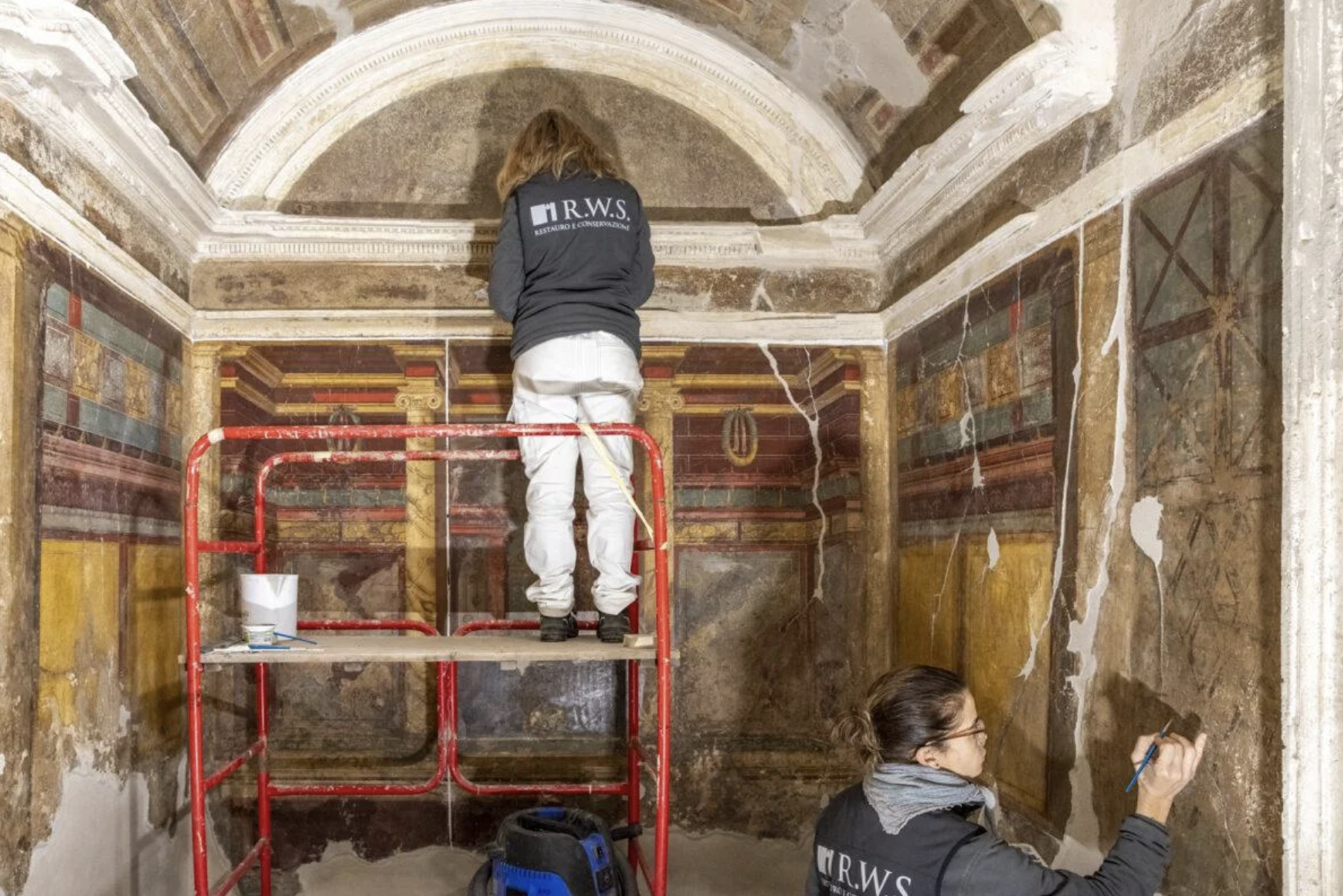
Photo Credit: Archaeological Park of Pompeii
The Villa di Poppea, thought to have belonged to Poppaea Sabina, the second wife of Emperor Nero, was constructed in the mid-first century BCE and once overlooked the Bay of Naples. It has long been celebrated for its exceptional decorative programme, and the latest discoveries only reinforce that reputation. In a space now referred to as the Hall of the Mask and the Peacock, conservators have uncovered vivid Second-Style frescoes of extraordinary quality. Peacocks, arranged symmetrically across the walls, dominate the decoration, suggesting a carefully orchestrated visual scheme designed to impress guests while framing views of the surrounding garden.
Alongside the peacock imagery, fragments of a theatrical mask have been found within the same room. The mask is believed to represent Pappus, a familiar character from Atellan comedy, typically portrayed as an ageing man vainly attempting to appear young and often mocked for his pretensions. This theatrical reference adds a light-hearted and playful element to the space. Other decorative fragments include symbolic motifs such as tripods enclosed within circular frames, further enriching the visual language of the room.
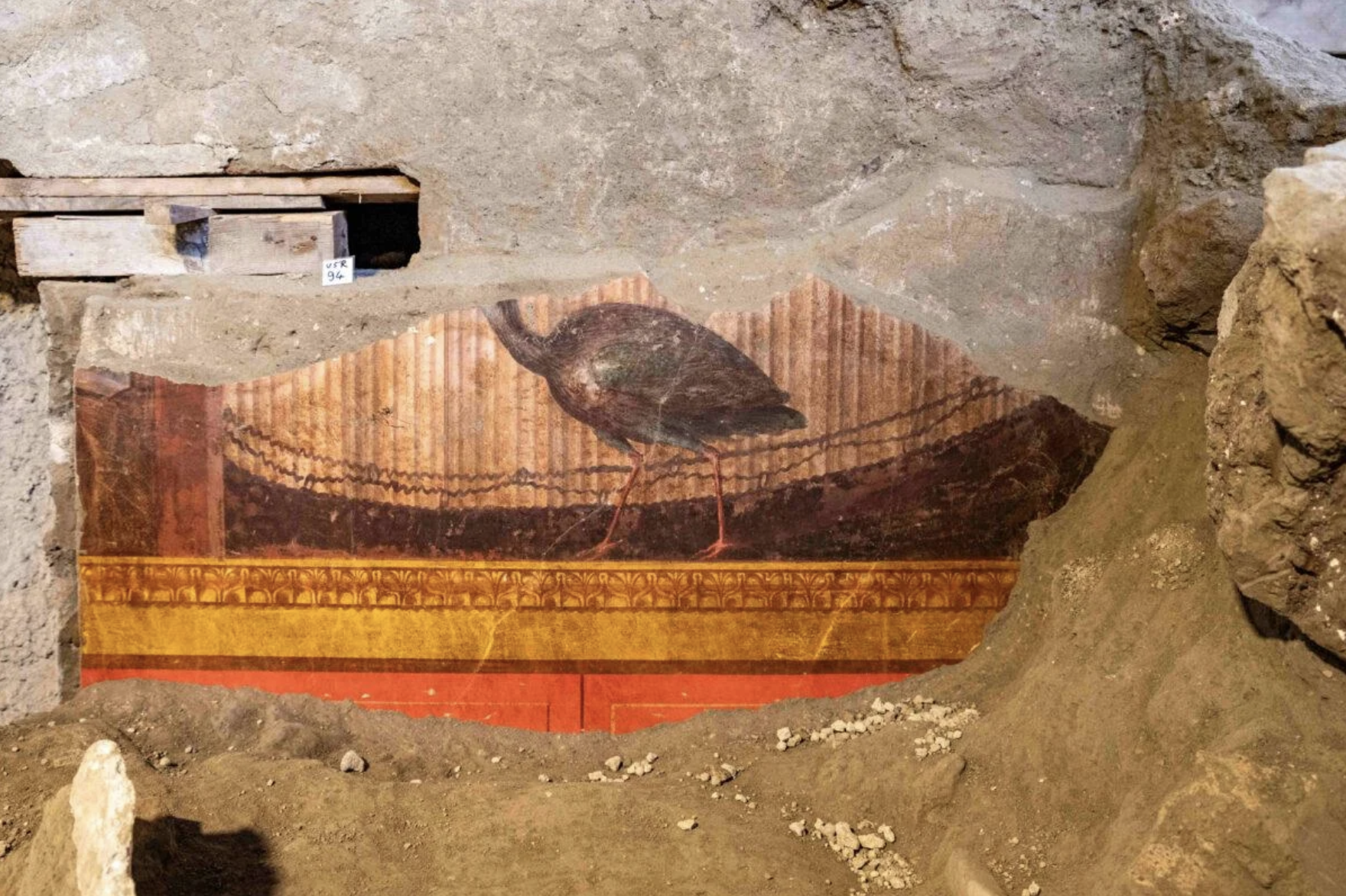
Photo Credit: Archaeological Park of Pompeii
Beyond the wall paintings, the excavation has also expanded knowledge of the villa’s overall layout. Four additional rooms have been identified, bringing the total number of known spaces to more than one hundred. Among these is an apsidal room that likely formed part of the bathing complex. Casting techniques have also revealed impressions of trees once planted in the garden, showing that the vegetation followed a precise and deliberate arrangement aligned with the villa’s southern portico. This discovery highlights the close relationship between architecture and landscape design in elite Roman residences.
Researchers have additionally identified an ancient channel near the Via dei Sepolcri. This feature appears to have developed long after the Roman period, shaped by later volcanic activity and erosion. Studying it is helping archaeologists reconstruct how the local environment changed following the villa’s abandonment.
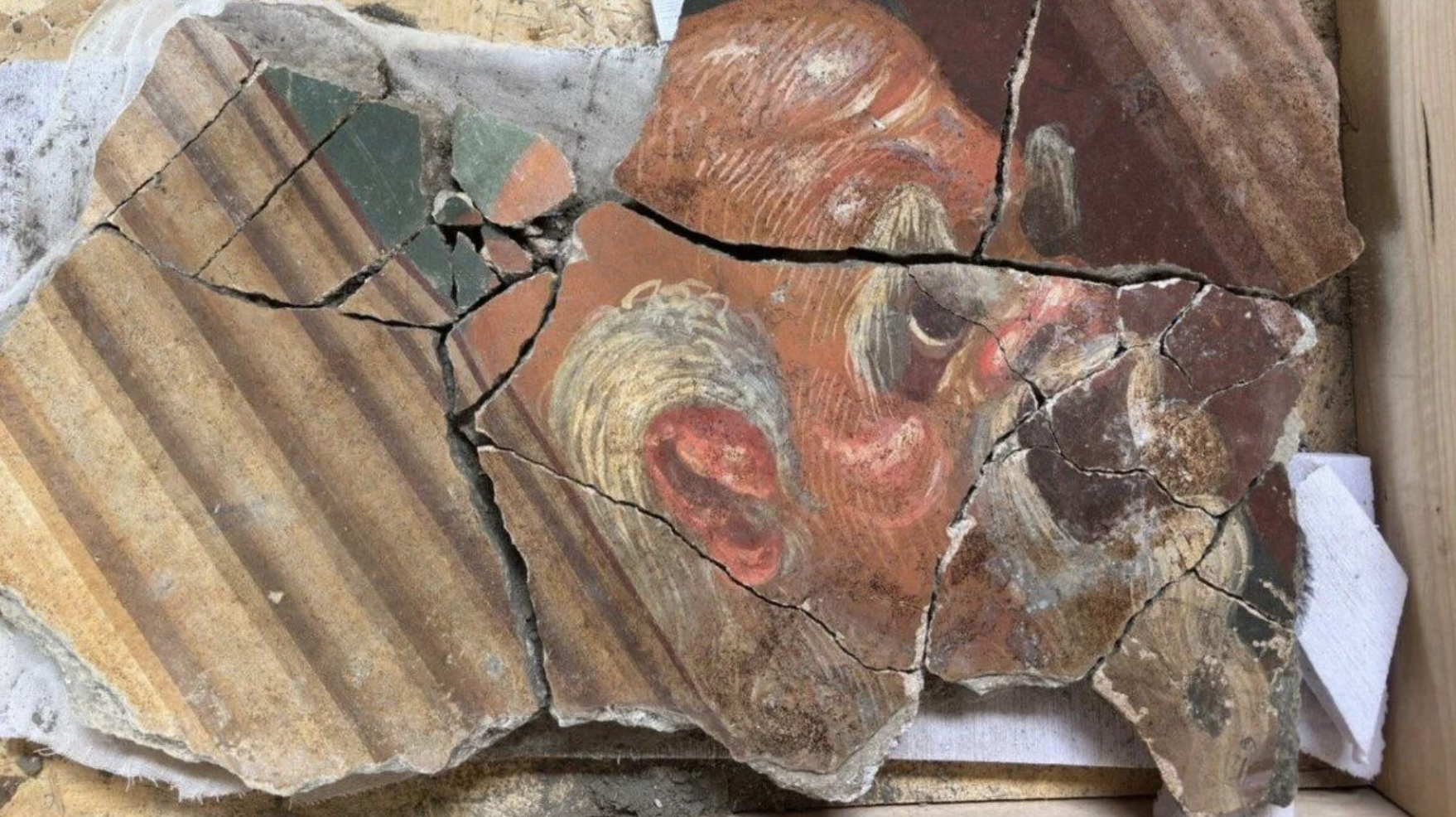
Photo Credit: Archaeological Park of Pompeii
At the same time, restoration work on two richly decorated cubicula, or private chambers, located near the excavation area, is nearing completion. One room features illusionistic architectural scenes and painted marble effects intended to make the space appear larger, while the other adopts a more understated decorative scheme with monochrome backgrounds and delicate floral motifs that were left unfinished when Vesuvius erupted. Careful conservation has brought renewed vibrancy to the colours, including the striking Egyptian blue pigment, and has restored mosaics and stucco details to near their original clarity.
Together, these discoveries and restoration efforts are painting a more complete picture of daily life, artistic taste, and environmental planning at the Villa di Poppea. They confirm its status as one of the most significant and opulent elite residences of the Roman world, offering an unparalleled glimpse into the luxury and sophistication enjoyed by Rome’s highest social circles.