2,000-Year-Old Egyptian Child Mummy Reveals Hidden Object in Chest!
A 2,000-year-old Egyptian child mummy housed in Wrocław is offering researchers a rare glimpse into ancient burial practices, while also presenting a fascinating new mystery.
During its first ever full scientific examination, experts discovered something unexpected: a concealed object placed on the boy’s chest. This hidden item could hold vital clues about who he was, or the rituals performed at the time of his burial.
Using modern, non-invasive CT scanning technology, researchers were able to peer inside the mummy without damaging it. What they found was striking: an unidentified object resting on the chest.
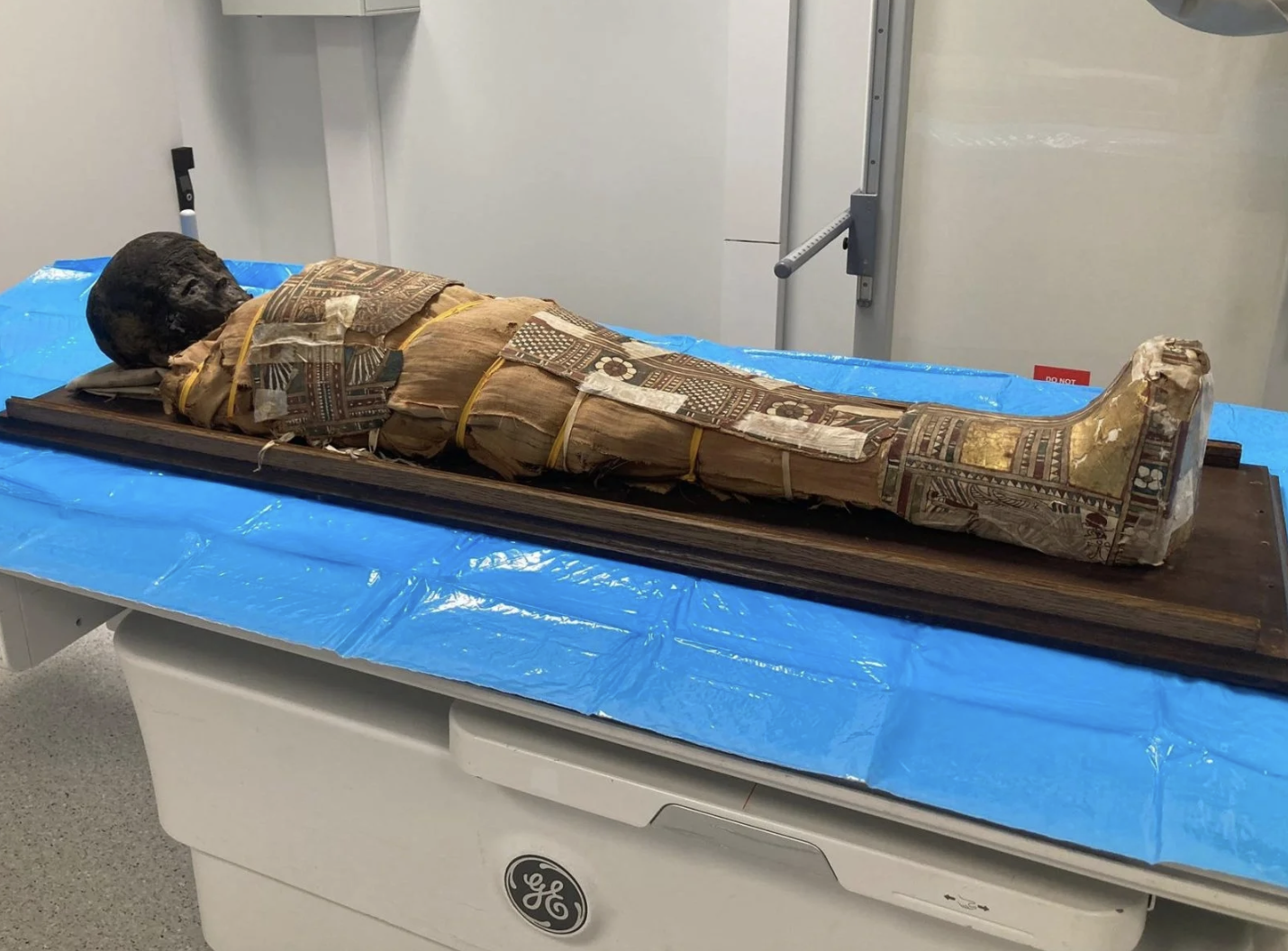
Photo Credit: Marzena Ożarek-Szilke – University of Wrocław
Scientists believe it could be a small papyrus scroll or an amulet, possibly inscribed with the child’s name or a protective message intended for the afterlife. Unfortunately, the fragile condition of the mummy’s outer casing means the object cannot yet be physically accessed without risking serious damage. For now, it remains a carefully guarded secret.
Although the mummy has been in Wrocław since 1914, when it was brought there by Cardinal Adolf Bertram as part of a private collection, it had never undergone a full scientific study.
That finally changed in 2023, when an interdisciplinary team led by Professor Agata Kubala from the University of Wrocław began a comprehensive investigation. Using advanced imaging techniques such as X-rays and CT scans, they were able to build a detailed picture of the mummy without unwrapping it. Their findings have since contributed to wider research into ancient Egyptian mummification.
One of the most significant breakthroughs was identifying the mummy as a young boy, around eight years old at the time of his death. Researchers determined his age by analysing the development of his teeth, which is considered one of the most reliable methods in such cases.
The body, measuring around 123 cm in length, is relatively well preserved. However, despite these insights, one key question remains unanswered: what caused his death? So far, there are no clear signs of injury or disease, leaving the circumstances of his passing a mystery.
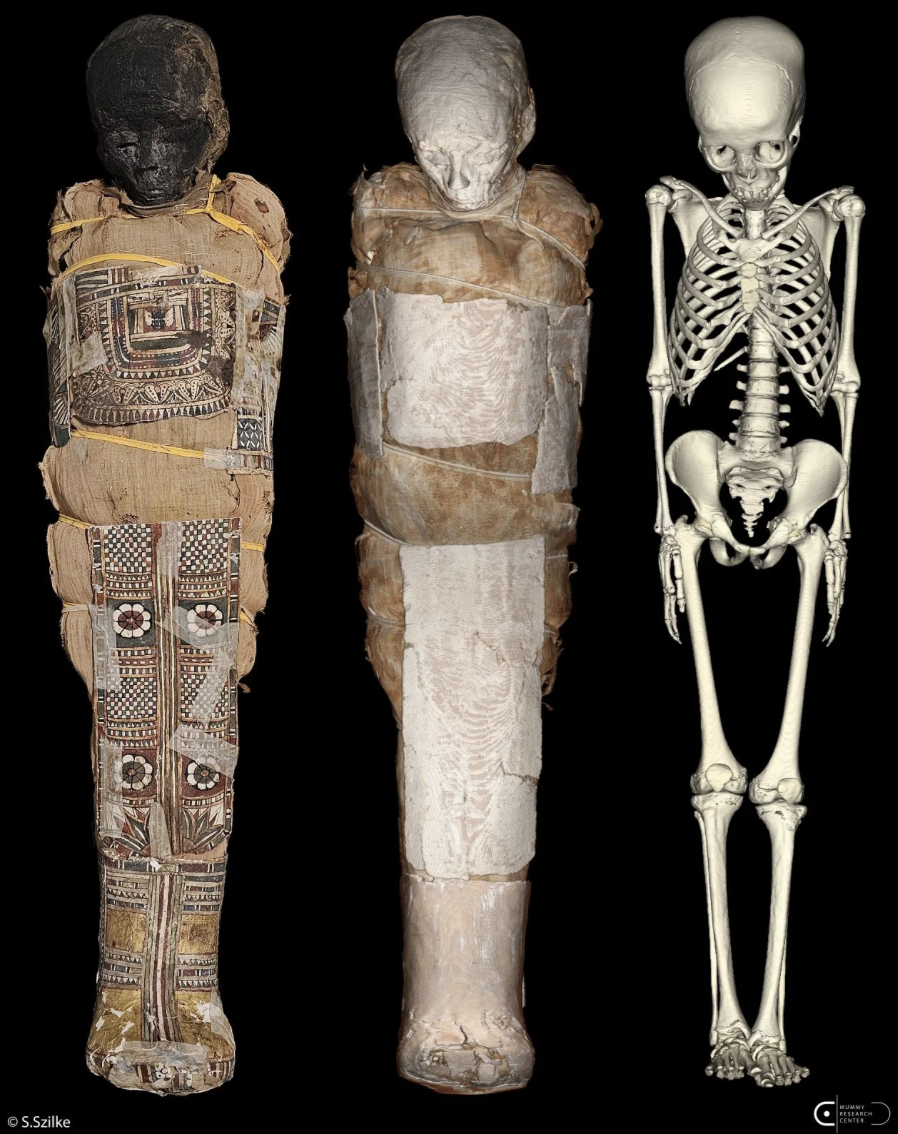
Photo Credit: Marzena Ożarek-Szilke – University of Wrocław
The scans also revealed details about how the boy was mummified. In keeping with ancient Egyptian customs, his brain had been removed through the nasal cavity. Most of his internal organs were also extracted, though not through the typical abdominal incision seen in more elaborate mummifications.
Instead, it appears alternative methods may have been used. Some internal structures, such as possible remains of the liver, may still be partially intact. The body cavity was filled with textiles, and there is little evidence of heavy resin use. This suggests a careful but relatively modest burial, typical of the Ptolemaic period, indicating the boy may have belonged to a family of moderate social standing.
Although historical records relating to the mummy were lost during the Second World War, researchers have been able to gather clues from the decorative casing, known as cartonnage.
The style and imagery strongly suggest the mummy originated from Upper Egypt, likely around Kom Ombo or Aswan. Decorative features such as lotus flowers, rosettes, and a winged scarab are consistent with funerary art from that region.
One particularly unusual detail is the depiction of a rare hybrid deity, possibly Nehebkau, shown carrying a mummy. This could provide further insight into local religious beliefs at the time.
This study highlights how modern technology is transforming the way we study the past. High-resolution CT scans allowed researchers to create detailed 3D models of the mummy, examining each layer individually, from bones to soft tissue to wrappings.
This approach is especially valuable for fragile artefacts like mummies, where traditional methods could cause irreversible damage.
What was once simply a museum exhibit is now recognised as the remains of a real child who lived more than two millennia ago. And yet, despite all the progress made, the most intriguing detail remains just out of reach.
The object hidden on his chest could reveal something deeply personal, perhaps even his name.
For now, researchers continue to explore ways of studying it safely. Until then, this ancient child’s story remains incomplete, a reminder that even after 2,000 years, the past still has secrets left to uncover.