Hidden Roman Settlement Discovered in Southern France Near Marseille!
A quiet stretch of land in southern France has started to reveal a much bigger story than anyone expected. Beneath the modern town of Gémenos, just 20 kilometres east of Marseille, archaeologists have uncovered what appears to be the entrance to a 2,000-year-old Roman settlement.
What they’ve found goes far beyond a few scattered ruins. Instead, it paints a picture of a carefully organised landscape, one that shows how everyday life, trade, and movement all came together at the edge of a Roman town.
At the centre of the site is a Roman road running north to south across the excavation area. This wasn’t just a route for getting from one place to another, it seems to have marked a clear boundary within the settlement.
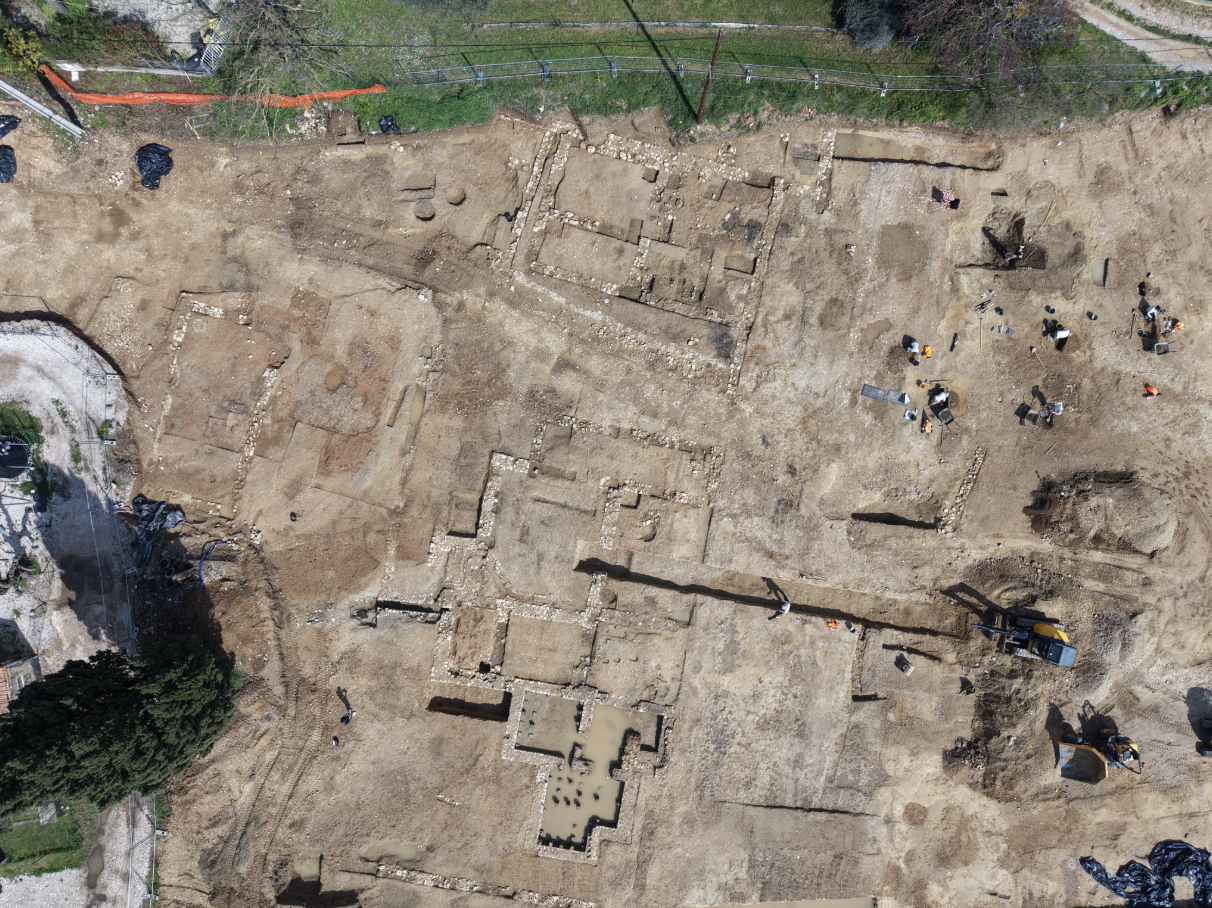
Photo Credit: Laurent Vallieres, Inrap
On one side of the road, there is evidence of agricultural activity. Archaeologists uncovered traces of vineyards alongside a series of circular pits, each about a metre wide. Some of these contained Roman artefacts, while others revealed medieval pottery, suggesting the land continued to be used long after the Roman period ended.
Cross the road, however, and the scene changes completely. Here, the remains of stone-built structures line the roadside, pointing to a more developed and urban environment.
One of the most striking discoveries is a group of interconnected rooms that appear to form a bath complex. It includes features typical of Roman engineering, such as a hypocaust heating system, where hot air circulated beneath the floors, along with a furnace room and a basin that was once lined with marble.
Fragments of painted plaster suggest the space was decorated, adding a sense of refinement. Yet the size of the complex raises questions. It doesn’t seem large enough to be a public bathhouse, but it’s too substantial to have been part of a private home.
Because of this, researchers believe it may have served a different purpose altogether. Positioned right along the main road, it could have been part of a roadside stop, a place where travellers could rest, wash, and socialise as they arrived at the settlement.
The area also reveals a more practical side of life. Just north of the bath complex, archaeologists discovered signs of metalworking. Hearths, along with fragments of iron and bronze waste, point to a workshop that was once active here.
It seems likely that these industrial activities were deliberately placed on the outskirts, close enough to be accessible, but separate from the main living areas.
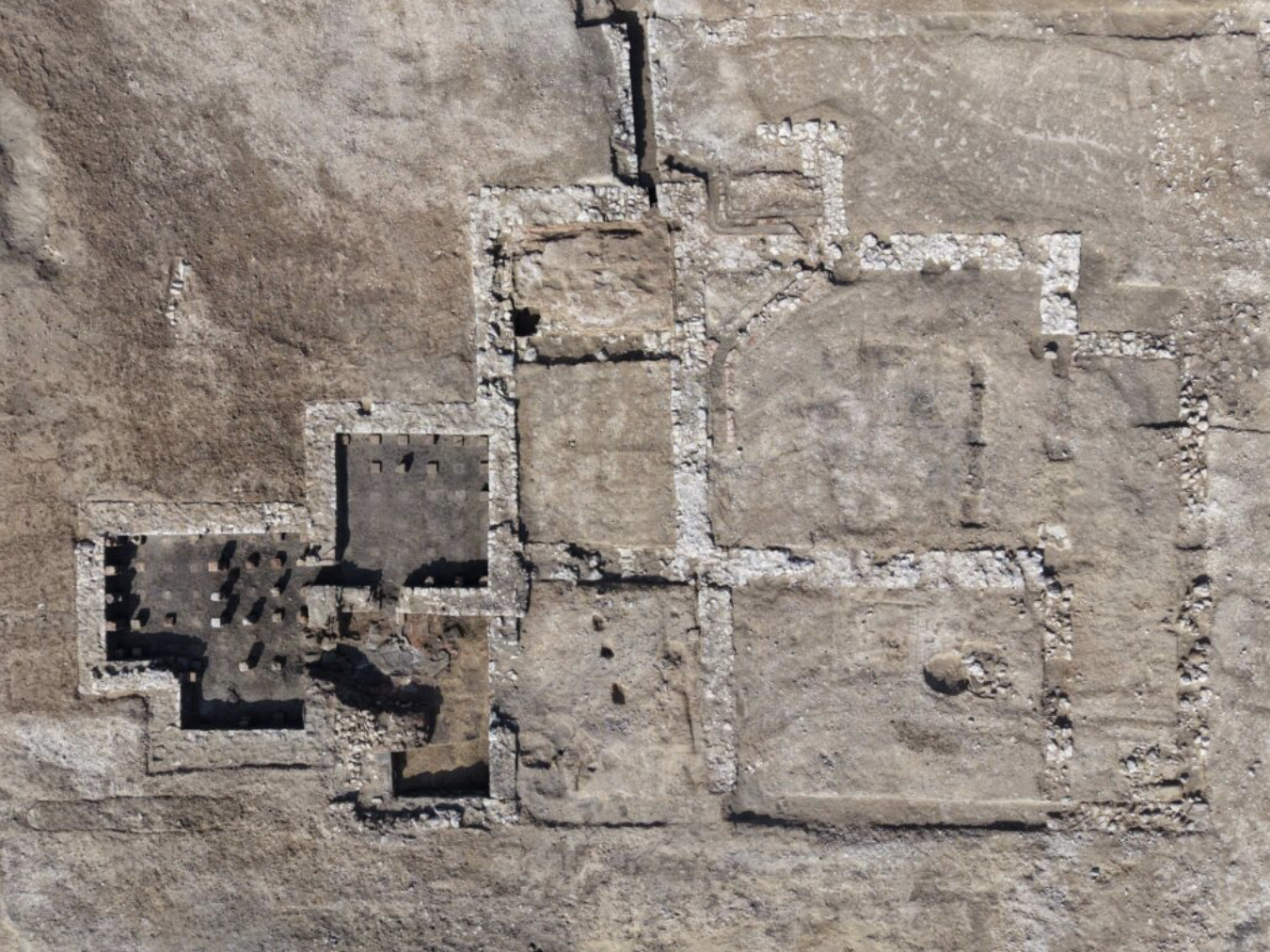
Photo Credit: Laurent Vallieres, Inrap
Nearby, other structures built from more basic materials hint at additional forms of craftsmanship, although their exact purpose is still being studied.
One particularly interesting find sits right between the built-up area and farmland: a small room with a floor made from crushed tiles. Inside, researchers found a hearth or oven constructed from reused ceramic pieces, including fragments of large storage jars. This space may have functioned as a kitchen, possibly serving workers or travellers passing through.
While the Gémenos site has been known to archaeologists for some time, earlier work suggested it was simply a small Roman settlement occupied between the 1st and 3rd centuries CE. This latest discovery changes that perspective.
Rather than being an isolated cluster of buildings, it now appears to have been a dynamic transition zone, a place where agriculture, industry, and travel all overlapped.
The mix of vineyards, workshops, and hospitality-like structures shows that this was not just a place to live, but a place designed for movement and exchange. It highlights how Roman settlements were far more fluid and interconnected than we might imagine.
Excavations at the site are still ongoing, with archaeologists continuing their work before the land is eventually developed. Even after digging finishes, the research will carry on, as specialists analyse the findings in more detail.
For now, what has been uncovered offers a fascinating glimpse into the past. It reminds us that Roman roads did more than simply connect places, they helped shape them, defining how people lived, worked, and moved through the world.