A 2,000-Year-Old Roman Hairpin Found Beneath Gloucester!
Gloucester has a long and fascinating history, stretching all the way back to the Roman period. What many people might not realise, though, is just how much of that past still lies hidden beneath the modern city.
Originally established as a Roman fortress between AD 65 and 74, Gloucester, then known as Glevum, later developed into a colonia. These were settlements created for Roman citizens, often retired soldiers, and played an important role in spreading Roman culture, laws and language across newly conquered territories. By the end of the 1st century AD, Glevum had become a thriving civilian town.
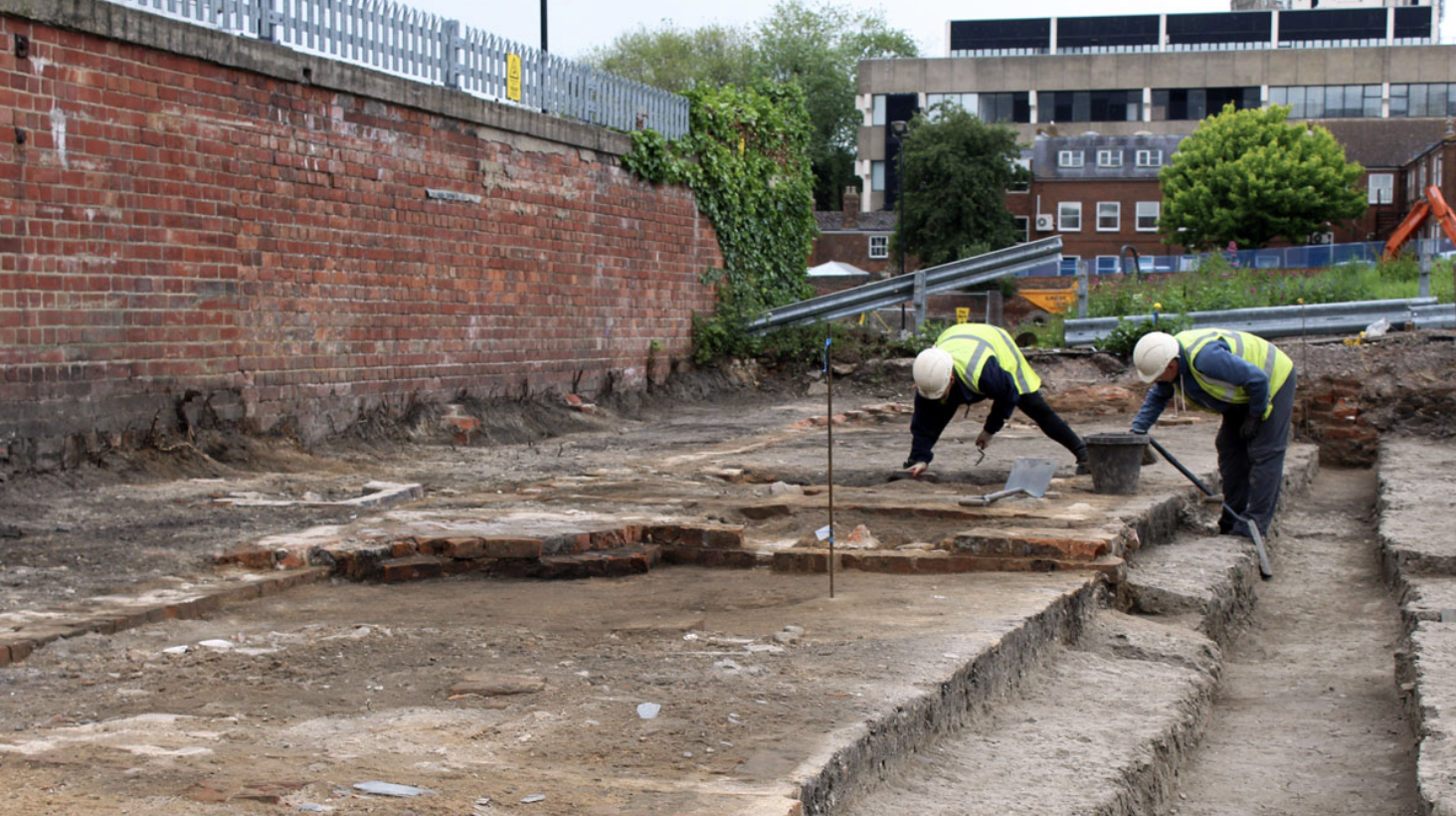
Photo Credit: Cotswold Archaeology
One area in particular, Blackfriars, has been the focus of archaeological excavations for decades. The name comes from a Dominican friary founded around AD 1239, but the site itself has a much deeper history. Located in the south-eastern corner of the Roman city, it straddled both the interior and exterior of the original defensive walls. Interestingly, the medieval city later developed across much the same footprint as its Roman predecessor.
Excavations in this area have uncovered remarkable evidence of Roman life. Beneath modern streets, archaeologists have found the remains of buildings, including barracks and houses. Decorative wall plaster, mosaic tiles (tesserae), and building materials such as roof tiles have all been discovered, some even suggesting the presence of a bathhouse.
There is also clear evidence that Glevum was a well-connected place. Discoveries linked to waterfront activity show how the city’s port connected to the River Severn, giving access to extensive trade networks that stretched as far as the Mediterranean. Alongside this, a wide range of artefacts have been uncovered, from pottery and coins to personal items like pins and a ligula, a small tool used for hygiene, applying make-up, or even medical purposes.
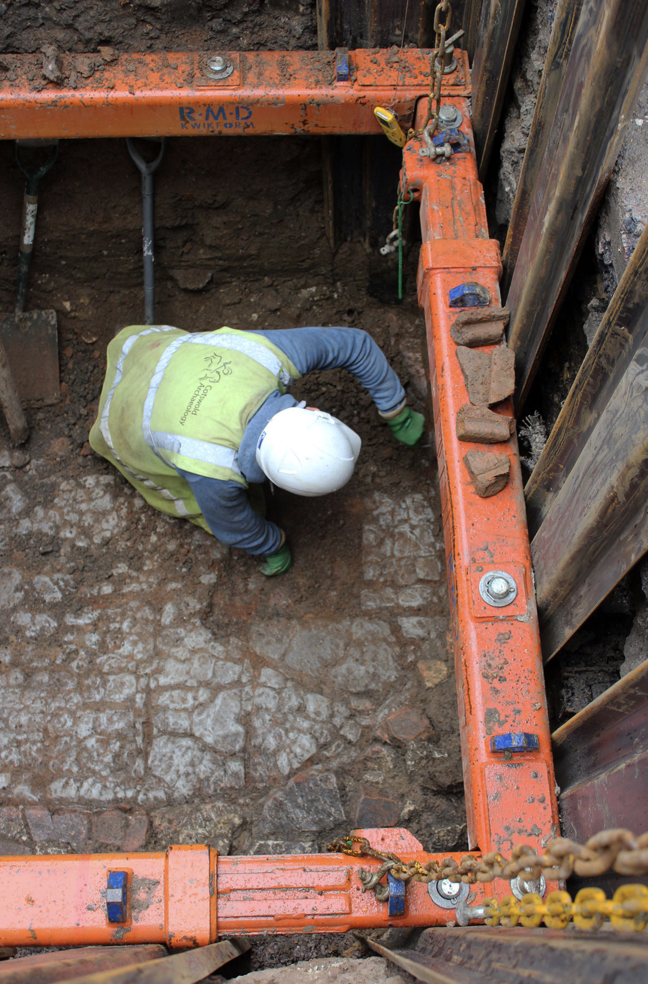
Photo Credit: Cotswold Archaeology
The area did not lose its importance after the Roman period. In the years following the Norman Conquest, the south-eastern corner of the city became the site of a medieval castle. Initially built as a motte and bailey, it featured a large earthen mound topped with a fortified tower, alongside a lower courtyard used for daily life. Over time, this castle was replaced in the 12th century, and later repurposed as a gaol once its defensive role was no longer needed. By the 18th century, a new prison had taken its place.
Among the more recent discoveries at Blackfriars are two Roman bone pins, likely used as hair accessories. While not especially rare, they offer a valuable glimpse into everyday life nearly two thousand years ago. One pin in particular stands out, featuring a carved pinecone design and probably dating to before AD 250.
In Roman culture, pinecones held symbolic meaning, representing fertility, regeneration and spiritual enlightenment. They were associated with gods such as Bacchus and Mithras, as well as the goddess Cybele, and frequently appeared in religious art and ritual objects. The pinecone motif could also be found on staffs known as thyrsi, carried by followers of Bacchus and Cybele.
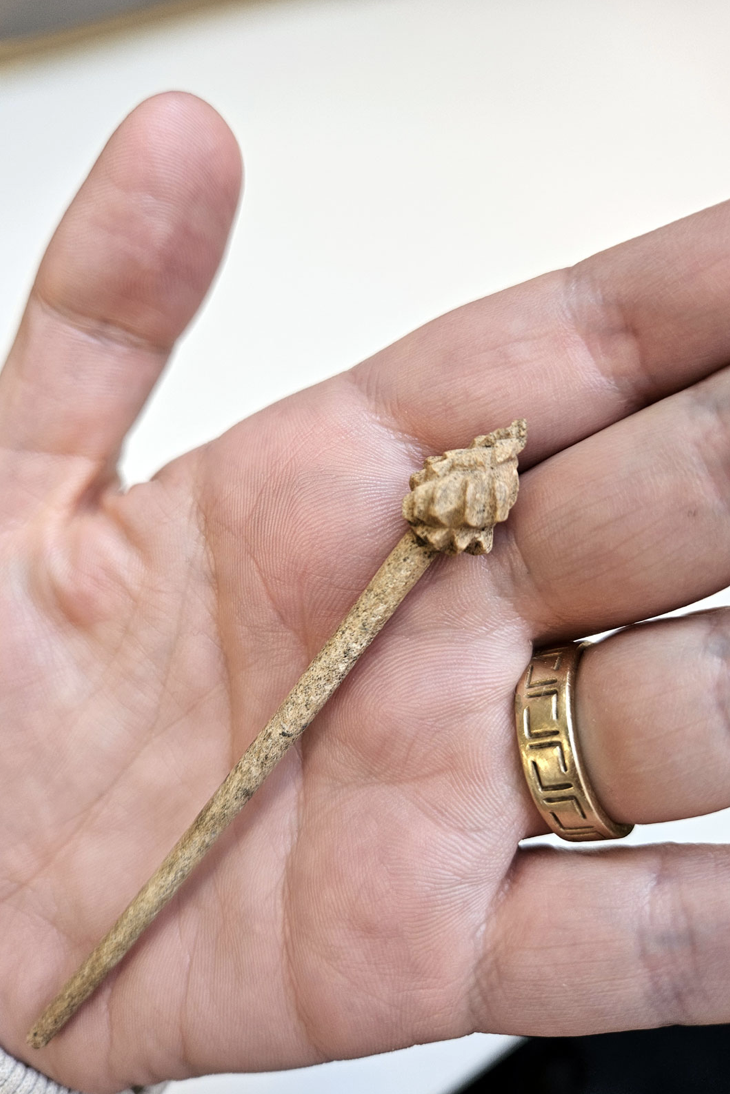
Photo Credit: Cotswold Archaeology
Interestingly, many of these pinecone designs are thought to be based on the Stone pine, a tree native to the Mediterranean. It was highly valued in Roman times, not only for its shade and ornamental use but also for its edible pine nuts, which had been cultivated for centuries. While these nuts were imported into Roman Britain, and it is possible that the trees themselves were too, there is no firm evidence to confirm this.
It is quite likely that the person who wore the pinecone hairpin in Glevum had never seen such a tree in real life. Instead, the design may have served as a symbolic link to the wider Roman world and its cultural identity.
Finds like this remind us that beneath Gloucester’s streets lies not just the remains of buildings, but the stories of the people who once lived there, ordinary lives connected to an empire that spanned continents.