2,200-Year-Old Land Lease Reveals Secrets of Hellenistic Farming and Economy!
A fascinating discovery near Fethiye is offering a rare glimpse into how people lived, farmed, and managed land over two millennia ago. A stone fragment, now housed in the Fethiye Archaeology Museum, has revealed an incredibly detailed land lease agreement dating back around 2,200 years.
What makes this find so compelling is not just its age, but the level of detail it provides about everyday economic life during the Hellenistic period.
The inscription was discovered during archaeological work on Şövalye Island. It once formed part of a larger stone stele and dates to roughly 220–200 BCE, shortly after the upheaval that followed the Death of Alexander the Great.
Interestingly, both sides of the stone were carved with text, suggesting it was an important public document rather than something private. Experts have since confirmed that it records a formal land lease agreement from Amos Ancient City.
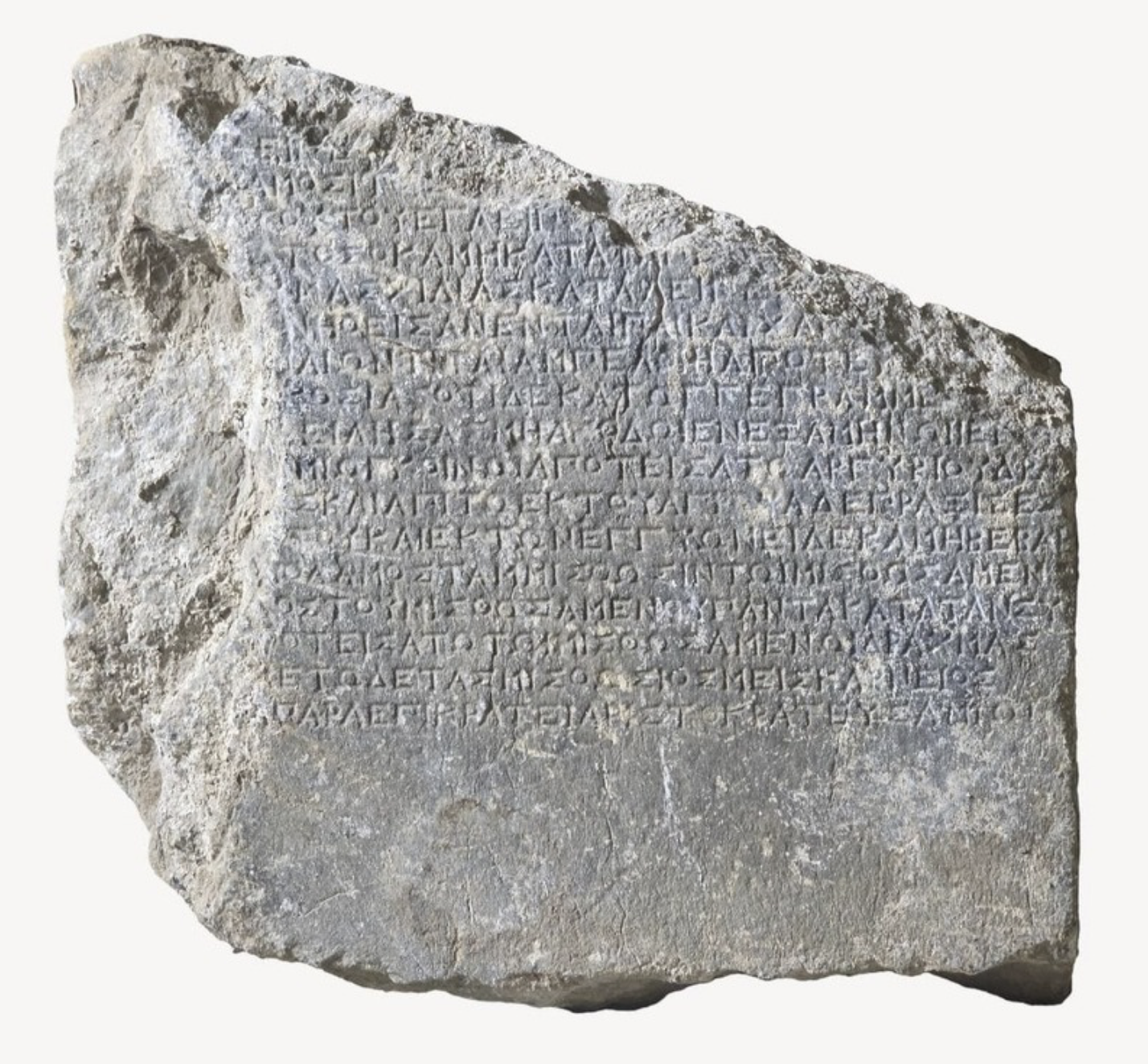
Photo Credit: Republic of Türkiye General Directorate of Cultural Heritage and Museums
In its day, Amos Ancient City was a thriving coastal settlement. Positioned on a hillside overlooking the sea, it played a key role in regional trade networks across the eastern Mediterranean.
The city really flourished between the 3rd and 2nd centuries BCE, benefiting from maritime trade and shifting political alliances. It maintained close connections with places like Rhodes and came under the influence of major powers of the time, particularly after the Treaty of Apamea reshaped control across Anatolia.
The inscription itself is remarkably detailed. It sets out clear expectations for tenants, including both financial and agricultural responsibilities. For every 100 drachmas of rent, tenants were required to plant:
800 grapevines
40 fig trees
But it doesn’t stop there. The document even specifies how deep each sapling should be planted, evidence of a surprisingly advanced understanding of farming techniques and productivity.
On top of that, the contract includes legal clauses covering penalties and compensation. This shows that land use was carefully regulated, with systems in place to protect both landlords and tenants. Far from being informal arrangements, these agreements were structured and enforceable.
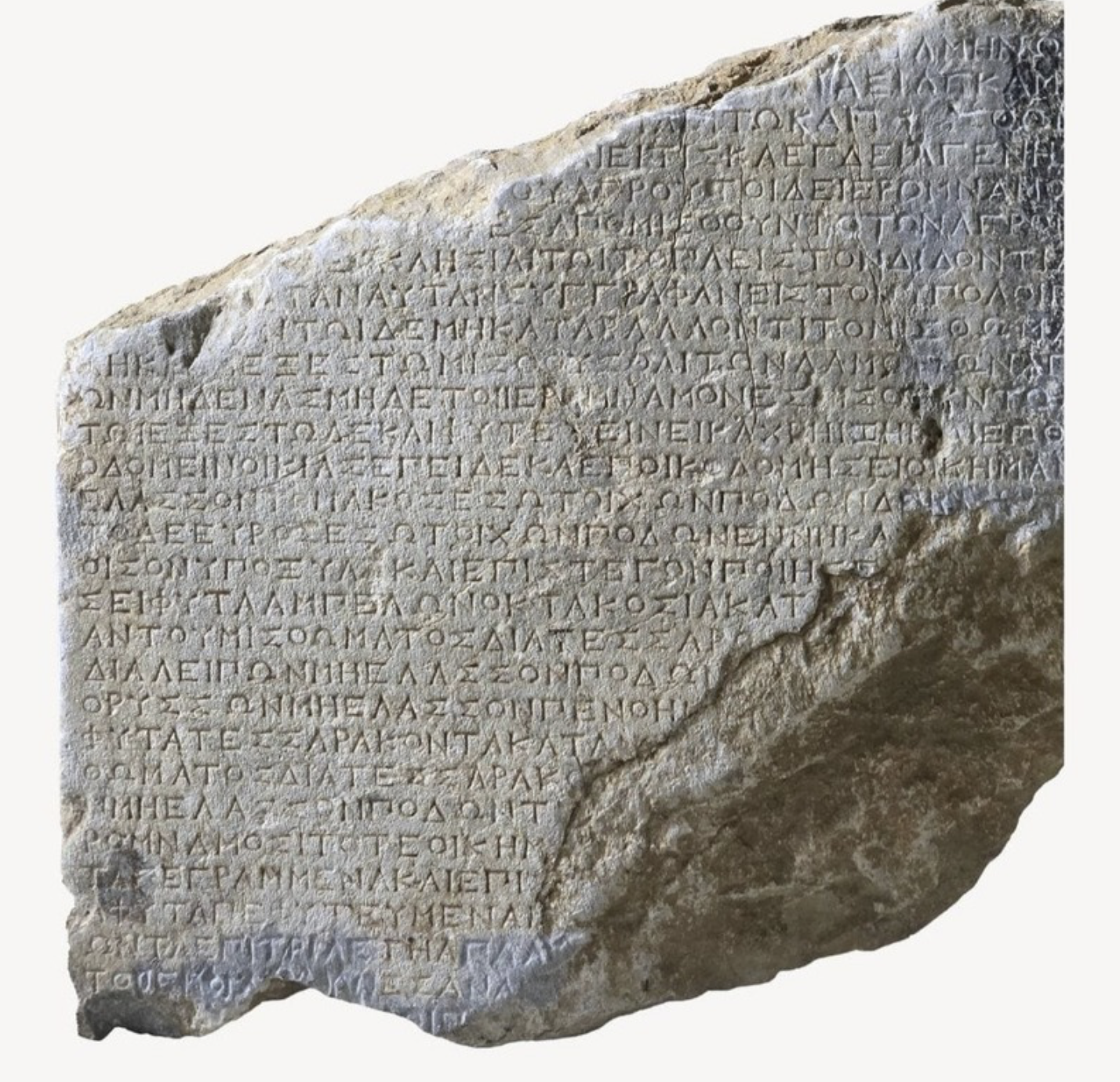
Photo Credit: Republic of Türkiye General Directorate of Cultural Heritage and Museums
Originally, the stone stood in a sanctuary dedicated to Apollo, serving as a public record in a religious and civic space. However, its story didn’t end there. Centuries later, during the medieval period, it was removed and reused, most likely as ballast in ships to help stabilise cargo. It’s a reminder that many ancient artefacts survived not because they were preserved, but because they were repurposed.
Today, the fragment is safely kept at the Fethiye Archaeology Museum, where it has been closely studied by researchers. Its publication in the academic journal Chiron brought it to wider attention, highlighting its importance for understanding ancient economies.
Meanwhile, ongoing excavations at Amos Ancient City are uncovering more fragments that may belong to similar contracts. Each new piece helps build a clearer picture of how land ownership, agriculture, and legal systems worked in the Hellenistic world.
This isn’t just an old stone with writing on it, it’s a window into how an entire society functioned. It shows how agriculture, law, and even religion were closely linked in ancient communities.
As research continues, discoveries like this remind us just how organised and sophisticated these early societies were. They also highlight the importance of preserving cultural heritage, ensuring that stories from the past continue to inform and inspire us today.