2,000-Year-Old Greek Theatre Mask Discovered in Croatia’s Crno Jezero Cave!
A remarkable archaeological discovery on Croatia’s Pelješac peninsula is shedding new light on how ancient communities blended Greek and local religious traditions. Inside Crno Jezero Cave, researchers have uncovered a terracotta object more than 2,000 years old: a complete head shaped as a Greek theatrical mask, dating back to the 4th or 3rd century BC.
The excavation, conducted by the Archaeological Museum of the Dubrovnik Museums between 23 April and 4 May 2026, revealed an artefact that immediately stood out for both its craftsmanship and context. Hollow on the inside and pierced with a small opening at the top, the piece was likely designed to be hung, perhaps displayed within a sacred or ceremonial space rather than used in everyday life.
In the Greek world, theatrical masks were far more than stage props. They were deeply connected to performance culture and religious practice, particularly the worship of Dionysus, the deity associated with theatre, wine, ecstasy, and transformation. This connection gives the discovery added weight, hinting at ritual meanings rather than purely decorative use.
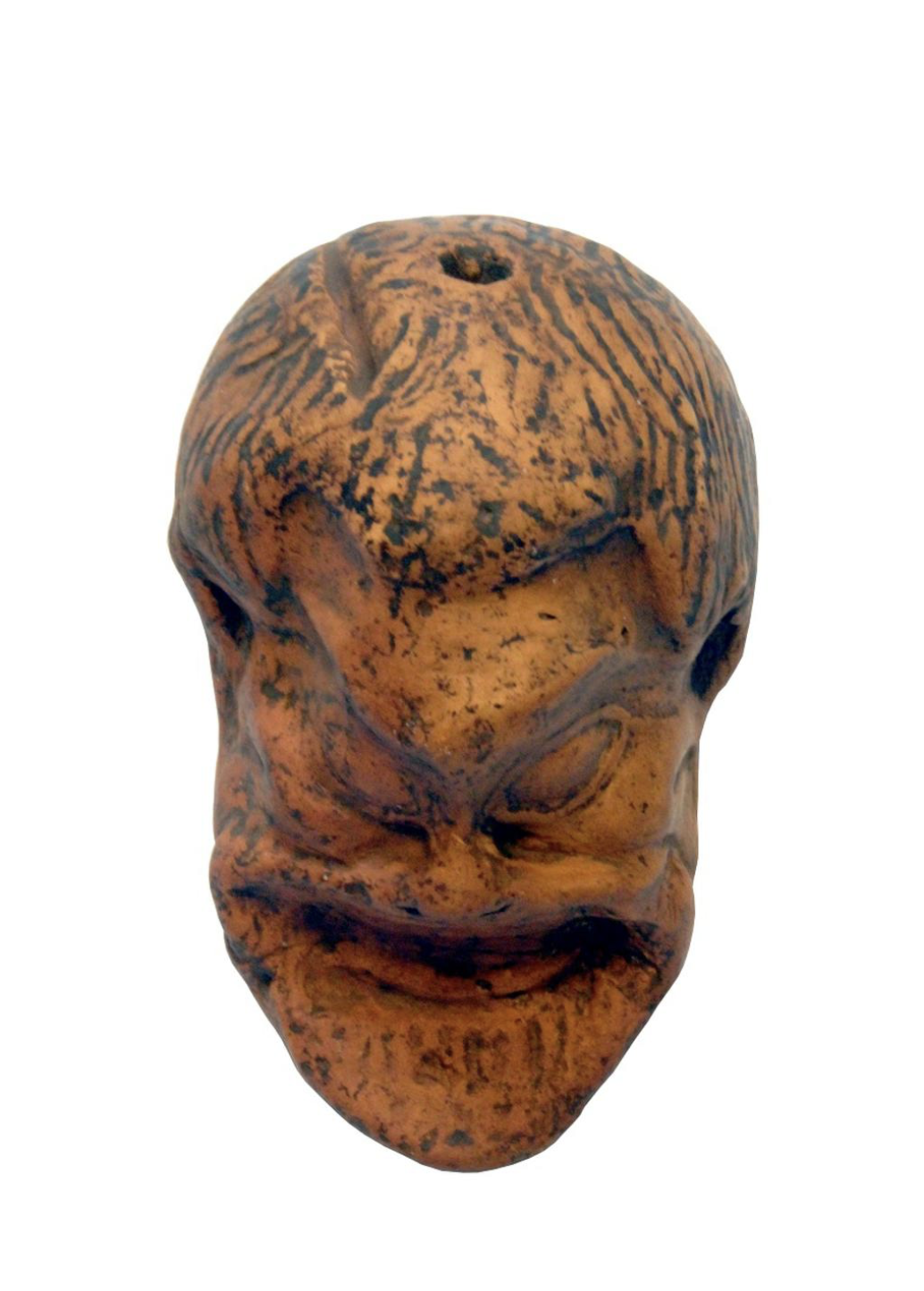
Photo Credit: Dubrovački muzeji / Dubrovnik Museums
What makes the find especially intriguing is not just the object itself, but where it was found. According to archaeologist Domagoj Perkić, who leads the research, the mask was uncovered in a secluded part of Crno Jezero Cave, an area that had remained largely blocked and undisturbed until recent excavations.
This protected position appears to have preserved the deposit in exceptional condition. Perkić has described the assemblage as almost like a frozen moment from antiquity, a snapshot of objects left in place and untouched for over two millennia.
Such preservation is rare and significant. Rather than an isolated artefact, the mask forms part of a wider ritual context, suggesting that Greek material culture and local Illyrian spiritual practices intersected within the cave environment.
Archaeological work has shown that the cave’s history stretches across several major periods. During the Bronze Age, particularly in the 2nd millennium BC, the cave seems to have served as a temporary shelter. It may have offered refuge during conflict, harsh weather, or seasonal movement.
By the Late Bronze Age and into the early Iron Age, its role changed dramatically. Human remains indicate that the cave became a burial site used over several centuries. Radiocarbon dating places this funerary phase between roughly 1012 and 481 BC, suggesting it functioned as a necropolis for more than 500 years.
After burials ceased, the cave entered yet another phase of use. From around the late 4th century to the mid-1st century BC, it appears to have functioned as an Illyrian sanctuary.
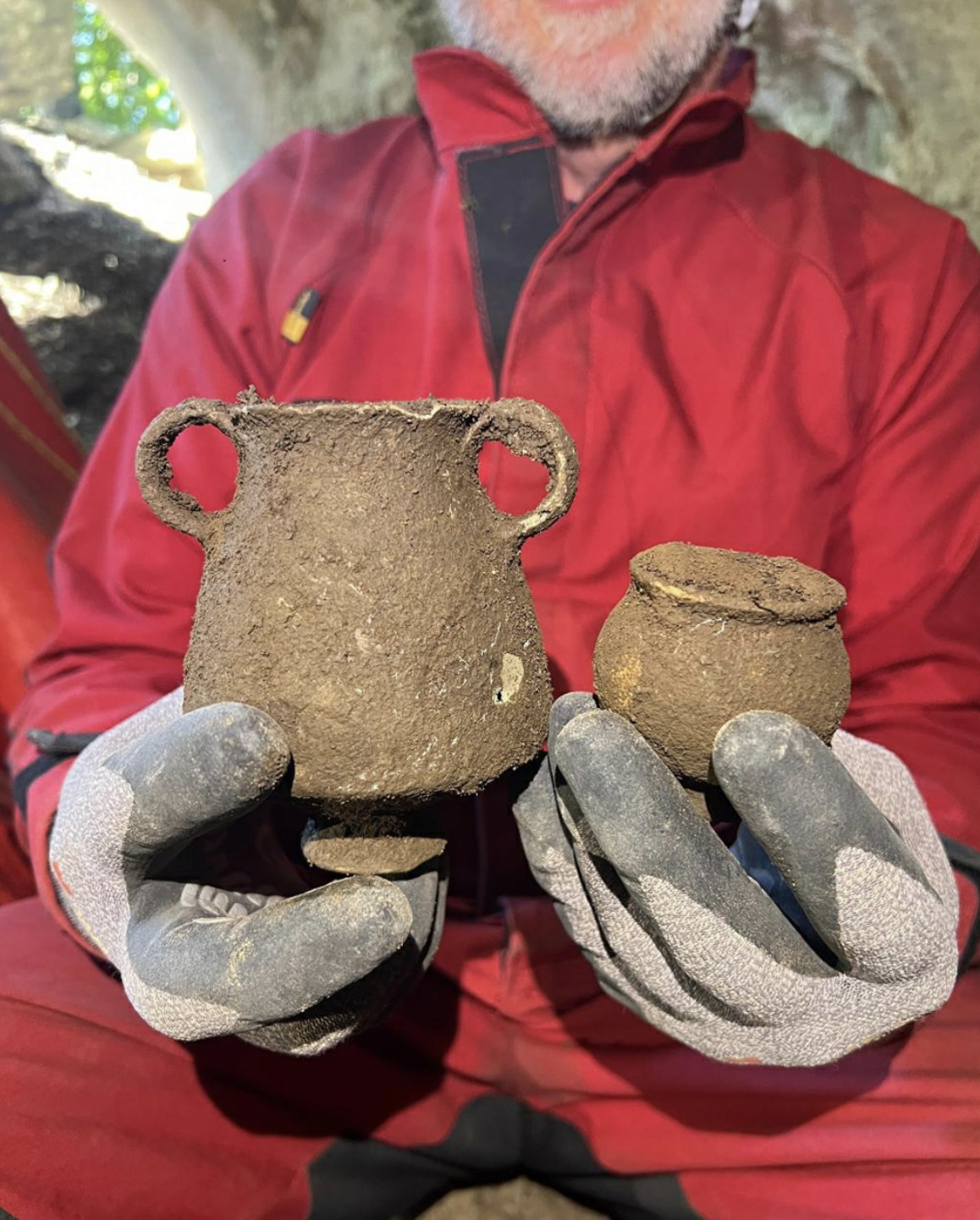
Photo Credit: Dubrovački muzeji / Dubrovnik Museums
This period produced a range of ritual deposits, including miniature vessels such as small amphorae, bowls, and drinking cups. Many of these were of Greek origin, while others were locally made. Such items were commonly left as votive offerings, gifts presented to deities during religious ceremonies.
Fragments of higher-quality Greek drinking and storage vessels have also been found. These were not everyday household items in local contexts; instead, they signified wealth, cultural connection, and exposure to the Greek Mediterranean world. Their presence strongly suggests ritual activity involving offerings, feasting, or wine-related ceremonies, although the exact nature of these practices remains uncertain.
The newly discovered mask naturally raises questions about the role of Dionysian worship in the region. In Greek religion, Dionysus was closely linked not only to theatre and wine but also to altered states of experience and ritual transformation, themes that seem echoed in the artefacts recovered from the cave.
However, researchers are cautious about drawing direct conclusions. Perkić has noted that the sanctuary may have been dedicated to Dionysus, to a local Illyrian equivalent, or to a hybrid deity shaped by cultural interaction over time.
This ambiguity is significant in itself. Rather than showing a simple transfer of Greek religious ideas, the evidence suggests a more complex process of adaptation. Local Illyrian communities appear to have selectively incorporated Greek objects and symbolism into their own ritual frameworks, creating something distinct rather than derivative.
Crno Jezero Cave is not an isolated case. It forms part of a wider network of Illyrian ritual sites in the Dubrovnik region, alongside caves such as Spila Nakovana and Vilina Cave. These sites span overlapping but distinct time periods. Nakovana was active broadly during the same era as Crno Jezero’s sanctuary phase, while Vilina Cave has an even longer sequence of use, beginning in the late 5th century BC and continuing into the early 3rd century BC. Together, they provide rare insight into how Illyrian religious practice developed alongside and in response to Greek influence along the eastern Adriatic.
Previous discoveries from Crno Jezero already included fragments of what appears to be a sculpted head and hair from a Classical-period Greek deity, reinforcing the idea that this cave held sustained ritual importance.
The 2026 excavation team brought together archaeologists, conservators, and speleologists, combining expertise to explore the cave’s complex interior and preserve fragile remains.
Although physically small, the terracotta mask carries considerable historical weight. It comes from a place that evolved repeatedly over time, from refuge, to burial ground, to sanctuary, reflecting shifting human relationships with the landscape.
Ultimately, the discovery raises more questions than it answers. What ceremonies took place deep within the cave? Who placed the mask there, and why? More than two thousand years later, the silent face of this theatrical figure still gestures towards a ritual world that archaeologists are only beginning to reconstruct.