Archaeologists Discover Evidence of a Civilisation That Existed Before Sparta!
When most people think of Sparta, they picture disciplined soldiers, harsh training, and a society built around military dominance. Traditional accounts often describe the Spartans as outsiders who arrived in southern Greece and established power through conquest. However, recent research suggests the story may not be nearly that simple.
New archaeological findings are challenging long-held assumptions about Sparta’s beginnings. Instead of emerging suddenly from invasion and control, Spartan society may have developed within a landscape that already possessed deep political, cultural, and religious roots. Long before Sparta rose to prominence, another identity appears to have shaped the region: the Lakedaimonians.
According to research by historian Hans Beck from the University of Münster, published in The Annual of the British School at Athens, the origins of Laconia may stretch back into the Bronze Age. Rather than focusing on classical Sparta itself, Beck’s study highlights two significant locations south of the city: the Mycenaean palace of Aghios Vasileios near Xirokambi and the sanctuary at Amykles dedicated to Apollo Amyklaios. Together, these sites tell a different story. They suggest that Sparta inherited an already existing world rather than creating one from nothing.
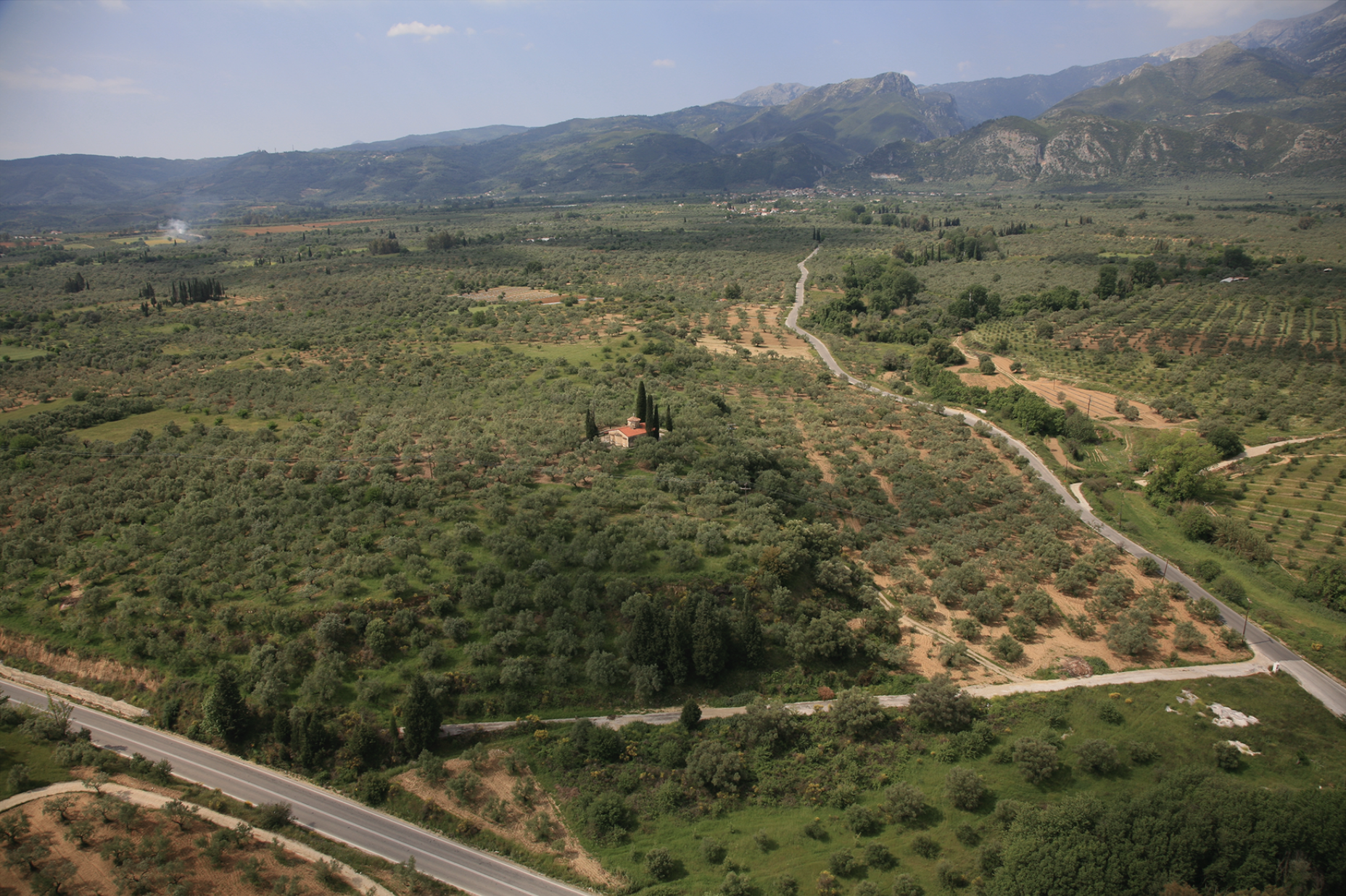
Photo Credit: Photograph by V. Georgiadis, from Wiersma et al. Reference Wiersma, 2022, 124. © Corien Wiersma, Aghios Vasileios Survey Project (printed with permission). Credit: Beck, H., 2026
Clues to this earlier past come from an unexpected source: clay tablets written in Linear B, the script used by Mycenaean palace administrators during the Late Bronze Age. Records uncovered at Thebes include references to terms connected to “Lakedaimonian,” implying that this regional identity existed centuries before classical Sparta became powerful.
This matters because later Greek writers often blurred the line between Spartans and Lakedaimonians, treating them almost as one and the same. Beck argues that the reality was much more complex. Identity in ancient Greece was not fixed in the way modern national identity works. Communities evolved through shared customs, sacred places, political centres, and collective memory.
Archaeology now provides physical evidence of where this earlier community may have been centred.
Roughly 12 kilometres south of modern Sparta lies Aghios Vasileios, a site that has revealed itself to be far more important than archaeologists once imagined. Excavations have uncovered monumental structures, decorated frescoes, bronze weapons, and a substantial archive of more than 200 Linear B fragments. Among these discoveries is a clay nodule linked to the wanax, the Mycenaean term for king, hinting that this location may have served as the seat of regional authority.
Far from being an isolated settlement, Aghios Vasileios appears to have been one of the most significant administrative centres of the Mycenaean world. In fact, the quantity of written records found there places it among major palace sites such as Knossos, Pylos, and Thebes.
Yet this palace was more than a political headquarters. Mycenaean palaces functioned as hubs of administration, economy, and ritual life. Farmers, craftsmen, officials, and local elites would have interacted through trade, ceremonies, taxation, and governance. Tablets discovered at the site mention livestock, textiles, oils, and other goods, showing how deeply connected the palace was to the economic life of the Eurotas Valley.
For people living across the region, repeated gatherings and obligations linked to the palace may have gradually created a shared sense of belonging, an early form of Lakedaimonian identity.
Like many Mycenaean centers across Greece, Aghios Vasileios eventually came to an end. Around the shift from the 13th to the 12th century BCE, the palace system collapsed. Across the wider Greek world, political institutions crumbled, royal centres were abandoned, and written archives disappeared. But in Laconia, something important survived. A sacred site at Amykles, located several kilometres north of the palace, continued to attract people even after royal authority vanished.
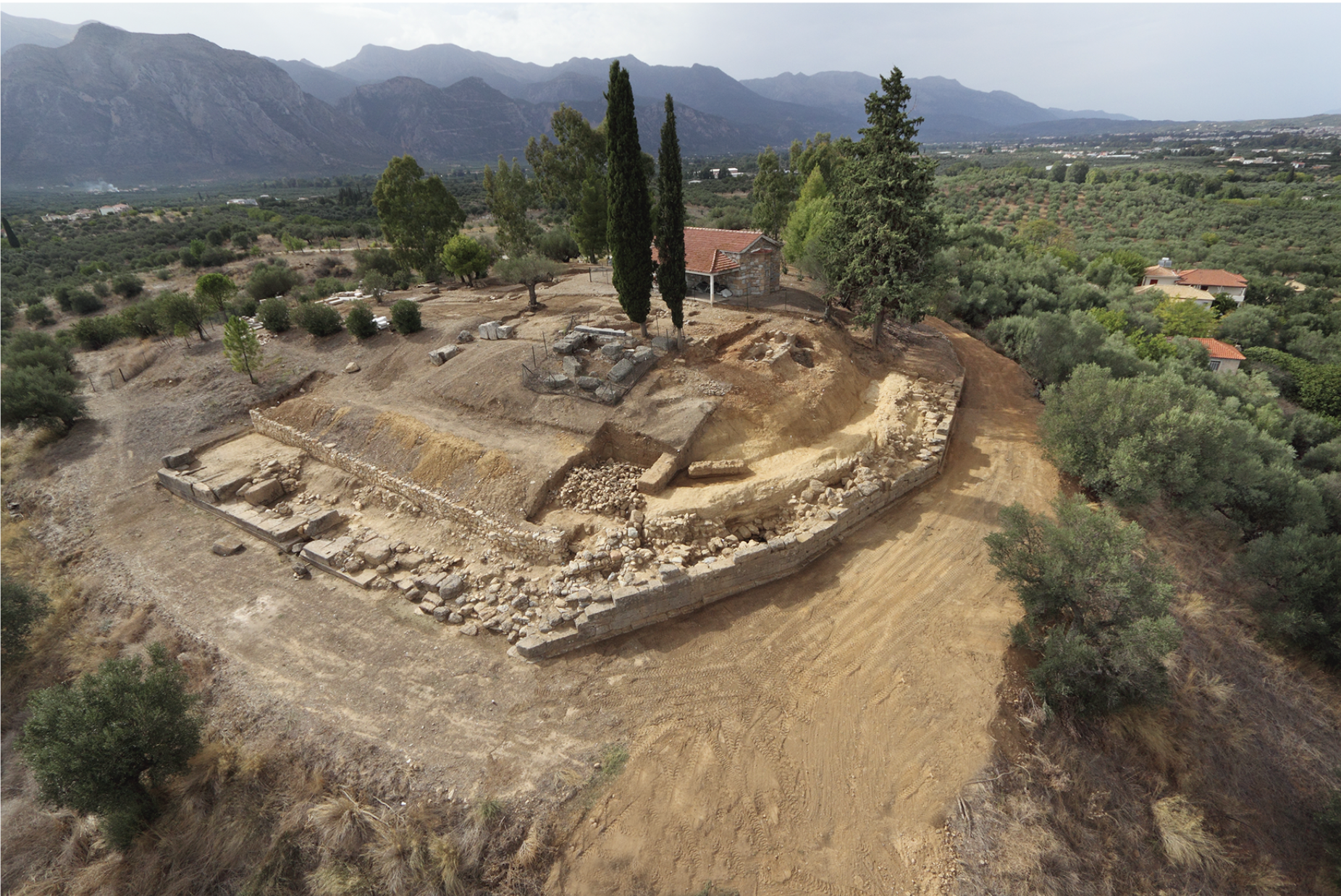
Photo Credit: Beck, H., 2026
The hill of Aghia Kyriaki at Amykles had already become an important ceremonial location during the Late Bronze Age. Archaeologists have uncovered figurines, drinking vessels, ritual containers, and signs of communal feasting, pointing to long-standing religious activity.
What makes Amykles remarkable is its continuity. Even after the collapse of palace society, people kept returning. Archaeological evidence suggests the sanctuary remained active across multiple historical periods, with offerings evolving over time. Bronze pins, swords, spindle whorls, and ceremonial vessels indicate a place where rituals, elite display, feasting, and social gathering continued uninterrupted.
In a world suddenly stripped of centralised authority, Amykles appears to have preserved something invaluable: collective memory. While kingdoms disappeared, sacred traditions endured.
For decades, historians commonly explained Sparta’s rise through the arrival of Dorian settlers who supposedly conquered Laconia and replaced what came before. Beck’s research paints a more gradual picture.
Although migration and conflict likely occurred, the evidence from Amykles does not point to abrupt destruction or cultural replacement. Instead, rituals appear to have continued with surprising consistency. Sacred traditions changed slowly rather than ending suddenly. This raises an intriguing possibility: early Spartans may not have erased earlier Lakedaimonian culture. Instead, they may have absorbed it.
Rather than wiping away the past, Sparta seems to have incorporated older sacred landscapes and regional traditions into its growing political structure. Amykles may have become the bridge between old and new identities.
One of the strongest examples of this connection was the Hyakinthia festival, one of the most important celebrations in the region. The event brought together Spartans and local Lakedaimonians through processions, sacrifices, athletic contests, music, feasting, singing, and dance. Ancient accounts even suggest that songs from different communities formed part of the ceremonies, reinforcing local traditions rather than replacing them.
For Spartans travelling from the city, Amykles represented an important religious destination. For surrounding communities, it was something even deeper, an ancestral place tied to generations of memory.
By the sixth century BCE, Amykles had grown into one of the most significant religious landmarks in Laconia. Towering above the sanctuary stood a massive bronze-covered statue of Apollo Amyklaios, estimated to reach around 14 metres high and visible across much of the surrounding valley.
Yet beneath this powerful image of an Olympian god lay another symbol of continuity: the tomb or altar of Hyakinthos, an ancient local hero whose traditions may stretch far back into the region’s past.
The pairing feels symbolic. Apollo represented broader Greek religious identity, while Hyakinthos embodied local memory. Together, they reflected how Sparta itself may have formed, not through complete replacement, but through adaptation and integration.
The rise of Sparta may therefore have been less about conquest alone and more about negotiation between old traditions and new power.