3,500-Year-Old Egyptian Dog’s Name Revealed in Ancient Tomb!
A faint inscription in an ancient Egyptian tomb has revealed the previously unknown name of a dog depicted more than 3,500 years ago. The animal appears in the tomb of User, a scribe and steward whose burial place lies at Thebes and is generally dated to the early 18th Dynasty, probably during the reign of Thutmose I. Although three dogs are shown in the tomb, only two had previously been identified by name. New examination of the faded decoration has now brought a third name back into view.
Egyptologist Chelsea Kaufman has identified the name as dwA.ty, which can be understood approximately as “He-of-the-Underworld”. The name may have had a connection with Anubis, the canine-associated Egyptian deity strongly linked to cemeteries, embalming and the protection of the dead.
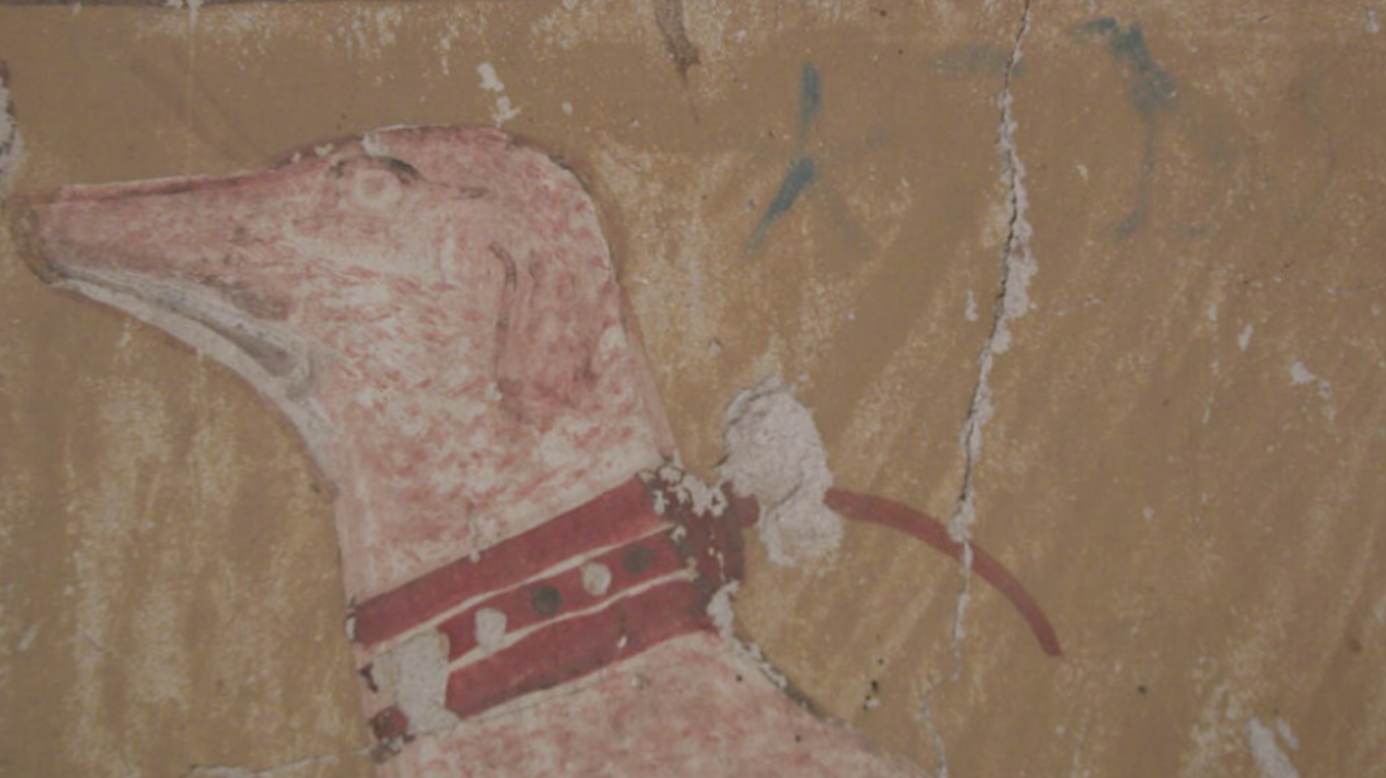
Photo Credit: Kaufman, C. (2026), The Journal of Egyptian Archaeology.
The discovery makes this the 97th recorded dog name from ancient Egypt and provides another insight into the relationships Egyptians had with individual animals.
User's tomb, known as TT 21, contains several offering scenes in which dogs sit beneath their owner's chair. The animals are depicted with collars and have the slender appearance often associated with sloughi-like hunting dogs.
Two of the dogs were already known. Their names were recorded as qn[j]j, meaning “Strong one”, and mAaty, translated as “Trusty”.
The third animal was more difficult to identify because the inscription accompanying it had almost disappeared into the surrounding decoration. The remaining traces were too faint to be easily read through conventional examination.
Kaufman used the DStretch plug-in in ImageJ, a digital imaging technique that can enhance subtle differences in surviving pigments. This revealed enough of the original inscription to reconstruct the dog's name as dwA.ty.
The interpretation is not entirely without uncertainty. One of the hieroglyphs could potentially be read differently, allowing for the alternative name sbA.ty, meaning “pupil”. However, Kaufman considers dwA.ty more persuasive given the funerary context and its association with the underworld.
The name is particularly interesting because dwA.ty is also associated with an epithet of Anubis. This does not necessarily mean that the dog was explicitly named after the god, but it does suggest a possible connection between the animal's name and the religious ideas surrounding death and the afterlife.
The newly identified name is significant because named dogs are relatively well represented in the archaeological record of ancient Egypt. Around 97 dog names are now known, spanning a period from the Old Kingdom through to the Ptolemaic Period. These names could describe an animal's appearance, temperament or qualities, while some appear to have had religious associations. Interestingly, certain names were also used for people, suggesting that the distinction between human and canine naming practices was not always particularly strict.
Private tombs provide much of this evidence. More than half of the known dog names come from funerary contexts, where images and inscriptions were intended to preserve aspects of an individual's identity and existence beyond death.
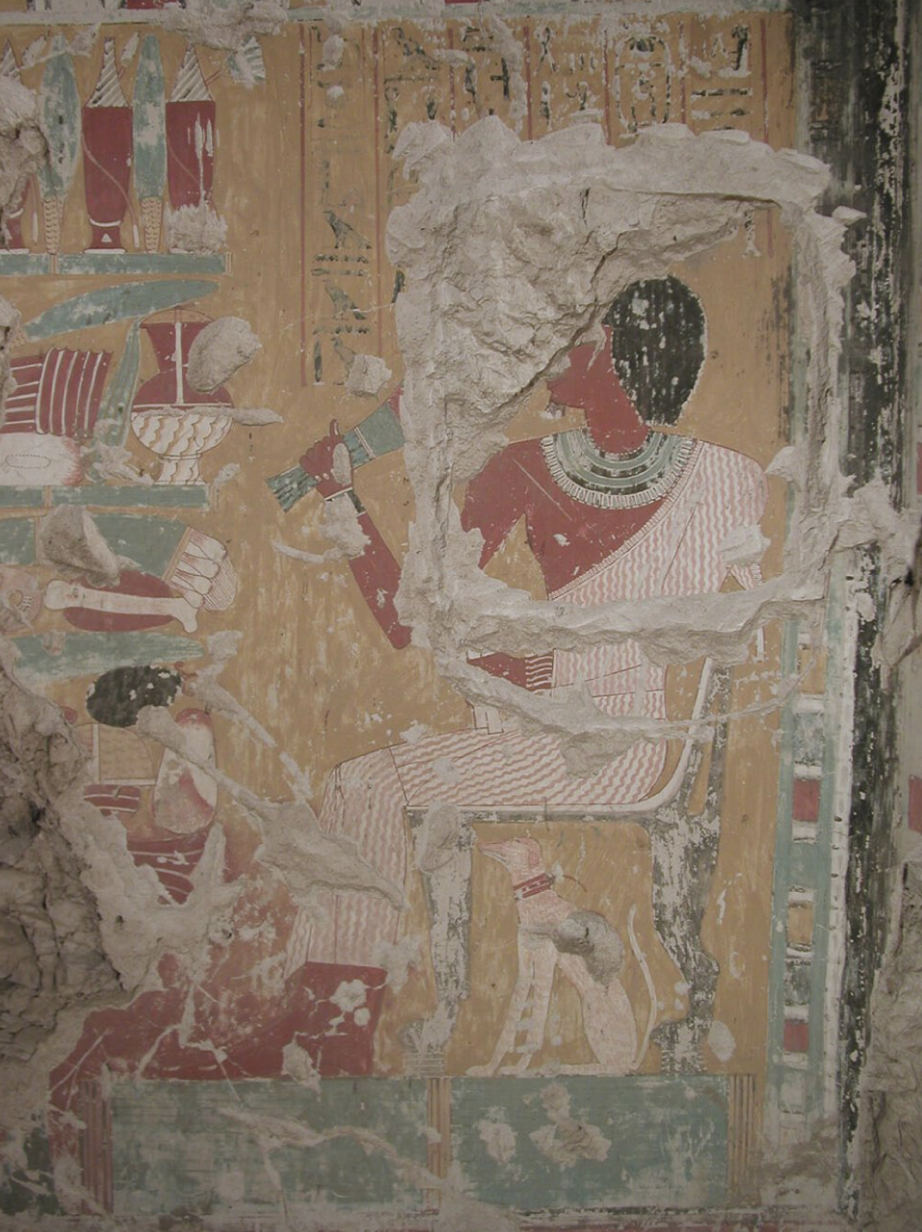
Photo Credit: Kaufman, C. (2026), The Journal of Egyptian Archaeology.
This makes the dogs in User's tomb particularly revealing. They were not simply decorative additions to an offering scene. By depicting the animals and recording their individual names, the tomb could preserve their identities alongside that of their owner.
In ancient Egyptian funerary belief, representations and names could play an important role in maintaining the existence of the deceased. The inclusion of User's dogs may therefore indicate that they were considered part of the personal world he wished to carry with him into the afterlife.
There is another reason why this particular animal stands out. The dog is shown beneath User's lion-footed chair with a distinctive coat consisting of red, rippling bands against a white background. Kaufman notes that the pattern appears unusual among surviving Egyptian representations of dogs.
There may even be a deliberate visual connection between the dog's coat and the rippled fabric worn by User himself, although the precise intention behind the design remains uncertain.
The written representation of the dog's name is equally unusual. Egyptian inscriptions containing dog names sometimes use a dog as a determinative, but these signs normally depict the animal standing. In User's tomb, however, the determinative is a seated dog, mirroring the posture of the animal represented directly beneath it.
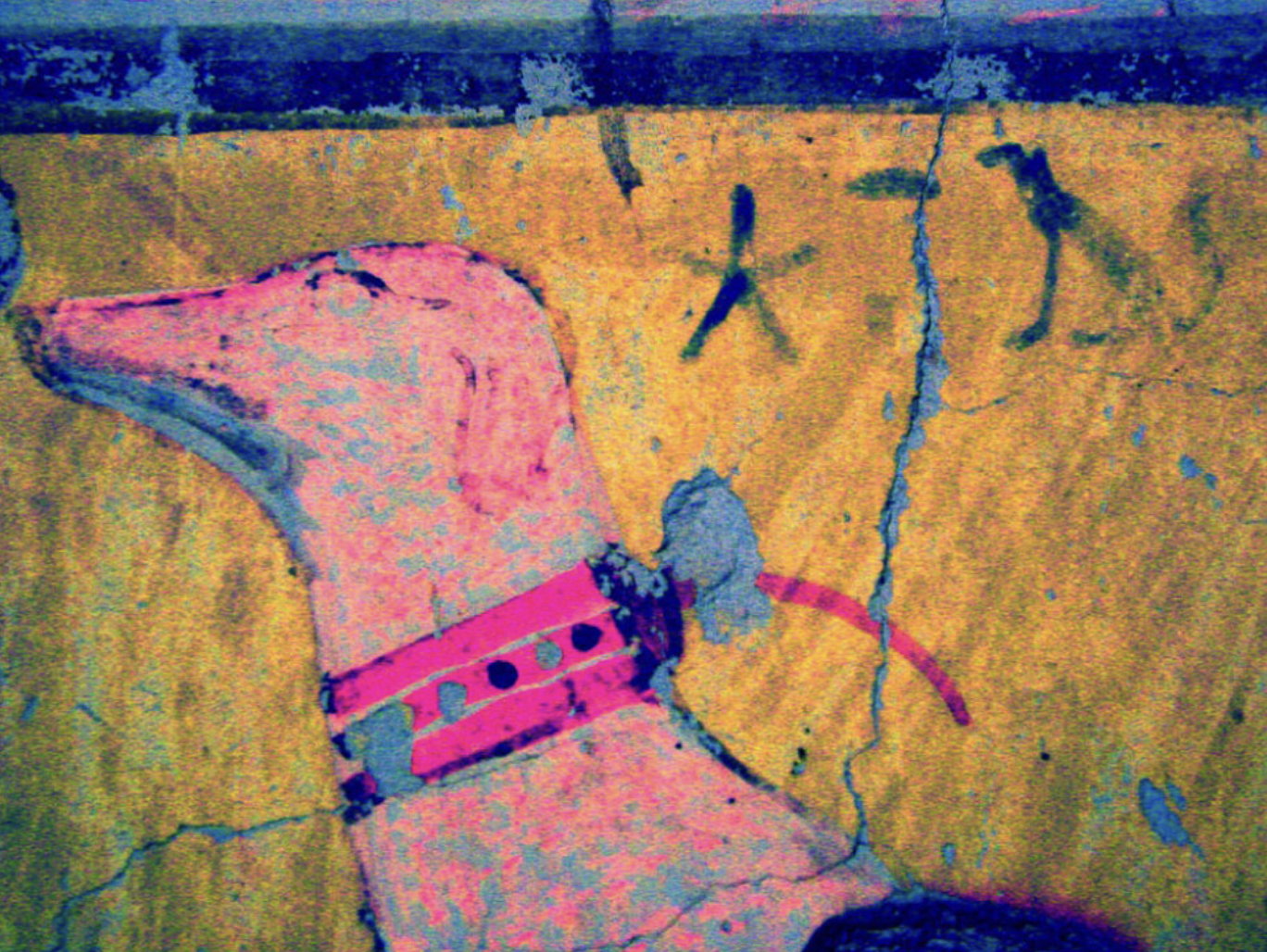
Photo Credit: Kaufman, C. (2026), The Journal of Egyptian Archaeology.
This appears to be an extremely rare feature. At present, only one other seated-dog determinative is known from an Egyptian dog name, appearing on a Middle Kingdom dog coffin.
The combination of features therefore makes the animal particularly distinctive: it has an unusual coat, a previously unrecorded name and an uncommon hieroglyphic sign that appears to correspond directly with its posture.
The faded inscription in User's tomb offers more than another entry in the catalogue of ancient Egyptian dog names. It provides a small but unusually personal glimpse into how individual animals could be remembered.
Dogs appear frequently in Egyptian art, but the fact that their names were recorded suggests that at least some were regarded as individuals rather than simply as anonymous animals.
In this case, User's dog was given a place within his tomb, its appearance was carefully represented, and its name was written beside it. If the interpretation of dwA.ty is correct, the name may even have carried an association with the underworld and the divine protection of the dead.
After more than three millennia, modern imaging has made it possible to recover those almost vanished signs. What survives is therefore more than an image of an ancient Egyptian dog. It is a reminder that this particular animal had a name, an appearance and a place within the life, and perhaps the imagined afterlife, of the person who owned it.