Ancient Egyptian Royal Retainers May Have Been Sacrificed!
More than 100 years ago, archaeologist Flinders Petrie investigated a series of burials surrounding the tombs of Egypt’s earliest kings. He suspected that some of the individuals buried there had been killed to accompany their rulers into the afterlife, raising the possibility that some may even have been buried alive.
At the time, however, Petrie could find little physical evidence to support his theory. Although the arrangement of the graves suggested that the burials might have been connected to royal funerals, the skeletons offered no clear proof of how the individuals had died.
Now, a new forensic investigation has brought fresh evidence to this long-standing debate. By examining 46 ancient Egyptian skulls, researchers identified potentially lethal injuries in 18 cases, strengthening the argument that at least some of the people buried alongside the earliest rulers may have been deliberately killed.
The remains come from Umm el-Qaab, an important royal cemetery at Abydos in southern Egypt. During the First Dynasty, approximately 3078–2900 BCE, Egypt’s early rulers constructed elaborate tombs and separate funerary enclosures at the site. Numerous smaller graves surrounded these royal monuments, with some burial groups containing hundreds of individuals.
These people are generally thought to have belonged to the royal household and court. They may have included administrators, craftspeople and other individuals who served the king during his lifetime.
Their graves varied considerably in their contents. Some contained relatively few possessions, while others held objects such as copper tools, pottery and stone vessels, flint knives and ivory combs inscribed with royal names. In certain cases, inscribed stelae also preserved the names and titles of the deceased, providing valuable information about individuals who would otherwise remain largely unknown.
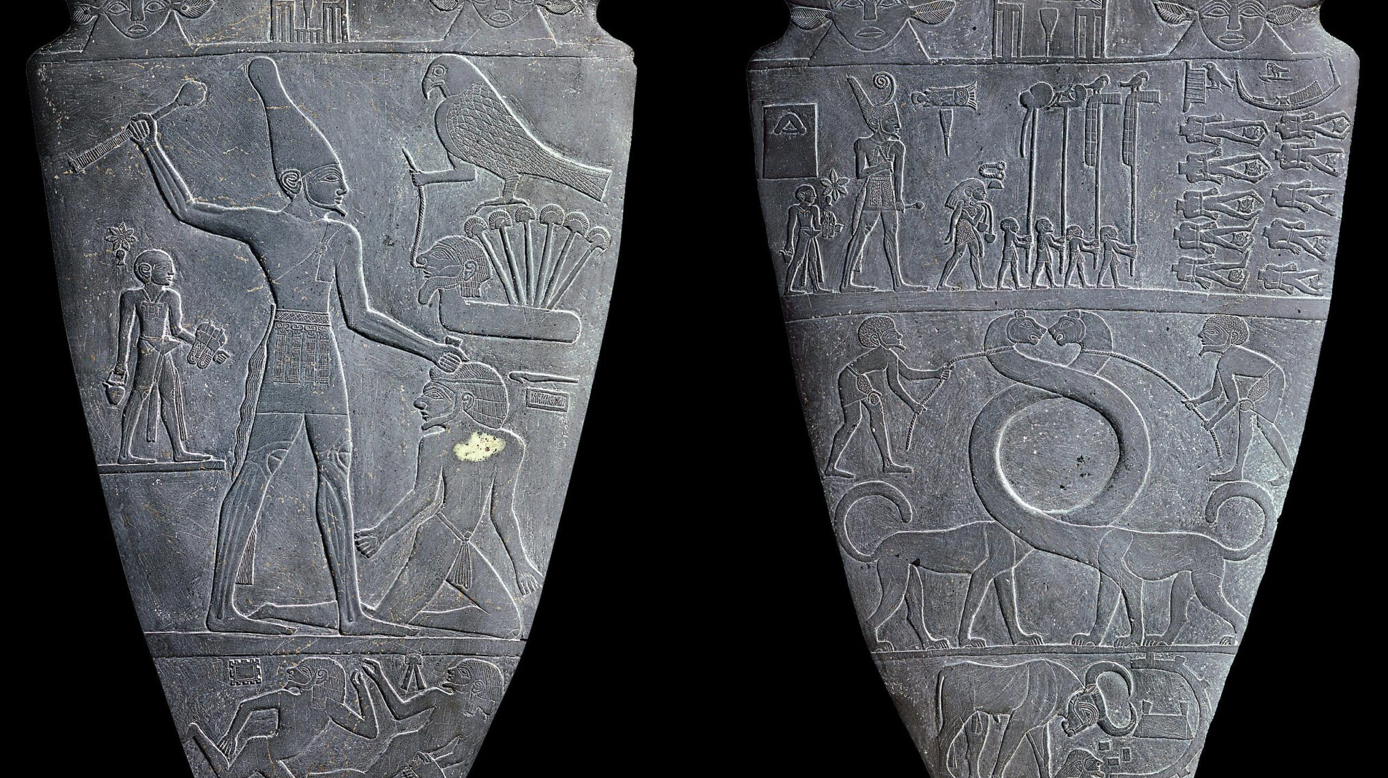
Photo Credit: Public domain
The sheer number of burials, combined with their close association with royal monuments, has long raised questions about the circumstances of these deaths. Were these individuals members of the royal household who died naturally and were subsequently buried near their ruler? Or were they expected to accompany the king into the afterlife, even if this meant sacrificing their own lives?
Petrie favoured the possibility that the burials were connected to royal funerals, partly because many appeared to belong to the same period. Yet the lack of obvious injuries made it difficult to establish whether the individuals had been killed.
He also drew attention to the unusual positions in which some bodies had been discovered. Arms extended away from the body, raised knees and turned heads led him to speculate that certain individuals might have been buried before they were fully dead. He even suggested that some could have been rendered unconscious before burial, only to regain consciousness underground.
Modern archaeology approaches this interpretation with considerable caution. The position of a skeleton does not necessarily reflect the posture of a person at the moment of death. As soft tissues decompose, coffins deteriorate and the surrounding soil shifts, bones can move considerably. Consequently, unusual body positions cannot, on their own, demonstrate that someone was buried alive.
The latest research does not establish that Petrie’s most disturbing suggestion was correct. Instead, it examines a more tangible question: whether physical injuries can reveal evidence of violence around the time these individuals died.
Bioarchaeologist Roselyn A. Campbell of Purdue University examined 46 skulls held in the Duckworth Collection at the University of Cambridge. The remains were associated with subsidiary burials connected to the funerary enclosures of three First Dynasty rulers: Djer, Djet and Merneith.
Her analysis identified potentially lethal cranial injuries in 18 skulls, representing approximately 39 per cent of the sample.
The most frequently observed injuries were linear fractures across the skull. Other remains showed evidence of sharp-force trauma, including a penetrating injury to the side of the head and a chopping injury close to the eye.
These findings are significant because forensic anthropology can help distinguish injuries sustained around the time of death from damage that occurred much later. Bone that still retains moisture behaves differently under impact from dry bone, allowing researchers to assess the likely timing of certain fractures.
Campbell also considered the earlier work carried out by Petrie. In some cases, he had applied paraffin wax to fractured areas of the skulls to stabilise them. This raises the possibility that he had recognised the damage but attributed it to pressure or disturbance during burial rather than injuries sustained close to death.
With modern forensic techniques, researchers can now investigate these fractures in greater detail than was possible during Petrie’s original excavations.
One possible explanation for the injuries is execution, although determining exactly how the individuals were attacked remains difficult.
Ancient Egyptian artwork frequently depicts kings raising a mace over a defeated enemy. Such scenes make the use of these weapons a reasonable possibility to investigate when considering potential executions during the early dynastic period.
However, the injuries identified at Abydos do not closely resemble the characteristic damage typically produced by a heavy stone mace. Experimental research has shown that these weapons can cause depressed fractures, in which part of the skull is driven inwards by the impact.
Most of the fractures in Campbell’s sample were instead linear. These may be more consistent with blows from relatively broad, flat objects made from lighter materials, potentially including wood or antler.
This does not establish which weapons, if any, were used in each case. Linear fractures can also result from accidental falls, meaning that the shape of an injury alone cannot confirm an intentional killing.
Nevertheless, the frequency of severe head injuries within this relatively small group is noteworthy. Campbell also highlights the location of some fractures, particularly those occurring above a region of the skull known as the hat-brim line. Such injuries are more commonly associated with deliberate blows than with ordinary falls, providing further support for the possibility that at least some individuals experienced intentional violence.
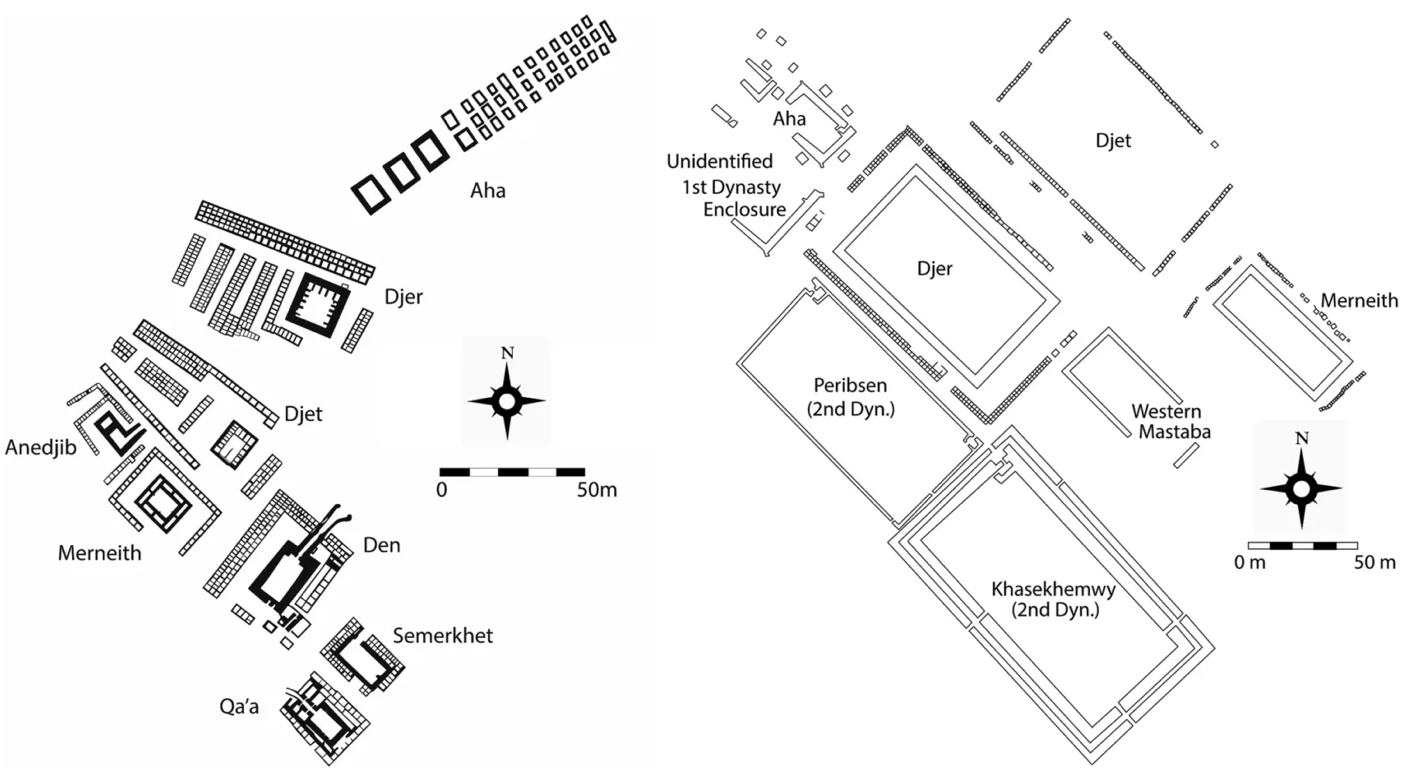
Photo Credit: Roselyn A. Campbell, after Bestock (2011).
Taken together, these observations suggest that the injuries cannot simply be dismissed as damage caused by the passage of time or the conditions in which the bodies were buried.
Despite the findings, there are important limitations to the study. The presence of trauma does not automatically mean that every injured individual was executed, nor does it prove that all 18 people died directly from their head injuries.
The term perimortem refers to trauma sustained around the time of death. It does not necessarily mean that an injury was the cause of death, and the evidence cannot always establish whether it occurred immediately before or shortly after death.
There is also a significant gap in the surviving archaeological record. The 46 skulls represent only around 5–15 per cent of the original burial populations associated with the funerary enclosures. Most of the remaining individuals cannot be studied as complete, identifiable skeletons, limiting the researchers’ ability to investigate injuries elsewhere on the body.
Furthermore, not every method of killing leaves clear evidence on bone. Strangulation or suffocation, for example, may leave little or no identifiable trauma on the skull. Some individuals may also have died naturally. It is therefore impossible to assume that everyone buried around these royal monuments met the same fate.
These limitations mean that the precise circumstances surrounding the burials remain unresolved. Nevertheless, the discovery of potentially lethal injuries provides an important new line of evidence that was missing from Petrie’s original investigation.
The new research lends support to the possibility that some of Egypt’s earliest royal retainers were deliberately killed in connection with royal funerary practices. It does not, however, prove that every subsidiary burial represented a human sacrifice or that Petrie was correct about people being buried alive.
Instead, the findings suggest that the funerary practices surrounding Egypt’s earliest rulers may have involved a more complicated combination of circumstances than previously understood. Different individuals could have experienced different deaths, and the surviving evidence is insufficient to reconstruct every event.
What has changed is the strength of the physical evidence. Petrie recognised the unusual relationship between the royal tombs and the surrounding graves, but he lacked the forensic methods needed to establish whether violence had played a role. Campbell’s examination has now identified serious injuries in a substantial proportion of the skulls studied, making deliberate violence a possibility that cannot easily be overlooked.
More than a century after Petrie first investigated these burials, the question of royal retainer sacrifice remains open. The skulls cannot tell us exactly what happened to every individual, but they offer a clearer picture of the violence that may have accompanied the funerary traditions of ancient Egypt’s earliest kings.