4,000-Year-Old Sealed Clay Cuneiform Letters Read Without Being Opened!
A remarkable breakthrough in archaeology has allowed researchers to read 4,000-year-old cuneiform letters without ever opening them. These ancient messages, discovered in Anatolia, were originally sealed inside clay envelopes, meaning their contents were completely hidden for millennia.
Traditionally, the only way to access the writing inside was to physically break open the envelope. While effective, this method destroyed the outer clay casing, erasing valuable information such as seal impressions, fingerprints, and traces of how the objects were made and handled. As a result, archaeologists were often forced to choose between reading the message or preserving the object’s full historical context.
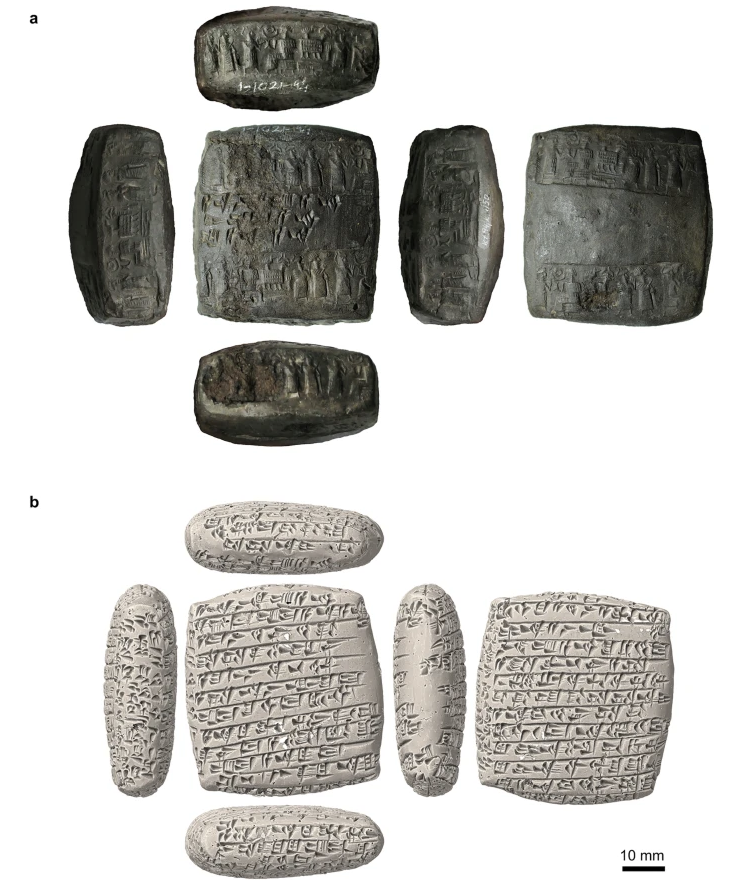
Photo Credit: Michel, C., et. al., 2026
This long-standing problem has now been addressed with a new portable X-ray CT scanning system known as ENCI (Extracting Non-destructively Cuneiform Inscriptions). Developed by a collaborative team of Assyriologists and physicists from institutions including the University of Hamburg and DESY in Germany, the device was designed specifically to be transported directly into museums and archaeological collections.
Unlike conventional large-scale scanners, ENCI is modular and can be assembled on site. Although it weighs around 420 kilograms in total, it can be broken down into several manageable parts for transport. Once set up, it is capable of producing highly detailed 3D scans of sealed tablets within minutes, allowing researchers to digitally separate the outer envelope from the inner tablet.
The system has already been tested in major institutions, including the Louvre in Paris and the Museum of Anatolian Civilisations in Ankara. During one extended research campaign, dozens of tablets were scanned, producing detailed tomographic data that revealed their hidden contents for the first time without any physical interference.
Many of the artefacts studied originate from Kültepe, once known as ancient Kanesh in central Anatolia. In the 19th and 18th centuries BC, Assyrian merchants based in the city of Assur established trading colonies there, managing long-distance commerce in goods such as textiles and silver.
Their correspondence was typically written on small clay tablets and then enclosed in protective clay coverings. The outer surface usually displayed only basic information, such as names and seal impressions, while the full message remained concealed until the envelope was broken open.
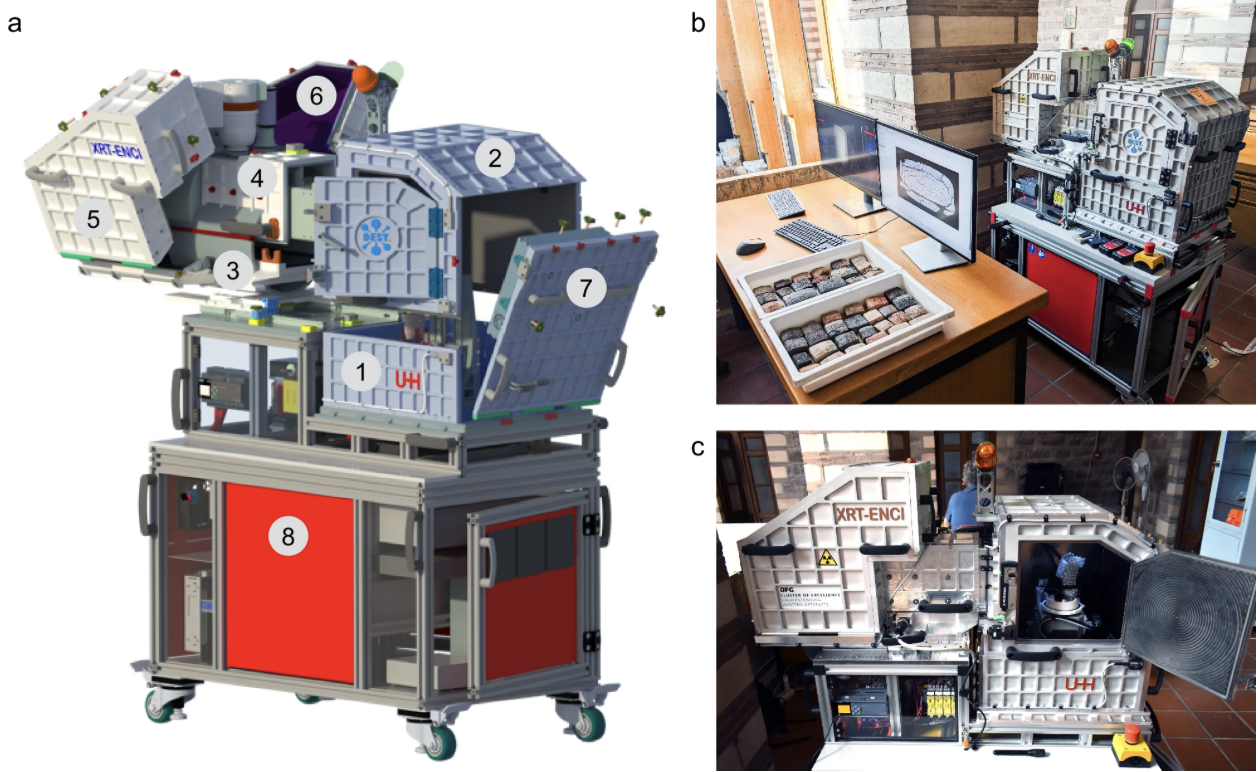
Photo Credit: Michel, C., et. al., 2026
One particularly revealing example is a letter sent by a woman named Anna-anna to her husband, a travelling merchant. Although the sealed envelope only indicated sender and recipient details, the internal text tells a more detailed story. It describes her efforts to recover silver owed to her husband, and how the debtor refused to settle the account until he returned.
Findings such as this are significant because they challenge assumptions about women’s roles in ancient societies, showing that they could be actively involved in commercial affairs during their husbands’ absence.
Further scans have revealed additional insights beyond the written content itself. Some tablets appear to include supplementary clay pieces used like extra pages when the original space was insufficient, particularly in documents relating to trade goods and logistical arrangements.
The imaging has also provided new information about how these objects were constructed. Evidence suggests that many envelopes were built from multiple layers of clay rather than a single sheet, likely to improve durability during transport across long distances.
Perhaps most importantly, this technology is opening a new chapter in the study of ancient archives. Many sealed tablets survived only because they were lost, abandoned, or stored and never opened. Until now, their contents remained inaccessible.
By using ENCI, researchers can now examine these fragile records without damaging them, preserving both the message and the physical artefact. This allows historians not only to recover lost texts, but also to better understand the people behind them: merchants, families, and individuals like Anna-anna, whose voices have remained unheard for thousands of years.
In doing so, museums may finally be able to explore some of the oldest private correspondence in human history without ever breaking the seals that protected it for millennia.