Inscription Reveals Rare Evidence of Mithras Temple Closure in the Roman Empire!
A newly interpreted inscription at Zerzevan Castle in southeastern Türkiye is offering a rare glimpse into how religious change unfolded in the later Roman Empire. Rather than simply suggesting that old beliefs faded away, the discovery appears to capture a more deliberate moment of transition, where a once-active Mithras sanctuary was formally brought to a close after Christianity became dominant.
The inscription was found at the entrance to an underground Mithras temple in the Çınar district of Diyarbakır. For years, it remained difficult to read with any certainty. However, recent analysis using Aramaic and Syriac epigraphy, led by Prof. Dr. Mehmet Sait Toprak of Mardin Artuklu University, has provided a clearer interpretation. According to the research team, the text includes a reference to the “holy cross” and appears to mark the official closure of the sanctuary around 1,700 years ago.
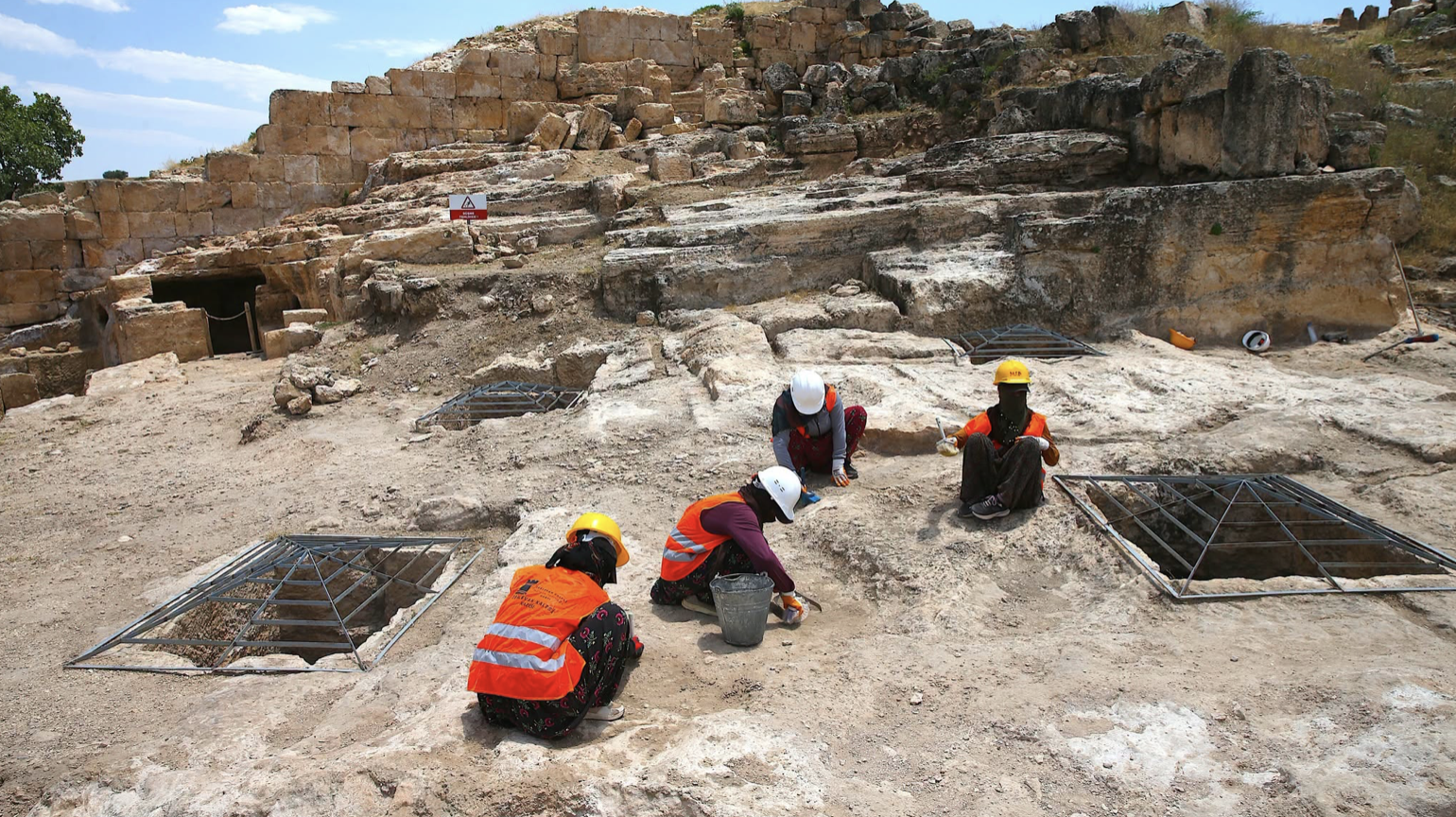
Photo Credit: Aziz Aslan/AA
What makes this discovery particularly significant is not just the wording of the inscription, but its placement. It is carved directly at the threshold of a subterranean Mithraeum, a space that would once have been reserved for initiated followers of Mithras. In this position, the inscription seems to function less as a casual marking and more as a symbolic declaration that the space was no longer in use for its original religious purpose.
Zerzevan Castle itself was a major Roman frontier garrison, positioned along an important strategic route between present-day Diyarbakır and Mardin. The site was heavily fortified and included defensive walls, towers, administrative buildings, cisterns, an arsenal, a church, and various underground structures. It reflected the military and cultural complexity of Rome’s eastern borderlands, where imperial forces frequently interacted with neighbouring regions.
Among its most intriguing features is the Mithraeum, an underground temple dedicated to Mithras, a mystery deity particularly popular among Roman soldiers in the 2nd and 3rd centuries AD. Unlike public temples, Mithraic worship took place in small, enclosed spaces and was only open to initiated members. This secrecy means that surviving archaeological evidence is often limited, making well-preserved sites like Zerzevan especially valuable.
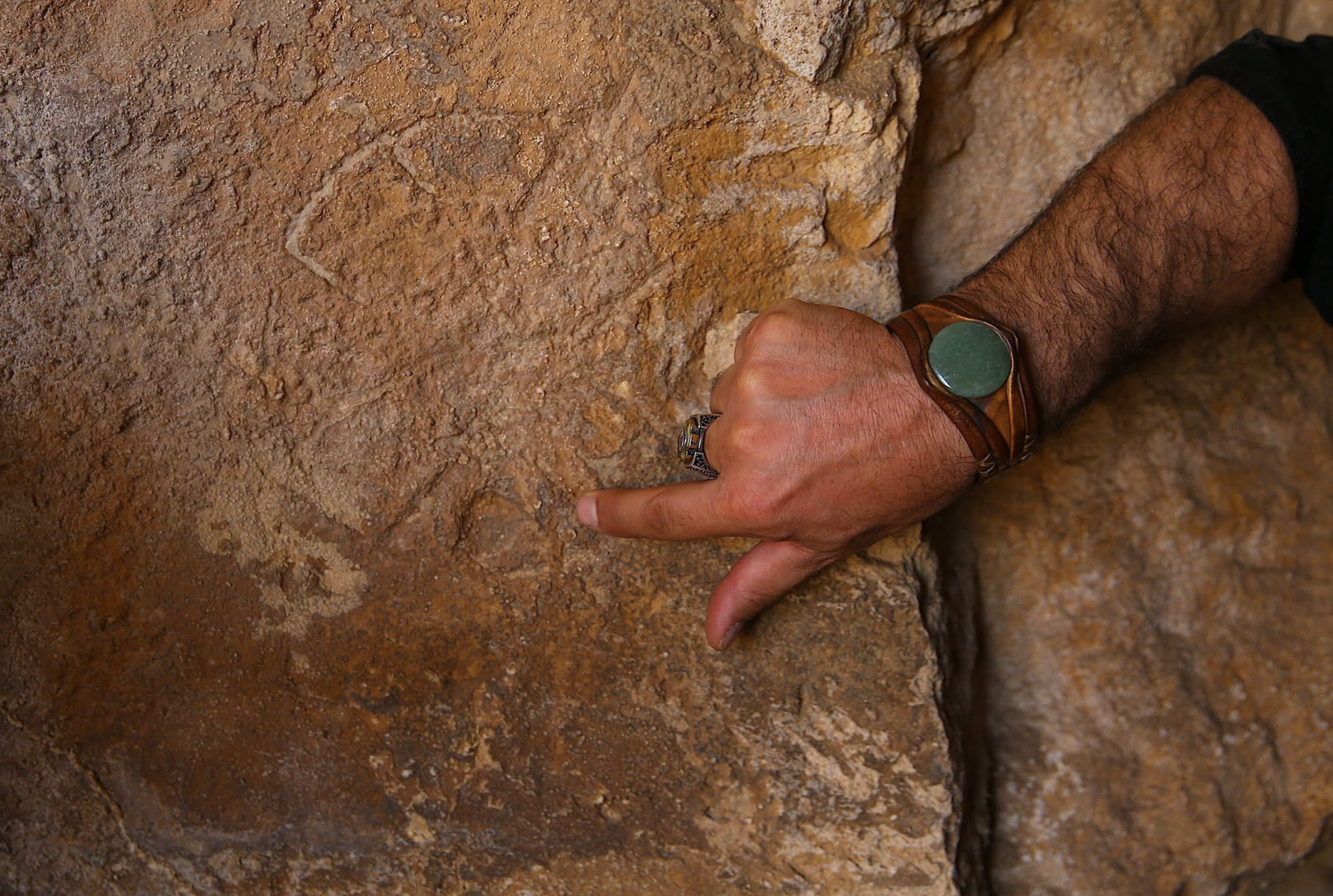
Photo Credit: Aziz Aslan/AA
The temple itself is carved into bedrock and measures roughly seven metres in length, five metres in width, and around 2.5 metres in height. Its compact design reflects the exclusive nature of Mithraic worship. Inside, archaeologists have identified rock-cut niches, a pool, and a channel system that is believed to have been used in ritual activity. Some interpretations also suggest that ceiling features may have played a role in ceremonial practices involving water and sacrifice.
These architectural details reinforce the idea that this was a carefully designed religious space rather than a later adaptation of an ordinary room. Mithras worship was closely associated with themes such as loyalty, cosmic order, secrecy, and solar symbolism, often linked with the deity Sol Invictus, the “Unconquered Sun”. At Zerzevan, this hidden religious world appears to have been directly intersected by a later Christian presence.
The newly deciphered inscription strengthens that interpretation. Prof. Dr. Toprak’s reading suggests that the text not only refers to the holy cross but also invokes God in terms that emphasise order, transformation and the spreading of love. Comparisons have been made with other Syriac and Aramaic inscriptions from Late Antiquity, including examples held in the Şanlıurfa Museum.
According to excavation director Prof. Dr. Aytaç Coşkun, the inscription has been under study since the discovery of the temple in 2017, with contributions from researchers in Türkiye and abroad. The latest interpretation now connects it more directly to the Christian-era closure of the Mithraeum.
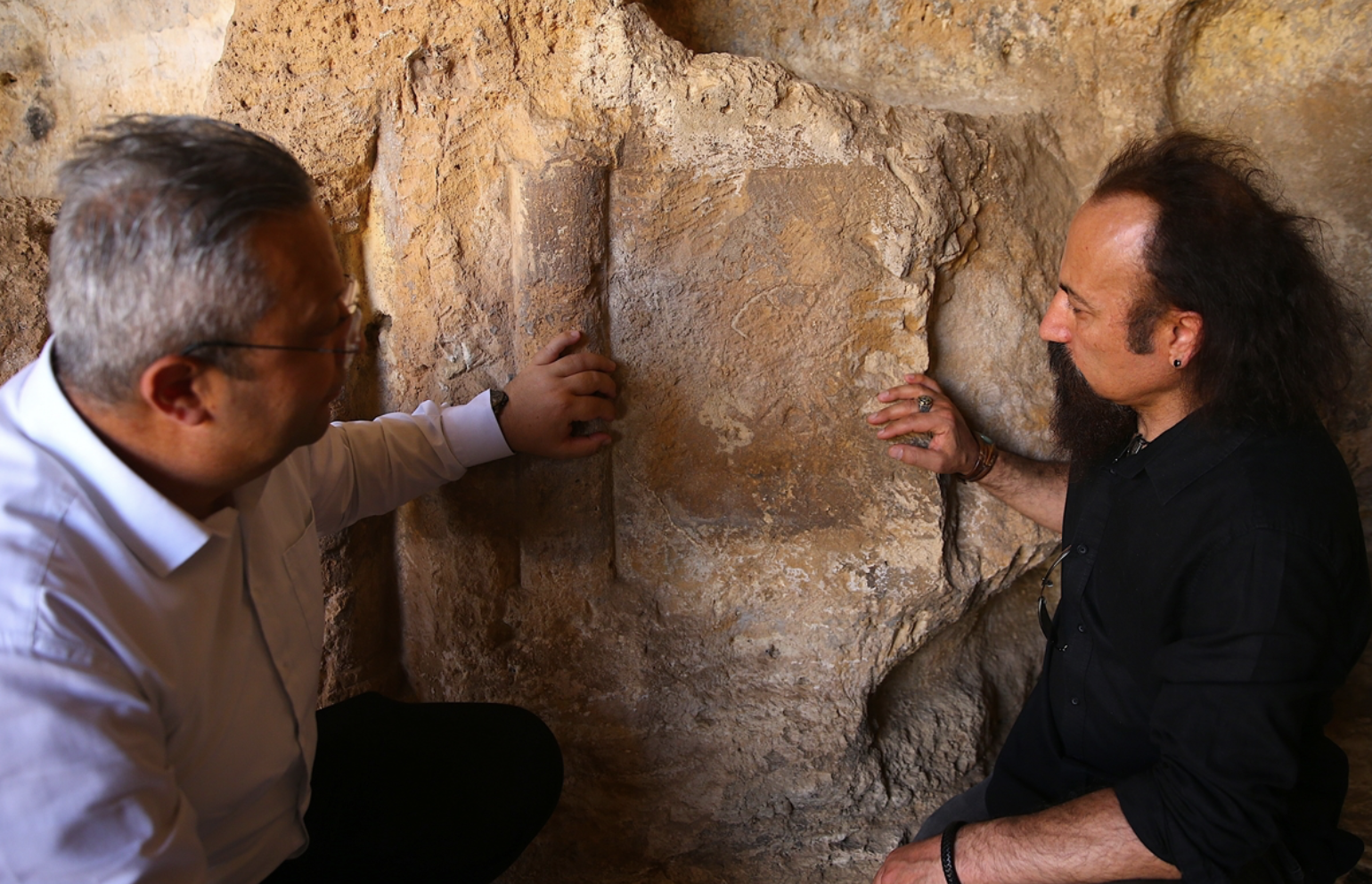
Photo Credit: Aziz Aslan/AA
The most striking element remains the location of the cross itself. Positioned at the entrance, it sits exactly where worshippers would once have entered a restricted underground sacred space. In this context, it appears to act as a kind of religious marker or seal, signalling that the function of the chamber had changed entirely.
Evidence for how Mithraic worship ended across the Roman Empire is relatively rare. Many Mithraea were abandoned without clear explanation, while others were repurposed or destroyed. What makes Zerzevan Castle unusual is that it preserves both the original cult space and a later inscription that appears to document its closure.
Over time, the fortress continued to evolve. It was repaired and reused during the reigns of Anastasius I and Justinian I and remained occupied until the Islamic expansion into the region in the 7th century. Today, Zerzevan Castle is included on UNESCO’s World Heritage Tentative List.
Taken together, the archaeological evidence and the newly interpreted inscription offer more than just another historical detail. They provide a tangible record of religious transformation, captured not in abstract terms, but at the very entrance to a once-secret Roman sanctuary.