Roman Minerva Shrine Found in Ancient Spanish Quarry!
A remarkable Roman shrine carved into the wall of an old quarry in central Spain is offering archaeologists a new perspective on how religion was woven into the everyday lives of workers in Roman Hispania. The sanctuary, dedicated to the goddess Minerva, was discovered at Carrascosa del Campo in Campos del Paraíso, Cuenca. Rather than standing in a town square or within a grand temple complex, it was created directly in the sandstone face of a working quarry.
Dating from roughly the middle of the second century to the beginning of the third century AD, the shrine belonged to a period when the surrounding territory was strongly linked to Segóbriga, a prominent Roman city in central Hispania.
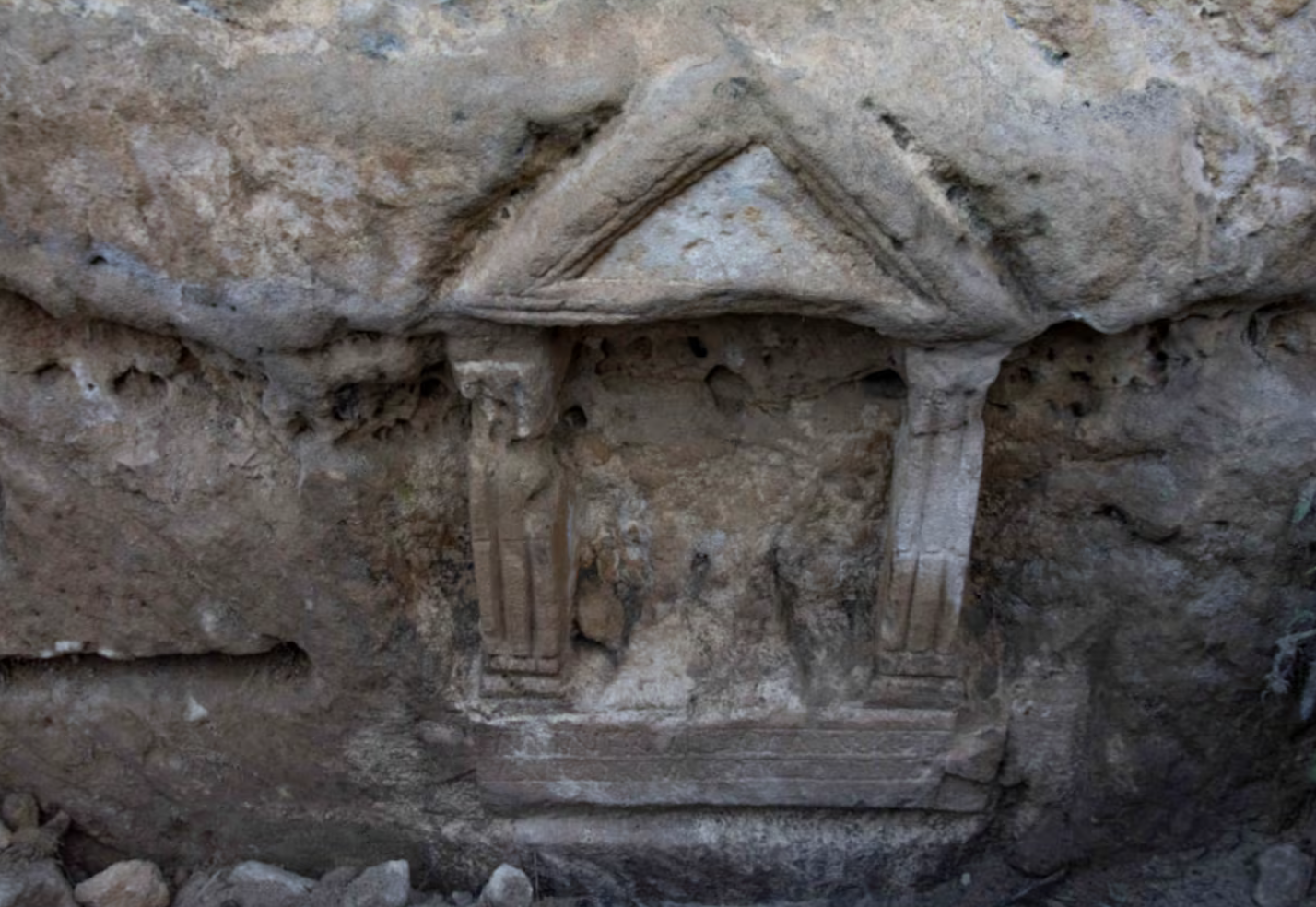
Photo Credit: María José Martínez Hernández
The discovery was reported in the journal MANTVA by archaeologists María José Bernárdez Gómez and Juan Carlos Guisado di Monti of the Don Felipe de Borbón y Grecia Mining History Museum at the Polytechnic University of Madrid.
At the heart of the site is a small rock-cut aedicula: a niche designed to resemble a miniature temple. Measuring approximately 70 centimetres across and 50 centimetres high, it is modest in scale but carefully executed. Its triangular pediment, fluted half-columns and side supports echo the architectural language of larger Roman religious buildings.
Minerva was a central figure in Roman religion, often compared with the Greek goddess Athena. She was associated with wisdom, military strategy and healing, but she also had strong links with craftsmanship, skilled labour and technical knowledge.
That makes her appearance in a quarry particularly fitting. This was an environment shaped by specialist work: cutting stone, managing tools and organising labour. The shrine may have served as a way for workers or supervisors to seek divine support for the demanding and potentially dangerous activities taking place around them.
Although weathering has damaged the carved figure, enough remains to identify Minerva. She is shown facing forward, wearing a helmet and long clothing, and carrying a spear and shield. The composition also appears to include the aegis, a protective symbol traditionally connected with the goddess.
An owl is carved onto the shield, providing one of the clearest clues to her identity. In the Roman world, as in Greek tradition, the owl represented alertness, knowledge and intelligence.
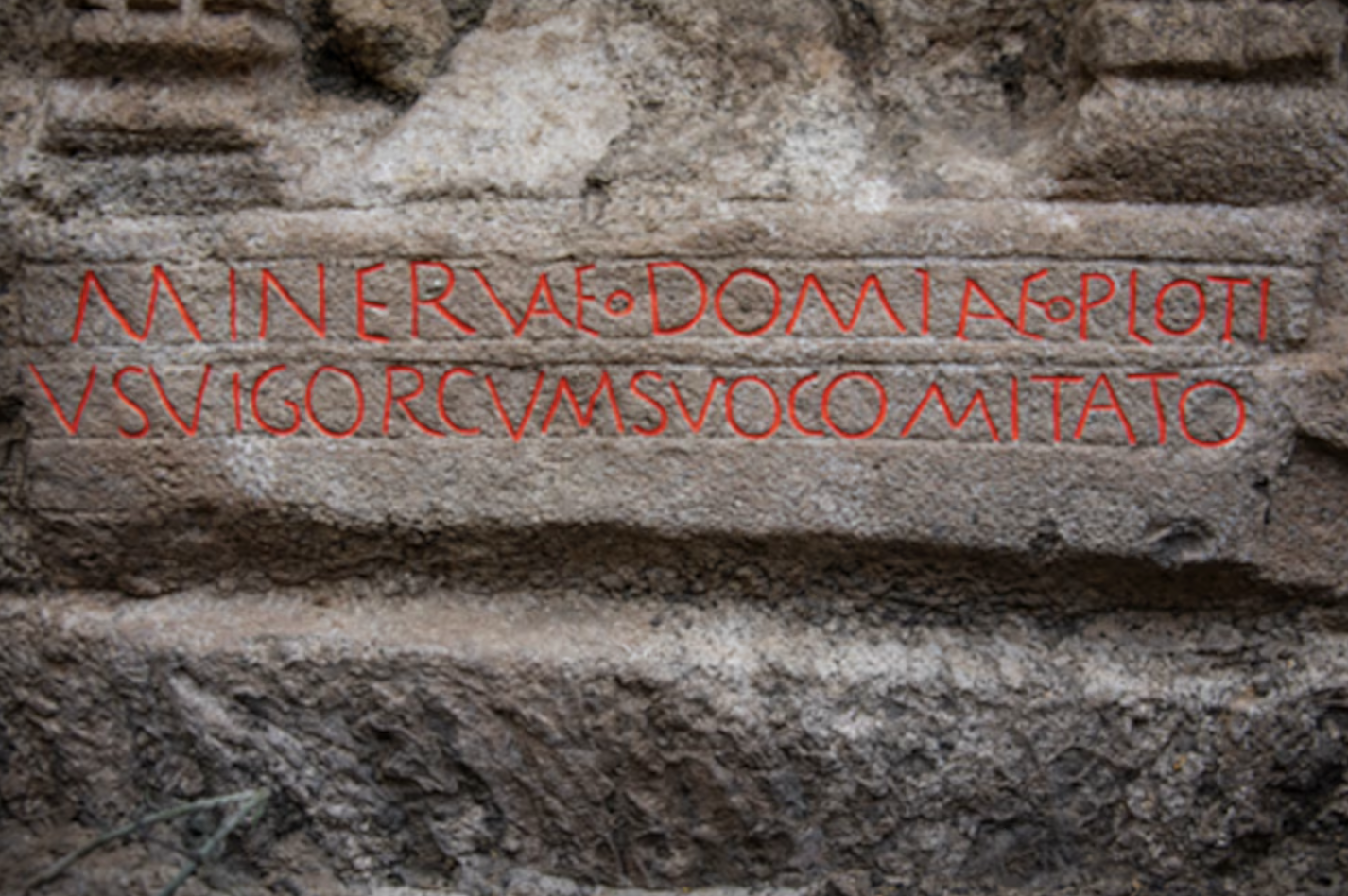
Photo Credit: María José Martínez Hernández
Beneath the shrine, archaeologists found a short Latin inscription naming the person who made the dedication:
MINERVAE DOMINAE PLOTI / VS VIGOR CVM SVO COMITATO
It may be translated as: “To Minerva Domina, Plotius Vigor with his entourage.”
The wording suggests that the shrine was not simply a personal act of worship. Plotius Vigor appears to have dedicated it alongside a group. This could have been a quarrying team, a military unit, an administrative party or another organised body connected to the area’s industrial activity.
The name Plotius, also found as Plautius, appears elsewhere in Roman Hispania and across the wider empire. Related family names have been recorded in places such as Tarraco, Gades, Emerita Augusta and Carthago Nova.
The quarry was part of a much broader Roman working landscape. The region around Segóbriga was known for extracting lapis specularis, a translucent form of gypsum used as window material before glass became widespread. Roads, villas, settlements and other mining sites helped support this productive network.
A small recess beside the sanctuary may once have held offerings or votive objects, further indicating that the niche was used for worship rather than being a decorative feature.
Its significance lies in its setting. Roman religion did not exist only in monumental temples, civic centres and formal ceremonies. People also created sacred places where they worked, travelled and lived.
This small sanctuary turns an industrial site into something more complex. It shows how quarrying, social organisation and religious belief could meet in one place, leaving behind a quiet but enduring record in the stone itself.