Ancient 3rd-Century Eurymedon Mosaic Discovered in Aspendos Reveals Rare Roman River God Art!
Archaeologists in Türkiye have uncovered a remarkable 3rd-century AD mosaic in the ancient city of Aspendos, shedding new light on Roman-period art and the city’s deep connection to water and landscape.
The discovery was made during excavations along Theatre Street, the historic route linking Aspendos’ acropolis with its famous Roman theatre. The mosaic forms part of a larger architectural complex located in the East Square area, close to the eastern city walls. According to the Turkish Ministry of Culture and Tourism, the structure appears to have been richly decorated with mosaic flooring across multiple rooms.
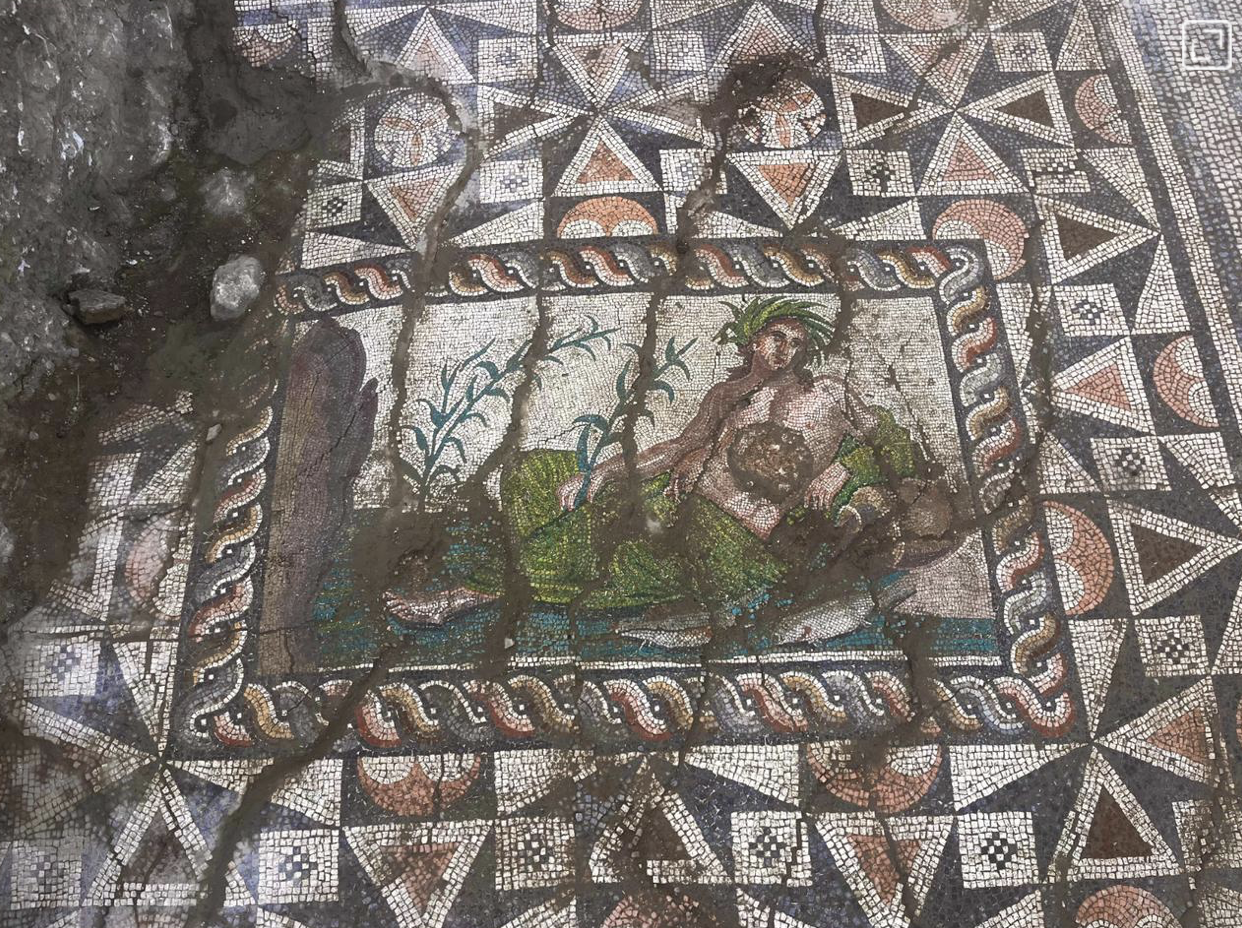
Photo Credit via Ministry of Culture and Tourism
At the centre of the newly revealed composition is a striking figure identified as the “Young Eurymedon”, a personification of the Eurymedon River, now known as the Köprüçay. This river once played a vital role in sustaining Aspendos, supporting agriculture, trade, and daily life in the ancient settlement.
What makes this discovery particularly significant is its rarity. River gods do appear in Roman art, but they are usually shown in more generic or idealised forms. In this case, however, the Eurymedon figure is clearly tied to a specific local landscape, making it both geographically and culturally distinctive.
The mosaic itself is arranged in two main sections. One features geometric decoration, while the other presents the figural scene. The river god is shown reclining beside an amphora from which water flows, with fish swimming around him and reed leaves adorning his head and hand. These details are not merely decorative; they form a symbolic representation of water, fertility and abundance.
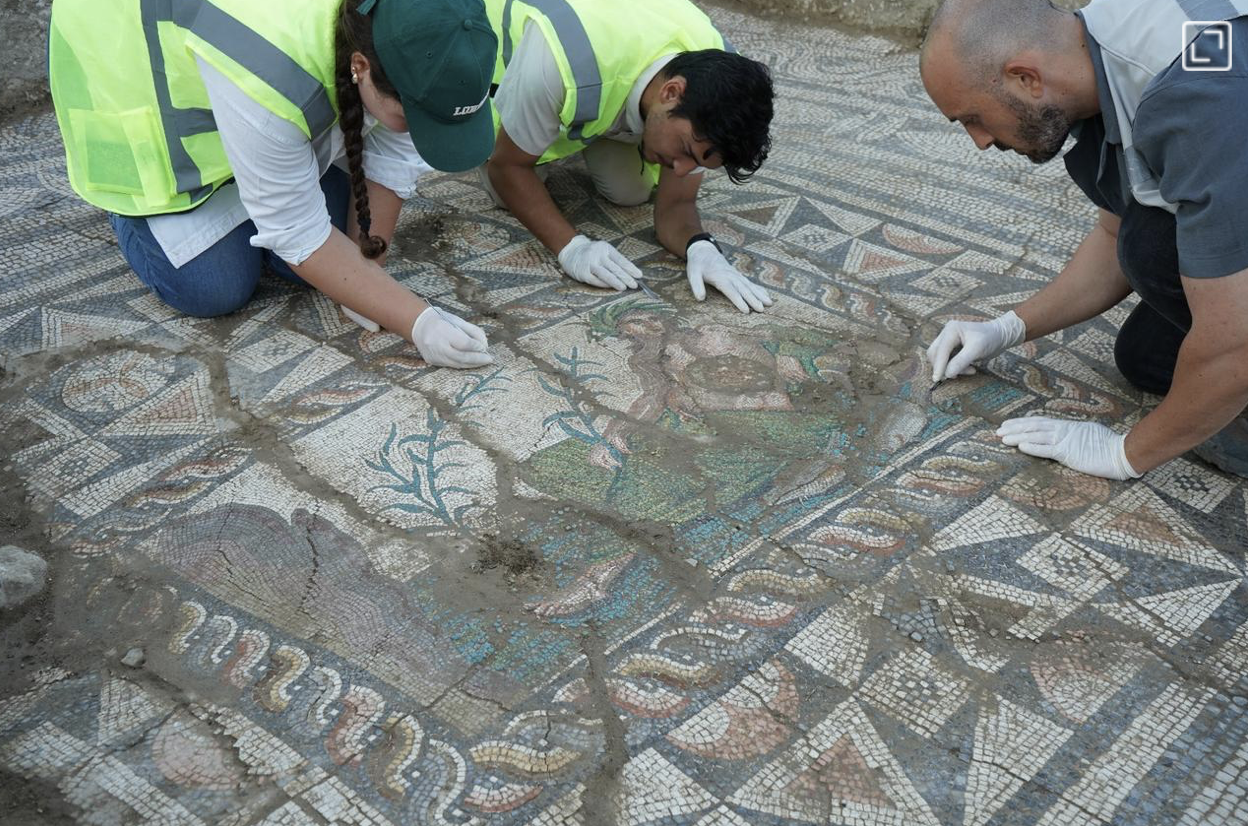
Photo Credit via Ministry of Culture and Tourism
Interestingly, the youthful depiction of Eurymedon sets this work apart from more traditional portrayals of river deities, who are often represented as mature, bearded figures. The choice to present him as young and dynamic may suggest ideas of renewal, vitality, and the life-giving qualities of the river itself.
The mosaic was created using small tesserae, allowing for subtle colour transitions and highly detailed craftsmanship. This level of precision is especially evident in the rendering of water elements and the careful balance of the composition.
Archaeological evidence suggests that the building in which the mosaic was found was originally constructed in the early 3rd century AD, possibly serving as a pool or water-related structure. Following a major earthquake in AD 262, the space appears to have been subdivided, reflecting how the urban landscape of Aspendos evolved in response to natural disaster.
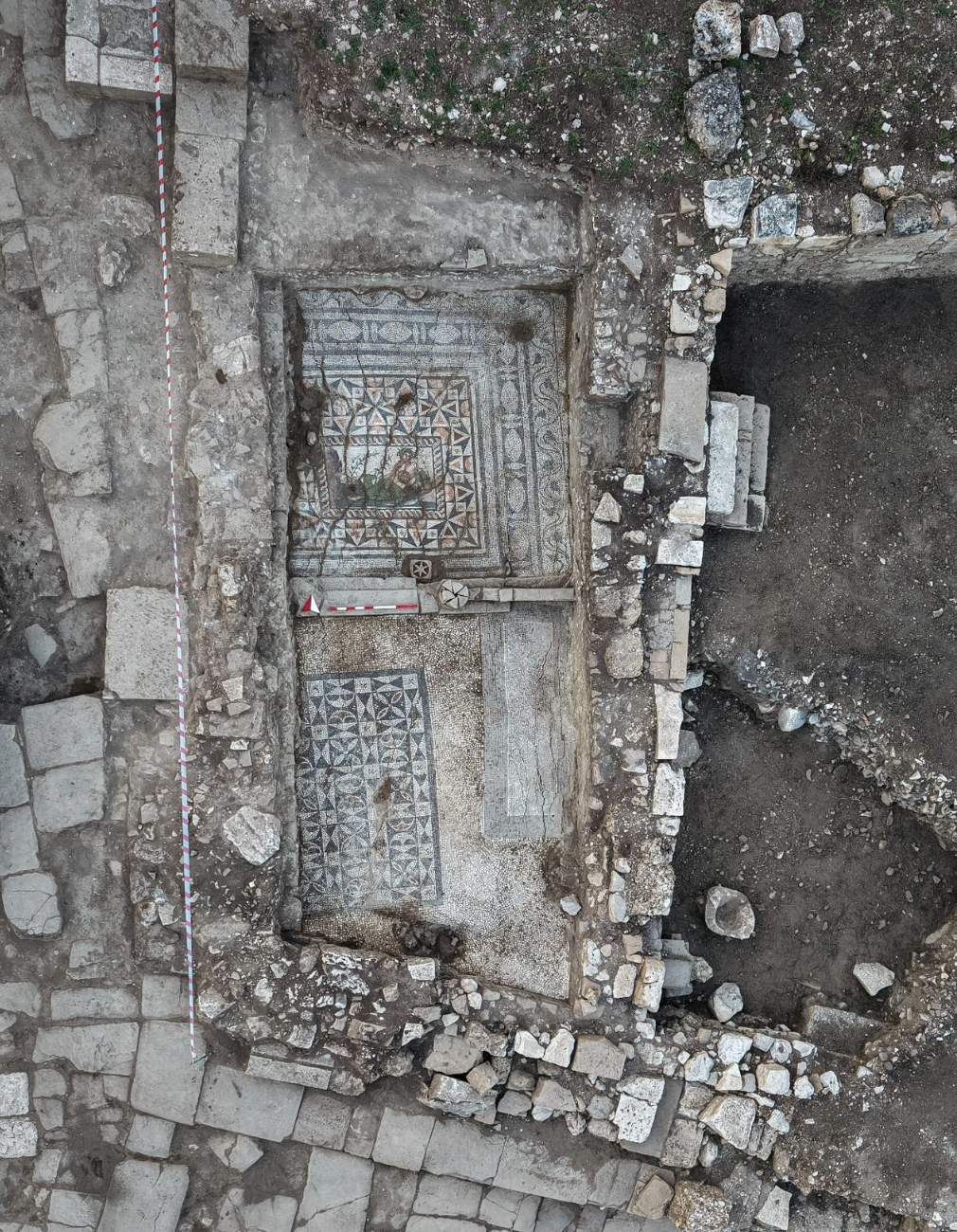
Photo Credit via Ministry of Culture and Tourism
The excavated area so far measures approximately 6 by 7.5 metres, although the full structure is believed to extend further beneath unexcavated sections. This means the mosaic may continue beyond what is currently visible, leaving open the possibility of further discoveries.
Aspendos is already widely known for its exceptionally well-preserved Roman theatre, one of the finest surviving examples in the Mediterranean. The city also featured an advanced aqueduct system that brought water from the surrounding mountains, demonstrating the importance of hydraulic engineering to its prosperity.
This new find adds an important layer to our understanding of the site. It shifts attention beyond the monumental theatre and highlights the everyday spaces, decorative art, and water infrastructure that shaped life in the ancient city.
As excavation work continues, archaeologists hope to uncover more of the mosaic and the structure it once adorned. For now, the image of the Young Eurymedon offers a rare and vivid glimpse into how the people of Aspendos understood their river not just as a resource, but as a living, divine presence woven into the identity of their city.