Roman Lime Kiln Discovered Near Bicske, Hungary Reveals Ancient Industrial Life!
Archaeologists working close to Bicske in Fejér County, Hungary, have brought to light an exceptionally well-preserved Roman lime kiln. The discovery offers a valuable glimpse into the industrial processes that supported everyday life in the Roman province of Pannonia, revealing a side of antiquity that often remains hidden beneath the ruins of settlements and cities.
The find was made during archaeological work connected to the expansion of the M1 motorway. The project was commissioned by the National Archaeological Institute of the Hungarian National Museum, with field investigations carried out under the Archaeological Heritage Protection and Scientific Department of the Szent István Király Museum.
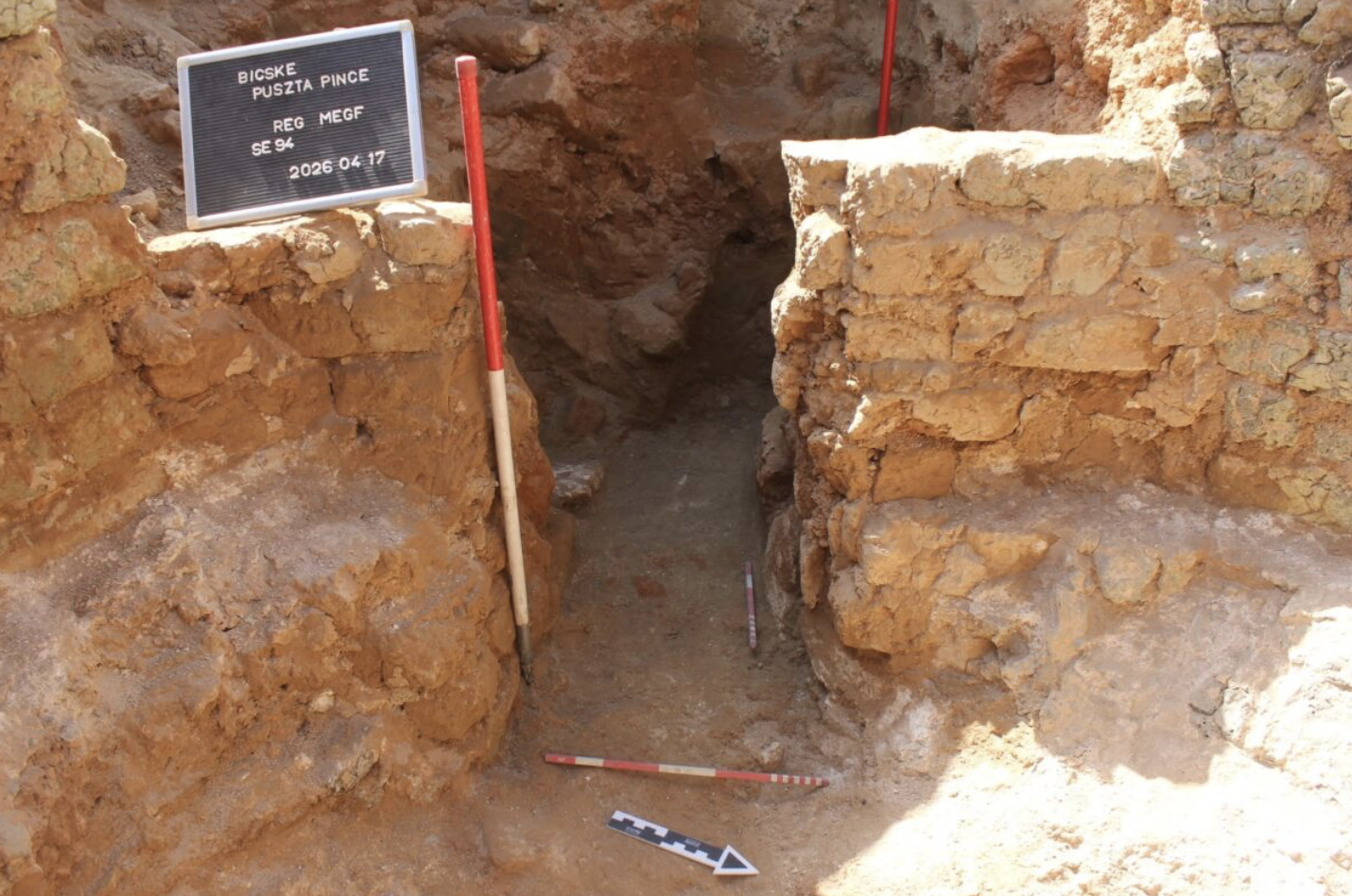
Photo Credit: SZIKM Régészeti Örökségvédelmi és Tudományos Osztály
The excavation team was led by archaeologist Alexandra Kiss, supported by museum experts and volunteers who contributed to uncovering and documenting the site.
Rather than belonging to a single historical period, the area around Bicske reveals a long and complex sequence of occupation. Earlier investigations had already identified parts of a Roman-era settlement, sections of an Árpád-period settlement, and even three Roman child burials.
The most recent fieldwork added further layers to this history, uncovering early Roman and late Árpád-period settlement remains alongside storage pits and sunken features dating to the late medieval and Ottoman periods.
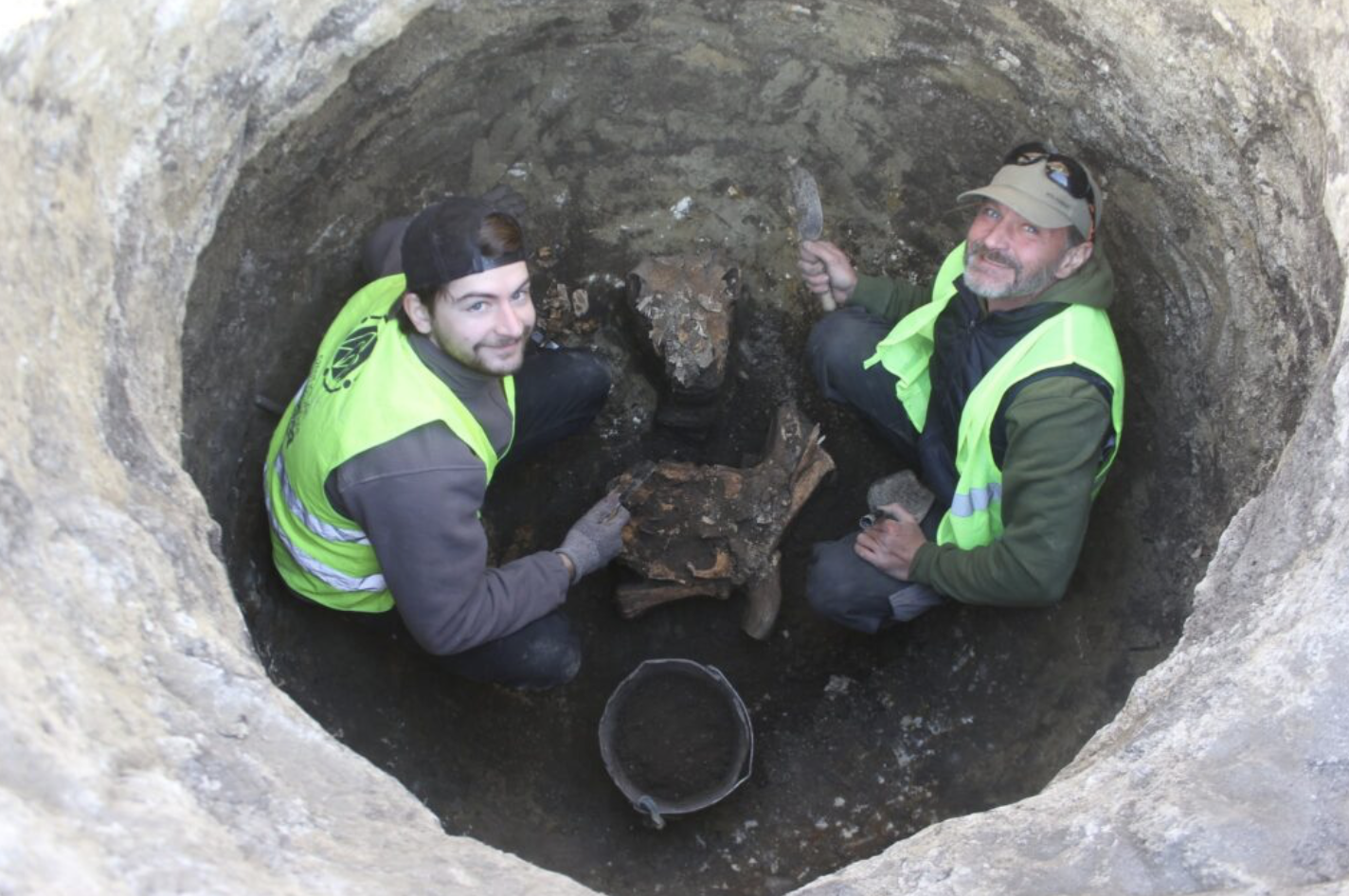
Photo Credit: SZIKM Régészeti Örökségvédelmi és Tudományos Osztály
Taken together, these discoveries show that the landscape was repeatedly reused over many centuries. Its continued attractiveness for settlement and production highlights its long-standing strategic and practical value across shifting historical eras.
At the centre of the latest discovery is a Roman lime kiln constructed into a natural hillside slope. The structure is circular, measuring around 2.3 metres across and reaching approximately 3 metres in depth.
Built from mudbrick and reinforced with clay plaster, the kiln includes a west-facing firing opening and an internal ledge around its base, which would have supported limestone during the burning process. Remarkably, the lower section survived in excellent condition, still retaining a thin layer of lime on its surfaces, direct evidence of its original use.
Fragments recovered from the fill, including Roman roof tiles (tegulae) and a grey S-profile bowl, helped archaeologists date the structure to the Roman period.
Lime kilns such as this were vital to Roman construction practices. By heating limestone to produce quicklime, they supplied essential material for mortar, plaster, and other building needs, forming an important part of the infrastructure behind Roman architecture and engineering.
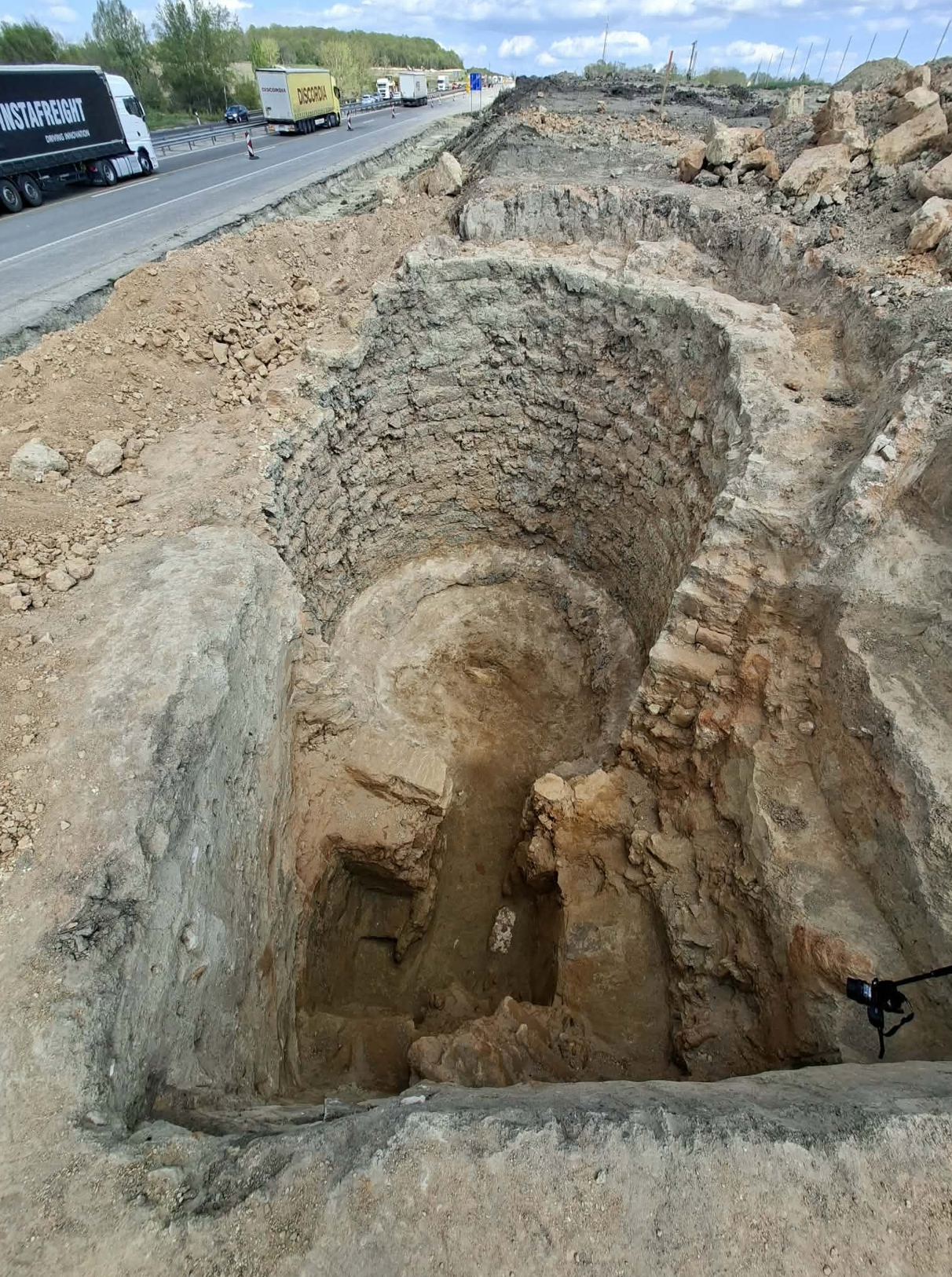
Photo Credit: SZIKM Régészeti Örökségvédelmi és Tudományos Osztály
The state of preservation makes the Bicske kiln particularly significant. Comparable examples in Hungary are extremely rare, with the last similarly well-preserved Roman lime kiln discovered in the early twentieth century during excavations at Aquincum.
Aquincum, located in present-day Budapest, was one of the key urban centres of Roman Pannonia. While Bicske lay outside such major hubs, it formed part of the wider provincial landscape that supported them, supplying materials and sustaining rural settlement networks across Transdanubia.
In this context, the kiln offers more than a single artefact; it contributes to a broader understanding of how Roman provincial life functioned beyond the large cities and military installations.
The discovery also highlights the importance of rescue archaeology in Hungary today. Large-scale construction projects, such as motorway developments, frequently reveal buried traces of past human activity that would otherwise remain undiscovered.
At Bicske, work linked to the M1 expansion has already uncovered evidence from Roman, medieval, and Ottoman periods. The newly excavated kiln now stands out as one of the clearest examples of Roman industrial activity found in the region.
Beneath the route of a modern transport corridor, archaeologists have effectively uncovered a palimpsest of human history, where ancient industry, medieval settlement, and later occupation layers all coexist beneath the present-day landscape.