6,000-Year-Old Lion Attack Survivor Reveals Prehistoric Care!
Archaeologists in eastern Bulgaria have uncovered one of the most extraordinary pieces of prehistoric evidence ever recorded: the remains of a young man who survived a brutal lion attack more than 6,000 years ago and lived long enough for his injuries to heal with the help of others.
The discovery was made at the Kozareva Mogila necropolis, also known as “Goat Mound”, a Late Eneolithic (Copper Age) burial site located near Bulgaria’s Black Sea coast. Dating back to the fifth millennium BCE, the grave contained the skeleton of a tall adolescent or young adult male, estimated to have stood between 171 and 177 centimetres. He had been buried on his side in a crouched position, without any grave goods, and in a pit that was noticeably deeper than many others at the site.
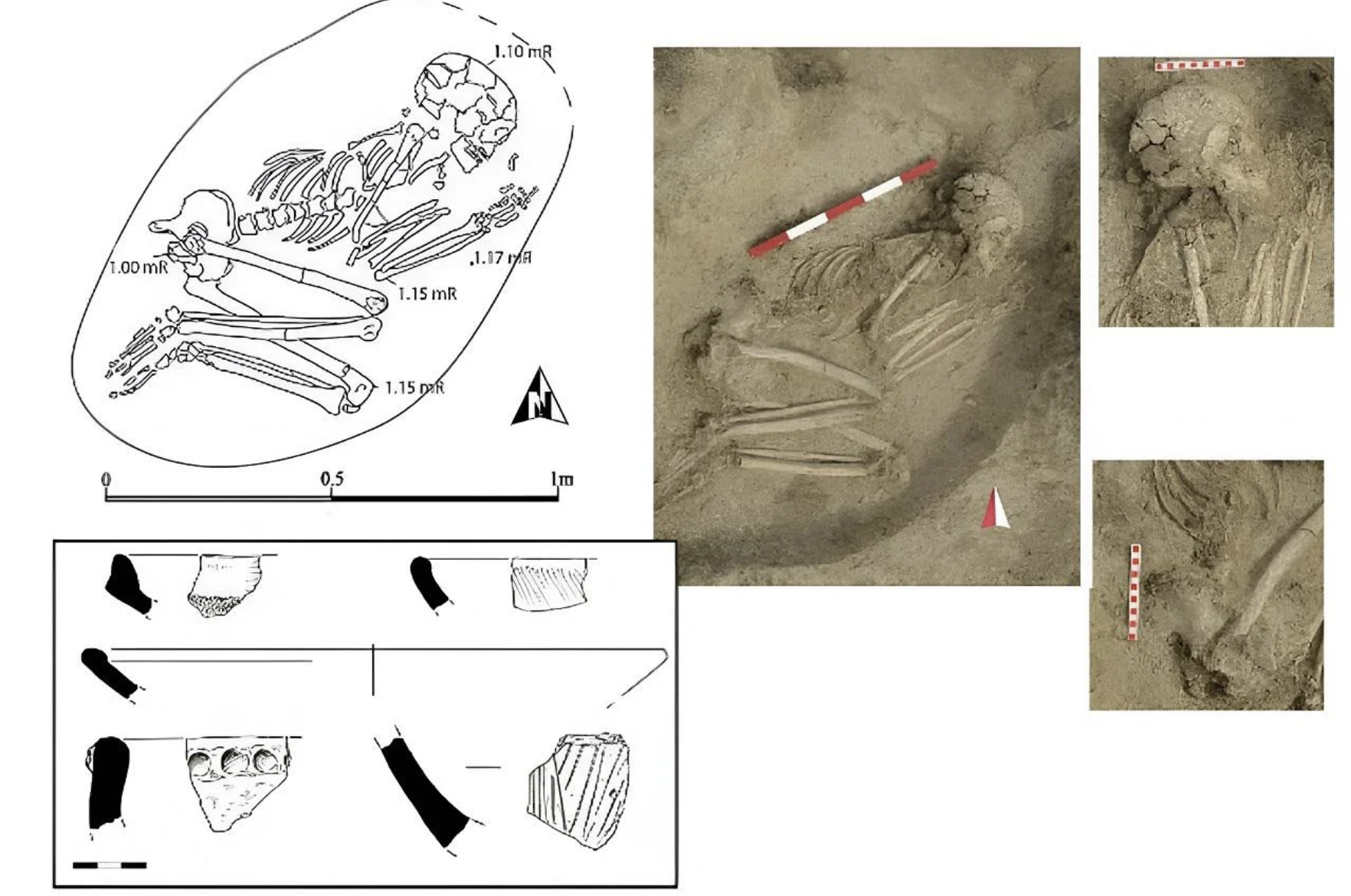
Photo Credit: N. Karastoyanova et al., Journal of Archaeological Science, Reports (2026)
What makes this burial exceptional is not the grave itself, but the astonishing injuries preserved on the skeleton. The skull bears multiple puncture and crushing wounds, including a large hole that penetrated the cranial cavity and would have exposed the brain. Smaller pits appear on both sides of the head, while further trauma is visible on the shoulder, arm and legs, suggesting severe damage to muscles and tendons. Inside the skull, a fragment of bone had fused to the inner surface, clear evidence of a catastrophic injury that was survived rather than fatal.
Researchers carried out detailed forensic and archaeozoological analysis to determine the cause of these wounds. Weapons, interpersonal violence and ritual practices such as trepanation were all ruled out. Instead, the injuries were compared with tooth marks from large carnivores using precision moulds and reference collections. The size, spacing and depth of the wounds closely match the bite pattern of a lion (Panthera leo), an animal known to have lived in the Balkans during the Copper Age. Smaller predators, such as lynx or leopards, were excluded based on both anatomy and regional evidence.
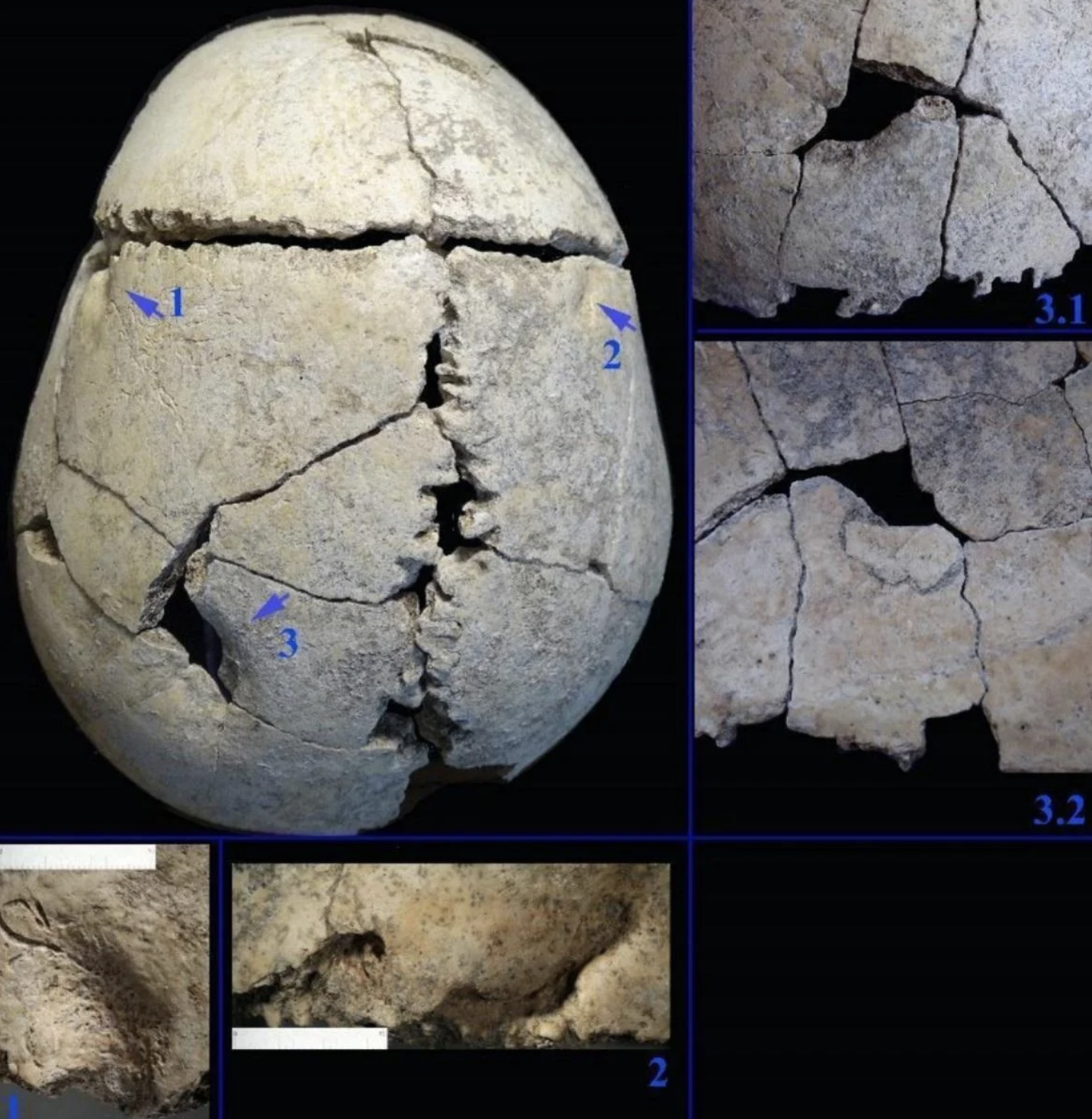
Photo Credit: N. Karastoyanova et al., Journal of Archaeological Science, Reports (2026)
The pattern of trauma suggests the young man was knocked to the ground and repeatedly bitten, including at least one powerful bite to the head. Surviving such an attack would be remarkable even today, yet this individual lived on for several months. All of the major injuries show signs of healing, with new bone growth and no evidence of infection at the time of death.
Despite his survival, the damage would have left him severely impaired. The cranial injuries may have caused neurological issues, while trauma to his limbs would likely have made walking or physical labour difficult, if not impossible. His continued survival strongly suggests that members of his community provided long-term care, helping him move, recover and meet his daily needs.
This case is a striking example of what researchers call the “bioarchaeology of care”, a field that explores how ancient societies supported injured or vulnerable individuals. The evidence from Kozareva Mogila indicates that this Eneolithic community invested significant time and resources into caring for someone who may no longer have been fully productive.
At the same time, the burial raises intriguing social questions. The lack of grave goods and the unusually deep grave could point to a lower social status. Researchers have also suggested that his scarred appearance or possible behavioural changes following the attack may have caused him to be viewed with fear or uncertainty after death.
Together, these remains offer a rare and deeply human insight into prehistoric life, a violent encounter with one of Europe’s most dangerous predators, followed not just by survival, but by compassion, care and community support thousands of years before modern medicine.