A Viking Age Mass Grave Unearthed Near Cambridge!
Archaeologists and students from the University of Cambridge have uncovered a burial pit containing human remains at Wandlebury Country Park, just a few miles south of Cambridge. The discovery was made during a training excavation near an Iron Age hillfort that has been known locally for decades.
As the team dug deeper, a long, narrow pit began to emerge, roughly four metres in length and about one metre wide. What they found inside was deeply unsettling: a mixture of complete skeletons and disarticulated bones, all belonging to young adult men.
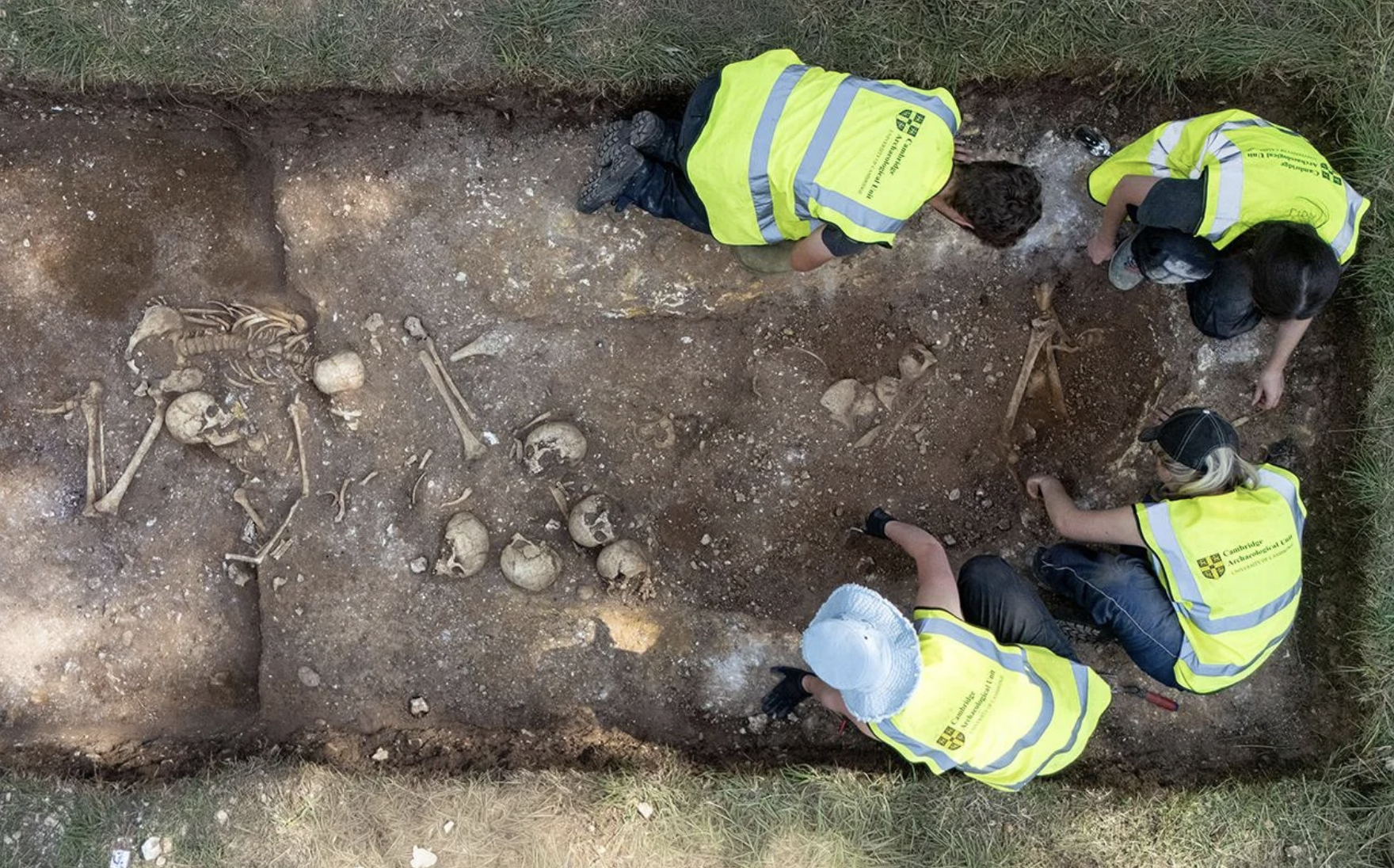
Photo Credit: Cambridge Archaeological Unit / David Matzliach
Four of the skeletons were laid out in full anatomical order. Nearby, however, were several skulls without matching bodies, along with a separate cluster of leg bones. Some of the remains bore unmistakable cut marks. One jaw showed clear signs of beheading. Several bodies had been placed face down, and the position of the arms strongly suggests that wrists may have been bound at the time of death.
The way the bones were arranged, and the condition they were found in, points towards deliberate, organised violence followed by rapid burial. This does not resemble a typical battlefield grave.
Radiocarbon dating of one individual places the burial between the late eighth and late ninth centuries, a turbulent period in eastern England. At the time, Cambridge lay near a fluctuating frontier between Anglo-Saxon territories and lands under Viking control. Written sources record Viking movements through the region in the 870s, which aligns strikingly with the date of the grave.
Interestingly, the injuries present do not match what we would normally expect from close combat. Only a few skeletons display wounds consistent with fighting. Instead, the grouping of severed heads and limbs suggests execution or punishment. Given that Wandlebury served as an important gathering place for centuries, it raises the possibility that these deaths were made public before burial. Some bones even show surface changes that indicate brief exposure before they were interred, supporting the idea of a delay between death and burial.
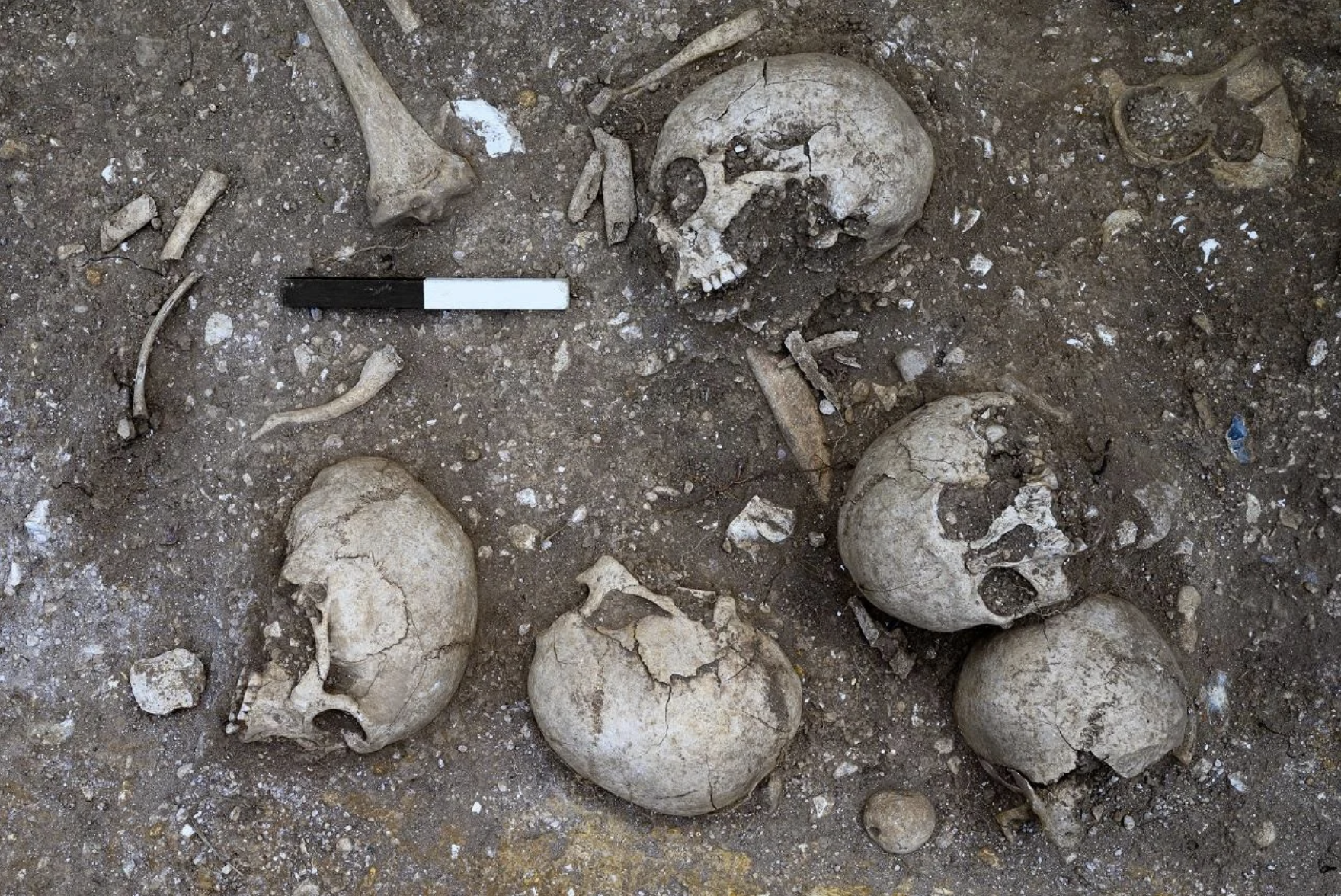
Photo Credit: Cambridge Archaeological Unit / David Matzliach
One skeleton in particular stands out. This young man measured close to 1.95 metres in height, remarkably tall compared to the average male height of around 1.68 metres in early medieval England.
His skull revealed something even more extraordinary: a circular hole, around three centimetres wide, on the rear left side. The edges show signs of bone regrowth, meaning he survived the procedure that created it. The shape and placement are consistent with trepanation, a surgical practice carried out in various societies throughout history.
His long bones were unusually thick and elongated. Specialists believe these features may be linked to excess growth hormone during adolescence, often associated with a tumour of the pituitary gland. Individuals with such a condition frequently suffer from severe headaches and increased pressure within the skull. Trepanation may have been an attempt to relieve that pressure. The fact that he survived the operation suggests a degree of medical knowledge and care within his community before his eventual death.
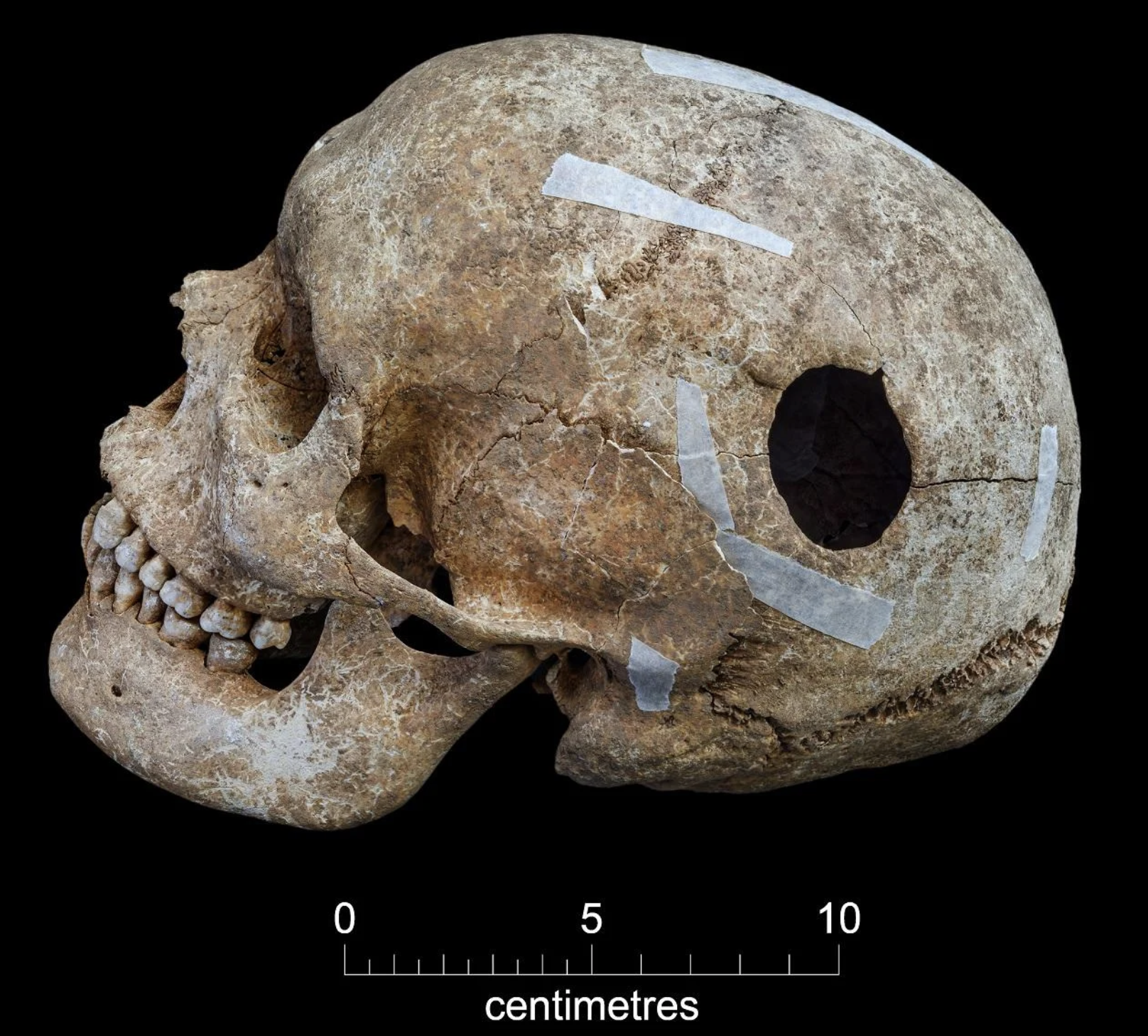
Photo Credit: Cambridge Archaeological Unit / David Matzliach
The remains have now been transferred to laboratory facilities for further analysis. Researchers plan to carry out ancient DNA testing and chemical isotope studies. These methods should help determine where the individuals grew up, what they ate, and whether any were related. The results may reveal whether this group was made up of local men, outsiders, or a mixture of both.
Human remains were previously uncovered at Wandlebury in 1976, when a storm uprooted a tree and exposed skeletons dating to a similar period. This latest excavation adds further weight to the idea that the area witnessed episodes of extreme violence during a time of regional power struggles and shifting control.
A geophysical survey of the surrounding landscape is now planned to search for related features from the same era. As always in archaeology, each layer of soil adds another piece to the story, and in this case, it is a story shaped by conflict, punishment and the realities of life in Viking Age England.