Ancient Athena Statue Discovered in Laodicea Reveals New Insights into Roman-Era Art!
A fascinating archaeological discovery has come to light in the ancient city of Laodicea, where excavations have revealed an impressive 2-metre-tall marble statue of the Greek goddess Athena. Announced by Mehmet Nuri Ersoy, the find is already being recognised as an important addition to our understanding of the region’s artistic and cultural past.
The statue was uncovered during ongoing excavation work at the West Theatre of Laodicea, a site renowned for its layered history and grand architecture. It was discovered within the stage building, buried beneath rubble and lying face down. Although the head is still missing, much of the sculpture remains intact, offering a valuable glimpse into the craftsmanship of the ancient world.
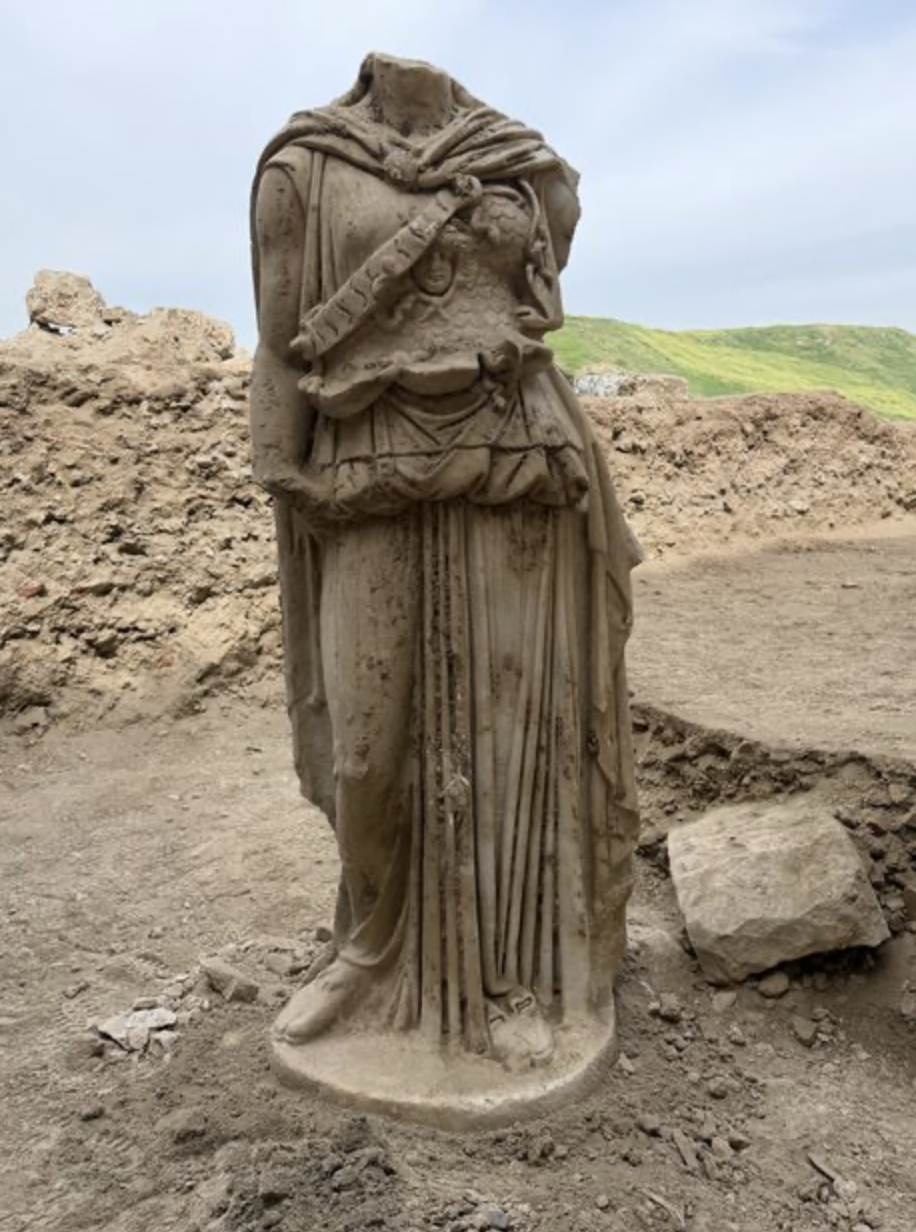
Photo Credit: Türkiye’s Minister of Culture and Tourism Mehmet Nuri Ersoy via X
Situated near modern-day Denizli, Laodicea has long been regarded as one of the most significant archaeological sites in the region of Anatolia. In ancient times, it was a thriving hub for trade, culture, and textile production, and discoveries here continue to reveal details about everyday life and artistic expression.
The West Theatre itself dates back to the 2nd century BCE and once served as more than just a venue for performances. It was also a space for storytelling, where sculptures placed between columns depicted mythological scenes and figures. Recent excavations have already uncovered works illustrating episodes from the adventures of Odysseus, including encounters with creatures such as Polyphemus and Scylla. The newly discovered statue of Athena adds yet another layer to this richly decorated setting.
Carved from white marble, the statue stands proudly on a circular base, depicting Athena in a standing pose. Even without its head, the piece showcases remarkable artistic detail. She is dressed in a finely sculpted sleeveless peplos, with a cloak draped around her neck, an unusual feature that sets this statue apart from similar representations.
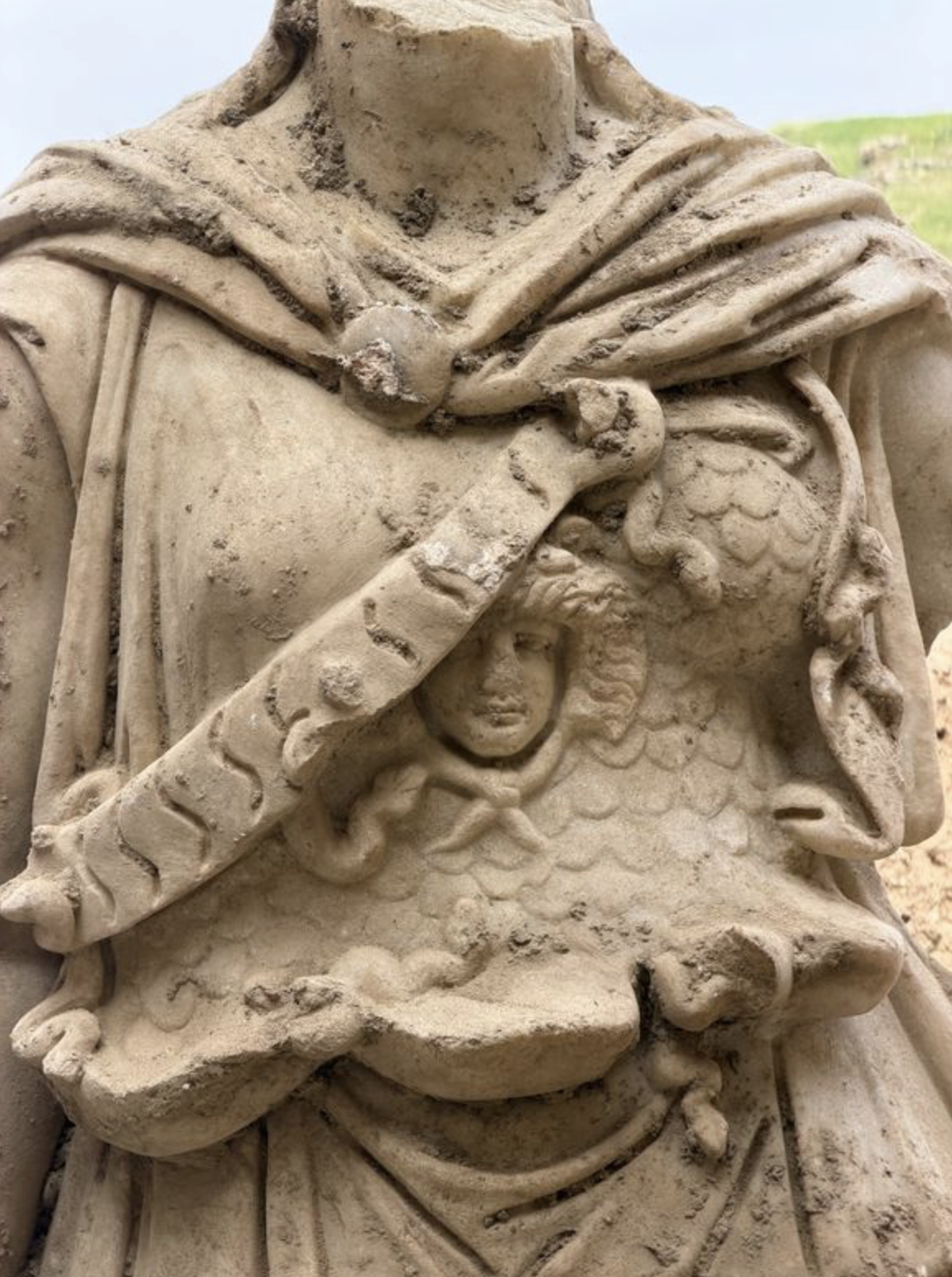
Photo Credit: Türkiye’s Minister of Culture and Tourism Mehmet Nuri Ersoy via X
One of the most striking elements is the aegis across her chest, adorned with the head of Medusa surrounded by serpents. The intricate folds of the fabric and the lifelike rendering of the drapery point to the work of a highly skilled sculptor. Interestingly, the back of the statue is less refined, suggesting it was originally placed in a niche or between columns where only the front would be visible.
Experts believe the statue reflects the artistic traditions of the Augustan period, a time when classical Greek styles were revived under Roman influence. This approach is characterised by balanced proportions, elegant detail, and idealised forms.
While Athena is typically associated with wisdom and warfare, her depiction in Laodicea may highlight another side of her identity. The city was known for its textile industry, and historical evidence suggests festivals were held in her honour, linked to weaving and craftsmanship. This interpretation shows how mythological figures could take on different meanings depending on local culture.
According to Minister Ersoy, the discovery forms part of Türkiye’s wider “Heritage for the Future” initiative, aimed at protecting and showcasing the nation’s archaeological treasures. Excavation and restoration work at the West Theatre has continued into 2026, gradually uncovering more artefacts and deepening our understanding of the site.
The unearthing of this statue is more than just a single archaeological find, it’s a reminder of how deeply the ancient world continues to influence us today. Each discovery adds another piece to the puzzle, helping us better understand the art, beliefs, and daily lives of those who lived thousands of years ago.