First Roman Bread Found in Switzerland at Vindonissa Excavation!
Archaeologists working at the ancient Roman site of Vindonissa have uncovered fascinating new evidence that sheds light on the settlement’s earliest days as a military outpost. Among the discoveries is something particularly unusual: what could be the first Roman bread ever found in Switzerland.
The excavation, led by the Aargau Cantonal Archaeology, began in August 2025 ahead of a planned housing development. The site lies just southwest of the known Roman fortress, and it’s proving to be far more revealing than expected.
What researchers are now uncovering is a much earlier phase of occupation, a time when Vindonissa was transitioning from a temporary encampment into a permanent military base.
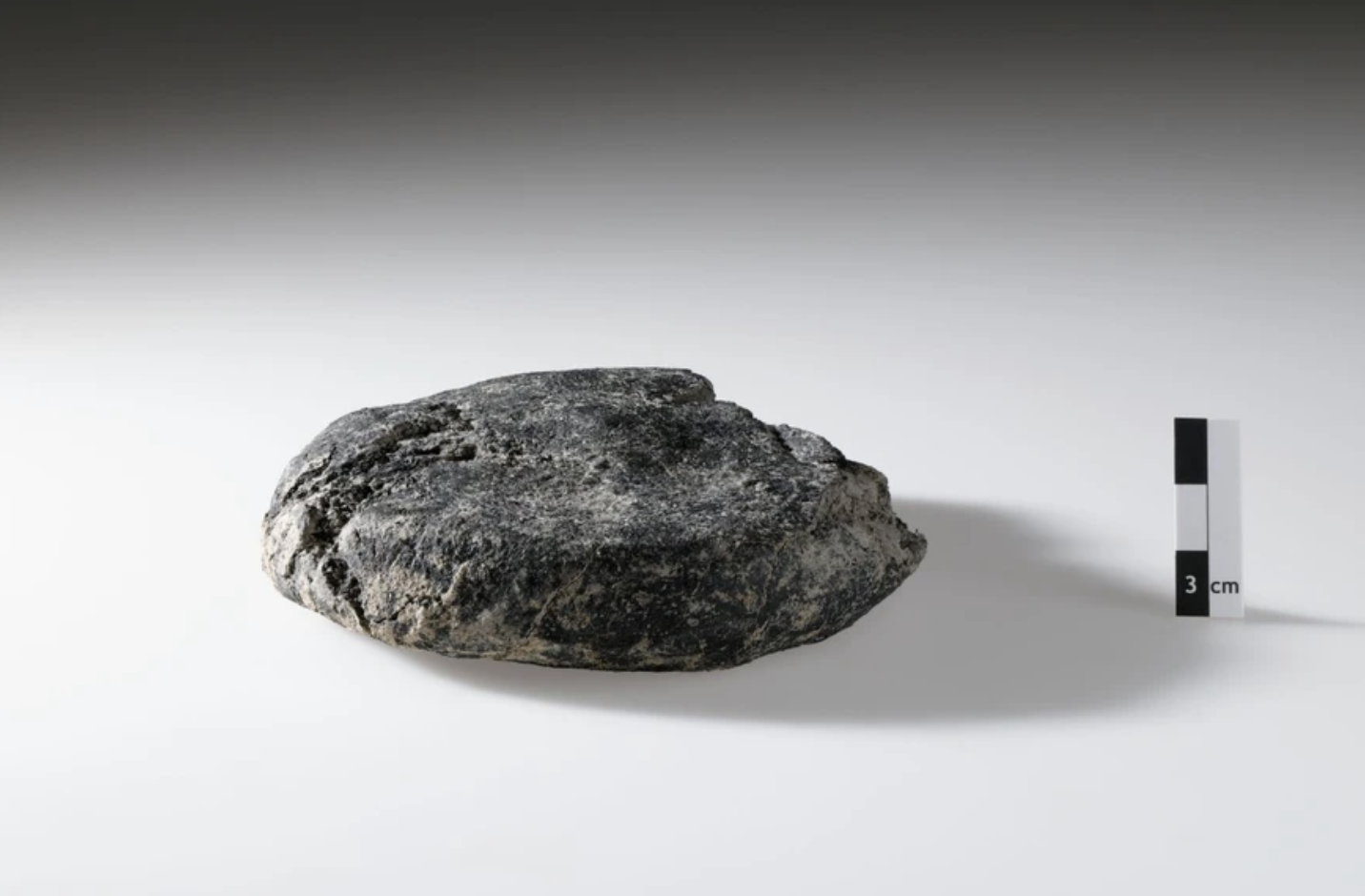
Photo Credit: Canton of Aargau
Across an area of roughly 4,000 square metres, archaeologists have identified structures that predate the well-known 1st-century AD camp. They’ve uncovered two parallel ditches lined with regularly spaced postholes, which likely supported a timber-and-earth defensive wall. Nearby, a distinctive V-shaped ditch, a classic feature of Roman military engineering, adds further weight to this interpretation.
While similar features were noted decades ago near Königsfelden Park, this new section is far more complete. For the first time, researchers can estimate the full scale of the earliest camp, which may have stretched nearly 400 metres from north to south.
This finding could help answer a long-standing question: did Vindonissa become a permanent base during the reign of Augustus, or later under Tiberius after AD 14?
Beneath what was once a Roman road, which helped preserve older layers below, archaeologists have also uncovered the remains of a building. Its layout is quite structured, with two smaller rooms flanking a larger central space that features a hearth.
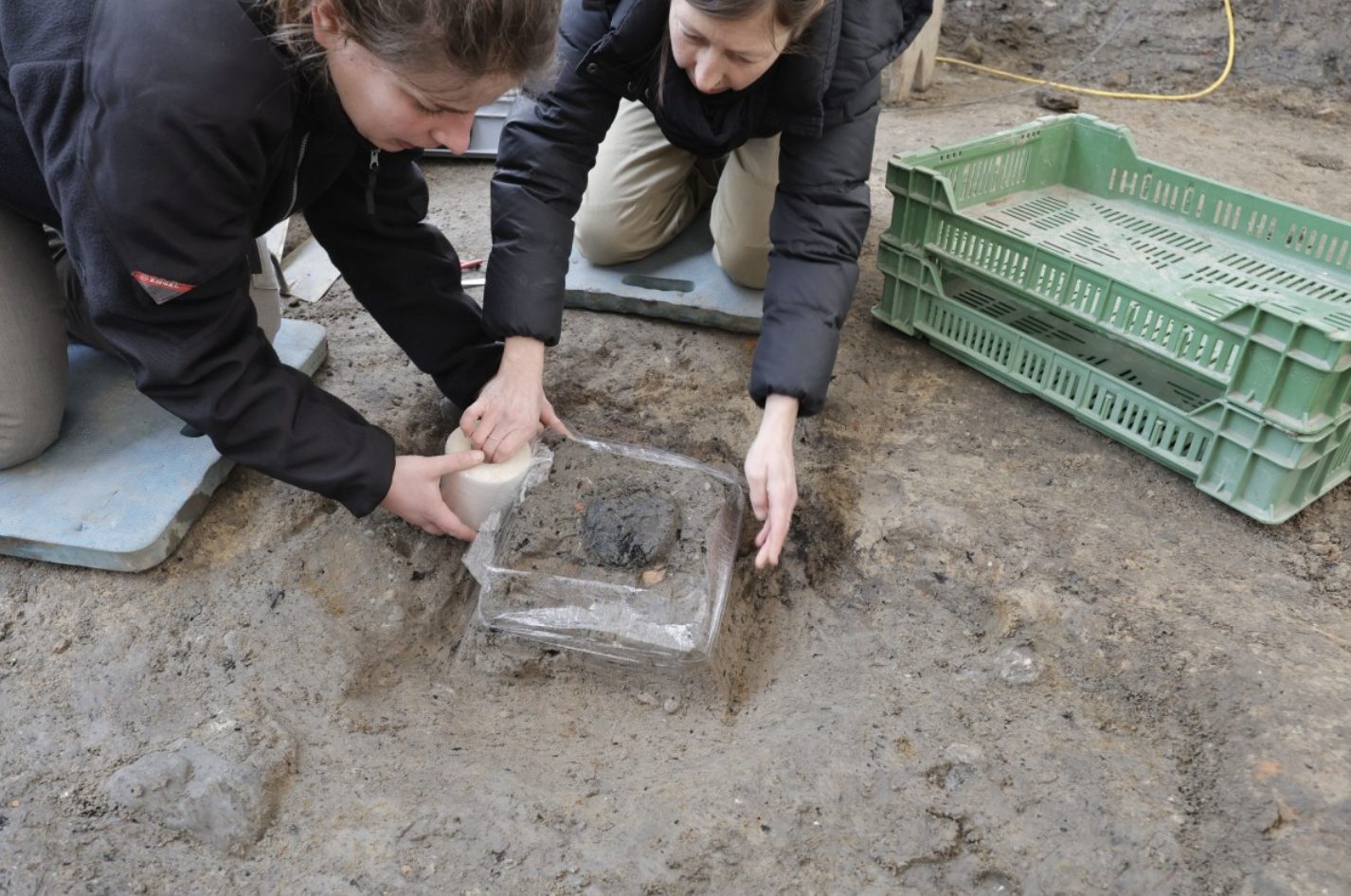
Photo Credit: Canton of Aargau
Elsewhere, the site shows clear signs of industrial activity during later phases. Tools, metalworking waste, and military items such as spearheads and projectile tips have all been found.
One particularly interesting feature is a carefully built clay furnace situated just inside the defensive line. This suggests that even in its earliest days, the camp wasn’t just about defence, it was also a place of production and daily work.
Among all the finds, one object stands out. Archaeologists discovered a small, charred, round item that was carefully removed and analysed. Experts from the University of Basel believe it to be carbonised Roman bread. Roughly 10 centimetres across and about 3 centimetres thick, it resembles a simple flatbread. Further testing is planned in Vienna to confirm its composition.
Finds like this are incredibly rare. Organic materials such as bread usually decay over time, surviving only in exceptional conditions, often when they’ve been burnt, as seen in places like Pompeii.
If confirmed, this would be the first Roman bread ever identified in Switzerland, a small but powerful link to everyday life in the ancient world.
Vindonissa held a strategically important position on the northern edge of the Roman Empire. Located at the meeting point of major river routes, it served as a key logistical and military hub. These new discoveries reinforce its importance, not just as a fortress, but as a fully functioning settlement with infrastructure, industry, and a community of people going about their daily lives.
Excavations are set to continue until July 2026, but there’s an opportunity to see the work up close. The site will open to the public on 9 May 2026, offering guided tours and a behind-the-scenes look at the archaeological process. Visitors will be able to observe how the excavation is carried out, view selected artefacts, and gain a deeper understanding of how Roman military sites developed over time.
This excavation is doing more than uncovering artefacts; it’s reshaping our understanding of Vindonissa’s history. The newly identified fortifications suggest that organised Roman military activity may have started earlier than previously believed. At the same time, the discovery of the charred bread offers something rarely preserved in archaeology: a direct, human connection to daily life.
It’s not a grand monument or a weapon of war, but something far more relatable, a reminder of the ordinary routines of soldiers living on the edge of the Roman Empire.
Taken together, these findings tell a richer story. Not just how the camp was built, but how it functioned as a place where people lived, worked, and survived, leaving behind traces in soil, timber, and even a single piece of bread.