Ancient Drainage Network Discovered Beneath Catania’s Roman Theatre!
A hidden network of ancient drainage channels beneath the Roman Theatre of Catania in Sicily has been mapped using geophysical techniques, offering new insight into both the engineering of the monument and the persistent flooding that threatens its preservation.
The investigation concentrated on the orchestra, the central area of the theatre where performances took place. Today, this part of the monument faces a significant problem: groundwater regularly rises through the floor, while heavy rainfall can leave sections of the archaeological site submerged for extended periods. The resulting moisture is contributing to the deterioration of the theatre’s ancient marble paving.
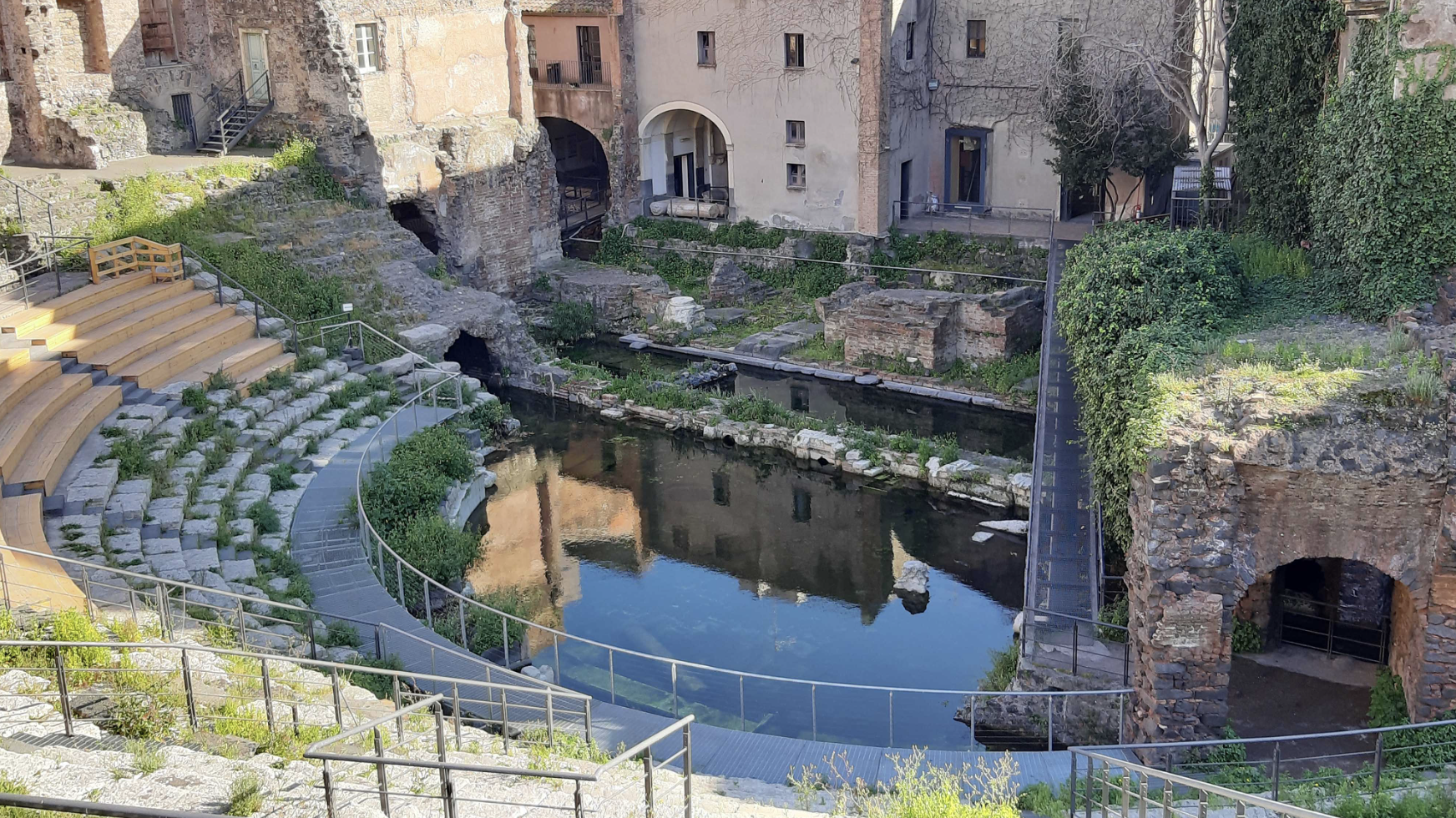
Photo Credit: University of Catania
Rather than excavating the orchestra, researchers turned to Ground Penetrating Radar (GPR). This non-invasive technique sends radar pulses into the ground, allowing buried structures and changes in the underlying material to be detected.
The team combined the radar survey with geological information obtained from previous boreholes. Together, the evidence revealed several features beneath the modern surface, including at least two substantial drainage channels.
These channels appear to run approximately north to south beneath the orchestra, at depths of around 60–70 centimetres below the present walking surface. Their outlets can still be seen within a cavity beneath the stage, providing physical evidence that the underground structures identified by the radar formed part of a functioning drainage system.
One of the clearest anomalies was detected close to the centre of the orchestra. At approximately one metre below the floor, the researchers identified what appears to be a masonry vault supported by walls on either side. Its construction and position suggest that it formed the roof of an underground drainage channel.
A second channel was detected further east, at a comparable depth.
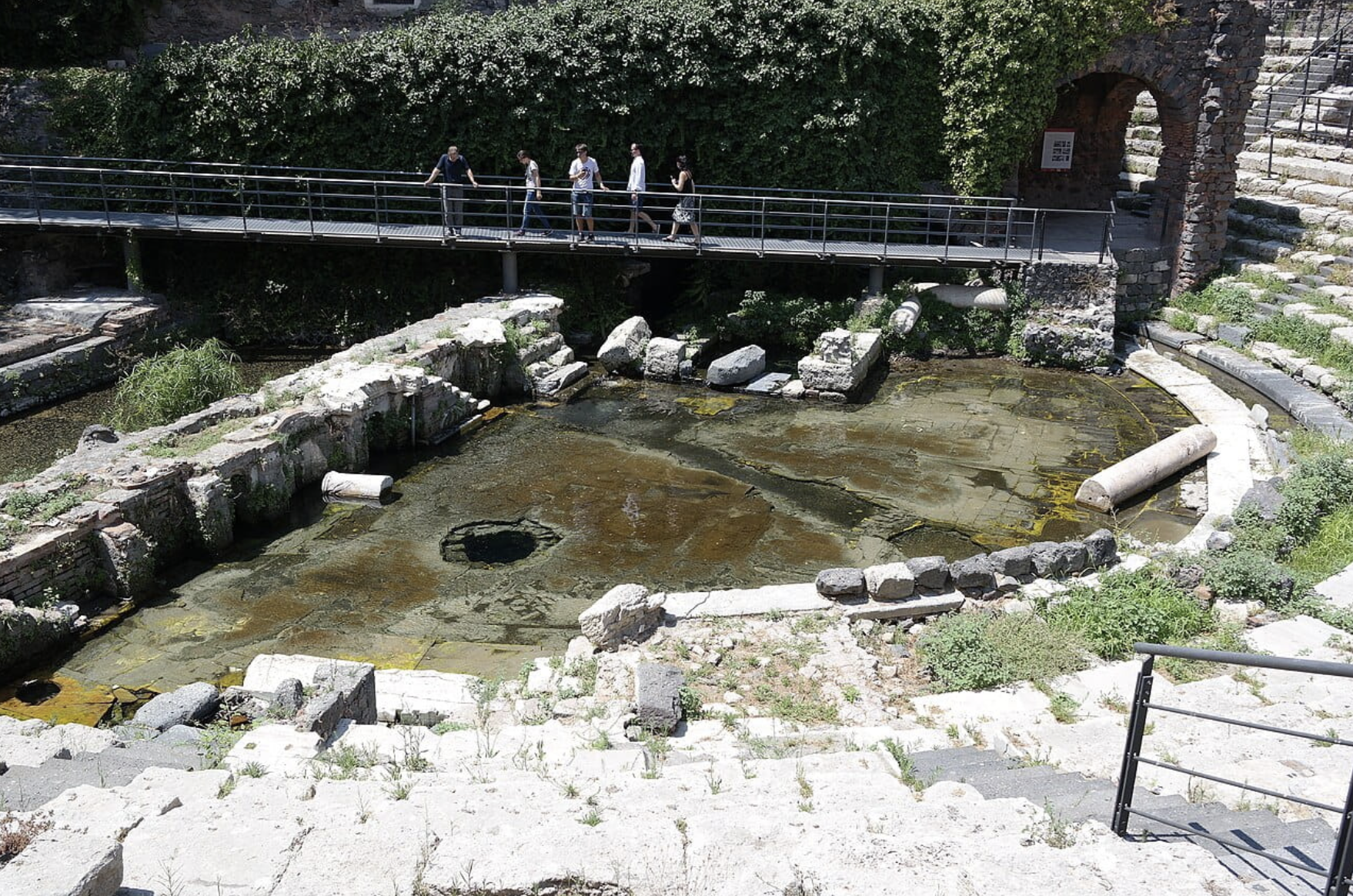
Photo Credit: Luca Aless, CC BY-SA 4.0
The channels do not appear to have operated independently. Researchers believe they were connected to a larger drain positioned along the northern side of the orchestra.
This feature is known as an euripus, a term used in ancient contexts for a channel or watercourse associated with buildings and spaces where water needed to be controlled or removed.
The network could have played an important role in managing water beneath the theatre. Groundwater rising from higher ground and rainwater may have been directed into the channels before being carried away from the monument.
There is also an intriguing possibility that the drainage system had a role in the theatre's entertainment programme.
The Roman theatre was not simply a venue for dramatic performances. Ancient theatres could be adapted for elaborate spectacles, including events involving water. The drainage network may therefore have helped remove water used during such performances, although its primary function appears to have been managing naturally occurring groundwater and rainwater.
The discovery is particularly significant because it may help explain one of the most serious conservation problems facing the site.
Groundwater levels beneath the theatre fluctuate considerably depending on weather conditions. Measurements indicate that the water table can sit approximately 1.8 metres beneath the orchestra floor, but during particularly wet conditions it can rise to around one metre above the floor level.
This creates repeated cycles of flooding and water movement through the ancient paving. Standing water can leave deposits of sediment on the marble, while prolonged damp conditions encourage the growth of plants and microorganisms. Over time, these processes can accelerate the deterioration of the archaeological remains.
The researchers suggest that sediment accumulated within the ancient drainage channels may now be restricting the movement of water. In other words, infrastructure that once helped keep the theatre dry may itself have become partially ineffective after centuries underground.
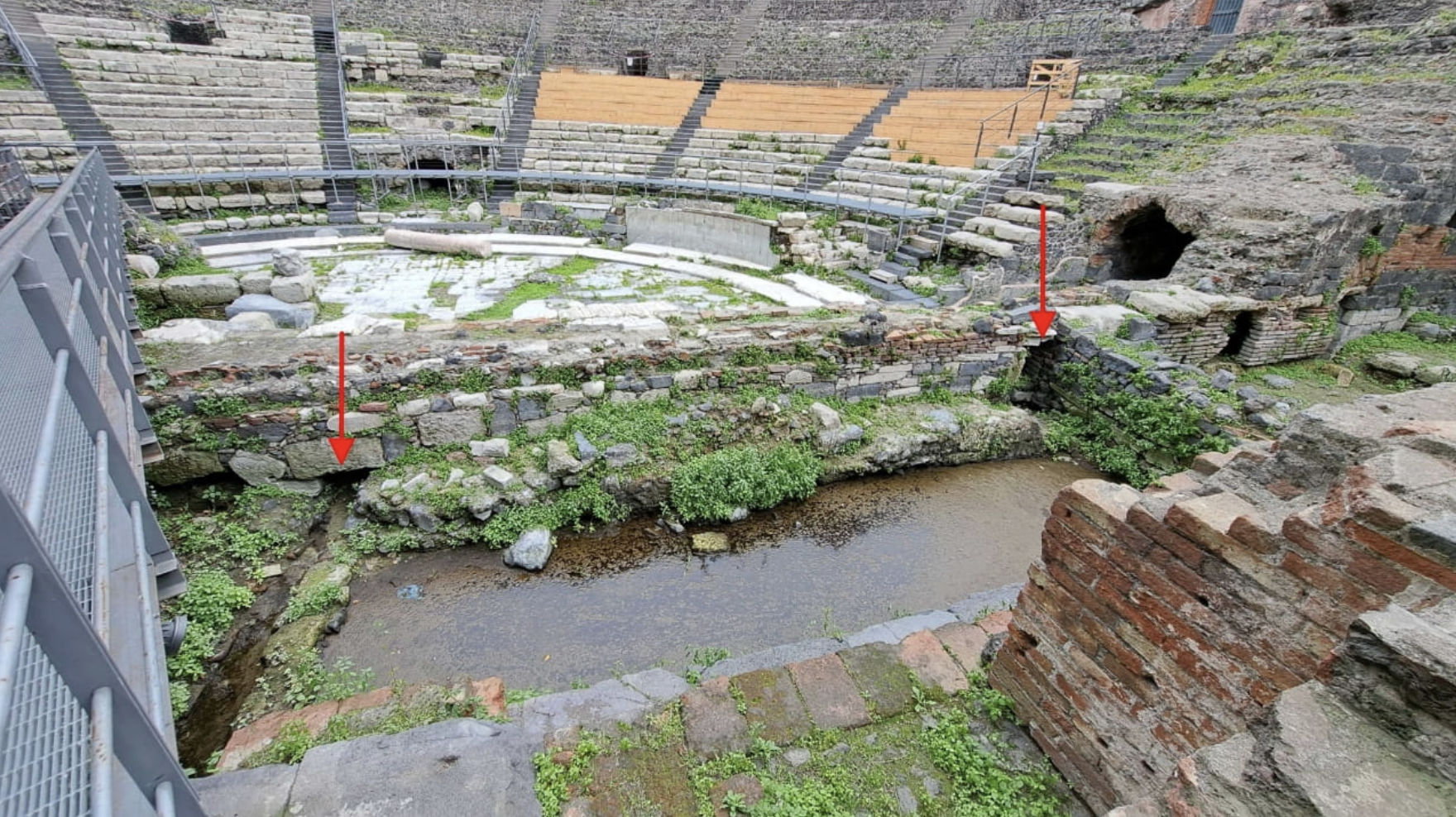
Photo Credit: University of Catania
There is evidence that the flooding is already affecting the structure. Surveys carried out in 2022 and 2023 recorded areas where sections of the marble paving had subsided. Particularly significant damage was identified in the southeastern part of the orchestra, directly above the location of one of the buried channels.
The study also provides clues about how dramatically the landscape surrounding the theatre has changed since antiquity. The orchestra currently sits at approximately 10.4 metres above sea level, whereas nearby Via Vittorio Emanuele is around 13 metres above sea level. This difference is partly the result of centuries of geological and human activity.
The eruption of Mount Etna in 1669 covered parts of Catania in lava, while subsequent construction and layers of artificial fill altered the city's topography further. Nineteenth-century road construction also changed the levels around the archaeological site.
Boreholes carried out in the area have revealed between six and seven metres of accumulated material in some locations, alongside evidence of earlier walls and structures.
This has led researchers to propose that the ancient drainage system may once have had a natural outlet closer to the modern street level. One possibility is that it connected with an earlier branch of the Amenano River, allowing water from beneath the theatre to travel away from the monument and ultimately towards the sea.
The Roman Theatre of Catania was constructed over earlier Greek structures and underwent major development during the Roman period, particularly from the first century CE onwards. Together with the nearby Odeon, it formed an important entertainment complex within the ancient city.
The new research demonstrates that understanding the monument requires looking beneath its visible architecture as well as studying the remains above ground.
By combining geophysical surveying with geological evidence, researchers have been able to reconstruct parts of an underground hydraulic system without disturbing the archaeological remains themselves.
The findings, published in Annals of Geophysics, provide an important foundation for future investigations. Further work could determine the full extent of the drainage network, establish where its channels originally carried water and assess how much of the system remains functional today.
More importantly, understanding how ancient engineers managed groundwater could help modern conservators tackle the very problem that is now threatening the theatre: water.
The Roman Theatre of Catania was built to accommodate thousands of spectators, elaborate performances and a changing urban landscape. Almost two thousand years later, its hidden infrastructure may prove just as important as its surviving stonework in ensuring that the monument survives for generations to come.