Study Reveals That the Shackled Men in Ancient Athens Mass Grave Were Locals!
For almost a decade, one of the most unsettling archaeological discoveries from ancient Athens has left researchers trying to understand who the victims were and why they met such a violent end.
At the Phaleron Burial Ground on the coast south of Athens, archaeologists uncovered a mass burial containing 79 adult men, many of whom had been buried with their wrists still secured by metal shackles. The bodies had been carefully arranged in three rows, creating an unusually organised and conspicuous burial.
The discovery, first made public in 2016, immediately raised questions about the circumstances surrounding the men's deaths. Were they criminals? Political prisoners? Captured enemies? Or victims of one of the conflicts that accompanied the development of the Athenian state?
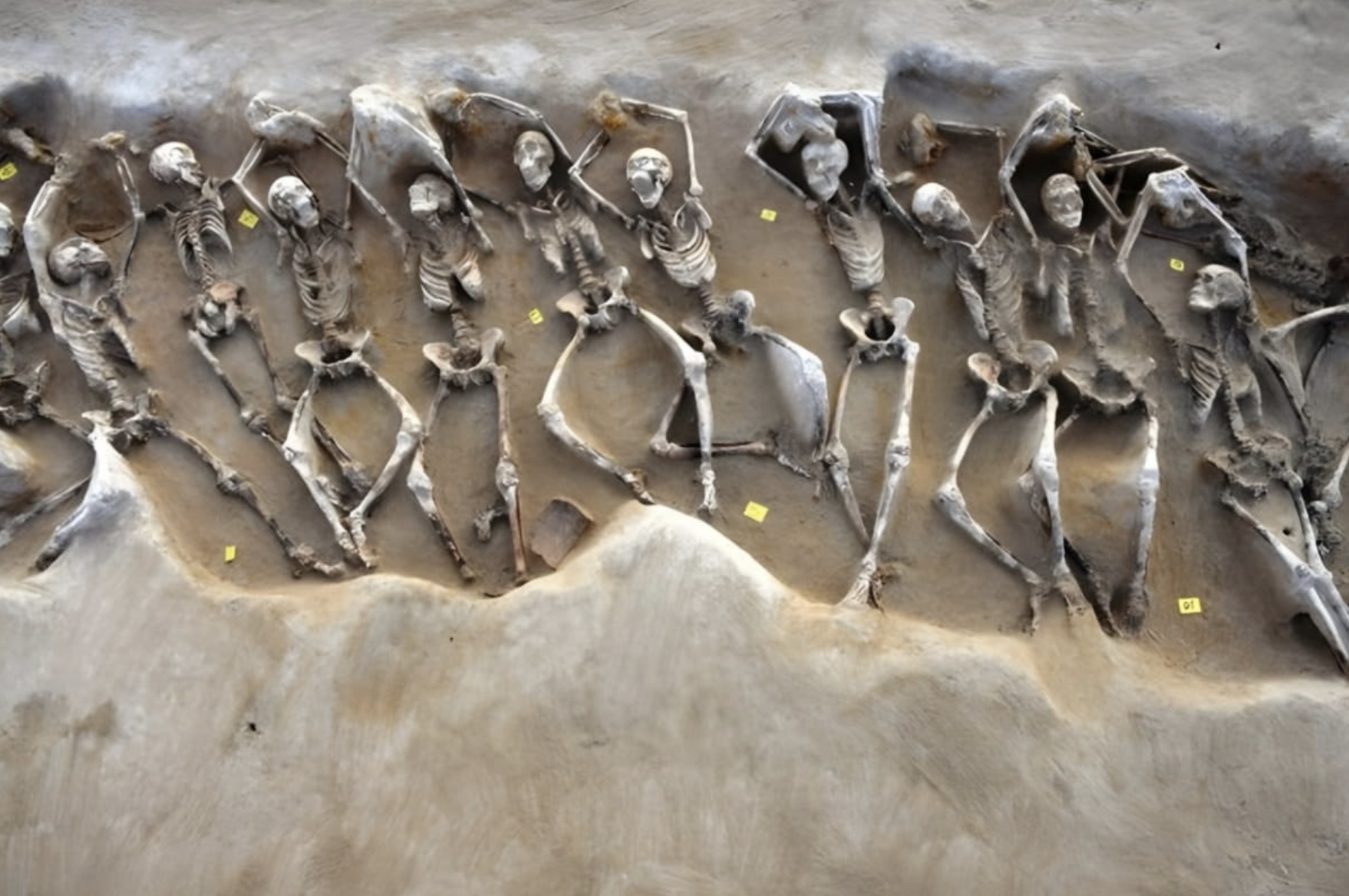
Photo Credit: Giannis Asvestas, Hellenic Ministry of Culture, from Bérard, R.-M., & Castex, D., Athens Journal of History (2021), CC BY-NC 4.0
A new study using strontium isotope analysis has now provided an important piece of the puzzle, and the results challenge the idea that these men came from elsewhere.
Unlike archaeological evidence such as weapons, pottery or inscriptions, isotopes can provide information about an individual's life history. Researchers examined the chemical composition of tooth enamel from 66 of the shackled men. They also analysed 97 other people buried elsewhere within the wider Phaleron cemetery, giving them a total sample of 163 individuals.
The technique focuses on strontium, a naturally occurring element found in rocks and soils. It enters the food chain and eventually becomes incorporated into human tissues. Crucially, the enamel of permanent teeth develops during childhood and does not substantially change later in life.
That means the strontium signature preserved inside a tooth can provide clues about the geological environment where someone spent their early years.
By comparing these signatures with the geology of different regions, researchers can establish whether an individual was probably raised locally or spent their childhood somewhere else.
The results were remarkably consistent. Of the 66 shackled men examined, 64 (approximately 97 per cent) had isotope signatures compatible with a local origin in Attica, the region surrounding Athens. The figure was almost identical among the wider population from the Phaleron cemetery. Around 96 per cent of the 163 individuals analysed displayed signatures consistent with having grown up locally.
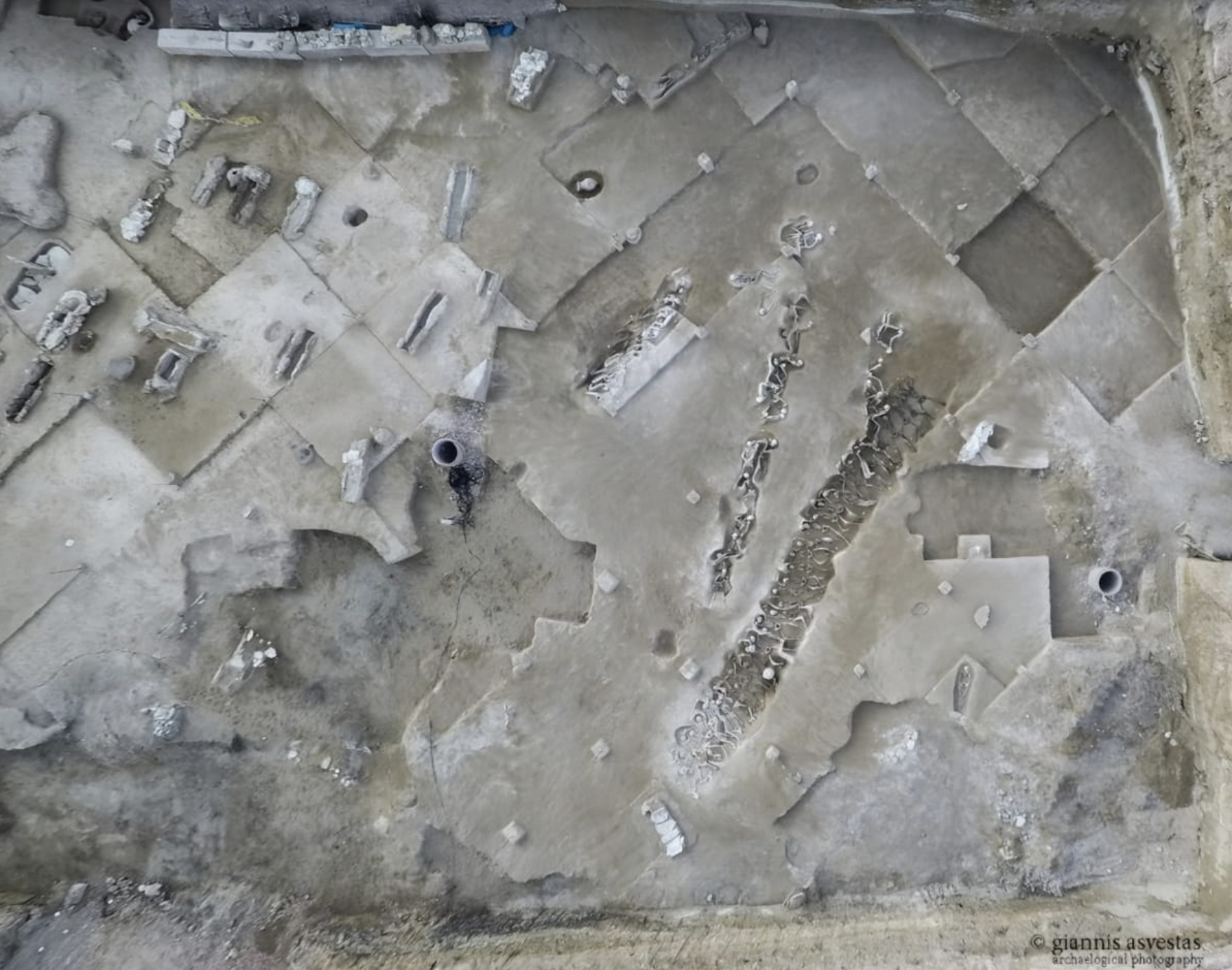
Photo Credit: Giannis Asvestas
Only a small number showed evidence suggesting that they had spent their childhood somewhere beyond the region. This is significant because one of the theories surrounding the mass burial had been that the men could have been foreign enemies, prisoners of war or outsiders who had been brought into Attica.
If that explanation were correct, archaeologists would expect to find a considerably larger proportion of individuals whose chemical signatures pointed towards other regions. Instead, the shackled group looks remarkably similar to the broader population buried at Phaleron.
The isotope evidence cannot tell us precisely why the men were killed. Strontium analysis can indicate geographical origins, but it cannot reveal whether someone was a political opponent, criminal, rebel or supporter of a particular faction.
Nevertheless, the findings eliminate one important possibility. The men do not appear to have been a group of foreign invaders brought to Athens from elsewhere. Instead, the evidence suggests that the victims were overwhelmingly local to Attica. That raises an even more unsettling possibility: the violence represented conflict within the community itself.
The burials date to the Archaic period, a crucial stage in Athens' development when older systems of aristocratic and clan-based power were being transformed. Political competition and social tensions accompanied the emergence of new forms of collective authority, making this a particularly turbulent period in the city's history.
The unusual circumstances of the Esplanada burial may therefore be connected to this wider period of instability.
The presence of the restraints remains one of the most intriguing aspects of the discovery. The fact that many of the men were buried with shackles around their wrists strongly suggests that they had been restrained before or around the time of their deaths. Their deliberate arrangement in rows also indicates that this was not simply an ordinary burial ground.
It may have been intended to communicate something to the wider population. But exactly what that message was remains uncertain. Were the men executed as punishment? Were they involved in a failed political uprising? Were they victims of factional violence? Or did the burial form part of an attempt by an emerging authority to demonstrate its power? At present, archaeology cannot provide a definitive answer.
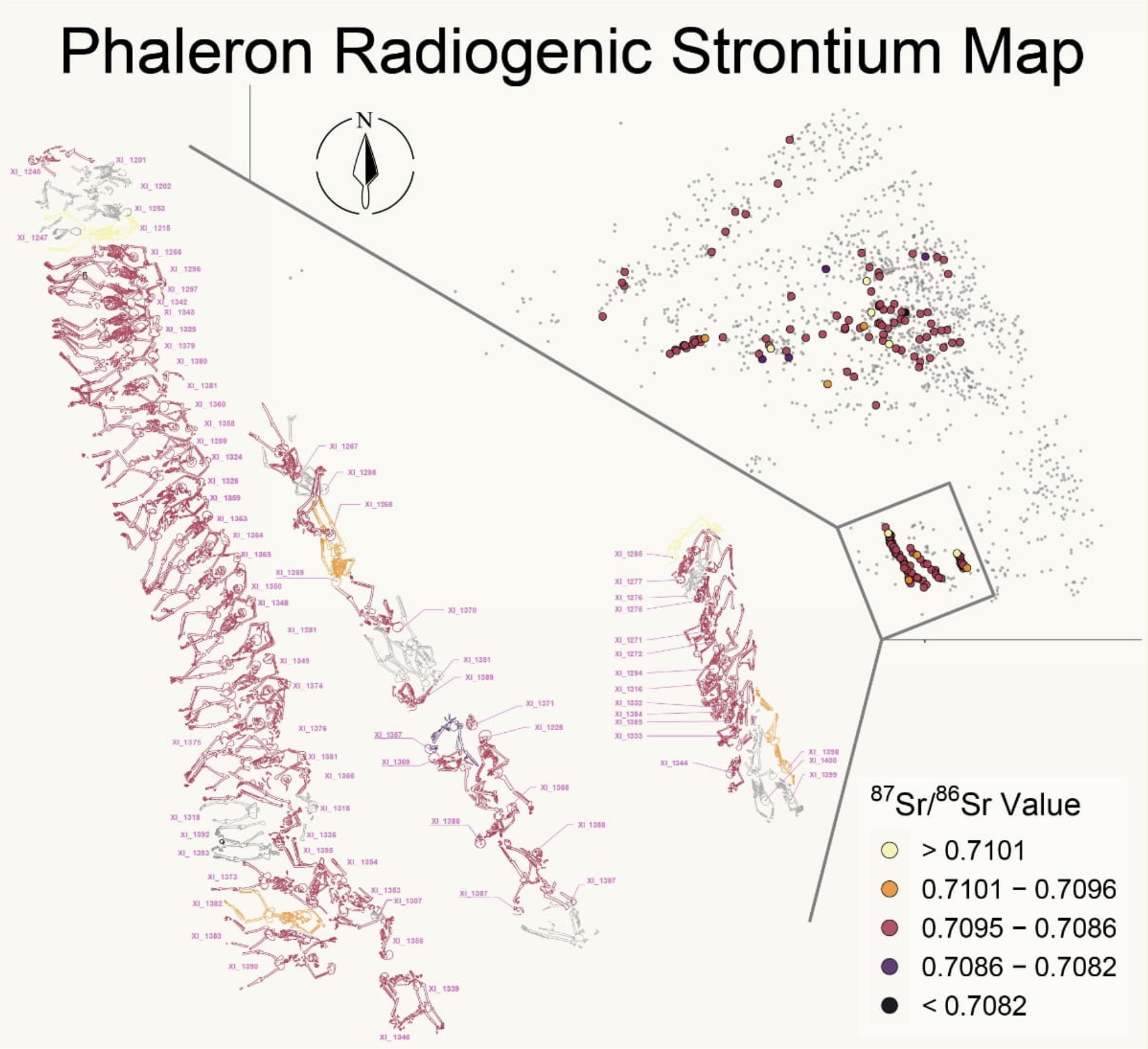
Photo Credit: Courtesy of Dr. Julianne R. Stamer.
What the new research does provide is a much clearer understanding of who these men were not. Rather than a group of foreign captives or enemy soldiers, the overwhelming majority appear to have grown up in the same wider region as the people living around Athens. That changes how we should think about the Esplanada.
The mass grave may not represent violence between Athens and an outside enemy. Instead, it could preserve evidence of a period when violence was taking place within the society itself.
There is also a wider significance to the findings. The study supports other evidence suggesting that, despite Athens' extensive connections with the wider Aegean during the Archaic period, large-scale movement of people into Attica remained relatively limited.
For the 79 men at the Esplanada, however, the most striking revelation is perhaps the simplest. They were not simply anonymous victims from somewhere beyond Athens. Their teeth suggest that many of them were people who had grown up locally, making their violent deaths an even more disturbing reminder that some of the bloodiest episodes in ancient history were not necessarily conflicts against outsiders, but struggles within communities themselves.