Roman Tax Fraud Scandal Revealed by 1,500-Year-Old Inscription!
A Roman inscription uncovered in western Turkey has brought to light an extraordinary case of corruption that appears to have plagued the imperial tax system for more than a decade. The affair involved officials falsifying tax receipts, exploiting provincial taxpayers and concealing the true amounts of money and goods collected from the Roman treasury.
What makes the discovery particularly striking is the punishment threatened against those responsible. In an unusually severe response, a senior Roman official ordered that officials continuing the fraudulent practices could face the death penalty.
The story emerges from Stratonikeia, an ancient city in southwestern Turkey, where archaeologists recovered additional fragments of a lengthy inscription in 2024. The pieces initially appeared to belong to a funerary or commemorative monument. Closer examination, however, revealed that they formed part of an imperial legal ruling issued in AD 480.
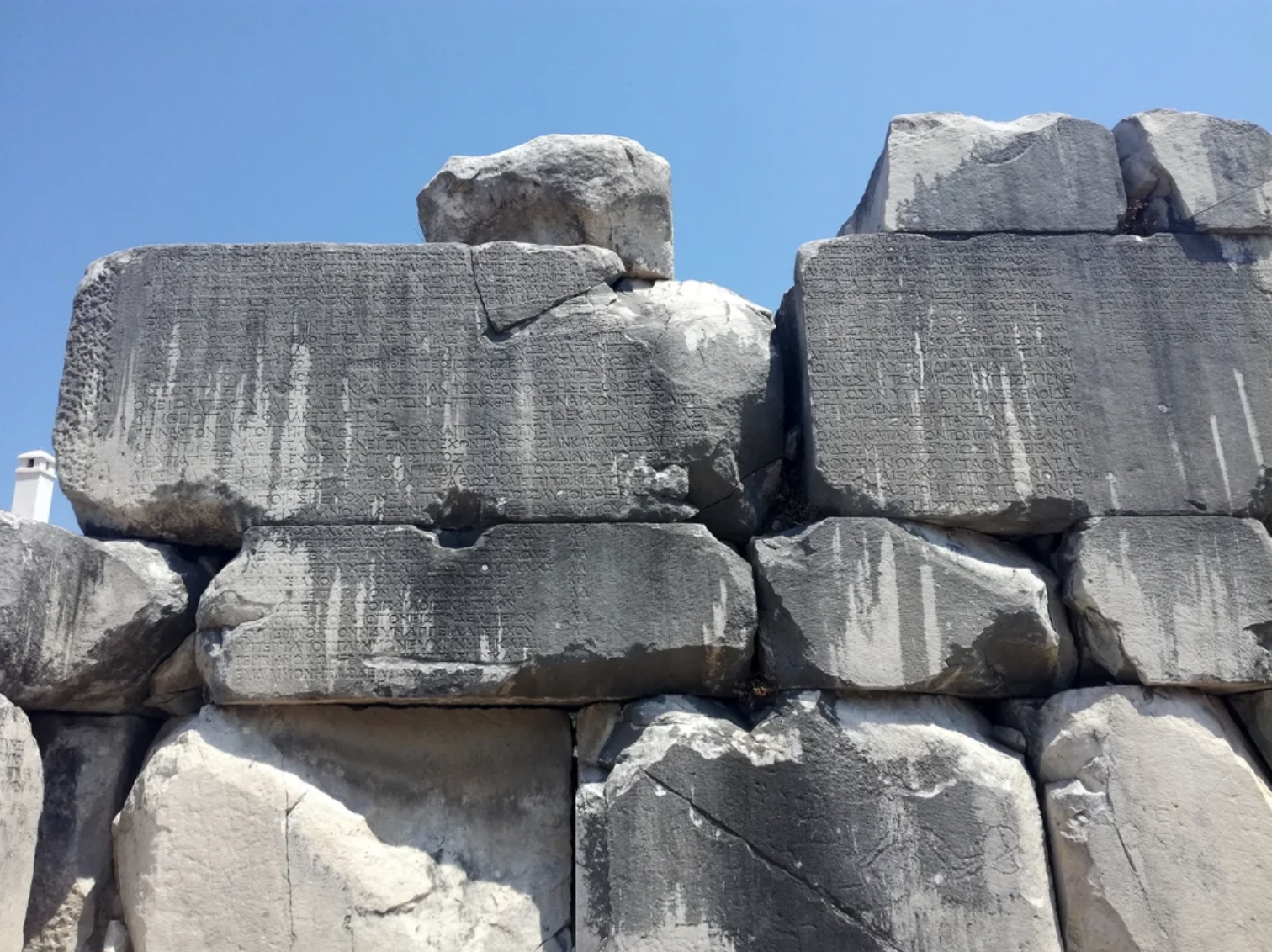
Photo Credit: Dr. Paweł Nowakowski
Researchers, including Dr Paweł Nowakowski of the University of Warsaw and Professor Mustafa Adak of Akdeniz University, were able to identify the fragments by comparing them with related inscriptions previously recorded at Mylasa, Keramos and Stratonikeia.
Their work has helped reconstruct a decree issued by the Praetorian Prefect of the East, providing a rare glimpse into the problems faced by the late Roman administration when attempting to control provincial taxation.
At the centre of the dispute was the management of an estate belonging to Placidia, the daughter of Emperor Valentinian III.
Roman tax collectors operating in western Asia Minor had developed a remarkably simple method of enriching themselves. They issued official receipts confirming that taxpayers had handed over money or goods, but deliberately failed to record the actual amounts received. This created a gap between what taxpayers were genuinely paying and what was reported to the imperial authorities.
The officials could collect a substantial amount from local people while declaring a much smaller figure to the treasury in Constantinople. The unreported difference could then be appropriated for their own benefit.
For those affected by the scheme, the consequences were potentially serious. Taxation was a fundamental part of Roman administration, and manipulation of the system could place an additional financial burden on provincial communities while depriving the imperial government of revenue. More remarkably, this was not a short-lived episode of corruption.
Evidence from the decree indicates that complaints about the fraudulent practices had already reached the imperial authorities around AD 465. An earlier Praetorian Prefect had apparently attempted to intervene, but his instructions failed to put an end to the problem. The officials involved seem to have continued their activities despite orders from the central administration.
By the time Flavius Illus Pusaeus Dionysius became Praetorian Prefect of the East in AD 480, the matter had apparently become sufficiently serious to warrant an exceptionally forceful response. Dionysius appointed a special envoy to deal with the situation and gave him a strict deadline. The official had until 1 December to resolve the affair, while his own property was placed at risk if he failed to carry out the order.
The corrupt tax officials faced an even more frightening consequence. They could be executed if they continued to falsify the receipts. The death penalty stands out because it was highly unusual in cases involving fraudulent tax receipts.
Other surviving Roman documents from the fourth to sixth centuries demonstrate that the problem was far from isolated. At least eleven other imperial rulings addressed the proper recording and issuing of tax receipts, suggesting that similar abuses occurred elsewhere within the empire. Yet these measures generally relied upon financial punishments rather than execution.
Researchers therefore believe that the unusually harsh language of the AD 480 decree may have had as much to do with obedience to imperial authority as with the financial losses themselves. The officials were not simply stealing money. They were continuing to disregard imperial instructions after the central government had already attempted to intervene. In that context, the offence could be interpreted as a direct challenge to the authority of the emperor and his administration.
The threat of execution may therefore have served partly as a powerful statement: ignoring imperial commands was not merely administrative misconduct, but could be treated as an attack on the authority of the Roman state.
The decree also placed pressure on local authorities. Provincial governors and officials known as the 'defenders of the cities' could be fined three pounds of gold if they continued to tolerate the fraudulent practices.
There is an extraordinary twist to the story. The decree was issued on 1 August AD 480, giving the appointed envoy several months to resolve the matter. Yet the same year saw the downfall of Dionysius himself. He was executed after being accused of conspiring against Emperor Zeno.
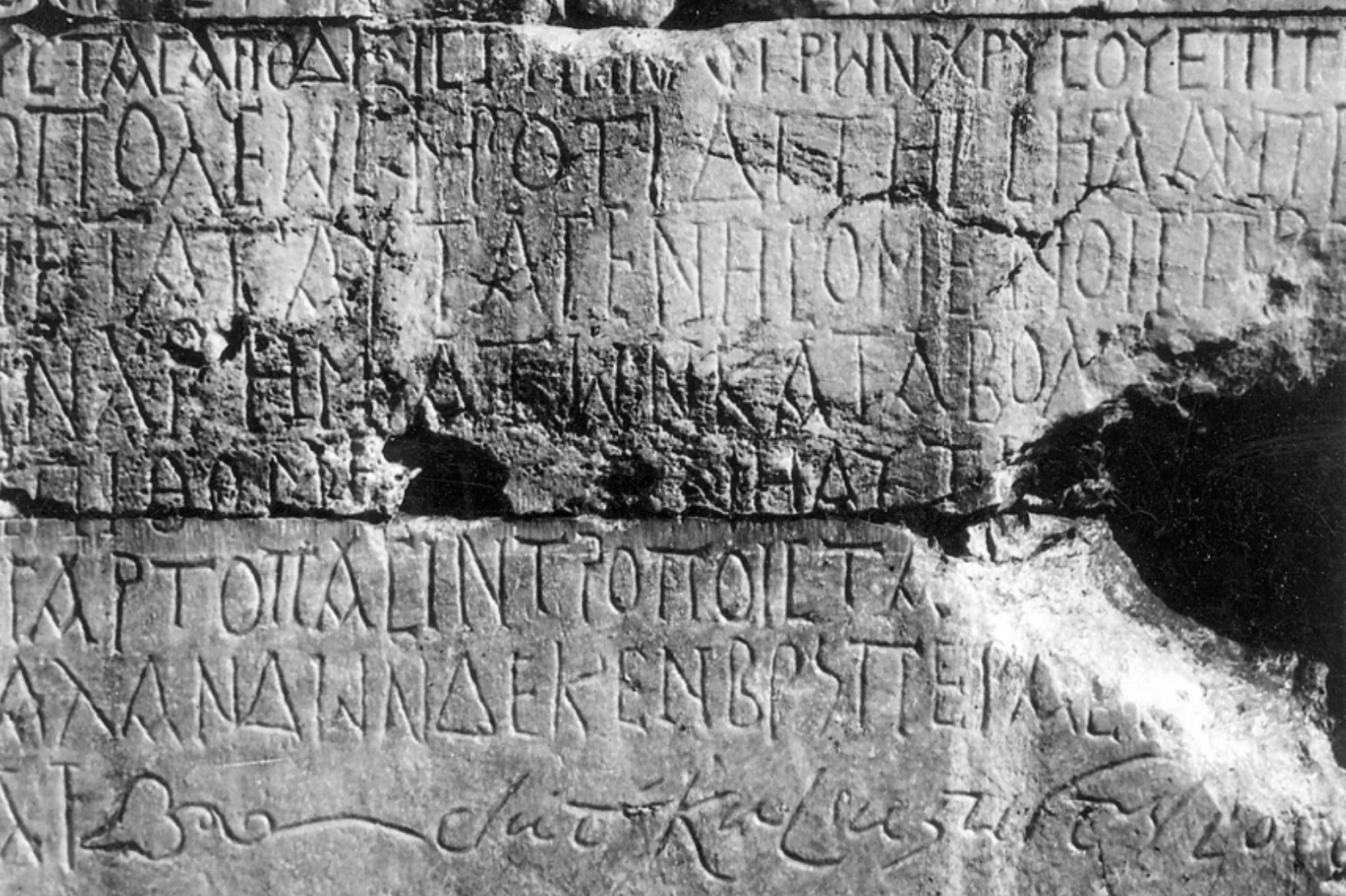
Photo Credit: Dr. Paweł Nowakowski
Despite this, the researchers believe that the prefect's orders were probably carried out. The fact that the ruling was subsequently inscribed and publicly displayed strongly suggests that the appointed envoy completed the task.
This creates an unusual historical irony. The man who threatened corrupt officials with death for defying imperial authority ultimately suffered execution himself after being accused of doing precisely that.
The discovery is important for more than what it reveals about corruption. The surviving inscriptions also provide historians with an opportunity to examine how imperial legislation was communicated throughout the Roman Empire.
Official decrees were often carved into stone and displayed publicly, allowing imperial decisions to be seen by local communities. These monuments reinforced the presence of the emperor and his administration even in cities far from Constantinople.
But the surviving examples show that the process was not always as rigid as modern legal publication. Different copies of the same decree sometimes contain variations in wording. Sentences could be rearranged, expressions altered and sections presented slightly differently. This suggests that the individuals responsible for preparing and carving the inscriptions were not necessarily copying an immutable text word for word. Scribes and stonecutters could play an active role in producing the final version displayed in a particular city.
The physical inscriptions therefore preserve evidence not only of Roman law, but also of the practical process through which that law was transmitted.
The craftsmen responsible for producing these monuments were highly skilled. One particularly revealing feature is the reproduction of the prefect's Latin signature at the bottom of the Greek inscription. Rather than simply naming the official, the stone preserves what appears to be a carefully reproduced version of his handwritten signature. Meanwhile, the main body of the decree was carved using a formal monumental script.
The differences between inscriptions from different cities suggest that there was no single empire-wide format for presenting these documents. Local workshops followed their own traditions while still conveying the authority of the imperial ruling.
For archaeologists and historians, these details provide an unusual opportunity to study the people behind the monuments, not simply the emperors and officials who issued the laws, but the scribes and craftsmen who transformed those decisions into permanent public texts.
The story also highlights how dramatically the fortunes of ancient inscriptions could change over the centuries. Although Roman authorities intended these stones to communicate important imperial decisions, many surviving inscriptions were later reused for entirely different purposes. Some were incorporated into buildings, while others became architectural decoration or were moved away from their original archaeological contexts.
One particularly unusual example from Turkey is an ancient funerary inscription containing a quotation from Homer's Odyssey. The stone was eventually reused as decoration at a petrol station after being removed from its original location.
Such examples demonstrate that ancient inscriptions have had surprisingly varied lives long after the societies that produced them disappeared. From imperial decrees carved into city walls to ancient stones reused centuries later, these objects continue to preserve fragments of the Roman world.