Ancient Greek Builders’ Marks Reveal Secrets of 2,000-Year-Old Gateway!
For centuries, the stones of an ancient gateway on Libya’s Mediterranean coast have carried an unusual collection of letters, symbols and monograms. Carved into the masonry of the Tauchira Gate at the ancient city of Ptolemais, these marks have survived for more than 2,000 years.
At first glance, they might appear to be nothing more than practical marks left behind by ancient craftsmen. However, new research suggests that they could provide an extraordinary record of how the gateway was constructed, who worked on it, how labour may have been organised and paid, and potentially even which wealthy individuals helped fund the project.
Archaeologist Anna Urszula Kordas from the University of Warsaw has conducted a detailed examination of 626 individual marks found across the towers of the gateway. Her study has identified 27 distinct types, ranging from simple Greek letters to combinations of letters, abbreviations and much more elaborate monograms.
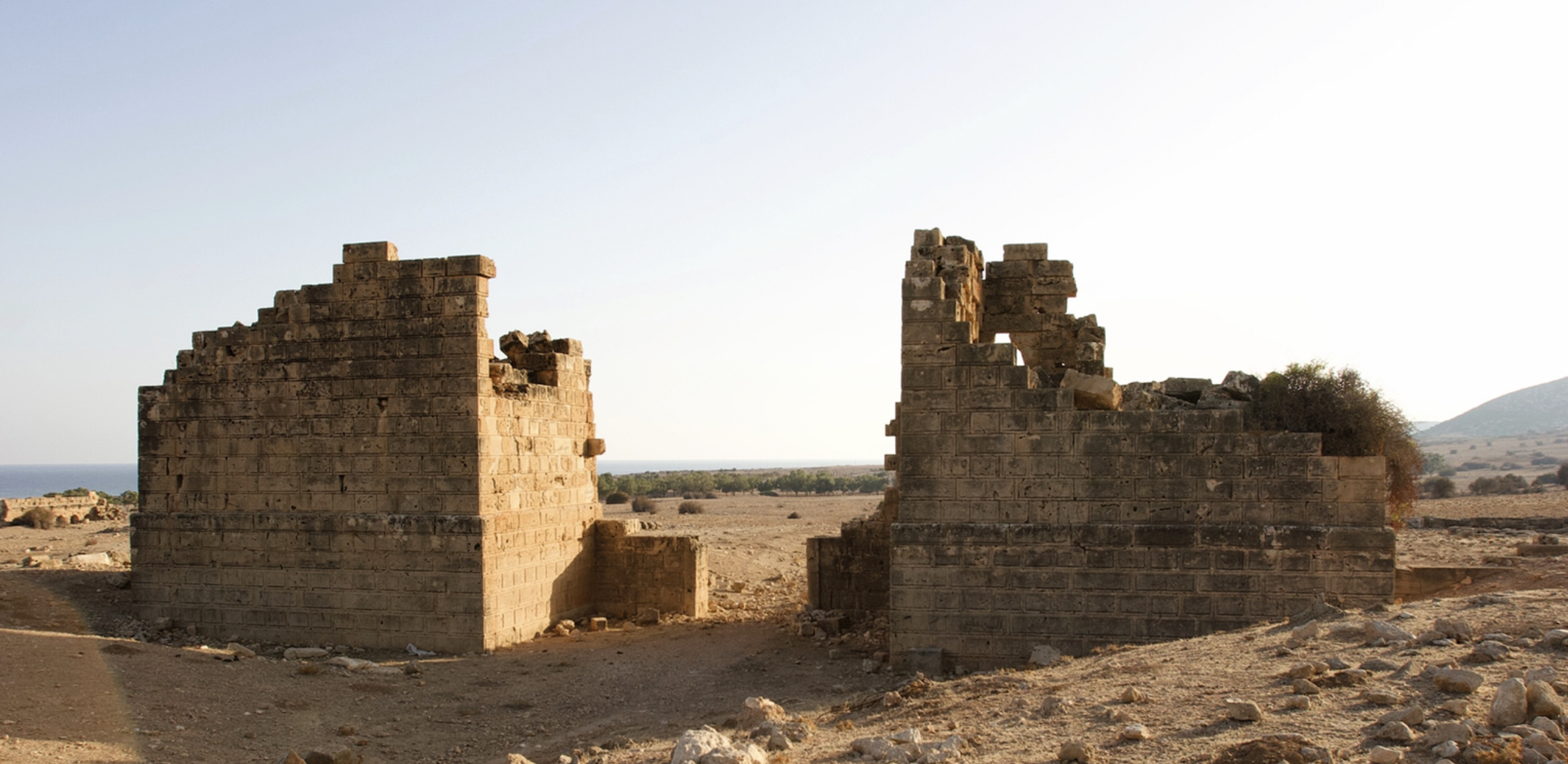
Photo Credit: Kordas, A. U. (2026)
The Tauchira Gate forms part of the ancient fortifications of Ptolemais and is among the best-preserved sections of the city's defensive walls. Two substantial towers flank the central entrance, creating one of the most impressive surviving examples of Hellenistic architecture at the site.
Kordas' investigation indicates that the markings were carefully positioned according to when and why they were made.
Some of the largest and crudest symbols appear on stone blocks that had not yet been finished. Several were carved at unusual angles, including sideways or upside down. Their appearance suggests that they were made while the blocks were still being prepared, perhaps at the quarry or during transportation to the building site.
These early marks could have been used to keep track of individual stones, organise the work being carried out by different groups, or help administrators monitor production and payments.
The marks found on the finished exterior surfaces of the gateway tell a different story. Rather than being roughly scratched into the stone, these symbols were carefully cut into prominent positions at the centre of completed blocks. They were consistently oriented upright, suggesting that they were added after the masonry had been positioned within the wall and finished by the masons. Most significantly, they were not subsequently removed.
On many ancient Greek monuments, construction marks were eventually erased or concealed when stone surfaces were given their final finish. At the Tauchira Gate, however, the marks appear to have been deliberately retained. This makes the monument particularly unusual. No close equivalent has so far been identified among other known Hellenistic fortifications.
The sheer consistency of the markings may indicate that they formed part of an organised system rather than being random signatures left by individual workers.
According to Kordas' interpretation, the symbols could have functioned almost like a permanent construction record. A mark placed on a completed block may have identified the workshop, team or contractor responsible for preparing it. Such a system could have allowed supervisors to monitor the work being carried out, determine which groups were responsible for particular sections and calculate payments based on completed work.
The evidence suggests that this practice may have been widespread across the gateway, with successive blocks carrying their own identifying symbols. At least seven separate groups appear to have been represented by simple Greek-letter markings. A further 14 possible teams, craftsmen or contractors may be identifiable through more complex monograms.
One particularly common symbol, AP/E, occurs 92 times on the northern tower. Its repeated appearance makes it unlikely to have represented a single individual mason. Instead, Kordas suggests that it could have identified a workshop owner, contractor or even someone who sponsored part of the construction.
There are also blocks carrying two different marks. These combinations could indicate that more than one workshop was involved in producing a stone, or that separate specialists were responsible for different stages of its preparation.
The organisation of the construction becomes even more interesting when the source of the stone is considered. The limestone used to construct the gateway appears to have been extracted from a quarry less than 500 metres from the monument. Rather than transporting fully finished blocks, workers seem to have moved much of the stone in a relatively unfinished state.
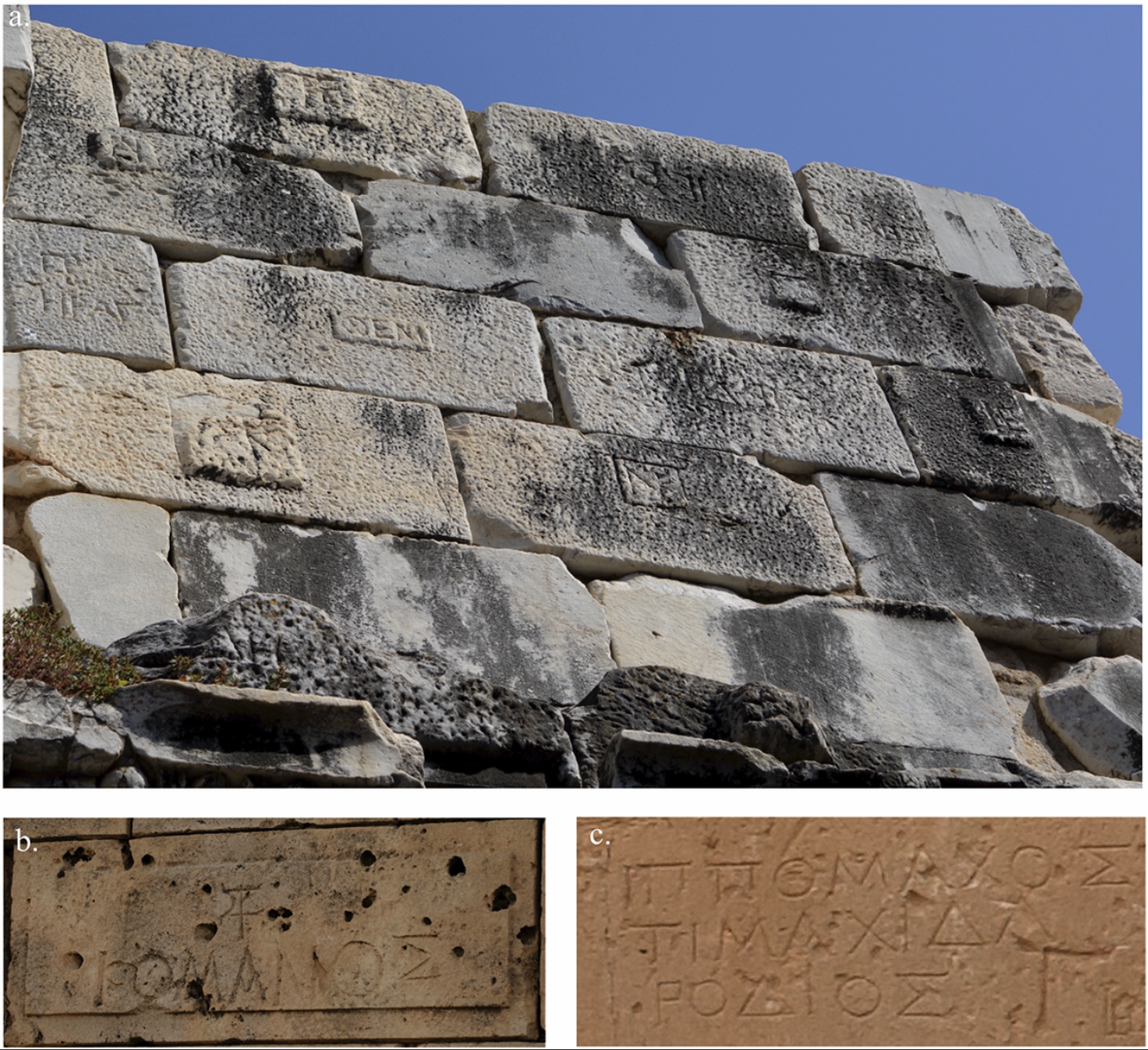
Photo Credit: Kordas, A. U. (2026)
The more detailed shaping and finishing could then be carried out once the blocks had been transported to the construction site and incorporated into the walls. This approach would have reduced the amount of material that needed to be moved and may also explain why some of the earlier, rougher marks were placed on blocks before they reached the gateway.
Perhaps the most intriguing possibility concerns the more elaborate monograms. Kordas suggests that some of these symbols may have been connected not simply with craftsmen, but with wealthy individuals who contributed to the construction project.
Large-scale public works in the Greek world could receive financial or material support from affluent members of society. Such contributions, sometimes referred to as epidosis, could involve money, building materials or labour.
If some of the monograms at Tauchira belonged to workshop owners or private benefactors, their prominent placement on the finished gateway may have served a second purpose beyond administration. They could have provided lasting public recognition.
In other words, the marks may have recorded not only who built the monument, but also who helped make its construction possible. For wealthy patrons, having their contribution permanently associated with a major civic project could have enhanced their public standing. The gateway may therefore have acted simultaneously as a defensive structure, a construction record and a monument to civic participation.
Ptolemais itself developed from the coastal harbour associated with the inland city of Barka. During the Hellenistic period it grew into an important urban centre, later flourishing under Roman rule. The city was characterised by its planned streets, substantial public architecture and affluent residential buildings, reflecting its importance within ancient Cyrenaica.
The Tauchira Gate represents a later phase in the development of its fortifications. Rather than forming part of the city's earliest defensive system, the monumental towers appear to have been constructed during a major rebuilding programme.
Architectural comparisons and the style of the letters point towards a date in the second century BCE. The construction is most likely associated with the reign of Ptolemy VIII Physcon, who ruled the Ptolemaic kingdom during the later Hellenistic period.
The hundreds of marks preserved at the Tauchira Gate offer an unusually detailed glimpse into the practical realities of ancient construction. Rather than simply showing that craftsmen worked on the monument, they may reveal how labour was divided between teams, how workshops interacted, how stone production was monitored and potentially how workers or contractors were compensated. They may even provide evidence for the relationship between construction and private patronage.
The significance of the discovery lies in the fact that these small symbols survived alongside the monumental architecture itself. They transform the gateway from simply an impressive surviving piece of Hellenistic fortification into something resembling a stone archive of the people who created it.