Ancient Egyptian Pleasure Boat Discovered in Alexandria!
Beneath the waters of Alexandria’s long-submerged harbour, archaeologists have uncovered something truly extraordinary: the remains of an ancient Egyptian pleasure barge known as a thalamagos. While these lavish vessels are mentioned in classical texts, this is the first time one has ever been physically recovered.
The discovery was made near the drowned island of Antirhodos, once part of the bustling Portus Magnus, during underwater excavations led by the European Institute for Underwater Archaeology (IEASM). What survives of the wreck is remarkably well preserved and offers a rare glimpse into elite leisure and ceremonial life in early Roman Egypt.
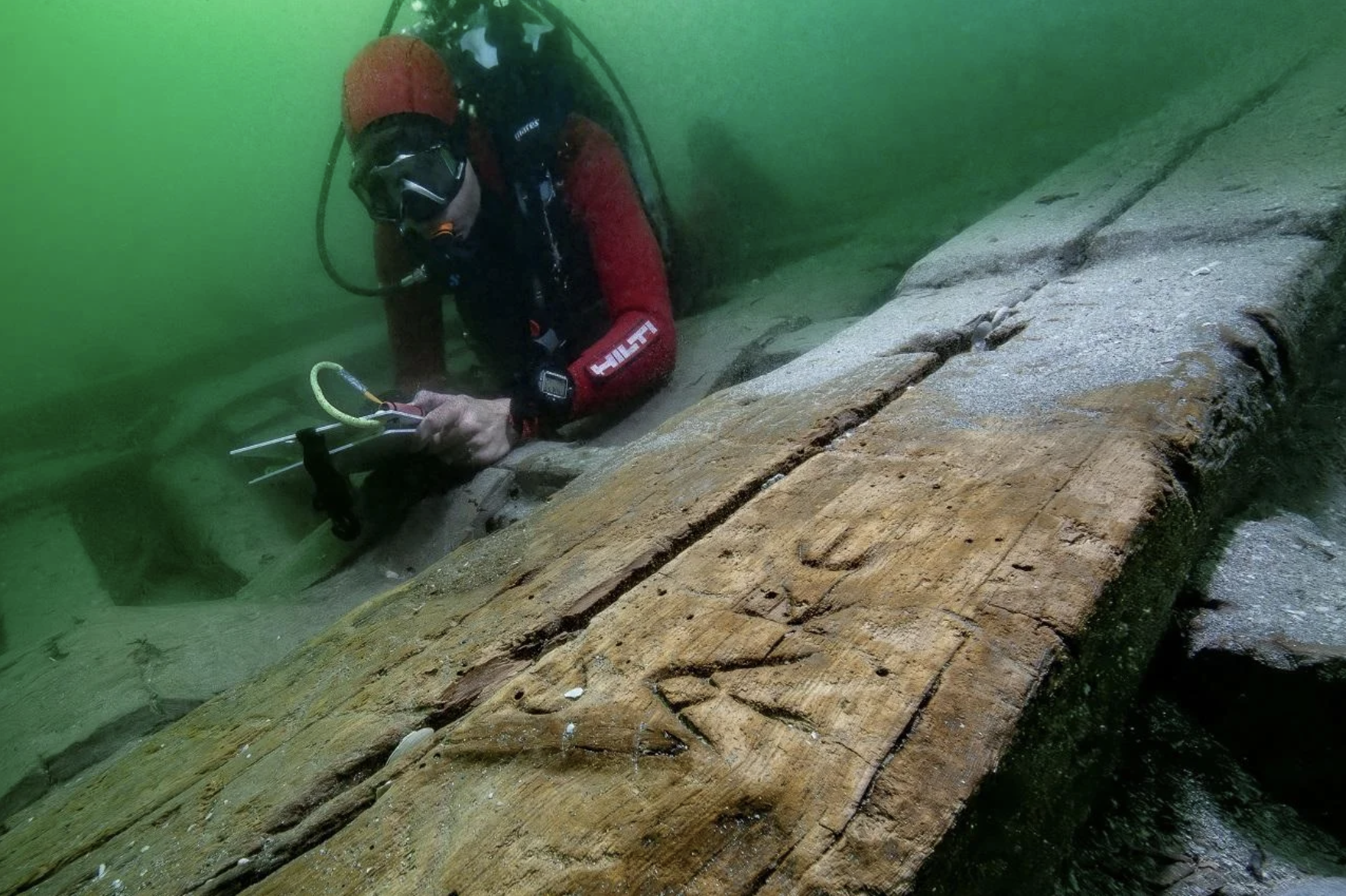
Photo Credit: Christoph Gerigk © Franck Goddio / Hilti Foundation
The wooden remains stretch for around 28 metres, although the original vessel would have measured closer to 35 metres in length and about seven metres across. Its proportions were carefully designed to maximise space, allowing for a central pavilion and a richly decorated cabin. The hull is flat-bottomed, with a sharp edge at the bow and a rounded stern, a highly specialised design suited to calm, shallow waters rather than open sea travel. Archaeologists believe the barge was propelled entirely by oars, requiring a crew of more than 20 rowers.
Clues scratched into the ship itself have helped to date it. Greek graffiti found on the central structure suggest the vessel was built locally in Alexandria during the first half of the first century CE. This fits neatly with the writings of the geographer Strabo, who described ornate cabin-boats used for festivals, leisure pursuits and religious ceremonies along Alexandria’s lush canal networks.
Intriguingly, the wreck lies less than 50 metres from the submerged remains of the Temple of Isis, another key site currently under investigation. One theory suggests the barge sank during a catastrophic event around 50 CE, when earthquakes and tidal waves caused large sections of Alexandria’s shoreline, including palaces and temples, to collapse into the sea. Another interpretation points towards a ritual purpose: the vessel may have belonged to the Isis sanctuary and been used in the navigium Isidis, an annual ceremonial procession symbolising the goddess’s solar journey to Canopus.
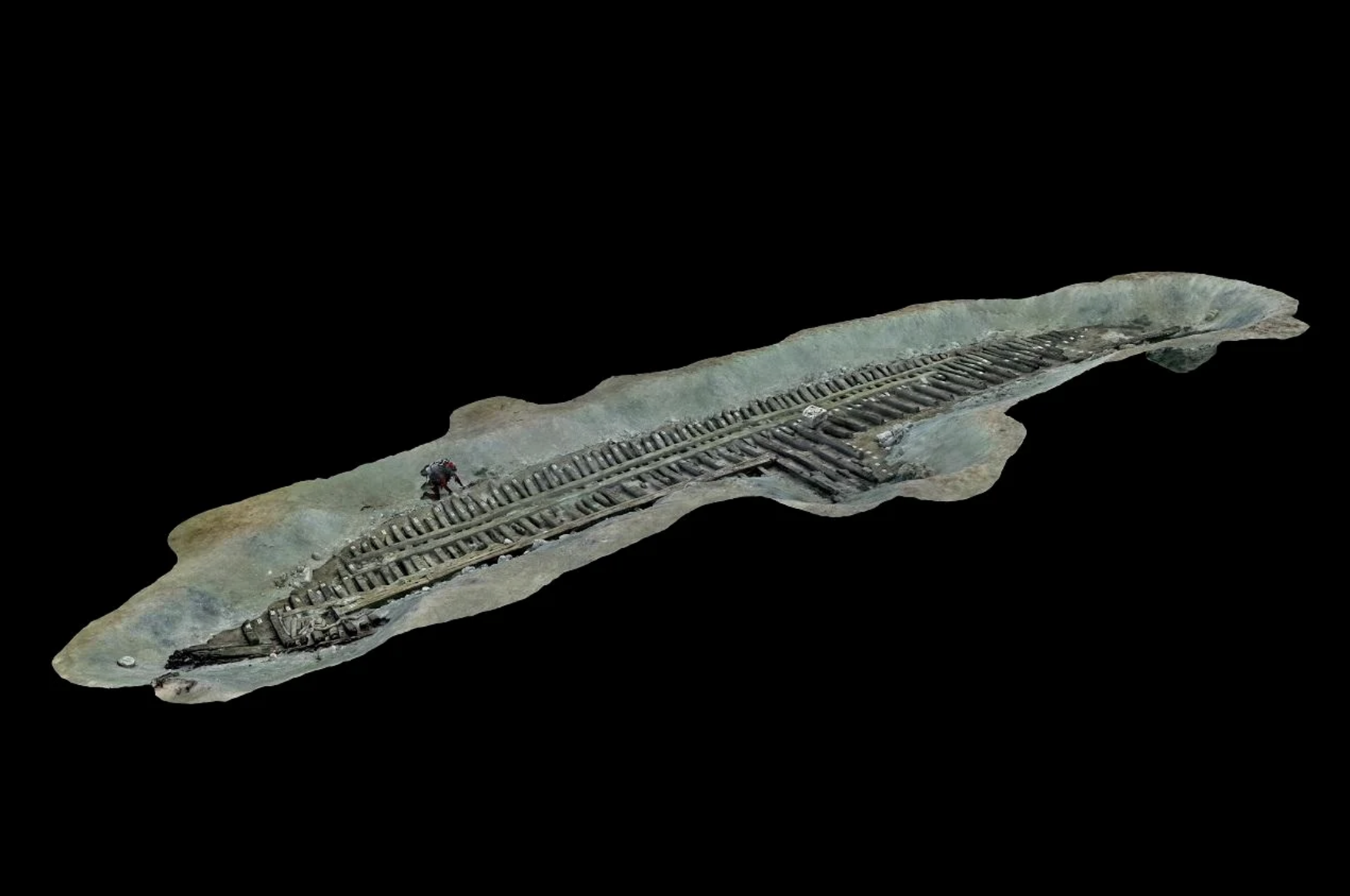
Photo Credit: 3D photogrammetry by Christoph Gerigk © Franck Goddio / Hilti Foundation
Images of similar boats appear in ancient artworks, such as the famous Nile mosaic of Palestrina, though the newly discovered barge is far larger than most surviving depictions. Its scale also evokes accounts of the extravagant floating palaces of the Ptolemaic rulers, including those associated with Cleopatra VII, highlighting Egypt’s long tradition of opulent ceremonial vessels.
Research into the wreck is still at an early stage. In line with UNESCO guidelines, the barge will remain on the seabed to ensure its preservation, while further excavations in the surrounding area continue. Archaeologists hope these ongoing investigations will shed more light on daily life, religious practices and elite recreation in Alexandria during the early Roman period.
The latest scientific findings from work at the Temple of Isis in Portus Magnus have recently been published by the Oxford Centre for Maritime Archaeology, marking an important step forward in understanding this remarkable underwater landscape.