Ancient Egyptian Princesses May Have Trained With Weapons, Study Suggests!
A fresh study of royal burials from ancient Egypt is challenging long-held assumptions about the role of elite women during the Middle Kingdom. Researchers examining the skeletal remains of several princesses buried at Dahshur have identified evidence that some may have regularly practised with weapons during their lives, rather than simply being buried alongside symbolic military objects.
Although the findings do not suggest these women fought in battle, they indicate that activities such as archery or handling ceremonial weapons could have formed part of their lives nearly 4,000 years ago.
The research, published in Frontiers in Environmental Archaeology, focused on six members of the royal family buried close to the pyramid complexes of Amenemhat II and Amenemhat III at Dahshur, around 30 kilometres south of modern Cairo.
The investigation was led by Zeinab Hashesh, Ahmed Gabr and Roxie Walker, who combined skeletal analysis, X-ray imaging and chemical testing to build a clearer picture of the princesses' health, daily activities and funerary treatment.
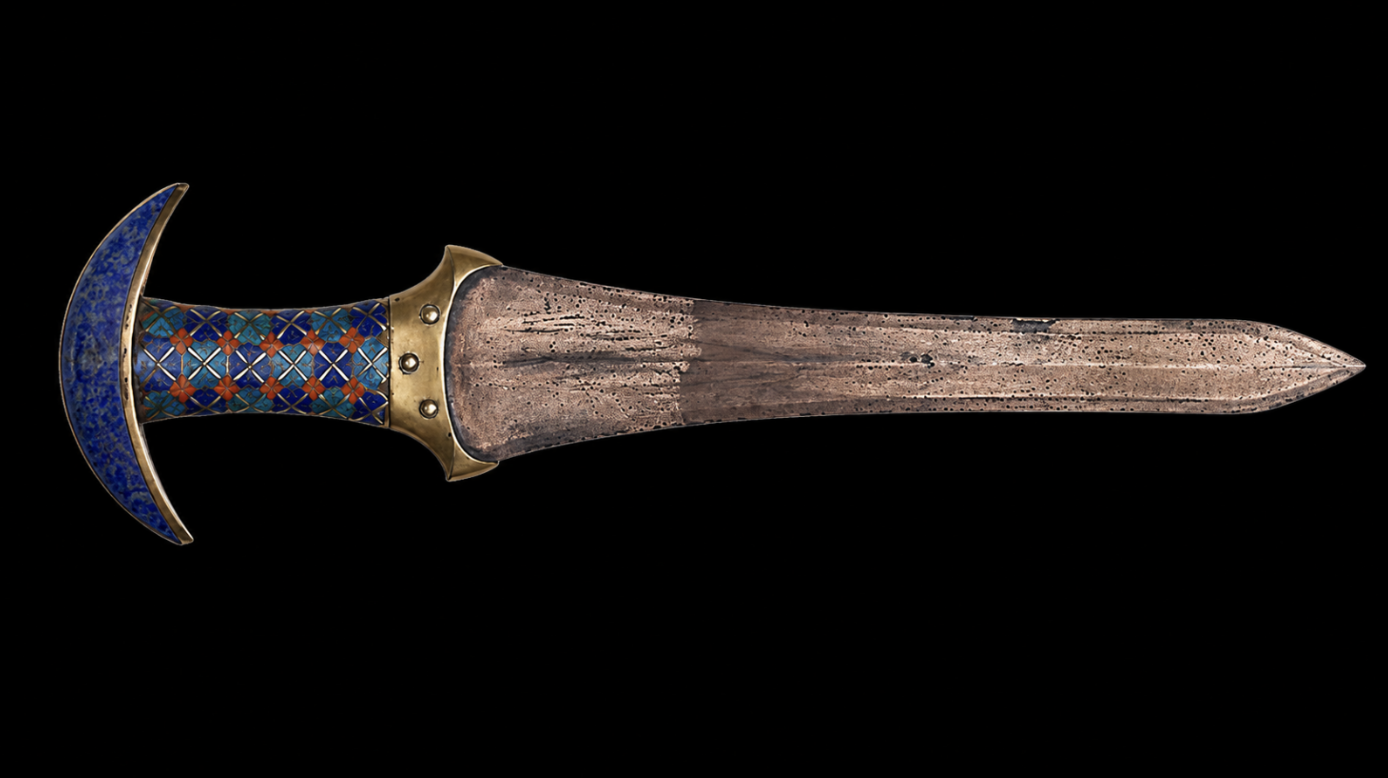
Photo Credit: Hashesh Z, Gabr A, and Walker R (2026)
Among those examined were King Hor and Princesses Ita, Khenmet, Itaweret and Noub-Hotep, together with an unidentified woman who may have been Princess Sathathormeryt, although that identification has yet to be confirmed.
These royal burials were first excavated by French archaeologist Jacques de Morgan during expeditions in 1894 and 1895. After their discovery, however, the skeletal remains became separated across different collections.
Most of the skulls were transferred to the Cairo School of Medicine, where they were later lost. The remaining bones spent more than a century stored in wooden boxes beneath the Egyptian Museum in Cairo before being rediscovered in 2020 through the Bioarchaeological Remains Curation Project.
Some bones still bore handwritten labels left by the original excavators, while others remained wrapped in nineteenth-century newspaper. Despite many skeletons being incomplete, between roughly 22 and 58 per cent of each individual survived, the preserved bones retained valuable evidence of health, injury and repeated physical activity.
Researchers identified unusually pronounced muscle attachment sites on the shoulders, arms, forearms and hands of several princesses. These changes are associated with muscles involved in gripping, drawing a bow, rotating the forearm and controlling the fingers.
Skeletal evidence alone cannot prove exactly what activity caused these developments. Similar patterns may result from hunting, physical exercise, ritual practices or other repetitive movements. However, the discoveries become particularly intriguing when viewed alongside the weapons buried with these women.
Rather than representing purely symbolic grave goods, some of the bows, arrows, daggers and maces may have reflected skills their owners genuinely possessed.
Princess Ita, who died between the ages of 28 and 34, displayed particularly strong muscle development in her right arm and forearm.
The attachment sites indicate repeated movements involving forearm rotation, thumb extension and firm finger grip. Researchers suggest this combination could be consistent with regularly handling a dagger or mace.
A richly decorated dagger accompanied Ita into her tomb. While such objects undoubtedly carried ceremonial significance, the physical evidence raises the possibility that the weapon represented something she had actively used rather than simply a symbol of royal authority.
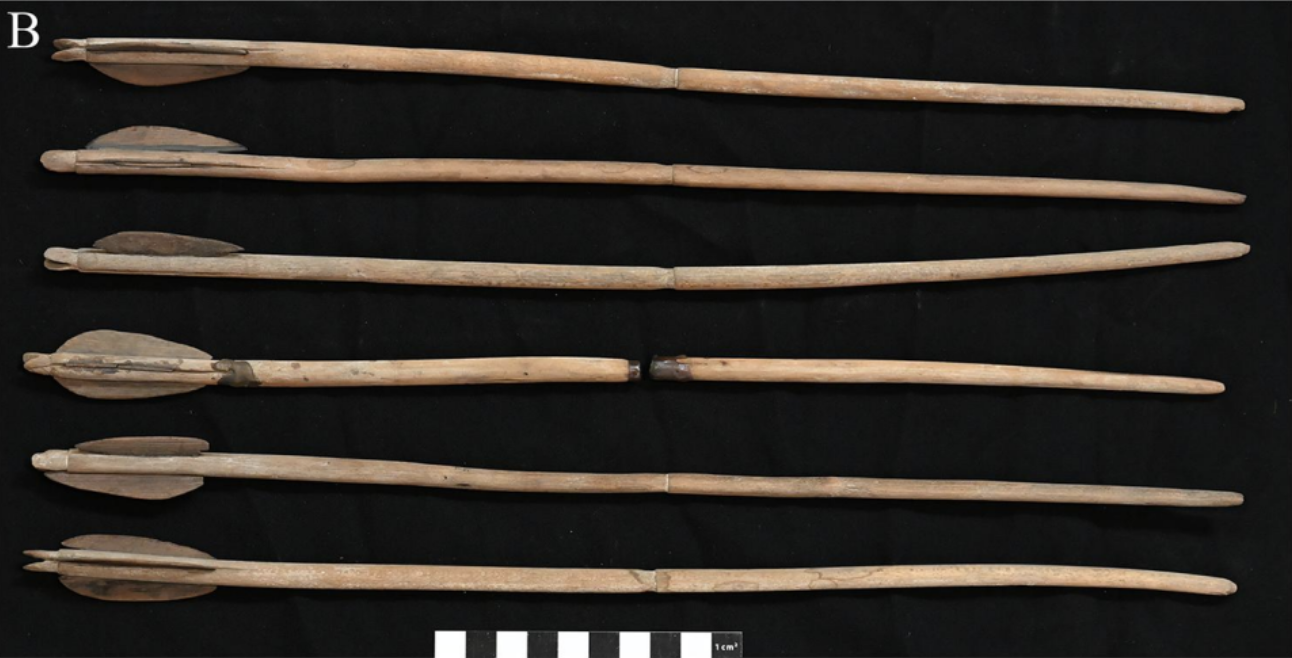
Photo Credit: Hashesh Z, Gabr A, and Walker R (2026)
Several other princesses exhibited skeletal features consistent with repeated archery movements. Khenmet, who died between approximately 35 and 45 years of age, showed pronounced muscle attachment areas on her forearms that may have developed through drawing and stabilising a bow.
Similar changes appeared in Princess Itaweret, who died between the ages of 20 and 34. Strong attachment sites across her collarbones and upper limbs matched the muscles most heavily used during archery.
Itaweret had also sustained several fractures to her ribs and left foot during her lifetime. Although these injuries had healed completely before her death, researchers cannot determine whether they resulted from hunting, accidents or another physically demanding activity.
Perhaps the strongest case comes from Princess Noub-Hotep. Her forearms and right hand displayed extensive muscular development linked to grip strength and hand rotation, while one of the bones in her right hand had remodelled slightly without signs of disease.
Arrows were discovered among the objects placed inside her tomb, creating a notable connection between the skeletal evidence and her burial equipment.
The unidentified woman, possibly Princess Sathathormeryt, also possessed strongly developed muscles associated with finger flexion. Historical excavation records describe Sathathormeryt's burial as containing bows, arrows, a flail and sceptres.
Weapons found in royal female burials have traditionally been interpreted as symbols of status, divine protection or participation in royal funerary rituals.
The Dahshur princesses held the title of "King's Children" and played an important symbolic role in the rebirth and regeneration of their royal father after death. Objects such as bows, maces and ceremonial regalia therefore carried significant religious meaning regardless of whether they had been used during life.
The researchers suggest these interpretations do not have to be mutually exclusive.
A ceremonial bow could still have belonged to someone who regularly practised archery. As members of Egypt's royal family, the princesses may have taken part in hunting, martial instruction or ritual training that is rarely associated with elite women in traditional reconstructions of Middle Kingdom society. The researchers stress that their conclusions remain cautious.
Muscle attachment sites are influenced by many different factors, including genetics, nutrition, age, body structure and disease, as well as physical activity. For that reason, skeletal evidence alone cannot identify someone as a trained warrior or experienced archer.
Instead, it is the combination of physical changes and the matching weapons found in the burials that makes the findings particularly compelling.
The skeletons also provide a glimpse into the health of Egypt's royal household. Several individuals displayed spinal degeneration, healed fractures and inflammatory conditions. Khenmet also showed signs that may indicate reduced bone density, although further analysis is needed before confirming a diagnosis.
The successful healing of broken bones suggests members of the royal family received effective medical care, consistent with treatments described in surviving ancient Egyptian medical texts.
Researchers also identified several inherited spinal variations, including spina bifida occulta and other vertebral abnormalities, appearing across multiple individuals. This could point towards close biological relationships and marriage within the royal family, although ancient DNA studies will be required to investigate that possibility.
Chemical analysis of dark residues preserved on the bones revealed another fascinating detail. Most of the princesses had been treated with a mixture of frankincense and juniper resin during embalming, while Ita's remains contained only juniper. These expensive imported substances demonstrate that the royal household had access to valuable materials acquired through long-distance trade.
Taken together, the evidence paints a far richer portrait of the Dahshur princesses than previously understood.
Rather than existing solely as symbolic figures adorned with jewellery and buried with ceremonial objects, their skeletons preserve signs of physical exertion, healed injuries and repeated specialised movements. While their weapons undoubtedly carried important religious significance, the new study suggests that for at least some of these royal women, they may also have reflected abilities developed during their lifetimes.